


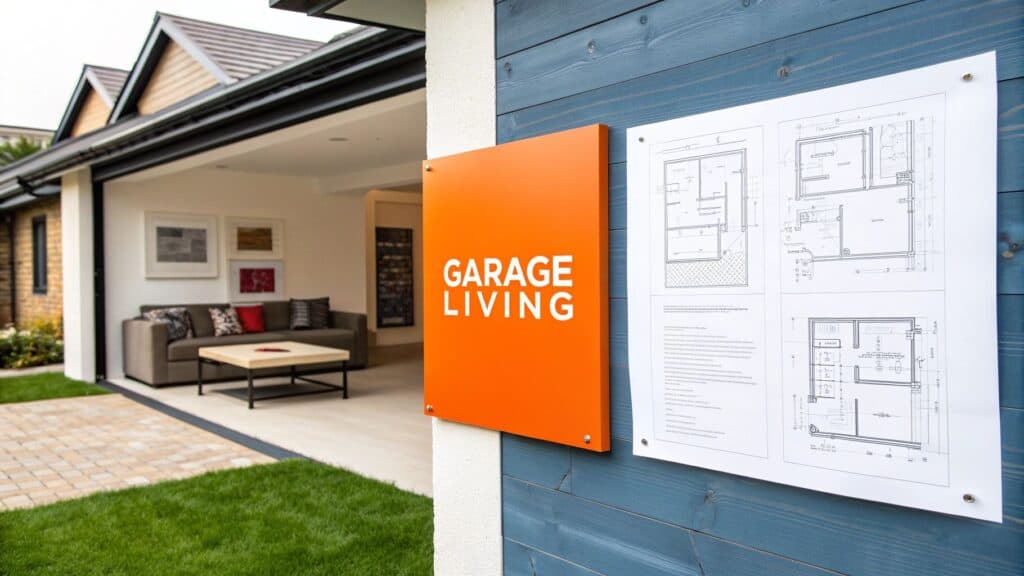
Learning how to convert a garage into living space is about more than construction; it’s about unlocking the hidden potential in your property. A thoughtful, professionally executed conversion can transform that underused space into a luxury guest suite, a high-end home office, or even a legal Accessory Dwelling Unit (ADU), adding tremendous function and value to your home. As Orange County’s premier design-build and restoration experts, we are here to guide you through the process, turning chaos into calm.
Your Blueprint for Expanding Your Orange County Home
For many discerning homeowners in Orange County, the need for more space is a constant, but the idea of a full-blown home addition can be overwhelming. A garage conversion presents a much smarter, more efficient path forward. You’re working with your home's existing footprint, which means avoiding the massive disruption of new construction while still gaining a seamless, beautiful extension of your living area.
This isn’t just about adding another room. It’s a strategic investment to elevate your property’s utility and market value. The possibilities are truly only limited by your vision:
- A Luxury Guest Suite: Offer five-star comfort and total privacy for visiting family, friends, or an au pair.
- A Dedicated Home Office: Create a professional, quiet workspace that’s completely separate from the hustle of the main house.
- An Income-Generating ADU: Capitalize on Southern California's housing demand by building a legal, high-end rental unit.
- A Personal Wellness Retreat: Design your own private home gym, a serene yoga studio, or a quiet meditation space.
Before diving in, it's critical to understand the entire scope. This table breaks down the essential factors we guide our Orange County clients through, from initial concept to final walkthrough.
Garage Conversion at a Glance Key Considerations
| Consideration | Key Factors for Orange County Homeowners | Our Design-Build Expertise |
|---|---|---|
| Zoning & Permits | Navigating specific city codes (e.g., Newport Beach, Irvine) for ADUs, setbacks, and parking requirements. | As Licensed General Contractors, we manage all permit applications and ensure full compliance, saving you the stress. |
| Structural Integrity | Assessing and reinforcing the existing foundation, walls, and roof to support a finished living space. | Our structural experts conduct thorough assessments and engineer solutions for a safe, durable conversion. |
| Utilities & Systems | Integrating HVAC, electrical, and plumbing without disrupting the main house. Sizing systems appropriately. | We design and install independent or tied-in systems for optimal comfort, efficiency, and code compliance. |
| Moisture Control | Preventing mold and water intrusion is critical. This involves proper vapor barriers, sealing, and insulation. | As an IICRC Master Certified firm, we implement industry-leading waterproofing and moisture mitigation techniques. |
| Egress & Safety | Meeting strict fire safety and egress window/door requirements for legal, habitable spaces. | Safety is our top priority. We ensure all designs meet or exceed egress, smoke detector, and fire-rating codes. |
This overview provides a starting point, but the success of your project lies in the details, which is where having an experienced, trustworthy partner becomes invaluable.
Navigating the Details with an Expert Partner
Embarking on a garage conversion in communities like Newport Beach or Irvine is not a DIY project. It requires a deep, practical knowledge of local building codes, zoning laws, and construction standards. Each city has its own set of regulations that can quickly become a minefield for the uninitiated. This is precisely where having a trusted expert in your corner makes all the difference.
A truly successful conversion is a blend of inspired design and meticulous execution. The goal is to create a space that feels like it was always part of the home—not a tacked-on afterthought. This requires a deep understanding of structural integrity, moisture control, and seamless aesthetic integration.
As a BBB Torch Award Winner for Ethics and an IICRC Master Certified firm, Sparkle Restoration Services brings a proven level of authority and trust to your project. We understand that for our clients, the experience of the renovation is just as important as the final product.
We are here to manage all the complexities, from the first architectural sketches to the final coat of paint, ensuring every detail is handled with precision. Our comprehensive design-build services provide a single point of contact and accountability, transforming the potential chaos of a renovation into a calm, predictable, and even enjoyable journey. Consider this guide your definitive resource for a seamless, high-ROI project that will elevate both your lifestyle and your property's legacy.
Laying the Groundwork: The Critical Pre-Construction Phase
A successful garage conversion is won or lost long before the first hammer swings. This is the crucial pre-construction phase, where your vision meets the realities of building codes, structural needs, and local ordinances. Getting this stage right is the single most important factor in keeping your project on time, on budget, and resulting in a safe, legal, and beautiful new living space.
It all begins with a simple question: What is this new space for? Are you dreaming of a private home gym, a quiet office away from the main house, or an income-generating Accessory Dwelling Unit (ADU)? Your answer sets the course for everything that follows, from the extent of plumbing and electrical work to the specific permits you'll need from your local Orange County city hall.
Demystifying Orange County Permits and Zoning
Once you have a clear vision, it’s time to navigate the world of permits and zoning laws—a particularly complex landscape here in Southern California. Every city, from Newport Beach to Irvine, has its own unique rulebook. Attempting to sidestep these regulations is a recipe for disaster, potentially leading to heavy fines, orders to tear out your work, and significant complications when you eventually sell your home.
Here are a few common requirements you will almost certainly encounter:
- Minimum Ceiling Height: Habitable rooms must have a ceiling height of at least 7 feet 6 inches. This can be a challenge in some older, low-slung garages.
- Egress Requirements: For safety, you will need at least one exterior door. If the room is for sleeping, an egress window that meets strict size and placement rules for a fire escape route is also required.
- Parking Replacement: This is a major consideration in Orange County. Most cities require you to replace the covered parking spots you're eliminating. This could mean building a new carport or finding another approved solution on your property.
- Setbacks and Lot Coverage: Planning to alter an exterior wall or add a new window? You must ensure any changes respect your property's setback lines.
Navigating the permitting process alone can be incredibly overwhelming for a homeowner. As your licensed General Contractor, we handle this entire maze. We ensure every plan is drafted and submitted correctly for a smooth approval, turning what could be chaos into a calm, managed process.
The journey from idea to finished space has a clear path, and as the infographic below illustrates, it all begins with meticulous planning.
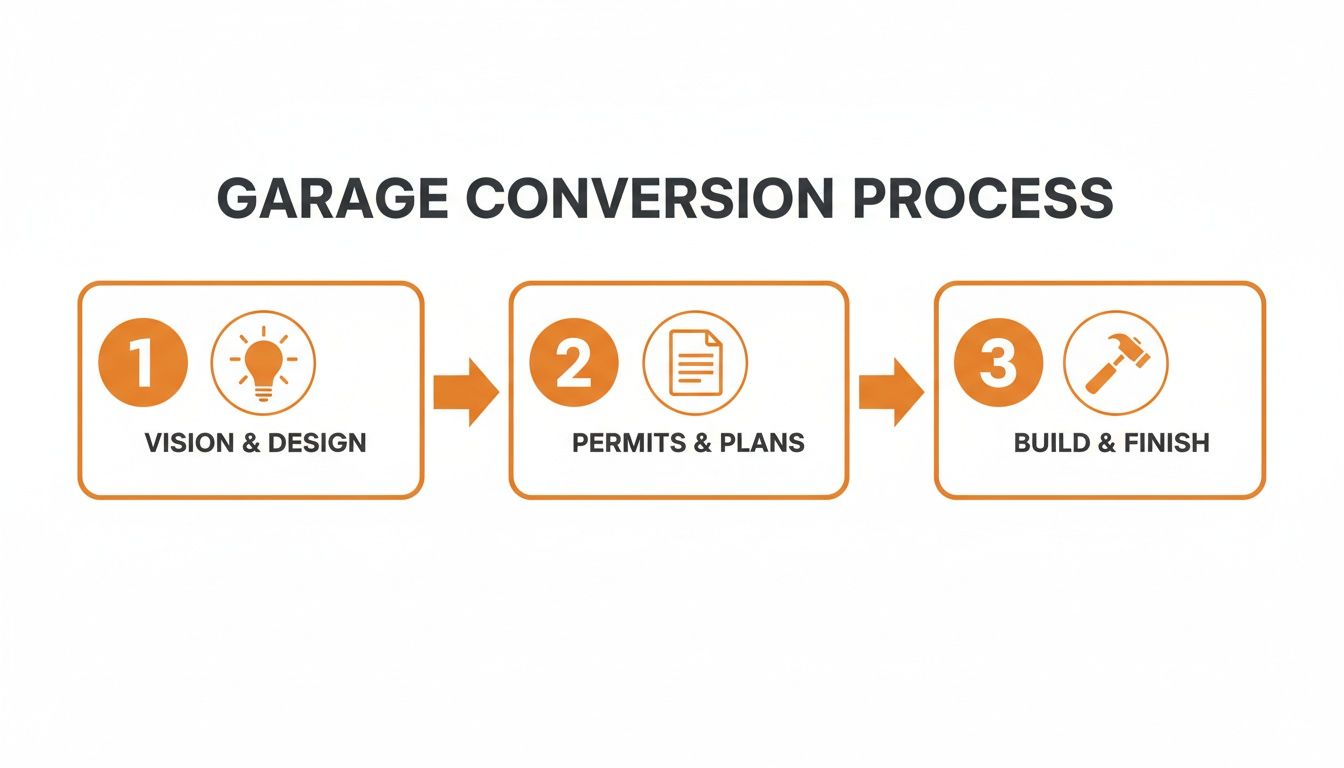

This visual clarifies that the "Vision" and "Permits" stages are the foundation. Nailing these upfront is what allows the "Build" phase to proceed smoothly and efficiently.
Assessing Your Garage's Foundation and Structure
Finally, a thorough structural assessment is non-negotiable. Garages were built to shelter vehicles, not people, and their construction reflects that. The concrete slab floor, for instance, is almost always sloped for drainage and lacks the vapor barrier and insulation needed to create a comfortable, dry living area.
A professional evaluation is essential. Our expert team can identify foundation cracks that need repair and determine if the existing slab can support new interior walls and finishes. To meet California's building codes, that concrete will almost certainly need to be leveled, sealed against moisture, and insulated before any flooring can be installed.
Our extensive experience in full-scale remodeling and construction services means we know how to execute this foundational work correctly, preventing future problems like dampness, mold, or a perpetually cold floor. Addressing these structural and regulatory details before a single 2×4 is cut is the mark of a well-managed project and the key to protecting your investment for decades.
Understanding the Real Costs and ROI in Southern California

When considering how to convert a garage into living space, one of the first questions is always about the financial investment. In a high-value market like Orange County, understanding the true scope is critical to making a wise decision for your property.
Let's be clear: there is no single price tag. The cost is a spectrum, and where your project falls depends entirely on your vision and the existing structure.
A simple conversion for a home office or gym is one thing. A fully independent Accessory Dwelling Unit (ADU) with a luxury kitchen and bathroom is a project of a different magnitude. The level of your finishes, the complexity of utility hookups, and the need for major structural work all shape the final budget.
Imagine turning that dusty garage in your Newport Beach home into a sleek guest suite—a massive upgrade for homeowners who need more room without the disruption of a full-scale addition. For a standard single-car garage (around 200-250 sq ft), you should realistically budget between $45,000 to $80,000 for a complete living space conversion. That range can increase to $85,000 to $150,000 or more if you’re transforming a two-car garage into a high-end ADU with a kitchen and bath. These figures reflect current rates in a competitive market like Southern California.
Breaking Down the Budget
To get a firm grip on your numbers, it’s helpful to calculate construction cost per square foot. This provides a baseline, but the specific line items can significantly influence your budget.
Here’s a realistic look at where the investment goes on a typical Orange County project:
- Design and Permits: This covers architectural plans, engineering reports, and city permit fees. Expect this to range from $5,000 to $15,000, depending on project complexity.
- Foundation and Framing: We almost always have to address the concrete slab—leveling and moisture-proofing it—and then frame the new walls. These foundational costs are non-negotiable for a quality outcome.
- Major Systems: HVAC, electrical, and plumbing are significant investments, especially for a full ADU that requires its own connections.
- Insulation and Drywall: This is essential for creating a comfortable, energy-efficient space and is a core part of a proper conversion.
- Exterior Finishes: This includes everything needed to make the new space look like it was always part of your home—windows, doors, siding, and any roofing work.
- Interior Finishes: Here’s where your style (and budget) truly come into play. Flooring, paint, lighting, cabinetry, and fixtures can vary dramatically in cost.
The Hidden Costs You Can't Ignore
Beyond the obvious construction, a handful of "soft costs" can often surprise homeowners. Acknowledging these from day one is the best way to prevent your budget from spiraling. Items like soil reports (if altering the foundation), hefty fees for new utility connections, or asbestos testing in older homes can add up. We have seen it happen, which is why we address these possibilities early. You can learn more about potential risks in our guide on asbestos and DIY home improvements.
The most successful projects are built on a foundation of trust and transparency. We provide our clients with a comprehensive financial picture upfront, including a contingency for the unexpected. This approach eliminates surprises, turning potential chaos into calm.
Maximizing Your Return on Investment
While the upfront cost is significant, the return on that investment is often even more impressive. In a market as competitive as Orange County, a professional, fully permitted garage conversion can deliver an ROI of 80% or higher. Adding legal, conditioned square footage directly increases your property's appraisal value.
But the benefits don't stop there. An ADU can generate substantial rental income, creating a new revenue stream that can pay off the project cost over time. When you combine that long-term financial gain with the immediate upgrade to your lifestyle, a garage conversion stands out as one of the smartest home improvements you can make in Southern California. It’s a strategic investment that pays dividends, both today and for years to come.
Upgrading Essential Systems for a Livable Space
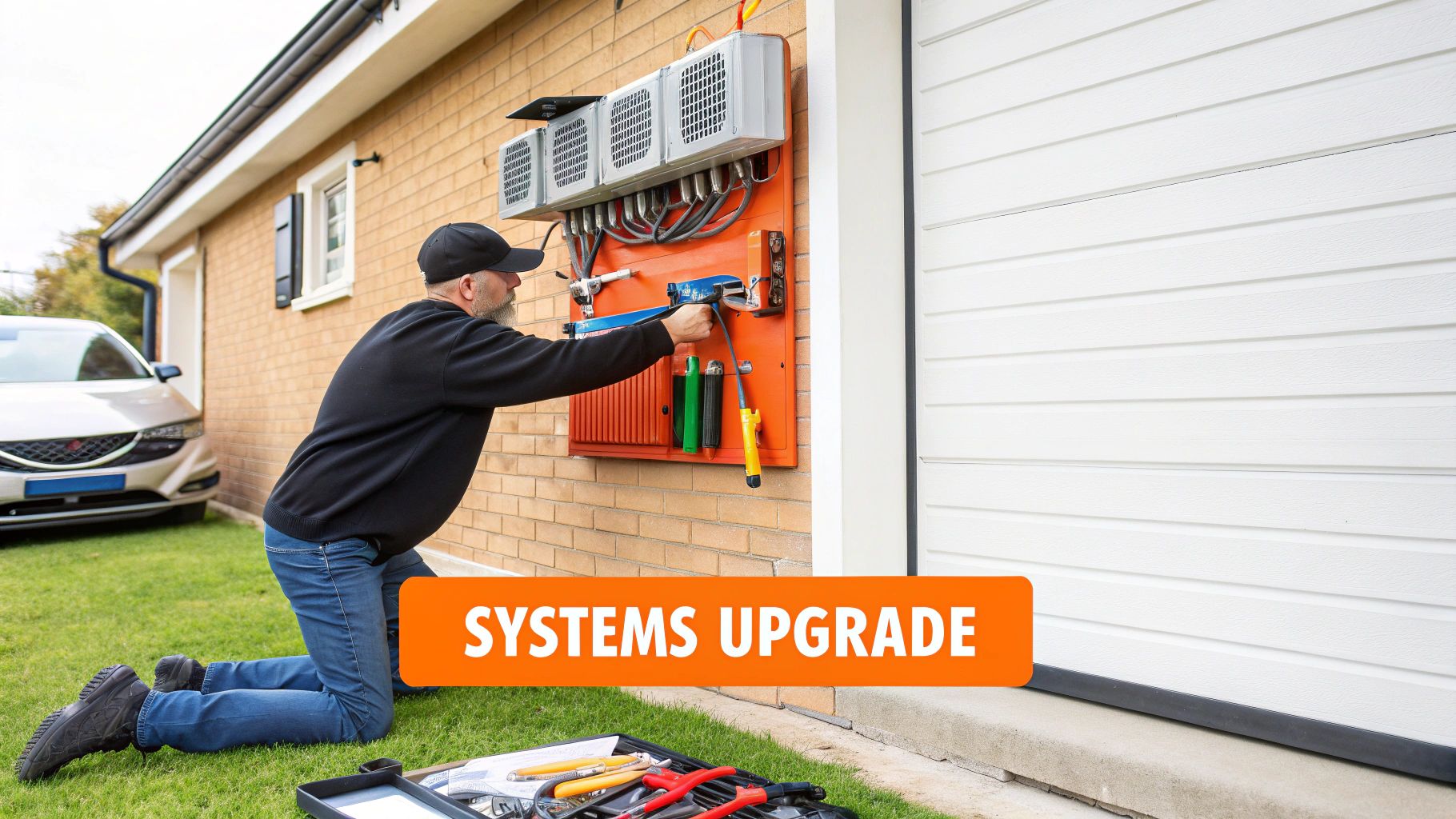

Transforming a space designed for cars into a truly comfortable part of your home means upgrading its core infrastructure. Simply adding drywall and flooring creates a recipe for a cold, damp, and unpleasant room. A successful conversion tackles three critical systems head-on: HVAC, electrical, and moisture control. When these are handled correctly, the new space will feel as if it were always meant to be there.
Mastering Climate Control
Your standard garage has no climate control, making it an oven in the Orange County summer and an icebox on winter nights. Your first major decision is how to heat and cool the space effectively. For most homeowners, it comes down to two solid approaches.
One option is to extend your home's existing HVAC system by running new ductwork into the garage. This can be effective, but only if your current system has sufficient capacity to handle the extra square footage without becoming overworked and inefficient.
The more popular—and often smarter—solution for a garage conversion is installing a ductless mini-split system. These units are champions of energy efficiency and provide zoned climate control. This means you can set the temperature for the new room independently from the rest of the house, which is ideal for a guest suite or home office with different needs.
Powering Your New Space: Electrical and Plumbing
Garages are electrically underserved. You may have a single circuit for the opener and one or two outlets, but a living space requires far more. A licensed electrician will need to pull several new circuits from your main panel to handle everything from lighting and outlets to a TV or kitchenette appliances.
If a bathroom or wet bar is part of your vision, plumbing becomes a major component of the project. This is more than just connecting pipes; it almost always involves cutting into the concrete slab to lay new drain lines and tapping into your home's main water supply.
As a licensed General Contractor, we have seen firsthand how crucial it is to plan these utility upgrades meticulously. Proper planning ensures that electrical loads are safely managed and plumbing is installed to code, preventing future issues like tripped breakers or leaks hidden within walls.
Properly upgrading these systems is also a key factor in the project timeline. While a very basic conversion might be quick, California's regulations mean you should plan for adequate time. For a project with significant electrical and plumbing work, you should realistically expect 8-12 weeks or more for the entire process, including permits and all necessary inspections.
Insulation and Moisture Control: The Non-Negotiable Foundation
This is where our expertise as an IICRC Master Certified firm truly benefits our clients. Garages are notoriously damp, and the concrete slab floor can pull moisture directly from the ground. Without professional-grade moisture control and insulation, your beautiful new room is at high risk for mold, musty odors, and even long-term structural damage.
The process involves several non-negotiable layers of defense:
- Vapor Barriers: A heavy-duty moisture barrier is essential. It must be installed over the concrete slab and behind the drywall to prevent water vapor intrusion.
- High-Quality Insulation: All exterior walls and the ceiling must be thoroughly insulated. This is not just about comfort; it's about regulating temperature and making the space energy efficient. To understand the effectiveness of different materials, it's helpful to know what R-value means.
- Professional Drywall Installation: We always recommend using moisture-resistant drywall, especially in areas prone to dampness, as an extra layer of defense that pays off.
Skipping these steps is one of the most common—and costly—mistakes we see. A damp, poorly insulated room isn't just uncomfortable; it can create serious indoor air quality problems. If you’re concerned about existing dampness, our experts can provide comprehensive mold remediation services to ensure your project starts on a clean, healthy foundation.
Ultimately, these system upgrades are the invisible workhorses that determine whether your garage conversion is a true success or a constant headache.
Designing for Luxury and Seamless Integration
Once the structural framework—the framing, foundation, and major systems—is in place, the exciting part begins. This is where your conversion shifts from a construction zone to a canvas for your personal style. It's the stage where a basic room transforms into a true, luxurious extension of your home.
The key to a high-end result is seamlessness. We focus on making design choices that ensure the new space feels like it was always there, perfectly connected to the rest of your property.
A huge part of that is selecting finishes that create a sense of flow. Flooring, for instance, sets the entire mood. While durability is essential, style cannot take a backseat.
In our Orange County projects, homeowners are moving away from cold, industrial-style concrete floors. Instead, they are embracing materials that blend high performance with elegance. Think high-end engineered hardwood or luxury vinyl plank that perfectly mimics the flooring in your main house. This creates an uninterrupted visual path from one space to the next. We can walk you through all the possibilities, and you can see some great options with our expert flooring sales and installation services.
Creating a Bright and Inviting Atmosphere
Let's face it: garages are inherently dark spaces. That's why a thoughtful lighting plan is absolutely essential to making the new room feel open, airy, and welcoming. Placing a single fixture in the middle of the ceiling is a classic mistake that leaves a room feeling flat and uninviting.
The professional approach is to think in layers. Combining different types of lighting can completely change the room's character.
- Natural Light: This is your greatest ally. Adding a new window or even a skylight is the most powerful way to flood the space with beautiful Southern California sunshine. It instantly makes the room feel larger and more connected to the outdoors.
- Ambient Lighting: This is your general, overall illumination. Recessed ceiling lights on a dimmer or a beautiful central fixture can provide excellent, even light.
- Task Lighting: This is about function. Think pendant lights over a wet bar, a focused desk lamp in a home office nook, or elegant reading sconces next to a comfortable chair.
- Accent Lighting: This is the jewelry of your design. Use track lighting to highlight artwork or an uplight to showcase an architectural feature, adding depth and a touch of drama.
This layered strategy doesn't just look good; it gives you complete control to set the perfect mood for any occasion.
Achieving a Seamless Exterior Integration
One of the biggest tells of a DIY or poorly planned conversion is that, from the curb, it still screams "garage." A truly high-end project gives just as much attention to the exterior as it does to the interior. The goal is to completely erase any sign that a garage door ever existed and create a facade that blends perfectly with your home's architecture.
This means matching the stucco texture or siding exactly. It means installing windows that are identical in style, size, and proportion to the others on your house. Even details like paint color and exterior trim must be spot-on.
A luxury conversion should be undetectable. The new living space should blend so perfectly with your home’s exterior that a guest would never guess it was once a garage. That’s the hallmark of a truly successful design-build project.
Beyond just gaining more space, a well-executed garage conversion is a savvy financial move, especially in the competitive Orange County market. These projects often deliver an impressive 80% or higher return on investment. Not surprisingly, full ADUs and bedroom additions tend to provide the biggest payoff. These design decisions transform a practical upgrade into a powerful home asset.
Common Questions About Orange County Garage Conversions
Taking the plunge on a garage conversion is a big decision, and it’s only natural to have a lot of questions. As Orange County's trusted design-build and restoration experts, we've guided countless homeowners through this exact process with empathy and clarity.
Here are the straightforward answers to the questions we get asked most often, so you can move forward with total confidence.
Do I Need an Architect for My Garage Conversion?
While you might not legally need an architect for a very simple project, working with a design-build firm that has in-house architectural talent is a strategic move that simplifies the entire process.
For more complex projects—like building a full Accessory Dwelling Unit (ADU) or making significant structural changes—professionally stamped plans are an absolute must to obtain building permits in cities like Irvine or Newport Beach.
This is where the design-build approach truly shines. By having the design and construction teams under one roof, we ensure the plans are not just beautiful, but also practical, code-compliant, and aligned with your budget from the start. This saves significant time and avoids the painful, costly revisions that can occur when a separate designer and builder are not in sync.
Will Converting My Garage Hurt My Home's Resale Value?
Quite the opposite. In a competitive market like Orange County, a well-executed, permitted garage conversion almost always adds significant value to your property. It is not unusual for these projects to see a return on investment of 80% or more.
The two factors that make or break your ROI are quality and compliance.
A fully permitted, thoughtfully designed space is a huge asset. It legally increases your home's square footage and enhances its functionality. The main consideration is parking. If you're eliminating the only off-street parking in a crowded area, that could be a negative for some buyers. But for most upscale Orange County homes with ample driveway space, the added living area is far more valuable than a covered parking spot.
An unpermitted conversion is the single biggest mistake a homeowner can make. It can lead to city-issued fines, tear-out orders, and massive headaches when you try to sell your home—potentially costing you far more than the project itself.
How Long Does a Garage Conversion Typically Take?
The timeline depends on two main factors: project complexity and the local permitting office's schedule. It's a process with a few distinct stages.
Here's a realistic breakdown of what you can expect:
- Design & Permitting: This initial phase involves drawing up plans, obtaining necessary engineering, and submitting everything to the city. This can take anywhere from 4 to 8 weeks.
- Straightforward Conversion: For a simpler project, like creating a home office or gym without new plumbing, the actual construction usually takes about 6 to 8 weeks once permits are in hand.
- Full ADU Conversion: If you are building a complete unit with a kitchen and bathroom, the construction timeline is longer. Expect it to take 4 to 6 months from the initial design meeting to the final city sign-off.
Our design-build model is structured to minimize delays. We manage the entire schedule proactively—from submitting plans to coordinating every trade and inspection—giving our clients a clear and predictable path forward.
What Are the Biggest Mistakes to Avoid?
After years of experience, we've seen a few common missteps that can completely derail a garage conversion. Knowing what they are is half the battle.
The absolute worst error is skipping the permits. As mentioned, an unpermitted job can come back to haunt you with serious financial and legal trouble. Do not let anyone convince you it's not a big deal.
Another common mistake is underestimating the importance of the "unseen" infrastructure. Cutting corners on insulation, failing to properly moisture-proof the concrete slab, or installing an inadequate HVAC system will leave you with a space that’s perpetually uncomfortable, damp, and a potential breeding ground for mold. This is where our IICRC Master Certification in water and mold remediation gives our clients a huge advantage—we build a healthy space from the slab up.
Finally, attempting to act as your own general contractor often ends in disaster, leading to communication breakdowns, scheduling nightmares, and spiraling budgets. The best way to sidestep these costly mistakes is to partner with an experienced, licensed, and certified design-build firm like Sparkle. Our integrated team works as one, turning potential chaos into a calm, controlled, and rewarding experience.
Your home is your most important asset, and a garage conversion is a major investment in its future. To get it done right, you need a partner with a proven history of excellence, integrity, and a focus on client satisfaction. At Sparkle Restoration Services, our BBB Torch Award-winning team brings unparalleled expertise to every project, guaranteeing your vision is brought to life with precision and care.
Ready to unlock the hidden potential in your home? Schedule your complimentary design consultation with our experts today.