


The best way to remove smoke odor from a house isn't just about spraying air fresheners and opening windows. That’s a temporary fix. True smoke remediation means a systematic approach: deep cleaning every affected surface, textile, and hidden nook, then bringing in professional-grade air purification and deodorization to chemically neutralize the microscopic particles causing the smell.
Smoke residue embeds itself deep into porous materials, and if you don't tackle the source, it will just keep releasing odors over time. You have to be thorough to permanently restore your home's air quality.
Your First Steps After Discovering Smoke Odor
Walking into your Orange County home and being hit with that lingering smoke odor—whether from a small kitchen fire, nearby wildfires, or old tobacco use—is a deeply unsettling feeling. That smell isn't just unpleasant; it's a constant reminder of what happened and a clear sign that tiny, invasive particles have worked their way into everything from your drywall and custom flooring to your drapes and furniture.
Why Airing Out Your Home Is Not Enough
Many homeowners in Newport Beach or Irvine immediately throw open the windows, thinking fresh air is the solution. While ventilation is a crucial first step, it’s only a band-aid. Smoke particles are often oily and acidic, allowing them to cling stubbornly to surfaces. They will continue to release odors—a process known as off-gassing—long after you've closed the windows.
These particles cause more problems than just the smell:
- Discoloration: Soot can leave permanent stains on paint, wallpaper, and even natural stone if it's not handled quickly.
- Corrosion: Over time, the acidic nature of soot can actually corrode metal fixtures and delicate electronics.
- Health Concerns: Lingering smoke particles tank your indoor air quality and can aggravate respiratory issues like asthma.
For discerning property owners, protecting the value and sanctity of a high-end home requires moving beyond simple fixes. The goal isn't to cover the odor but to eliminate its source at a microscopic level, ensuring a true restoration.
Immediate Actions to Take
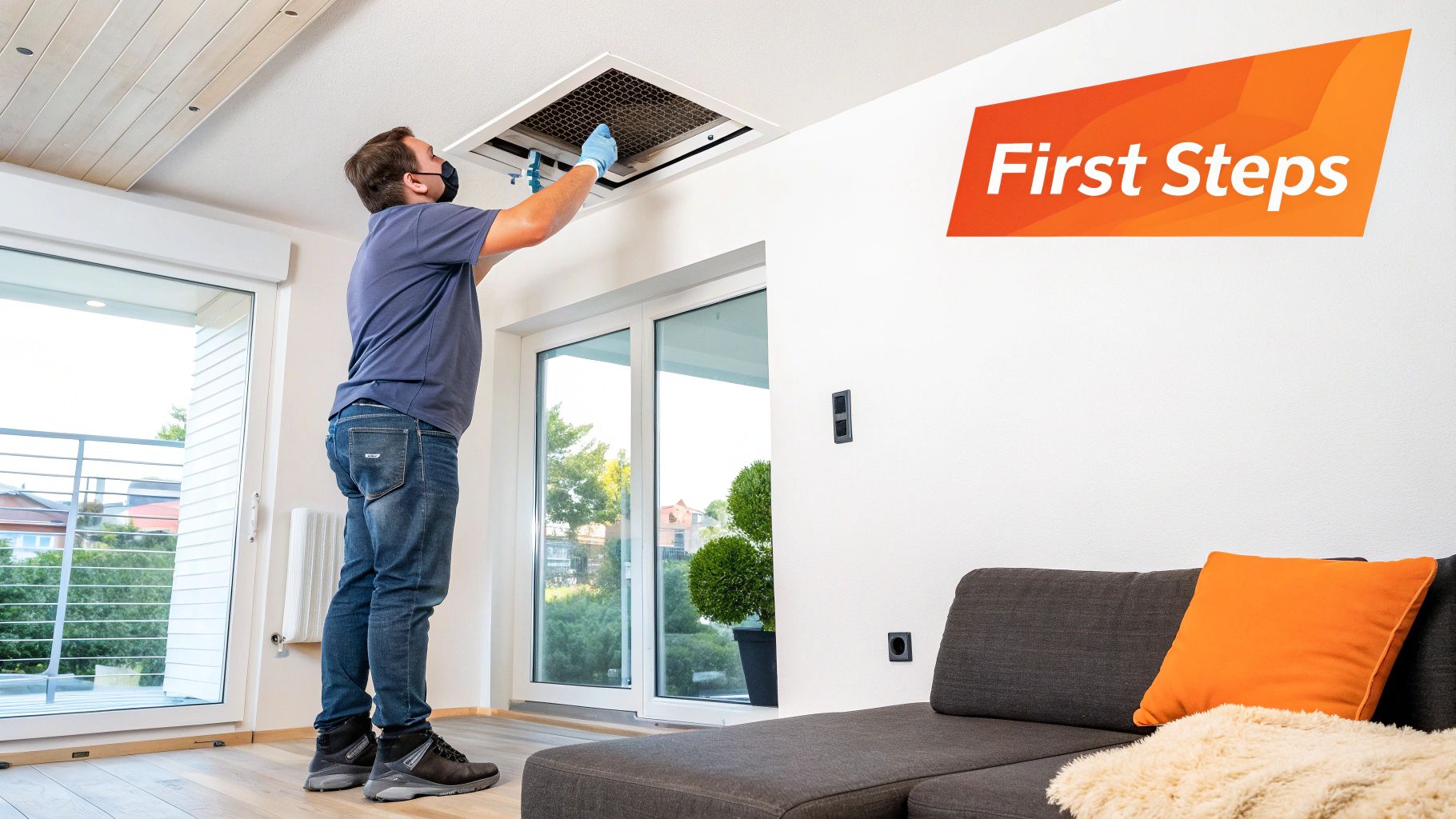
Before you start scrubbing, it’s vital to assess the situation and take a few controlled, immediate steps. What you do first can make all the difference in a successful restoration. The absolute priority is to stop the smoke residue from spreading to clean areas of your home.
This means you should resist the urge to crank up your central HVAC system. Turning it on will just circulate soot and odors throughout the entire ductwork, turning a contained problem into a whole-house nightmare.
Instead, focus on containment and getting a professional assessment. Understanding the true extent of smoke damage is tricky; it often requires a trained eye to spot contamination in hidden places. For a professional evaluation of your property's specific needs, you can easily schedule an appointment with our IICRC-certified specialists. This initial consultation is the first step in turning chaos into calm, fast.
How to Properly Assess Smoke Damage in Your Home
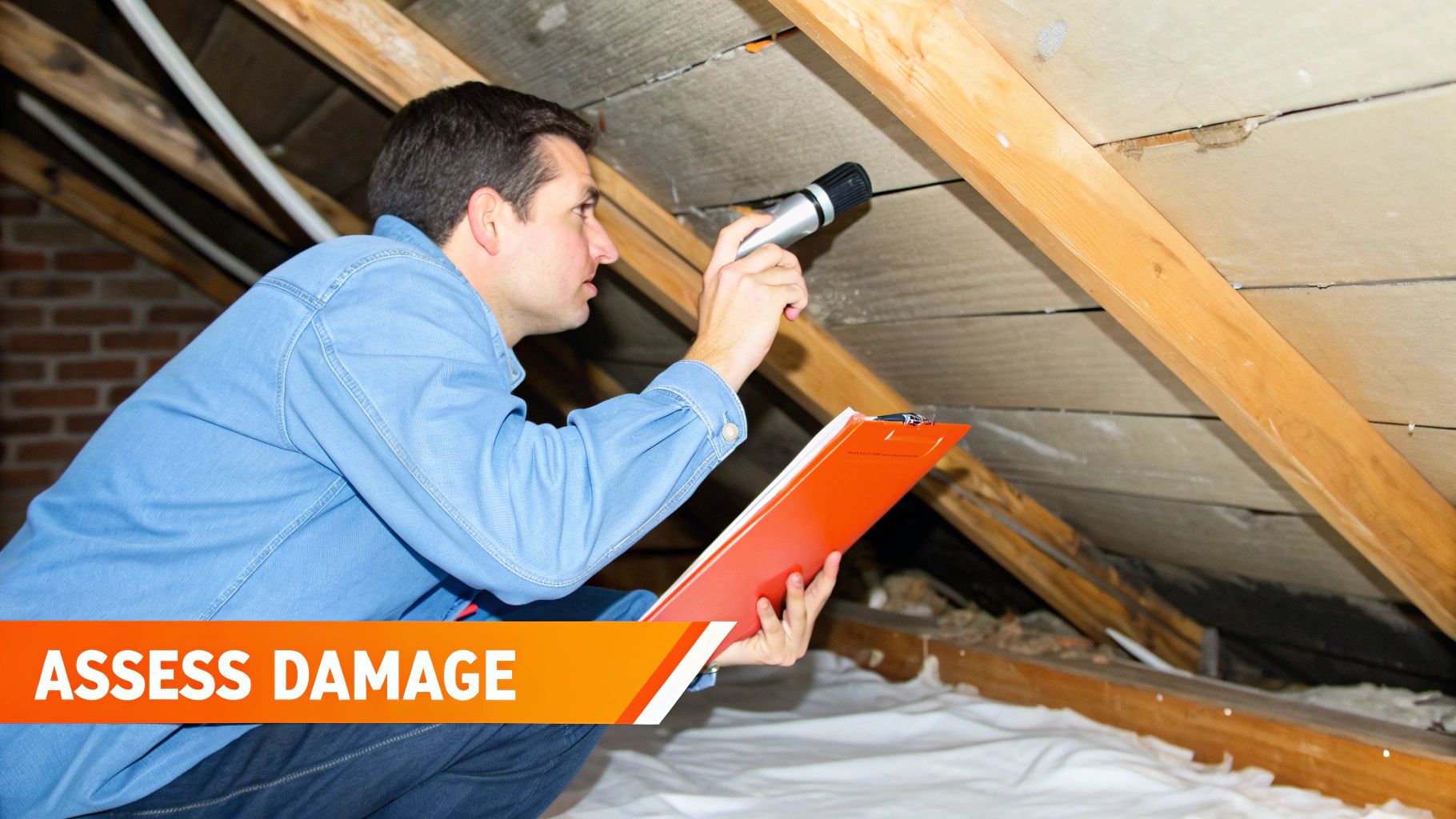
Before you can figure out the best way to remove smoke odor from a house, you first have to understand the enemy you’re facing. A thorough assessment is the absolute first step, and it dictates every single action that follows. A common mistake we see is homeowners just cleaning what they can see, which all but guarantees the odor will come right back.
Smoke isn’t a one-size-fits-all problem. The type of smoke determines its behavior and how aggressively it clings to surfaces, which is especially critical in the high-end homes we see across Orange County. Understanding this difference is the key to a successful restoration project.
Differentiating Smoke Types
The source of the smoke directly impacts the kind of residue it leaves behind. Get this wrong, and you could easily cause more harm than good. Each type demands a specific cleaning protocol.
- Dry Smoke (High-Temperature Fires): Think of a fire fueled by wood or paper. The residue is powdery and seems easier to clean, but it can spread in a flash. You have to be incredibly careful, using HEPA vacuuming to avoid smearing those fine soot particles across every surface.
- Wet Smoke (Low-Temperature, Smoldering Fires): This is the nasty stuff, usually caused by burning plastics and synthetics. It leaves a sticky, smeary residue that is a nightmare to remove. The odor is often pungent and acrid, and it takes specialized solvents to break it down.
- Protein Residue (Kitchen Fires): When meat or poultry burns, it creates a residue that's practically invisible but packs a powerful, nauseating odor. It’s notorious for discoloring paints and varnishes and is incredibly difficult to eliminate without professional-grade deodorizers.
Understanding the type of soot is non-negotiable. I've seen homeowners try to wipe away wet, oily smoke residue with a standard cleaner, only to permanently set the stain into porous surfaces like marble or unsealed wood. It turns a restorable issue into a costly replacement.
Smoke Damage Severity Checklist
To help you get a clearer picture of what you're up against, we've put together this checklist. Use it to walk through your property and gauge whether you're dealing with a light, moderate, or severe smoke damage situation. This will help you decide if it's a DIY job or time to call in the pros.
| Area of Inspection | Low Severity Signs (Light Odor) | Moderate Severity Signs (Visible Soot) | High Severity Signs (Pervasive Odor & Stains) |
|---|---|---|---|
| Walls & Ceilings | Faint, lingering smell; no visible marks. | Light grey or yellow film; visible soot "webs" in corners. | Dark, heavy soot staining; discoloration of paint/wallpaper. |
| HVAC System | Odor is noticeable only when system turns on. | Soot visible on vent covers; musty smell from ducts. | Strong, continuous odor from vents; visible soot inside ductwork. |
| Fabrics & Upholstery | Light smoky smell on curtains, carpets, furniture. | Visible light soot on surfaces; odor embedded in fibers. | Oily, sticky residue on fabrics; deep, pungent odor. |
| Hard Surfaces | Slight odor on countertops, wood floors, etc. | Noticeable film that smudges when wiped. | Heavy, sticky residue; discoloration on wood and stone. |
| Hidden Areas | Faint odor inside closets or cabinets. | Soot found on items inside closed spaces. | Pervasive odor that has penetrated all enclosed areas. |
After using this checklist, you should have a much better handle on the scope of the problem. Remember, what you see on the surface is often just the beginning.
Inspecting Hidden Contamination Zones
Smoke is invasive. It travels with air currents and gets into every conceivable space. A proper assessment means looking far beyond the areas you can easily see.
Your home's HVAC system is a primary culprit for spreading odors. If it was running during or after the fire, it likely sucked soot and odors right into the ductwork. From there, it will just keep recirculating them until it’s professionally cleaned.
Other critical areas you absolutely have to inspect include:
- Attics and Crawlspaces: Drafts pull smoke particles into these spaces where they settle deep into insulation and onto wooden framing.
- Wall Cavities: Smoke easily penetrates through outlets, light fixtures, and tiny gaps, contaminating the space between your walls.
- Inside Cabinets and Closets: Even a closed door is no match for microscopic smoke particles. They will settle on your clothing, linens, and even your dishware.
For a detailed evaluation of complex smoke issues, our team of experts provides comprehensive fire damage restoration services, ensuring no area is overlooked.
Documenting Damage for Insurance Claims
A meticulous assessment isn't just for planning the cleanup—it’s absolutely crucial for your insurance claim. Before you touch, move, or clean a single thing, you need to thoroughly document the damage.
Take clear photos and videos of every affected area. Get close-ups of soot on walls, ceilings, and personal belongings. Then, make a detailed list of all damaged items, noting their condition and what you estimate their value to be.
This documentation serves as undeniable proof for your insurer, which helps streamline the claims process and ensures you get the fair compensation you need. Failing to document properly can lead to disputes and delays, adding a ton of unnecessary stress to an already difficult situation.
In the upscale property markets of Irvine and Newport Beach, a lingering odor can significantly impact home value. In fact, persistent smoke can decrease a luxury property's value by as much as 5-10%. Proper, professional remediation isn't just about getting your home back—it's about protecting a major financial asset.
Getting Down to Brass Tacks: Cleaning Surfaces and Belongings
Once you’ve sized up the smoke’s reach, it’s time to roll up your sleeves. The only way to truly get smoke odor out of a house is with a methodical, surface-by-surface attack. Smoke isn’t just a bad smell; it’s a sticky, invasive cocktail of microscopic soot particles and volatile organic compounds (VOCs). These particles embed themselves differently into everything they touch, so a one-size-fits-all cleaning spray just won't cut it.
This is especially true for homes with custom finishes, where using the wrong chemical on natural stone, exotic hardwoods, or designer fabrics can cause thousands in permanent damage. The goal is always to remove the soot, not the finish.
Matching the Cleaning Method to the Material
Think of your home's surfaces as a collection of different sponges. Porous materials like drywall, unsealed wood, and natural stone literally soak up odor-causing particles. Non-porous surfaces like sealed granite, glass, and metal might seem easier, but the acidic soot can still etch or corrode them if left sitting.
A systematic plan is your best friend here. You need to be thorough and cover every nook and cranny. Many pros find it helpful to follow something like a comprehensive cleaning checklist to make sure nothing gets missed.
- Hardwoods and Natural Stone: These delicate surfaces demand pH-neutral cleaners. Anything too acidic or alkaline will strip the sealant or discolor the material. You're trying to lift oily soot, not damage a beautiful investment.
- Drywall and Painted Surfaces: Never, ever wet-wipe a sooty wall first. You’ll just smear the greasy residue, creating a bigger mess. The first pass should always be with a dry cleaning sponge (often called a chemical sponge) to lift the loose soot off the surface. After that, you can follow up with a specialized degreasing cleaner.
- Fixtures and Hardware: Soot is acidic. Within just a few days, it can start to corrode and pit metal fixtures, faucets, and door handles. Cleaning these early is a small step that prevents permanent damage.
The Pro-Grade Tools: HEPA Vacuums and Air Scrubbers
Your household vacuum cleaner is no match for microscopic smoke particles. In fact, it can make the problem worse. This is where professional technology is non-negotiable.
HEPA (High-Efficiency Particulate Air) vacuums are an absolute must. A standard vacuum just spits the tiniest, most embedded particles right back into the air. A true HEPA vacuum, on the other hand, is engineered to capture 99.97% of particles as small as 0.3 microns. This ensures soot is actually removed from your home, not just moved around.
The single most common mistake we see in DIY smoke cleanup is using a regular shop-vac or household vacuum on soot. You are essentially aerosolizing the contamination, forcing it deeper into your home's air and HVAC system. It turns a manageable problem into a much bigger one.
Air scrubbers are the other workhorse of professional remediation. These powerful units are basically supercharged air purifiers. They pull in massive volumes of contaminated air, run it through a series of filters (including HEPA and activated carbon for odors), and exhaust clean, fresh air. We run these continuously during a cleanup to catch any particles that get kicked up, which dramatically improves air quality and stops soot from settling on already-cleaned surfaces.
Deep Cleaning for Textiles: Drapes, Rugs, and Furniture
Soft materials are smoke odor magnets. Drapery, area rugs, carpets, and upholstered furniture trap odors deep within their fibers. A quick spritz with a fabric deodorizer is like putting a bandage on a broken arm—it does nothing to fix the underlying problem.
These items require a specialized touch to avoid ruining them.
- Drapery: Heavy drapes almost always need to be taken down for professional dry cleaning. The solvents used are specifically designed to break down and flush out oily smoke residue without causing shrinkage or damage.
- Area Rugs and Carpets: Deep cleaning is essential. For high-end wool, silk, or antique rugs, we almost always recommend taking them off-site for a controlled cleaning. This is the only way to safely remove soot without causing colors to bleed or delicate fibers to break down.
- Upholstered Furniture: This is where things get tricky. Using the wrong product or too much moisture on delicate upholstery can leave behind water stains, cause the fabric to shrink, or permanently alter the color.
For your most valuable and delicate pieces, professional treatment isn’t just a good idea—it’s cheap insurance for preserving your belongings. At Sparkle, our IICRC-certified technicians are trained to identify the exact fabric type and determine the safest, most effective cleaning method. To see how we handle these sensitive items, learn more about our professional carpet and furniture cleaning services. Trusting certified pros ensures your cherished pieces come back looking and smelling like they should, without compromising their integrity.
Advanced Deodorization and Air Purification
Getting the surfaces clean is a huge step, but honestly, it’s only half the battle. To truly eliminate that lingering smoke smell for good, you have to go deeper—attacking the odor particles you can't even see. This is where the heavy-duty equipment comes in, the kind of advanced tech that certified pros use to destroy odors at a molecular level, not just cover them up with a pleasant scent.
These professional-grade methods don't mask smells; they create powerful oxidizing agents that chemically break down the volatile organic compounds (VOCs) that cause smoke odors. Think of it like this: an air freshener is a temporary fix, but these techniques permanently dismantle the source of the smell so it can never come back.
Thermal Fogging Technology
One of the most effective tools in our arsenal is thermal fogging. This process heats up a specialized deodorizing solution until it turns into a fine, smoke-like fog. Why is this such a game-changer? Because this fog behaves just like smoke did during the fire.
It creeps into the same microscopic cracks, pores, and hidden spaces where the original soot and smoke particles are trapped. This ensures the deodorizing agent makes direct contact with every last odor source, neutralizing it right where it hides.
A common misconception is that deodorization is a simple final step. In reality, it’s a precise science. Applying these treatments requires a deep understanding of air currents, material porosity, and safety protocols to ensure complete neutralization without damaging your home's valuable contents.
Ozone and Hydroxyl Treatments
When we're dealing with severe, deeply embedded odors that have saturated an entire property, we often bring out the big guns: gas-phase treatments. These are absolutely not DIY solutions and require the home to be completely empty of people and pets for safety.
- Ozone Generation: We use a commercial ozone (O₃) generator to fill a sealed area with ozone, a highly reactive molecule. That extra oxygen atom is unstable and breaks off to attach itself to odor-causing molecules, oxidizing and destroying them on contact. It’s incredibly effective but demands strict professional control and a thorough ventilation period before anyone can safely re-enter.
- Hydroxyl Generation: A newer, safer alternative we often use is a hydroxyl generator. This machine uses UV light to create hydroxyl radicals (·OH), sometimes called "nature's detergent." These radicals are just as powerful at breaking down odors and VOCs, but they are completely safe for people, pets, and delicate materials. This allows us to run the equipment while other restoration work is happening, speeding up the whole process.
Deciding between a DIY approach and calling in the pros often comes down to the types of materials affected. This chart helps clarify when professional tools become essential.
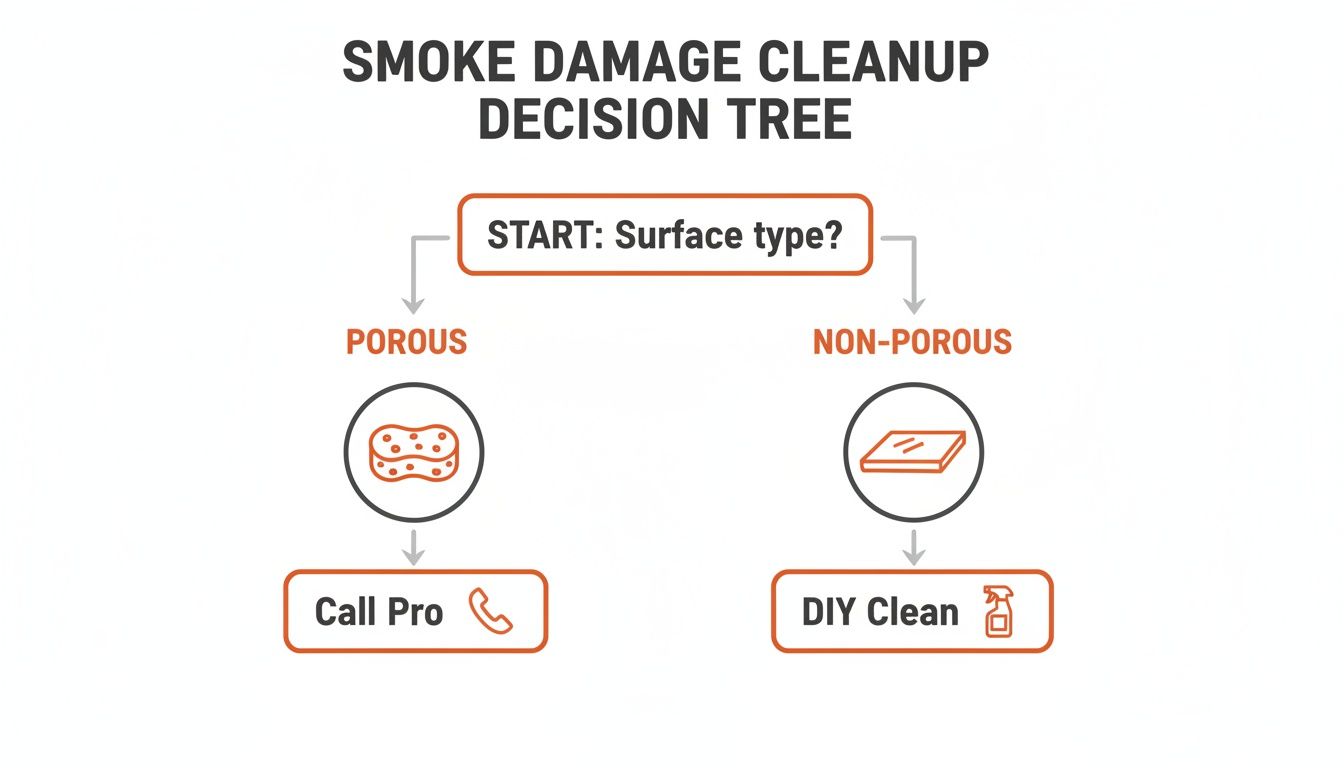
The main takeaway is that while you might be able to handle non-porous surfaces yourself, porous materials like drywall, carpet, and wood absorb odors so deeply that only professional-grade equipment can truly pull them out.
Why Professional Expertise is Non-Negotiable
Just look at the aftermath of the devastating 2024 California wildfires, which burned over 1.2 million acres. Thousands of homes in Orange County were left struggling with stubborn smoke odors that their own HVAC systems were spreading from room to room. In these situations, professional services like ours proved their worth, using a multi-layered approach to eliminate odors in 95% of cases within just 3-5 days—a far cry from the weeks of frustration homeowners faced trying to DIY a solution.
We use advanced tools like nano-filters and high-capacity air scrubbers that capture 99% of soot particles, and we apply specialized sealants to prevent any remaining odors from escaping over time. This is the level of detail required to meet the strict IICRC standards we are certified in.
To help you understand the options, here’s a quick comparison of the professional methods we use.
Professional Deodorization Methods Compared
This table breaks down the most effective professional deodorization techniques, highlighting how they work and why an expert needs to be at the controls.
| Method | How It Works | Best For | Professional Handling Required? |
|---|---|---|---|
| Thermal Fogging | Heats a solvent into a fine mist that penetrates porous surfaces like smoke. | Widespread, moderate odors in porous materials like wood, drywall, and upholstery. | Yes. Requires specialized equipment and knowledge of chemical agents and ventilation. |
| Ozone Generation | Fills a sealed space with O₃ gas, which oxidizes and destroys odor molecules. | Severe, pervasive odors in an entire structure. Great for hard-to-reach areas. | Absolutely. Ozone is toxic to breathe. The area must be unoccupied and properly aired out. |
| Hydroxyl Generation | Uses UV light to create hydroxyl radicals that safely break down odors and VOCs. | Ongoing deodorization in occupied spaces, or for delicate items like electronics and artwork. | Yes. Professional equipment is needed to generate sufficient radicals for effective treatment. |
While these tools are incredibly powerful, they can be ineffective or even dangerous if used incorrectly. Choosing a certified, experienced team like Sparkle Restoration ensures the right technology is used safely and effectively for your specific situation. This isn't just about restoring your home's air quality; it's about protecting your family and your investment.
Remember, your ventilation system is a critical piece of the puzzle. If your HVAC system is contaminated, it will just keep pumping smoke odors back into your home, undoing all your hard work. For a closer look at this crucial step, check out our guide on professional HVAC system cleaning. A comprehensive approach is the only way to truly bring your home back to its pre-loss condition and turn chaos back into calm.
Protecting Your Investment with Professional Restoration
When smoke damages a high-value property in Orange County, the stakes are much higher than just a lingering bad smell. Trying to tackle smoke odor removal yourself can, believe it or not, cause permanent damage, tank your property's value, and create ongoing health risks. While quick, small actions are a good first step, the only real way to protect your investment is to bring in the pros.
Your home isn't just a structure; it's your sanctuary and a major financial asset. Allowing microscopic, acidic soot particles to stay embedded in custom cabinetry, natural stone, or luxury textiles is a gamble most homeowners can't afford to take. The aftermath of smoke can lead to corrosion, discoloration, and an odor that just won't quit, impacting resale value for years to come.
The Sparkle Difference: A Commitment to Excellence
Since 2002, Sparkle Restoration Services has been the go-to partner for discerning homeowners and property managers across Newport Beach, Irvine, and Laguna Niguel. We get the unique challenges and high standards that come with luxury properties. Our entire approach is built on proven expertise, solid ethics, and a focus on what our clients need.
What really sets us apart is our dedication to technical skill and ethical service:
- IICRC Master Certifications: We hold the industry's top-tier certifications in Water, Fire, and Cleaning. This isn't just a fancy title; it's a deep, scientific understanding of how restoration works, ensuring we use the right methods for your specific situation.
- Licensed General Contractor: As a full-service firm, we can move seamlessly from restoration to high-end remodeling. This gives you a single, trusted point of contact for the entire project.
- 2024 BBB Torch Awards for Ethics Winner: This prestigious award speaks to our commitment to integrity, transparency, and earning our clients' trust. We manage every project, and every insurance claim, with the highest level of professionalism.
We believe in turning chaos into calm, fast. For our clients, this means a stress-free process where every detail is managed with precision, from the initial assessment to the final walkthrough, restoring not just your property but your peace of mind.

Why Professional Restoration Is the Only Surefire Solution
The reality of smoke damage is that it often goes much deeper than what you can see. Imagine coming back to your Newport Beach estate only to find that stubborn smoke smell has permeated everything. Industry data shows that since the surge in California wildfires back in 2018, fire-related smoke damage claims in Orange County have shot up by over 150%.
Professional intervention has become absolutely essential. Expert treatments succeed 98% of the time, which is a massive difference from the 40% success rate for DIY attempts, according to recent industry analyses. The technical depth required is significant.
Dealing with the aftermath also means wading through complex insurance paperwork. Our team has spent years working directly with insurance carriers and can guide you through the maze. For a closer look, check out our homeowner's guide to navigating property insurance claims. We help make sure your claim is documented properly to get you a smooth and fair settlement.
And of course, property care is about more than just emergencies. General upkeep is key. Knowing the best way to clean your house exterior is part of a holistic approach to maintaining your home's value, which is central to our philosophy.
Your Partner in Restoration and Remodeling
At Sparkle Restoration Services, we do more than just get rid of odors; we restore the integrity, beauty, and value of your home. Whether you're dealing with the fallout from a fire or planning a luxury kitchen or bath remodel, our team brings the exact same level of excellence and meticulous attention to detail to every single project.
Don't let smoke damage compromise your investment or your lifestyle. Contact Sparkle Restoration Services today for a consultation. Let us show you how our expertise and commitment to quality can transform your property and give you the peace of mind you deserve.
Still Have Questions About Smoke Odor Removal?
Even after the initial cleanup, it’s completely normal to have questions swirling around. Most of our clients in Orange County are dealing with this for the first time, and understanding the details about timelines, insurance, and safety can bring a lot of peace of mind. Let's tackle some of the most common questions we hear.
How Long Does Professional Smoke Odor Removal Take?
The timeline for getting your home back to normal really depends on a few key things: the size of your property, how bad the smoke was, and what kinds of materials were affected.
For a typical single-family home in a place like Irvine or Newport Beach with moderate smoke issues, you can usually expect the whole process to take about 3 to 5 days. That timeline gives our team the room to do the job right, without cutting corners.
We follow a comprehensive, multi-step process that includes:
- Initial Assessment and Source Removal: We start by identifying and getting rid of any materials that are too damaged to save and are holding onto that stubborn odor.
- Thorough Cleaning: This is where the real work begins. We meticulously clean every single surface, from the walls and ceilings right down to hidden nooks and crannies.
- HVAC Decontamination: This step is crucial. If you skip cleaning the air ducts, you'll just end up blowing smoke particles right back into your clean house.
- Advanced Deodorization: Finally, we bring in the heavy hitters like thermal fogging or hydroxyl treatments to neutralize any lingering odor molecules.
Now, if you're dealing with significant structural damage from a fire, the timeline will obviously be longer. After we do our initial on-site inspection, we'll give you a detailed project plan with a clear, transparent schedule. No surprises.
Will My Homeowners Insurance Cover Smoke Damage Restoration?
For most homeowners, the answer is a relieving "yes." Standard homeowners insurance policies almost always cover damage from sudden and accidental events, and that includes both the fire and the smoke damage that comes with it. The policy is designed to get your property back to its "pre-loss condition."
This means that all the professional services needed to make that happen—soot removal, deep structural cleaning, and advanced smoke odor elimination—are generally covered. We've spent decades working directly with every major insurance carrier in Southern California, so we know the process inside and out.
Dealing with an insurance claim on top of everything else is just plain overwhelming. Part of our job is to lift that burden. We meticulously document all the damage and communicate directly with your adjuster to streamline the claim and make sure you get everything you're entitled to.
Are the Deodorization Chemicals You Use Safe for My Family?
Your family’s health is our number one priority, period. We only use EPA-registered, industry-approved cleaning agents and deodorizers that are proven to be both effective and safe for homes with kids and pets. We don't mess around when it comes to your indoor air quality.
When we need to use more advanced methods like ozone or hydroxyl generation, we follow the strictest IICRC safety protocols to the letter.
- Ozone Treatments: This method is incredibly effective, but it requires the house to be completely empty—no people, pets, or even plants. After the treatment, we air out the entire property until it's 100% safe for you to return.
- Hydroxyl Treatments: This technology is a bit different and is actually safe to use in occupied areas. This often lets us run the equipment while other restoration work is happening, which can speed up the project.
Our IICRC Master Certified technicians are highly trained in the safe and precise use of every tool and product in our arsenal. We guarantee your home will not only be free of smoke odor but also a healthy place to live when we're done.
Can I Stay in My Home During the Smoke Removal Process?
Whether you can stay put really depends on the extent of the damage and the specific techniques we need to use. We always make this decision with your safety and comfort as the main concern.
During the first phases, like cleaning and soot removal, it's often fine for homeowners to stay in an unaffected part of the house. However, if the restoration plan calls for advanced treatments like thermal fogging or an ozone shock treatment, the home will need to be vacated for a specific period.
We lay all of this out for you from day one. We’ll create a clear schedule and communicate exactly which days or hours the property needs to be empty. Our goal is to get the job done right with as little disruption to your life as possible.
Don't let smoke damage impact your home's value or your family's health. The team at Sparkle Restoration Services has the certified expertise and advanced equipment to permanently eliminate smoke odor and restore your home.
For a comprehensive assessment and a clear plan to get your life back on track, contact us today.
Schedule Your Free Consultation at sparklerestoration.com
Ready to create a space that’s as beautiful as it is functional? Schedule your complimentary design consultation today by visiting Ready to Work with Sparkle?