



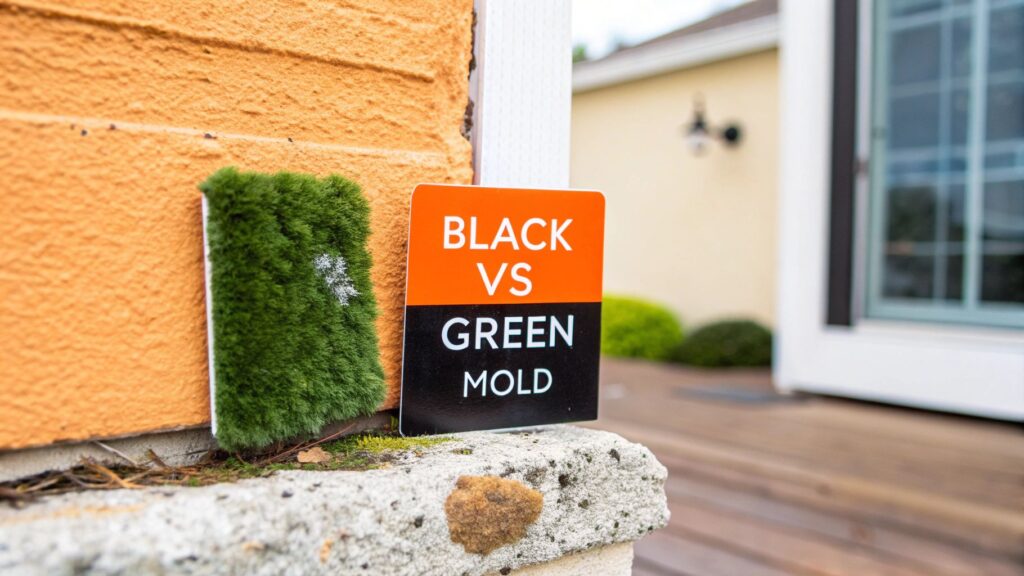
When homeowners discover mold, the immediate reaction is often fear, centered on one question: "Is that toxic black mold?" While black mold (Stachybotrys chartarum) has a notorious reputation, the reality is that its color isn't the sole determinant of risk. Many common green molds can also seriously compromise your home's air quality and structural integrity.
Ultimately, any visible mold, regardless of its color, is a definitive red flag. It points directly to a moisture problem that requires professional attention—and fast. This guide on black mold vs green mold will provide the clarity you need to protect your family and your property.
Your Guide to Mold Identification and Safety
Discovering mold in your Orange County home is unsettling, immediately raising concerns about your family's health and potential property damage. Whether it's a dark, slimy patch behind a leaky pipe or fuzzy green spots in a damp bathroom, understanding the fundamental differences is the first step toward taking effective action.
This guide will help you understand what sets black mold apart from the various green molds you might encounter. While a visual inspection offers clues, it's critical to remember that only a certified professional can accurately identify a mold species and assess the true level of risk to your home and health.
Key Mold Characteristics at a Glance
To provide a quick overview, this infographic breaks down the primary differences between black and green mold.
As you can see, the conditions that allow them to grow and their physical appearance are quite different.
The most important takeaway for any homeowner is that all mold indicates a problem. Both types signal an underlying moisture issue that can lead to significant structural damage and health complications if not properly addressed by experts.
Quick Comparison: Black Mold Vs Green Mold Characteristics
For a more detailed side-by-side analysis, this table outlines the key distinctions between these common mold types.
| Characteristic | Black Mold (Stachybotrys) | Green Mold (Aspergillus, Penicillium, etc.) |
|---|---|---|
| Appearance | Slimy, dark greenish-black or gray | Powdery or fuzzy; various shades of green, sometimes blue or white |
| Typical Locations | Areas with prolonged, severe water saturation like drywall, wood, and insulation | Diverse surfaces including damp walls, carpets, food, and HVAC systems |
| Growth Speed | Slower to develop, requiring constant moisture | Can appear within 24-48 hours of moisture exposure and spreads rapidly |
| Health Concerns | Can produce mycotoxins linked to serious respiratory and neurological issues | Potent allergens; can trigger asthma, sinus infections, and some species produce mycotoxins |
This table demonstrates that while their characteristics differ, both pose legitimate health threats that should never be ignored.
"The most significant myth we encounter is that only black mold is dangerous. In reality, certain species of green mold, like Aspergillus, are among the most common culprits for the allergy and asthma symptoms we see in Orange County homes."
At Sparkle Restoration Services, our IICRC Master Certified technicians are expertly trained to identify the moisture source, contain the spread, and remediate the mold completely, restoring your home to a safe, healthy, and calm environment.
Visually Identifying Different Mold Species In Your Home
While color is often the first thing people notice, it's merely a starting clue in the black mold vs green mold puzzle. Differentiating them accurately requires a closer examination of texture, growth patterns, and location—details our IICRC-certified professionals are trained to spot instantly. For homeowners here in Orange County, understanding these visual cues can help you assess the situation before contacting an expert.
Toxic black mold, known scientifically as Stachybotrys chartarum, has a very distinct appearance. It's more than just black; it's often a dark, greenish-black or sometimes even gray. The most telling indicator is its texture. When active and fed by a moisture source, it appears slimy and wet, almost like a thin layer of dark gelatin.
You will almost exclusively find this type of mold on materials high in cellulose that have been water-saturated for an extended period. This includes drywall soaked from a persistent leak, wood studs in a damp crawlspace, or insulation behind a wall where a pipe burst. This is not a mold that appears overnight; its presence is the calling card of a serious, ongoing moisture problem that demands professional intervention.
The Broad Spectrum of Green Molds
Unlike the specific nature of Stachybotrys, "green mold" is a general term for hundreds of different species. Consequently, its appearance can vary widely, ranging from light and fuzzy to dark and powdery. The shades can range from a pale olive to a deep forest green and may even have bluish tints or patches of white.
Some of the common green mold species we find in Southern California homes include:
- Penicillium: Often appears as a bluish-green mold with a velvety texture. It’s well-known for growing on spoiled food but is equally at home on water-damaged wallpaper, carpets, and insulation.
- Aspergillus: This species comes in many colors but frequently appears as a grayish-green. It’s a common culprit found in HVAC systems, on dusty surfaces, and in humid areas like bathrooms.
- Cladosporium: Typically an olive-green or brownish color, this mold is resilient and can grow in both cool and warm environments. You might find it on fabrics, old carpets, or painted wood surfaces.
The texture of green mold is usually powdery or fuzzy—similar to what you'd see on old bread. This is a significant contrast to the slimy appearance of active black mold. However, if its water source dries up, black mold can also become dry and powdery, which is precisely why a professional assessment is crucial for accurate identification.
No matter the color, any mold discovery means you have a moisture control problem on your property. Visual clues are helpful, but they don't reveal the full extent of the contamination or its impact on your indoor air quality.
Ultimately, attempting to identify mold by sight alone is a risk. Disturbing what seems like a harmless patch of green mold could release a cloud of allergenic spores into the air. Trying to wipe away black mold could aerosolize its mycotoxins, making a bad situation significantly worse. Correct identification and safe removal is a job for certified experts who understand the science behind proper remediation.
Comparing The Growth Conditions And Causes
When trying to determine if you have black mold vs green mold, one of the biggest clues is how it originated. Think of black mold as a specialist—it's highly selective and only appears under specific, severe conditions. Green mold, in contrast, is an opportunist, ready to colonize at the first sign of excess moisture.
Understanding the unique requirements of each is key to identifying potential problem areas in your home and preventing future growth.
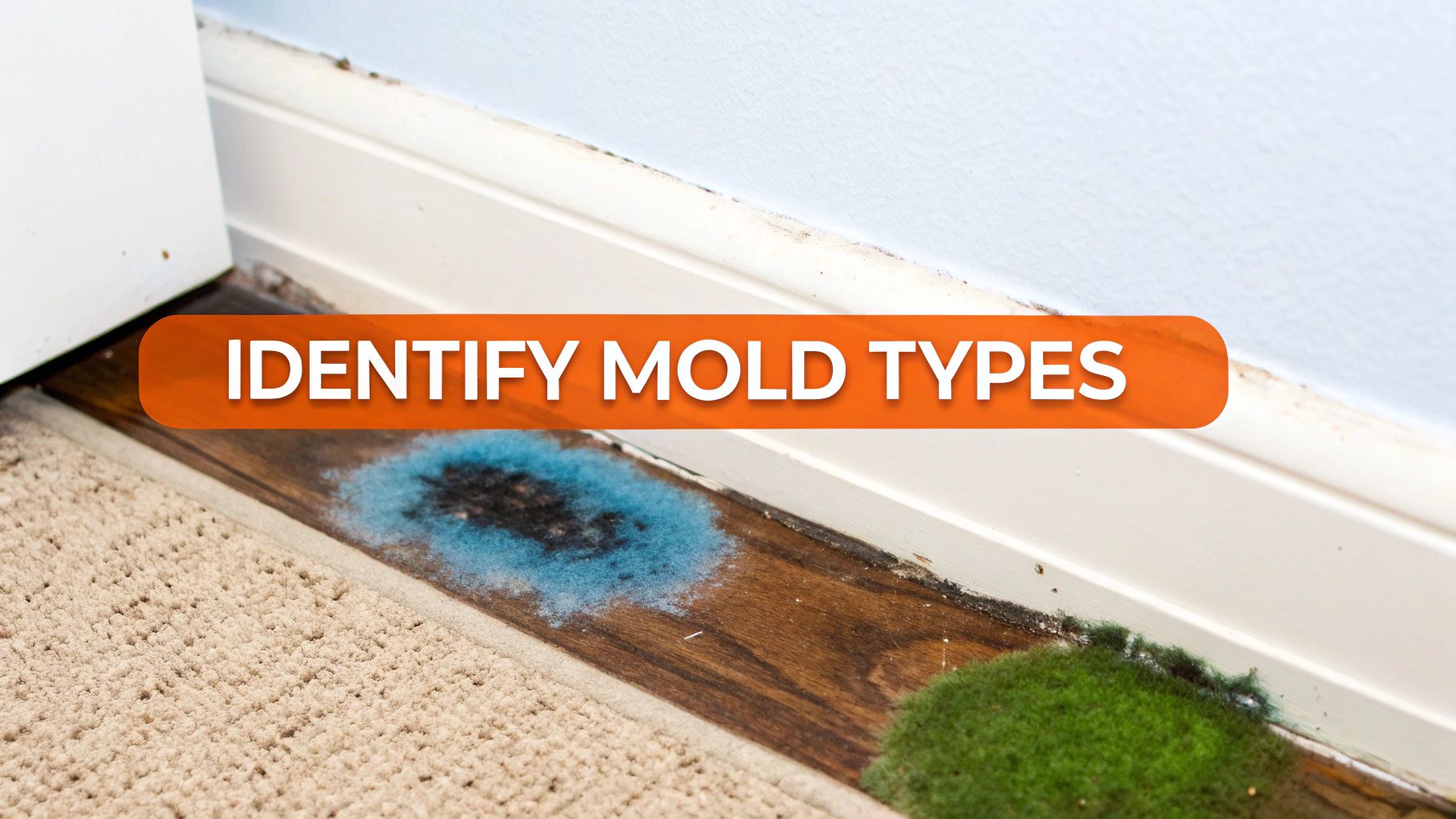
This distinction is especially important for homeowners here in Orange County. We've seen everything from major plumbing disasters to the subtle, creeping humidity from our coastal air, and each scenario creates a different kind of mold challenge. The root cause often reveals the type of fungus you're dealing with.
The Specific Demands of Black Mold
Stachybotrys chartarum, the infamous toxic black mold, is notoriously demanding. It doesn’t just need dampness; it requires prolonged, severe water saturation. This isn't the kind of mold that grows from a steamy shower.
Its appearance is almost always linked to a major water event that leaves materials rich in cellulose—like drywall, wood, and insulation—soaking wet for a week or longer.
Common causes we encounter in Orange County homes include:
- Major Flooding: Water intrusion into a basement or first floor that was not professionally dried immediately.
- Persistent Leaks: A slow, hidden leak from a roof or pipe that has been dripping behind a wall for months, keeping materials saturated.
- Severe Condensation: Chronic moisture buildup within walls due to poor insulation or major HVAC system failures.
Because it requires such specific conditions and grows slowly, finding black mold is a significant red flag. It is a clear sign of a serious, long-term moisture problem—a symptom of a much larger structural issue that requires immediate, expert attention from a licensed general contractor.
The Opportunistic Nature of Green Mold
Green molds are a completely different story; they are far less particular. Species like Aspergillus, Penicillium, and Cladosporium can begin growing within just 24-48 hours of moisture exposure. They thrive in areas with moderate humidity and don’t need the deep saturation that black mold depends on.
Imagine finding a fuzzy green patch on your bathroom wall after a minor pipe leak in your Orange County home. It might seem harmless, but green mold can appear within 24-48 hours and spread across several square feet in just one week, especially in the humid conditions common to our Southern California coastal climate. Unlike black mold which is a slow grower, green mold thrives on everyday surfaces like damp carpets, window sills, and even inside HVAC vents. You can learn more about the rapid growth of various green molds on bustmold.com.
As a BBB Torch Award Winner for Ethics, Sparkle Restoration Services always emphasizes that addressing the root cause is paramount. Remediating a patch of green mold from bathroom condensation is a vastly different project than abating black mold that grew from a hidden plumbing disaster.
This rapid growth means you'll often find green mold in areas affected by everyday moisture, something we see frequently in coastal communities like Newport Beach and Irvine.
Common triggers for green mold include:
- High Humidity: Bathrooms, laundry rooms, and basements without proper ventilation.
- Minor Leaks: A small drip under a sink or a leaky window frame.
- Damp Surfaces: Condensation on windows and walls, or carpets that didn't dry properly after a spill.
Because green mold appears so quickly from relatively minor issues, it serves as a useful early warning. It's your home's way of telling you there's a moisture imbalance that needs to be corrected. Ignoring it can lead to more serious structural damage—and create the perfect environment for more demanding molds to take hold.
A Nuanced Look At The Health Risks And Toxicity
When you see mold, it's easy to get caught up in the black mold vs. green mold debate. A common misconception is that only black mold poses a real threat, but this is a dangerous oversimplification. The truth is, any mold growing in your home has the potential to negatively impact your family's health. Both types release particulates that degrade your indoor air quality.
For homeowners in Orange County, where homes are significant investments, protecting both your family's well-being and your property value means treating every mold discovery with the seriousness it deserves.
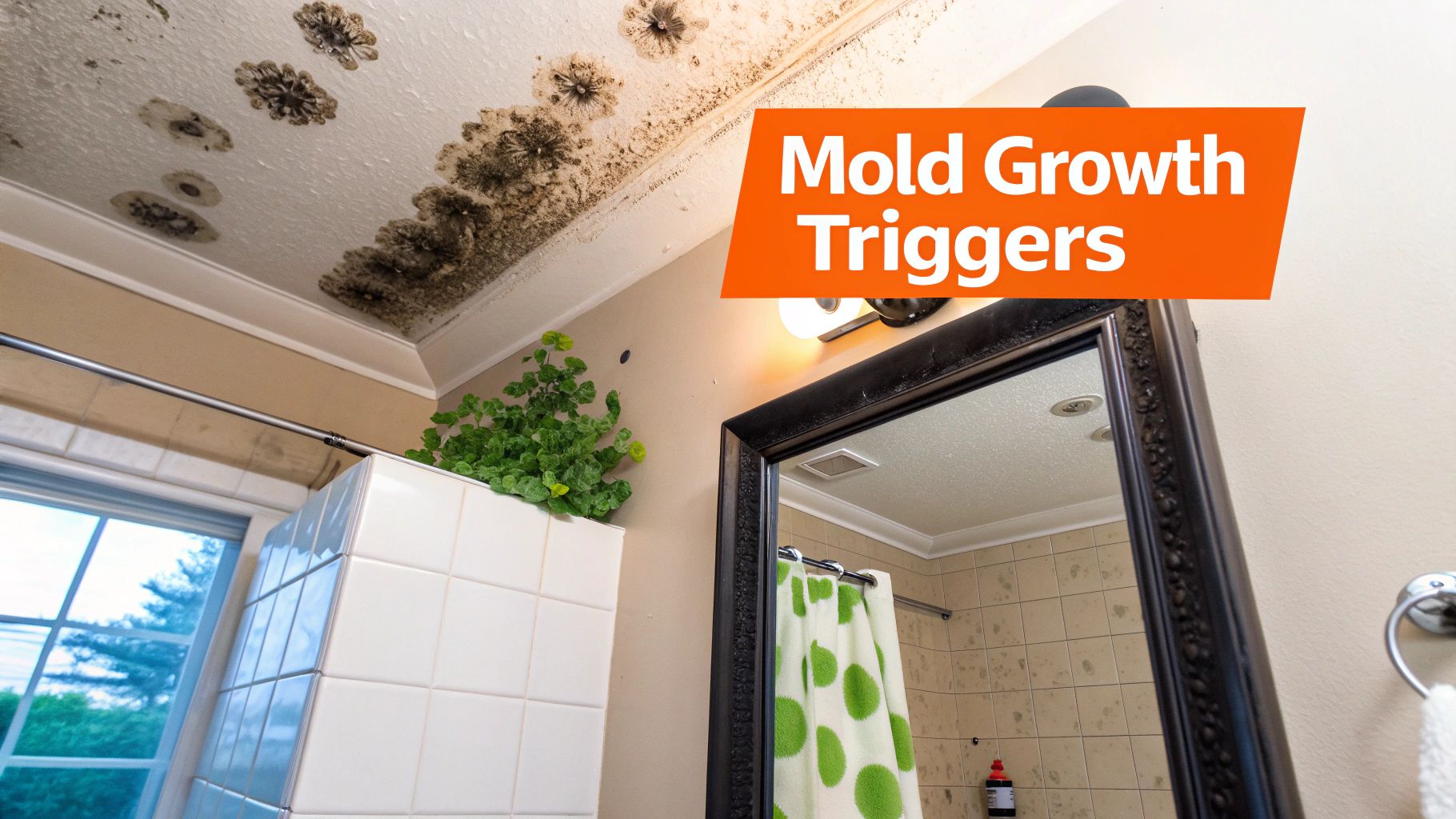
The Potent Toxins of Black Mold
The primary concern with Stachybotrys chartarum is its ability to produce mycotoxins. These are toxic chemical compounds that can attach to spores or dust particles, become airborne, and be inhaled. Prolonged exposure in a contaminated environment is linked to a host of severe health symptoms.
Black mold earns its formidable reputation. Those dark, slimy patches indicate a mycotoxin-producing colony that thrives in chronically wet areas, like a flooded basement in an Irvine home or a neglected HVAC system in a Newport Beach property. It requires more than 48 hours of constant moisture to begin growing—much longer than green mold's rapid 24-hour start—and it embeds deep into porous materials like wood, drywall, and insulation. You can find more insights on mold's nationwide impact over at detailbymiles.com.
Symptoms often associated with black mold exposure can be serious and may include:
- Severe Respiratory Distress: Chronic coughing, wheezing, and difficulty breathing.
- Neurological Issues: Headaches, dizziness, memory loss, and cognitive difficulties.
- Immune System Suppression: A weakened immune response, increasing susceptibility to other illnesses.
Due to these severe potential health effects, black mold remediation is not a DIY project. It demands professional containment and removal protocols to prevent cross-contamination and ensure every toxin is eliminated.
The Allergenic Threat of Green Molds
While green molds may not have the same toxic reputation, dismissing them as harmless is a significant mistake. Many species, especially common ones like Aspergillus and Penicillium, are powerful allergens and irritants. For a large portion of the population—particularly children, the elderly, and anyone with a compromised immune system—exposure can trigger significant health problems.
"The color of the mold does not determine the level of risk. We frequently find that allergenic green molds are the direct cause of chronic sinus infections, asthma flare-ups, and persistent allergy symptoms for our clients. A healthy home is a mold-free home, period."
Even for those without allergies, the sheer volume of spores some green molds release can irritate the respiratory system, eyes, and skin.
Common health issues linked to green mold include:
- Allergic Reactions: Sneezing, runny nose, red eyes, and skin rashes.
- Asthma Attacks: Spores are a well-known trigger for individuals with asthma.
- Chronic Sinusitis: Persistent sinus infections and congestion that do not resolve.
- Aspergillosis: In rare but serious cases, individuals with weakened immune systems can develop a lung infection from inhaling Aspergillus spores.
Furthermore, certain strains of Aspergillus can also produce mycotoxins, blurring the line between "toxic" and "allergenic" molds. This overlap is precisely why our IICRC Master Certified technicians treat every mold project with the same high level of caution. The goal is always the same: to restore your home to a safe and healthy environment for you and your family.
Why Professional Remediation Outperforms DIY Methods
Upon discovering mold, the initial impulse for many is to grab a bottle of bleach and start scrubbing. While this feels proactive, in the nuanced world of black mold vs. green mold, this common DIY tactic can backfire spectacularly, creating a false sense of security and a much larger problem.
A superficial wipe-down might make the mold disappear temporarily, but it rarely addresses the root of the problem. Household cleaners like bleach cannot penetrate porous surfaces such as drywall or wood, meaning the mold’s underlying root system remains intact and ready to regrow.
Worse, aggressive scrubbing can disturb the mold colony, releasing millions of microscopic spores into the air. This not only spreads the contamination to other areas of your home but also severely degrades your indoor air quality, turning a localized issue into a property-wide infestation.
The Professional Process: A Guaranteed Solution
As IICRC Master Certified professionals and licensed general contractors, we don’t just "clean" mold—we execute a strict, scientific protocol designed to eradicate it permanently and protect your family’s health. It’s a process built on proven industry standards that DIY methods simply cannot replicate.
Every professional remediation project we undertake includes these critical steps:
- Containment: We establish physical barriers and use negative air pressure machines to completely seal off the affected area. This ensures no spores can escape and contaminate the rest of your Orange County property during the removal process.
- Air Filtration: High-Efficiency Particulate Air (HEPA) scrubbers run continuously, capturing airborne spores, dust, and other microscopic contaminants to purify the air.
- Safe Removal: Porous materials that cannot be salvaged, like contaminated drywall and insulation, are carefully removed, double-bagged, and disposed of according to strict safety regulations.
- Thorough Cleaning: All non-porous surfaces are meticulously cleaned and treated with EPA-approved antimicrobial agents to eliminate any lingering mold particles.
- Moisture Source Correction: This is the most crucial step. We identify the source of moisture that allowed the mold to grow and ensure it is properly repaired to prevent recurrence.
Understanding Growth Speed and Infiltration
The need for a professional becomes even clearer when you understand how differently these molds behave. Comparing black mold vs. green mold reveals just how quickly a situation can escalate. Common green molds can appear within just 24-48 hours of water damage. Black mold is slower, often taking weeks of sustained dampness to take hold, but it can infiltrate up to 50% deeper into building materials.
Statistics show that mold affects 70% of U.S. properties with humidity over 60%. Of these cases, green mold is the culprit in 55% of fast-growing surface-level infestations, while black mold accounts for 30% of the more severe, structural cases. You can find more data on mold behavior from IICRC-certified sources at MoldRemediationofOrlando.com.
Choosing professional remediation is an investment in your property's value and your family's long-term health. It’s the definitive difference between a temporary, risky fix and a permanent, guaranteed solution that delivers true peace of mind.
Ultimately, attempting to tackle mold without the proper training, equipment, and containment protocols is a significant gamble with your home and health. Partnering with a reputable, BBB Torch Award-winning company like Sparkle Restoration Services ensures the job is done right the first time, turning the chaos of a mold discovery into the calm of a restored, healthy home.
When To Call An Orange County Mold Remediation Expert
Understanding the difference between black mold and green mold is one thing, but the most critical decision an Orange County homeowner can make is knowing when to put down the sponge and pick up the phone. Attempting to manage a serious mold problem on your own can be a risky gamble for both your health and your home's value. Certain situations are non-negotiable—they demand an expert, and fast.
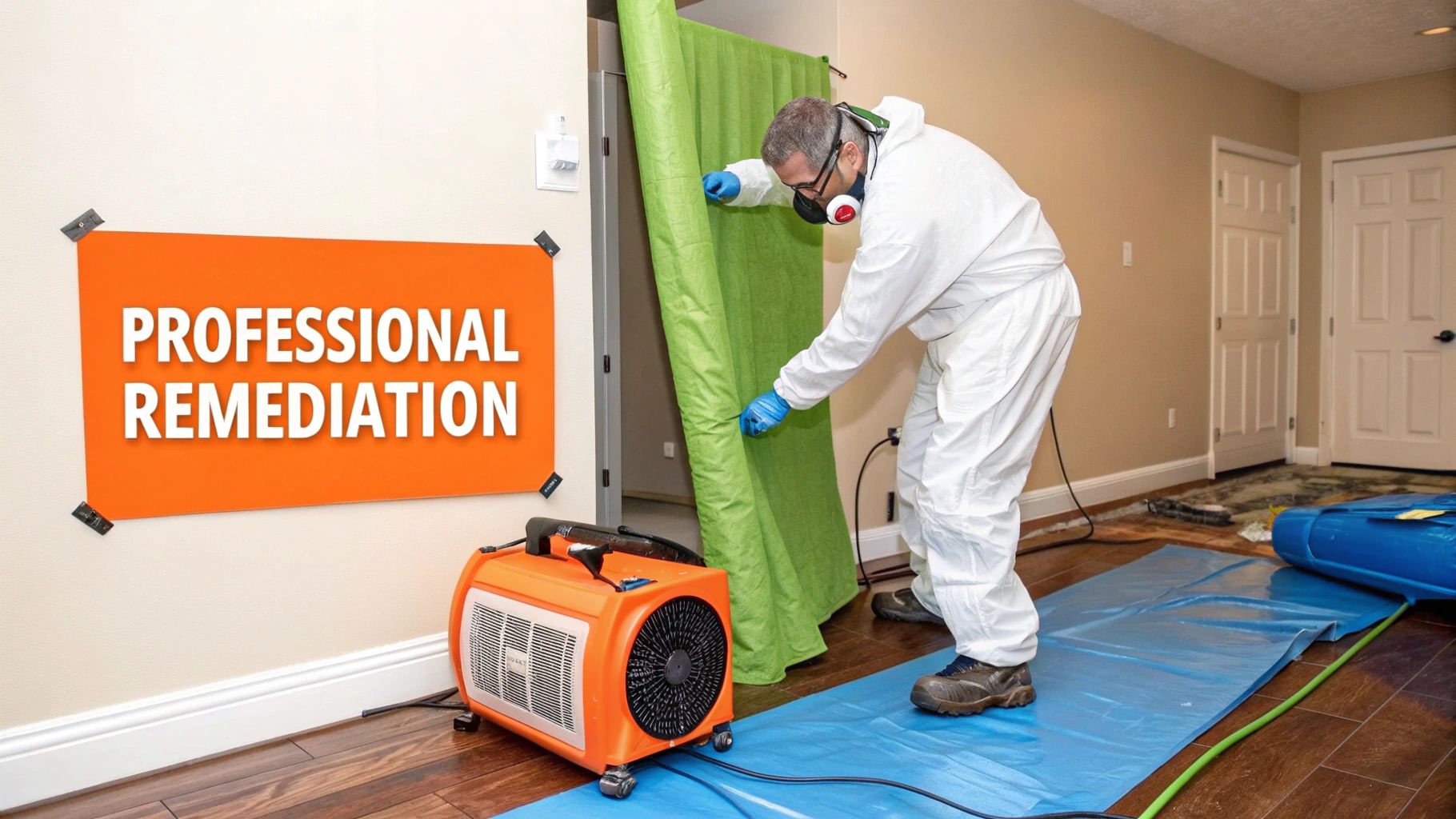
If you observe any of the red flags below, it's time to bring in a certified mold remediation specialist.
Clear Triggers For Professional Intervention
Ignoring these warning signs is a recipe for more extensive damage and significantly higher restoration costs. While the Environmental Protection Agency (EPA) advises calling professionals for any mold growth covering more than 10 square feet, other factors are equally critical.
Be vigilant for these definitive signs that you need an expert:
- Widespread Growth: If you see a patch of mold larger than a dinner plate, it's often just the tip of the iceberg, signaling a much larger problem hidden beneath the surface.
- Persistent Musty Odors: If you cannot eliminate an earthy, musty smell but can’t locate the source, mold is likely thriving in a hidden area—such as behind drywall, under flooring, or deep within your HVAC system.
- Post-Water Damage Growth: Any mold that appears after a flood, a burst pipe, or a roof leak requires professional remediation. The moisture has almost certainly penetrated your home's structural materials, and it takes specialized equipment to dry it properly and remove the mold safely.
- Unexplained Health Symptoms: If family members are experiencing persistent allergy-like symptoms, worsening asthma, or other respiratory issues that seem to improve when they leave the house, it is a major red flag for poor indoor air quality, likely caused by mold.
"For discerning homeowners in communities like Newport Beach and Irvine, peace of mind is paramount. Calling a professional isn't just about removing mold; it's about receiving guaranteed verification that your home's environment is safe, healthy, and structurally sound for your family."
At Sparkle Restoration Services, our IICRC Master Certified technicians are available 24/7 for emergency response. As a BBB Torch Award Winner for Ethics and a licensed general contractor, we don’t just clean the mold you can see. We identify and resolve the root moisture problem to deliver a permanent solution. We are here to turn chaos into calm—fast—and restore not just your property, but your sense of security.
Frequently Asked Questions About Mold
When you find what appears to be mold in your Orange County home, questions and concerns arise almost immediately. To provide clarity and help you navigate the confusion surrounding black mold vs. green mold, we have compiled answers to the questions we hear most frequently from our clients. This information is designed to help you make informed decisions to protect your family and property.
Can Green Mold Turn Into Black Mold?
No, green mold cannot "turn into" black mold. They are entirely different types of fungi, each with a unique biological makeup. A helpful analogy is that an orange cannot turn into an apple. "Green mold" is a general term for many common species like Penicillium or Aspergillus, whereas "toxic black mold" specifically refers to Stachybotrys chartarum.
However, the ongoing moisture that fuels green mold growth can eventually create the super-saturated conditions that black mold requires to thrive. In this sense, green mold often serves as an early warning sign. If the underlying water problem is not corrected, you could easily end up with both types growing side-by-side.
Is It Safe To Live In A House With Black Or Green Mold?
Living with any type of significant mold growth is unsafe. Both black and green mold release spores and other particulates into the air, which severely degrades your home's indoor air quality.
- Black Mold (Stachybotrys): Is known for producing mycotoxins, which have been linked to serious respiratory conditions and other chronic health issues.
- Green Mold (Aspergillus, etc.): These are potent allergens that can trigger asthma attacks, sinus infections, and persistent allergic reactions.
For the safety of your family—especially if you have children, elderly relatives, or anyone with a weakened immune system—any mold problem must be remediated by an IICRC-certified professional. It is the only way to guarantee complete removal and restore your home to a healthy state.
At Sparkle, your family's well-being is our top priority. We approach every mold job with the utmost care, making sure the air in your home is clean, safe, and completely free of harmful contaminants.
Does Homeowners Insurance Cover Mold Removal?
This is a complex question. Whether your homeowners insurance covers mold removal depends on the original cause of the water damage.
Most policies will cover remediation if the mold is a direct result of a "covered peril"—such as a sudden pipe burst or storm damage to your roof. Even then, there is often a limit on the payout. However, mold resulting from slow leaks, poor maintenance, or the general high humidity common in coastal Orange County is almost always excluded. As a licensed general contractor with years of experience, we can help you navigate the claims process and provide the proper documentation for your insurer.
How Can I Tell If Mold Is Affecting My Air Quality?
Long before you see it, your own senses are often the first alarm. If you notice a persistent musty or earthy smell that does not go away, that is a significant red flag for hidden mold growth.
You might also notice that family members are experiencing more allergy-like symptoms—sneezing, coughing, itchy eyes—that seem to occur only when they are at home. However, the only way to know for sure is with a professional indoor air quality (IAQ) test. This scientific analysis identifies exactly what kind of mold spores are in your air and at what concentration, providing the hard data needed to develop an effective remediation plan.
If you even suspect you have mold, do not wait for the problem to escalate. The IICRC Master Certified experts at Sparkle Restoration Services are available 24/7 to provide a thorough inspection and restore your home to a safe, healthy condition. Contact us today to schedule your consultation and gain the peace of mind that comes from working with Orange County's trusted leader in restoration and remodeling.
Ready to create a space that’s as beautiful as it is functional? Schedule your complimentary design consultation today by visiting Ready to Work with Sparkle?