



When you stumble upon a patch of mold in your Orange County home, your first thought might be about the color. The difference between black mold vs white mold isn't just cosmetic—it often points to different levels of potential toxicity and the underlying moisture problems threatening your property. The infamous Stachybotrys chartarum (black mold) is known for its slimy, greenish-black appearance and its ability to produce harmful mycotoxins. On the other hand, various white molds tend to look fuzzy or powdery and are more often linked to allergies rather than severe toxicity. For discerning homeowners, understanding this distinction is the first step toward protecting your family and your investment.
Understanding The Critical Differences Between Molds
Finding a strange, discolored growth on a wall or ceiling is enough to stop any property owner in their tracks. Here in Orange County, our coastal humidity can create the perfect breeding ground for mold, making it crucial to understand what you're up against. The first question that pops into your head is usually: is this just an unsightly nuisance, or am I dealing with something dangerous like toxic black mold?
Arming yourself with knowledge from a trusted source can dramatically reduce the stress of the situation and help you make smart, timely decisions. While any type of mold growth warrants professional attention to protect your home's air quality and structural integrity, knowing the key characteristics of each can help you gauge the urgency and scope of the problem.
Key Distinctions at a Glance
Black mold, scientifically known as Stachybotrys chartarum, has earned its notorious reputation. It produces potent mycotoxins—toxic compounds that can impact human health in ways that most white molds simply don't. While white mold, often a species of Aspergillus or Penicillium, usually appears as a powdery, cotton-like substance with little to no odor, black mold is distinct. It has a slimy, greenish-black texture and gives off a strong, musty smell, almost like rotting wood. You can find more helpful insights about different mold types on BustMold.com.
This difference is critical. The presence of Stachybotrys chartarum almost always signals a serious, long-term water leak that's been left unaddressed, compromising not only your air quality but your home's structure.
For discerning homeowners, the real issue isn't just the color—it's what that mold tells you about your home's health. Black mold is a major red flag for a significant underlying moisture problem that demands immediate, expert intervention to prevent structural damage and keep your family safe.
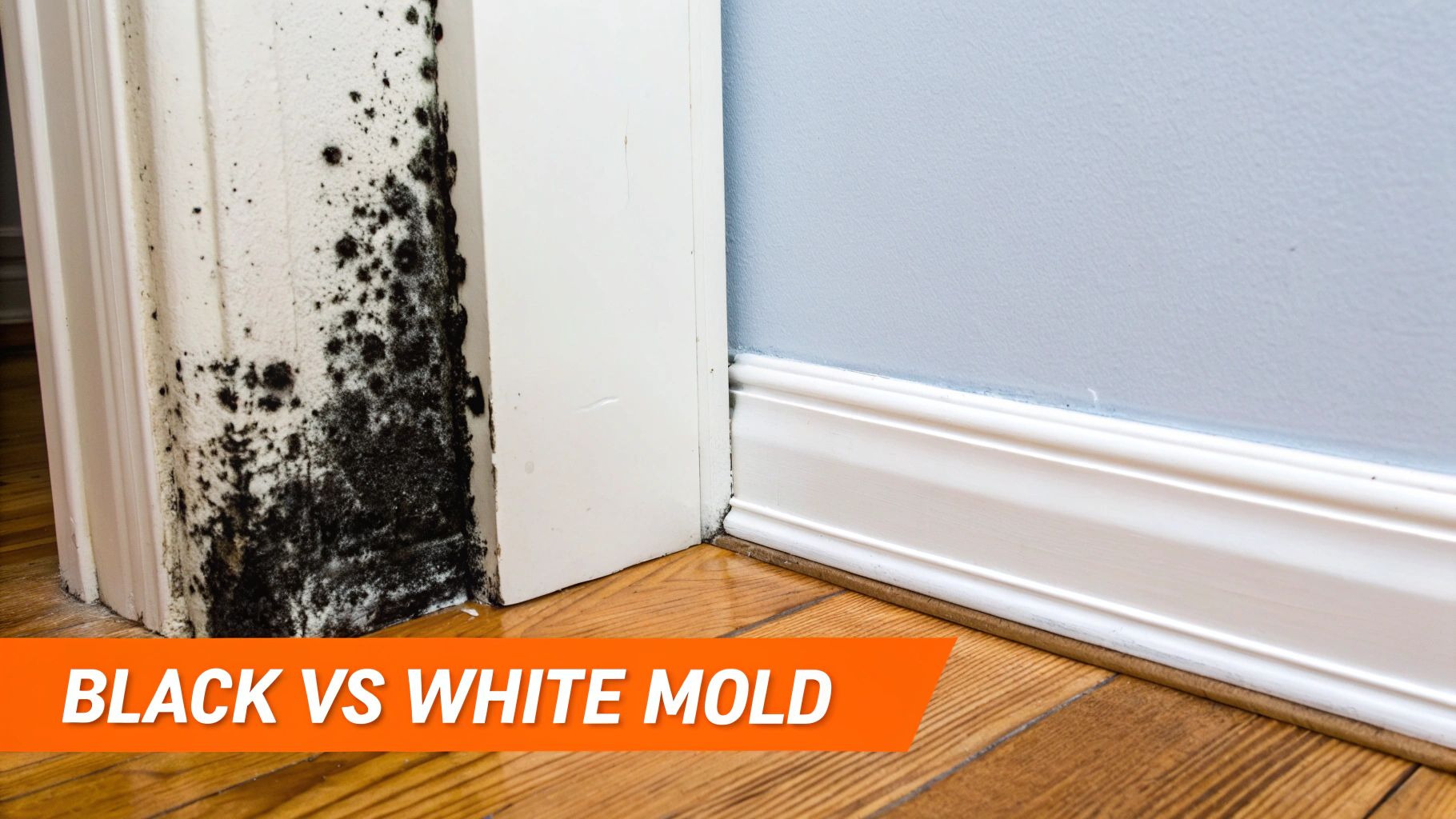
To give you a clear, easy-to-read reference, we've put together a simple breakdown of the most common differences between these two types of mold. Think of this as a first-step guide for preliminary identification.
Quick Guide: Black Mold Vs. White Mold Identification
This table offers a quick snapshot of the key features that set black mold apart from the more common white varieties. It’s a great starting point for any homeowner concerned about indoor air quality.
| Characteristic | Black Mold (Stachybotrys chartarum) | White Mold (Aspergillus, Penicillium, etc.) |
|---|---|---|
| Color | Dark greenish-black or jet black. | White, light gray, or greenish-white. |
| Texture | Slimy or wet when active; sooty when dry. | Powdery, fuzzy, or cotton-like. |
| Odor | Strong, musty, earthy smell like rotting leaves. | Often faint, musty, or no noticeable odor. |
| Health Risk | High; produces mycotoxins linked to serious health issues. | Primarily allergenic; can trigger asthma and allergies. |
| Growth Needs | Requires constant moisture and cellulose materials. | Can grow in a wider range of damp conditions. |
Remember, this guide helps you make an initial assessment, but nothing replaces a professional inspection. For a definitive answer and a safe remediation plan, you need an IICRC Master Certified expert like Sparkle Restoration Services to provide an accurate diagnosis.
A Practical Guide to Visual and Sensory Identification
Spotting potential mold growth early is one of the best things you can do to protect your property and your health. While color is an obvious starting point, a closer look—and even the ambient smell—can give you critical clues about the severity of the problem. This guide will help you look beyond the basics and feel more confident in spotting the warning signs.
Reading The Visual Cues
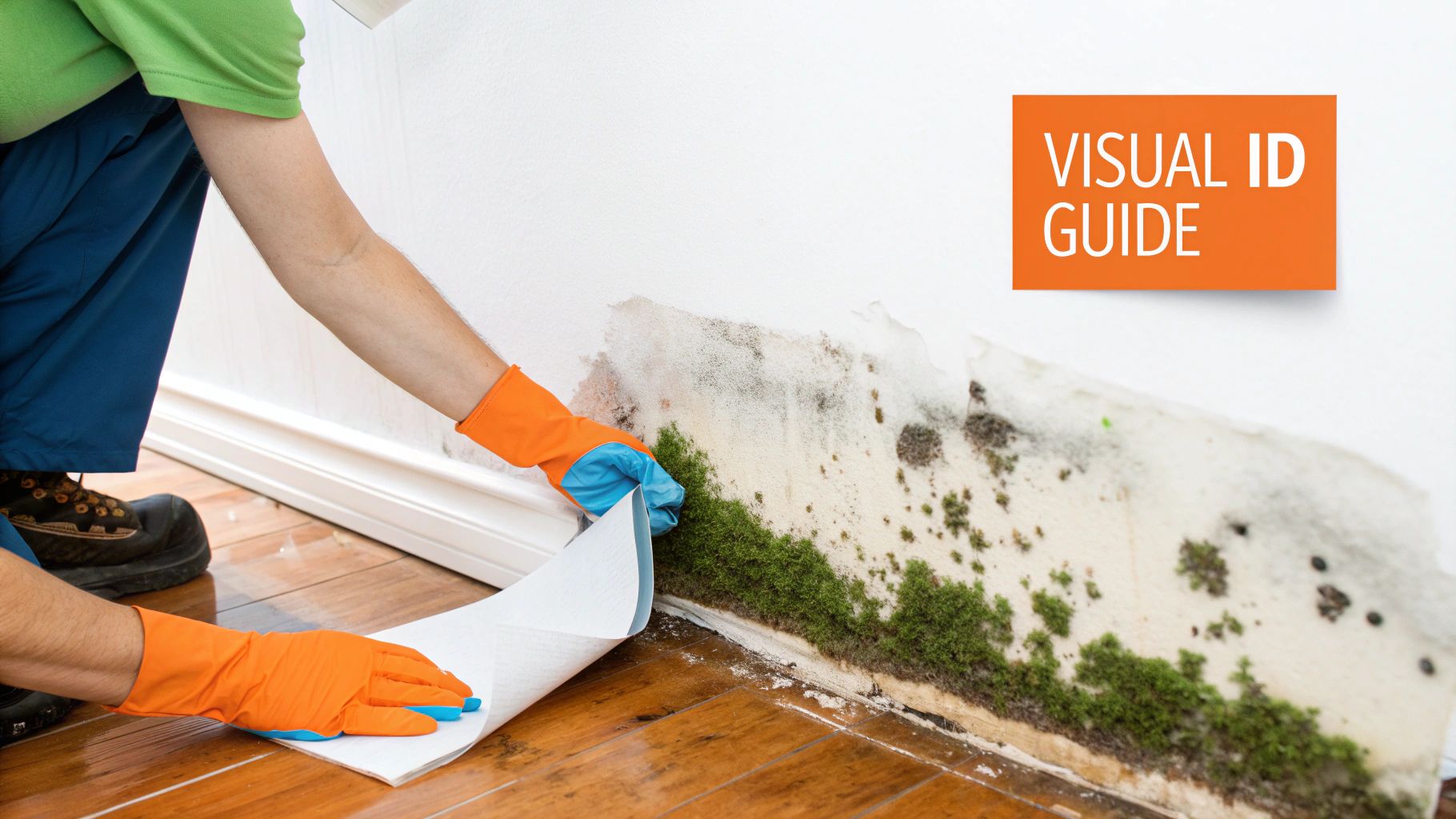
Not all mold is created equal, and its appearance can shift dramatically depending on its water source and the material it is consuming. Pay attention to the texture and shape—these details are often what separates harmless mildew from a more concerning fungal colony.
Black Mold Texture: The infamous Stachybotrys chartarum often has a distinctively slimy or wet texture, especially when it has a steady supply of water. You might see it as gelatinous or tar-like splotches on drywall or wood. If that water source has dried up, the same mold can look sooty or powdery.
White Mold Texture: White molds, on the other hand, usually look fuzzy, powdery, or even cotton-like. They tend to sprawl without a defined shape, often appearing as a thin film of white across a damp surface.
Following The Scent
Your nose is an incredibly effective tool for mold detection. In fact, a persistent, musty odor is frequently the very first sign of hidden mold, often noticeable long before you see any visible growth.
The smell from black mold is particularly potent and unpleasant. People often describe it as earthy and heavy, like rotting leaves or damp, decaying wood. This strong odor is a major red flag because it means mold is actively growing and releasing microbial volatile organic compounds (mVOCs) into your air.
White mold may have a much fainter musty smell, and sometimes you can't smell it at all. If you catch a damp, stale scent in a basement or bathroom but can't find the source, there’s a good chance mold is growing behind the walls or under the floor.
Homeowners often get used to the subtle smells in their own house, a phenomenon called "olfactory fatigue." If you suspect a mold issue but can't quite place the smell, ask a friend who doesn't live with you to visit. A fresh perspective can often pick up on musty odors you've gone nose-blind to.
Real-World Scenarios In Orange County Homes
Let's apply this to situations we see all the time in Orange County. Our homes face unique challenges, from coastal humidity to common construction styles that can unfortunately trap moisture.
Scenario 1: The Irvine Kitchen Leak: Picture a slow, unnoticed leak from the icemaker line behind your refrigerator. The trapped moisture and darkness create the perfect breeding ground for Stachybotrys. The first sign might be a musty smell when you open a nearby pantry. When you finally pull the fridge out, you find dark, slimy splotches on the drywall—a textbook sign of black mold.
Scenario 2: The Newport Beach Bathroom: A bathroom with poor ventilation, a common issue in some older coastal homes, might start showing white, fuzzy patches on the ceiling or along grout lines. This is typically an allergenic white mold that loves the constant condensation from hot showers. It looks powdery and spread out, not like distinct, dark spots.
Ultimately, these visual and sensory clues are invaluable for catching problems early, but they aren't a substitute for a professional diagnosis. Different mold species can look strikingly similar, and the only way to be certain about the type and the true extent of the contamination is through professional testing. Calling an IICRC Master Certified firm like Sparkle Restoration Services ensures you get an accurate assessment and a safe, effective plan to restore your home.
Comparing Health Risks And Allergenic Potential
When you find mold in your Orange County home, the conversation quickly turns to health. While no mold is a welcome guest, black and white molds affect your well-being in different ways. Their impact is distinct, but the result is the same: a compromised indoor environment that puts your family at risk.
The notorious reputation of Stachybotrys chartarum, or toxic black mold, comes from its ability to produce mycotoxins. These are microscopic toxic compounds released into the air, where they can be inhaled or absorbed.
Once airborne, these mycotoxins can cause a cascade of serious health issues, including severe respiratory distress, nagging headaches, and neurological symptoms like brain fog. In modern, well-sealed homes, poor airflow can trap and concentrate these toxins to dangerous levels, amplifying the risk.
The Allergenic Threat Of White Mold
Do not make the mistake of dismissing white mold as harmless just because it isn't "toxic." Its threat comes from a different angle—it's a powerful allergen and irritant. Common white molds, like Aspergillus and Penicillium, can release an incredible number of airborne spores that easily overwhelm the respiratory system.
For anyone with sensitivities, this constant exposure can trigger a host of chronic problems:
- Asthma Flare-Ups: Mold spores are a well-known and potent trigger for asthma attacks.
- Chronic Sinusitis: This leads to persistent inflammation of the sinuses, causing congestion and discomfort.
- Allergic Reactions: Symptoms often include sneezing, coughing, itchy eyes, and even skin rashes.
Even if you don't have pre-existing conditions, long-term exposure can sensitize your immune system, which can unfortunately lead to developing new allergies over time.
A common misconception is that "non-toxic" means "safe." In reality, allergenic molds can create a constant state of inflammation in the body, placing significant stress on your immune system and degrading your quality of life over time.
A Deeper Look At The Health Impact
Understanding the difference between a toxic and an allergenic response is critical. Black mold wages a direct chemical assault on anyone exposed to its mycotoxins. White mold, on the other hand, acts more like a persistent invader, triggering an inflammatory response that can become chronic and debilitating.
While black mold's mycotoxins are a direct toxic threat, white mold triggers systemic immune suppression and chronic inflammation through respiratory irritants that penetrate deep into lung tissue. This can affect up to 20% of asthma sufferers and those with compromised immunity. You can find more insights on the health impacts of different molds on Biorestore.org.
Essentially, one poses an immediate chemical danger, while the other wages a war of attrition on your body’s defenses.
Vulnerable Individuals And Amplified Risks
It’s important to remember that mold doesn't affect everyone equally. Certain people are far more susceptible to severe reactions, whether the culprit is black or white mold.
This high-risk group includes:
- Infants and Young Children: Their developing respiratory and immune systems are far more vulnerable.
- The Elderly: Age can weaken the body's natural defenses against environmental threats.
- Immunocompromised Individuals: People with conditions like HIV/AIDS or those undergoing chemotherapy have a much harder time handling spore exposure.
- Individuals with Chronic Respiratory Conditions: Anyone with asthma, COPD, or severe allergies will likely experience magnified symptoms.
For these residents, any mold infestation is an immediate and serious health concern. This is why professional remediation isn't just about protecting your property—it's about safeguarding the health of everyone under your roof. Both black and white mold demand a swift, professional response from an IICRC Master Certified firm like Sparkle Restoration Services to ensure your home is restored to a safe and healthy state.
Understanding The Growth Conditions For Each Mold Type
While all molds need moisture to survive, the specific conditions that allow black mold and white mold to thrive are surprisingly different. Understanding these environmental triggers is key to prevention. It empowers you to spot and fix vulnerabilities before a small problem turns into a massive remediation project.
Think of your home as an ecosystem. The best defense is disrupting the conditions mold needs to grow. The key difference usually comes down to two things: the consistency of the moisture source and the type of material it's growing on. Black mold is notoriously picky, while many white molds are opportunistic and will grow almost anywhere.
The Specific Needs Of Black Mold
Stachybotrys chartarum, or toxic black mold, is a specialist. It doesn’t just need a little dampness; it demands a constant, heavy supply of moisture to even get started. This is exactly why you almost always find it in areas with a long-term water problem that’s gone unnoticed for weeks, if not months.
It's also a picky eater. Black mold requires materials high in cellulose and low in nitrogen to really thrive, which makes certain parts of your house particularly vulnerable.
Common breeding grounds for black mold include:
- Drywall and Gypsum Board: The paper backing is a five-star meal for this mold.
- Wood Framing: Structural wood that has been soaked by a slow leak is a prime target.
- Fiberboard and Particleboard: Often found in cabinets and subflooring, these materials act like a sponge.
- Wallpaper: The paper and the adhesive behind it create a perfect environment when damp.
Basically, if you see black mold, it’s a huge red flag for a serious, chronic water leak—think of a persistent plumbing leak behind a wall or a slow roof leak that has saturated your attic insulation over time.
For an IICRC Master Certified technician, the presence of black mold is like a breadcrumb trail. It doesn't just tell us that there's a problem; it tells us where to look for a significant, hidden water source that has been damaging your property for a while.
The Versatility Of White Mold
Unlike its infamous cousin, white mold is far less demanding. Many of the species that show up as white, like Aspergillus or Penicillium, can grow in a much wider range of conditions. They don't need a constant, soaking source of water; often, high humidity or a little condensation is all it takes for them to get started.
This adaptability means white mold can pop up in more places throughout a home. You’ll often find it in areas prone to damp air rather than direct water damage.
Typical locations for white mold include:
- Poorly Ventilated Bathrooms: Steam from showers creates the perfect humid microclimate on ceilings and grout.
- Damp Basements and Crawl Spaces: These areas naturally have higher humidity, letting white mold grow on concrete, wood joists, or anything stored down there.
- Attics with Poor Ventilation: Condensation can easily form on the underside of the roof sheathing, giving mold just enough moisture to take hold.
- On Fabrics and Upholstery: In a humid house, white mold can even start growing on carpets or furniture.
Because it thrives on simple condensation and humidity, white mold is often a sign of a ventilation or atmospheric moisture issue, not a direct leak. While that might seem less severe, it points to a systemic problem with your home's air quality and moisture control that requires professional attention to fix correctly and prevent recurrence.
A Side By Side Look At Professional Remediation
Once you've confirmed there’s mold in your home, the next step is professional remediation. This process isn't a one-size-fits-all job. The protocols for handling toxic black mold are worlds apart from those for a standard allergenic white mold, and the difference comes down to the level of risk involved.
Understanding these distinctions is exactly why bringing in a certified professional is non-negotiable. At Sparkle Restoration Services, our IICRC Master Certified technicians follow strict, science-backed procedures designed to keep your family safe and completely eliminate the threat. This is far more than just cleaning; it’s a meticulous environmental health process from start to finish.
Initial Assessment And Containment Protocols
The first order of business in any remediation project is to isolate the contaminated area to stop the problem from spreading. For a typical white mold situation in a Newport Beach bathroom, this might mean sealing off the room with heavy-duty plastic sheeting and running HEPA-filtered air scrubbers to pull spores out of the air.
For black mold, the approach is drastically more stringent. Because mycotoxins are involved, we establish a full-scale containment zone under negative air pressure. This technique creates a vacuum effect, making it physically impossible for airborne spores or toxic particles to escape the work area and infiltrate your home’s HVAC system. It's an essential safety measure to protect the rest of your property.
The level of containment is the first major differentiator in professional remediation. Standard containment for white mold protects against allergens, while the negative air pressure containment for black mold is designed to control a toxic substance, similar to protocols used for asbestos abatement.
This diagram helps visualize the different conditions that typically lead to either black or white mold, which directly influences how we plan our initial remediation strategy.
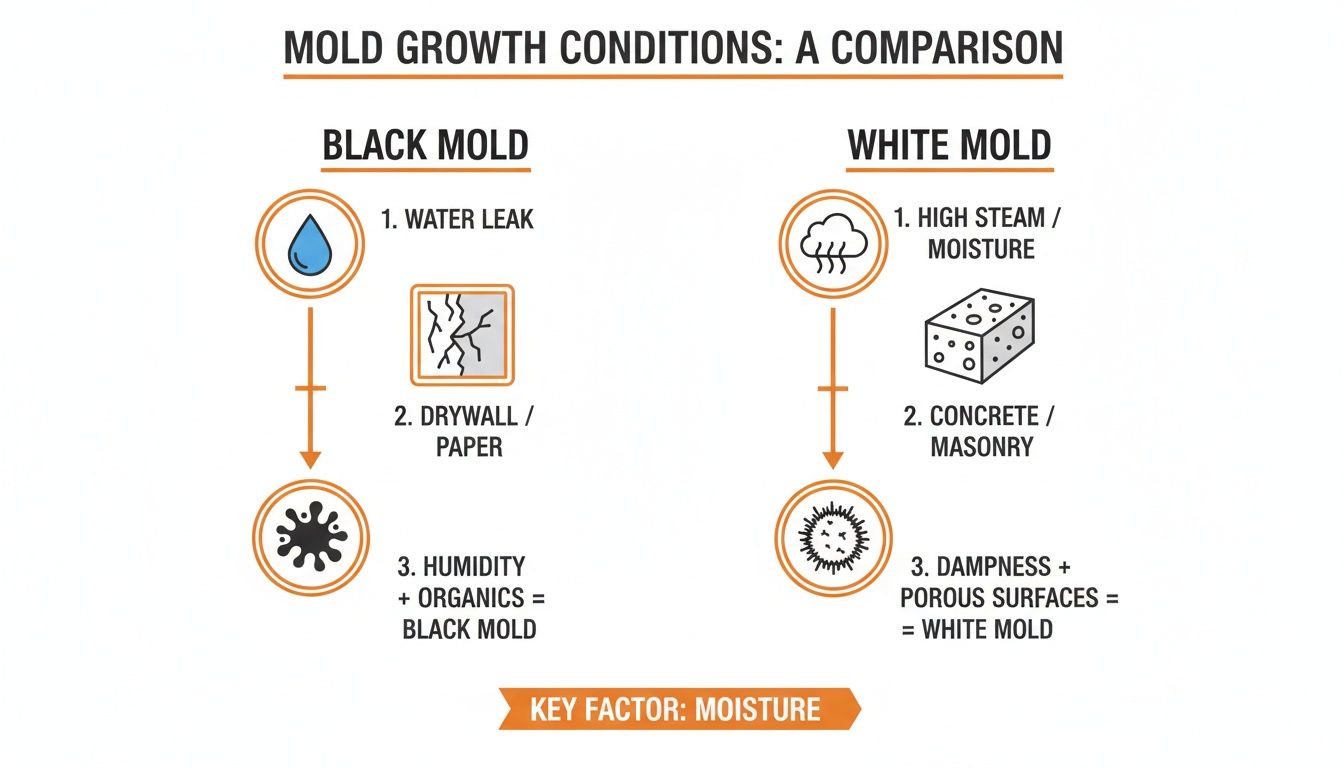
As you can see, black mold is often the result of a direct water leak hitting materials like drywall, whereas white mold can pop up from something as simple as high ambient moisture on a concrete surface.
Material Removal And Treatment Differences
With containment firmly in place, the hands-on removal work begins. The techniques we use—and how aggressive we have to be—depend entirely on the type of mold and the material it is infesting.
Most white molds grow on non-porous or semi-porous surfaces. Remediation here often involves a combination of HEPA vacuuming, damp wiping with antimicrobial solutions, and perhaps some wire brushing. The goal is straightforward: physically remove the surface growth and sanitize the material underneath.
Black mold is a different beast entirely. It almost always infests porous, cellulose-rich materials like drywall and wood, which it actively digests and destroys.
- Aggressive Removal: When we're dealing with Stachybotrys, surface cleaning won't cut it. Standard protocol demands the complete removal and disposal of all contaminated porous materials. That means cutting out sections of drywall, pulling out saturated insulation, and sometimes even sanding down structural wood framing to get every last trace.
- Specialized Disposal: All contaminated materials are carefully double-bagged in thick, sealed plastic and disposed of according to strict local regulations for hazardous waste.
This is a huge reason why DIY attempts are so dangerous. Simply wiping at black mold can release a massive cloud of mycotoxins into the air and does absolutely nothing to address the growth that has penetrated deep into the material.
To better illustrate these critical differences, here's a look at how professional protocols diverge based on the risk level.
Comparing Professional Mold Remediation Protocols
A detailed look at the key steps and differences in professional remediation strategies for black mold versus white mold, highlighting safety and technical requirements.
| Remediation Step | Black Mold Protocol (High Risk) | White Mold Protocol (Standard Risk) |
|---|---|---|
| Personal Protective Equipment (PPE) | Full-face respirators, full-body hazmat suits, gloves, and boot covers are mandatory. | N-95 respirators, safety glasses, gloves, and disposable coveralls are typically sufficient. |
| Containment | Full isolation with negative air pressure using HEPA-filtered exhaust fans to prevent any escape of contaminants. | Standard containment using polyethylene sheeting to seal off the work area from the rest of the property. |
| Material Removal | Complete removal and disposal of all contaminated porous materials (drywall, insulation, carpet). | Surface cleaning, HEPA vacuuming, and antimicrobial treatment. Material removal is only necessary if structural integrity is compromised. |
| Disposal | Contaminated materials are treated as hazardous waste, requiring double-bagging and specific disposal procedures. | Standard construction debris disposal methods are generally acceptable. |
| Air Filtration | Continuous use of commercial-grade HEPA air scrubbers throughout the entire process. | Air scrubbers are used to capture airborne allergens but may not run continuously. |
| Post-Remediation Verification | Independent, third-party air quality testing (clearance testing) is strongly recommended to confirm mycotoxin removal. | Visual inspection and moisture readings are often sufficient to confirm successful remediation. |
This table makes it clear that while both scenarios require professional attention, the technical and safety demands for black mold remediation are on another level.
Post-Remediation Verification And Clearance
After the physical mold is gone, we enter the final and most critical phase: ensuring the environment is truly clean and safe. For both mold types, this includes a final, detailed HEPA vacuuming of every surface inside the containment zone, followed by a final wipe-down with an EPA-registered antimicrobial agent.
But for a black mold project, we don’t stop there. We strongly recommend bringing in an independent third-party Indoor Environmental Professional (IEP) to conduct post-remediation air sampling. This step provides unbiased, scientific proof that the air quality has been fully restored to safe levels and that all traces of the toxic threat are gone. This clearance testing is the ultimate assurance we can give our clients that their home is once again a healthy sanctuary.
At Sparkle Restoration Services, our standing as a Licensed General Contractor and a BBB Torch Award Winner for Ethics isn't just about accolades. It means we don’t just remove mold—we manage the entire process with unmatched professionalism, from the initial containment to the final reconstruction, turning chaos back into calm.
Why Orange County Homeowners Choose Sparkle Restoration
Figuring out the difference between black mold vs white mold is one thing, but restoring your home to a safe, healthy state requires a partner you can absolutely trust. When homeowners across Orange County discover mold, the stress is real. They call Sparkle Restoration Services not just for our technical skill, but for the confidence and peace of mind that comes with proven, local expertise.
Choosing the right company is about knowing the job will be done right—the first time. It’s about having a team in your home that has the best equipment and operates with unshakable integrity. This is where our credentials become your guarantee.
Unmatched Credentials for Your Peace of Mind
Our dedication to excellence is demonstrated by the industry’s most respected certifications. We don’t just meet the standards; we set them.
- IICRC Master Certified: This isn't a basic certification; it's the highest level of achievement in the restoration industry. Holding Master Certifications in Water, Fire, and Cleaning means we bring an elite level of technical knowledge to every job.
- Licensed General Contractor: This is what sets us apart. Many companies can only handle the mold itself. Our general contractor license means we manage the entire project, from remediation to flawlessly repairing and restoring any part of your home that was affected. You get one expert, one point of contact, from start to finish.
This combination of skills is rare, and it’s a game-changer for our clients. It means you get a complete solution that turns a chaotic situation back to normal, fast, without the headache of juggling multiple contractors.
Discerning homeowners in places like Newport Beach and Irvine know that credentials and reputation are everything. Our BBB Torch Award for Ethics isn’t just a trophy for our office—it's a promise we make to you. It reflects our deep commitment to honesty, transparency, and always putting your family’s well-being first.
The Sparkle Difference: A Seamless Experience
We understand that dealing with mold is a major disruption. That's why our entire process is built around respecting your time, your property, and your peace of mind. From the very first inspection to the final walkthrough, our team is focused on clear communication, meticulous containment, and restoring your home’s safety.
When you hire Sparkle, you're choosing a team that has been proudly serving Orange County since 2002. You're choosing professionals dedicated to turning a complex problem into a solved one, leaving your home healthier and more secure than it was before.
If you suspect a mold issue, don't wait for it to get worse. Contact Sparkle Restoration Services today for a consultation and experience the difference true professionalism makes.
Answering Your Top Mold Questions
Even when you know the difference between black and white mold, you probably still have a few practical questions about what to do next. Let's tackle some of the most common concerns we hear from homeowners in Orange County.
Can I Just Paint Over Black Or White Mold?
Absolutely not. Painting over mold is one of the worst mistakes a homeowner can make. It’s a temporary cosmetic fix that hides the problem but does nothing to solve it.
Mold is a living organism. It will continue to grow and consume the material underneath the paint, all while releasing spores and mVOCs into your home's air. The only effective solution is professional remediation to eliminate the mold at its source and fix the underlying moisture issue permanently.
What Does Professional Mold Remediation Cost In Orange County?
The cost can vary significantly depending on the scope and severity of the infestation. A small, accessible patch of white mold will naturally cost less to remediate than a major infestation.
Conversely, extensive black mold that requires full containment, demolition of building materials, and structural repairs is a much larger project with a higher cost. At Sparkle Restoration, we provide a transparent, detailed estimate after a thorough professional inspection, so you have a clear understanding of the investment required.
Is It Safe To Stay Home During Mold Remediation?
This depends on the scope of the project and the type of mold. For a minor, isolated spot of allergenic mold where containment is simple, you may be able to remain in an unaffected area of the house.
However, for any significant remediation work, especially involving toxic black mold, we strongly recommend arranging for temporary accommodation. This is the only way to guarantee your family’s safety from airborne spores and mycotoxins while our certified team properly contains and restores your home.
How Can I Prevent Mold From Coming Back?
Long-term mold prevention is all about moisture control. It's that simple. That means fixing every leak promptly, ensuring your bathrooms and kitchen have proper ventilation, and using dehumidifiers to keep your indoor humidity below 50%.
You also have to act fast whenever you have a water issue. After we complete a remediation project, our team will provide specific recommendations tailored to your home to help keep it dry and mold-free for the future.
Don't let mold put your property’s value and your family's health at risk. For an expert assessment and a clear, effective plan to make your home safe and clean, trust the certified professionals at Sparkle Restoration Services. Schedule your free consultation today and get the peace of mind that comes with our promise of "Turning Chaos Into Calm, Fast."
Ready to create a space that’s as beautiful as it is functional? Schedule your complimentary design consultation today by visiting Ready to Work with Sparkle?