



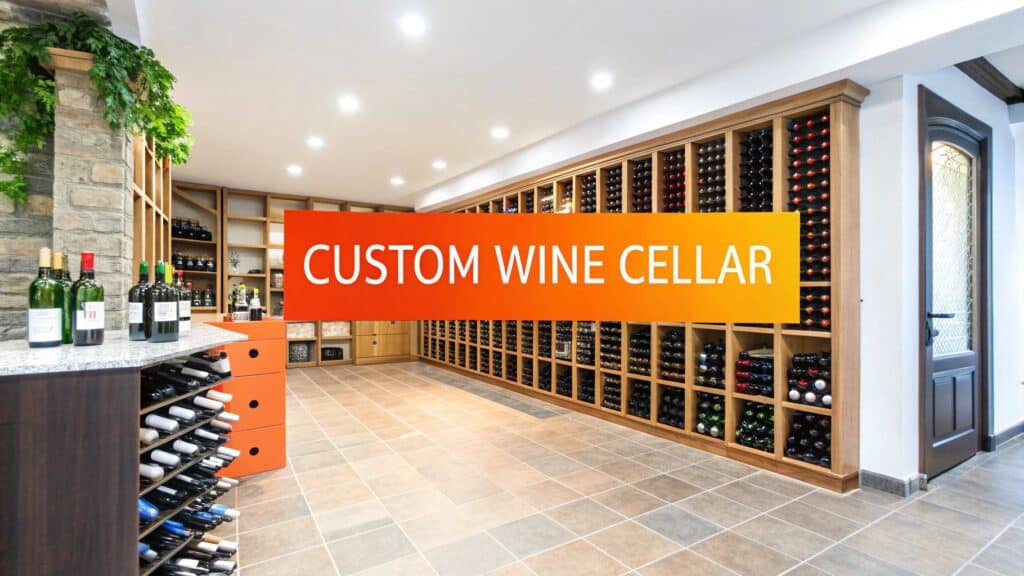
A custom wine cellar design is more than just a storage space; it's a dedicated environment, meticulously engineered to protect, age, and beautifully display your wine collection. For discerning homeowners in Orange County, it represents a seamless fusion of precise climate control and stunning aesthetics, where racking, lighting, and finishes converge to create a space that is as functional as it is breathtaking.
Why a Custom Wine Cellar is More Than Just Storage
Let's be clear: a professional wine cellar is far more than a chilled room. It is a significant investment in one of life’s great pleasures and a sophisticated statement piece for your home. It’s an exceptional way to transform an underutilized space—a spare closet, a basement corner, or a dedicated room—into a feature that elevates both your lifestyle and your property value.
The real magic happens when the art of design meets the science of preservation. This is a technical build that demands a deep, professional understanding of how temperature, humidity, light, and subtle vibrations impact wine over time. Getting these details right is non-negotiable, and that’s where an expert approach makes all the difference.
It’s Not Just Racks and a Cooling Unit
A true custom cellar is a complete, sealed system that extends far beyond installing shelves and a cooling unit. It involves ensuring the structural integrity of the room, installing specialized moisture barriers, and applying high-performance insulation—all fine-tuned details that prevent costly issues like mold or temperature swings from destroying a valuable collection.
Here’s what truly sets a bespoke cellar apart:
- Layouts Built for Your Collection: The design is tailored to the unique dimensions of your space and, just as importantly, the current size and future growth of your wine collection.
- Precision Climate Control: This is the heart of the cellar. The system is engineered to maintain a rock-steady environment, typically around 55°F with 50-70% humidity—the ideal conditions for perfect aging.
- Materials That Last: Every element, from the wood for the racks to the flooring and the cellar door, is carefully selected for its durability and ability to perform in cool, humid conditions without warping or degrading.
- Smart, Safe Lighting: We utilize low-heat LED lighting to create the perfect ambiance, highlighting your collection beautifully without exposing the wine to damaging UV rays or heat.
This isn't an average remodeling project. Building a specialized environment requires deep expertise in moisture management and structural integrity. That’s why partnering with a Licensed General Contractor who understands the intricate building science is crucial. It’s this unique blend of high-end remodeling skill and technical restoration knowledge that sets Sparkle Restoration Services apart. For a deeper dive into the possibilities, this guide to home wine cellar design is an excellent resource to explore.
A well-designed wine cellar is a sanctuary built for patience. It’s a space where time works for you, slowly transforming good wine into a truly exceptional experience.
Ultimately, a custom wine cellar design is a deeply personal journey—a reflection of your taste, your collection, and your passion for wine. When you combine your vision with our award-winning craftsmanship, we create a space that not only protects your investment but brings you joy for decades. Our team is ready to guide you through this unique process, just as we do with the wide variety of services we offer homeowners throughout Orange County.
Planning Your Cellar for Flawless Wine Storage
Before installing a single rack, understand this: the foundation of an exceptional custom wine cellar design is meticulous planning. This is where your vision meets the technical realities of construction. A successful planning phase ensures your cellar performs flawlessly for decades; errors at this stage can lead to significant headaches down the road.
The first critical decision is identifying the best location in your Orange County home. Basements are the classic choice for good reason—they're naturally cool and dark. However, they are far from the only option. We have helped homeowners get incredibly creative, turning underutilized spaces into stunning cellars.
You might be sitting on the perfect spot right now:
- A Repurposed Closet: A walk-in or even a standard closet can be transformed into a compact and highly effective cellar, an ideal solution for smaller, curated collections.
- Under a Staircase: This is one of our favorite transformations. This often-wasted space can be framed and insulated to create a unique, eye-catching wine feature that becomes a conversation piece.
- A Dedicated Room: For the serious collector, converting a spare bedroom or a little-used den offers maximum design freedom, providing ample room for high-capacity racking, tasting areas, and dramatic custom displays.
Finding the Perfect Spot in Your Home
When scouting locations, it's essential to think like a bottle of wine. Your primary concerns are ambient temperature, humidity, and vibration. A space that is already cool, dark, and away from the rumbling of a laundry machine or home theater system will be far more efficient to convert.
Why does this matter? Constant vibration can disturb the sediment in aging wines, hindering their long-term development.
Likewise, an area exposed to direct sunlight or large temperature swings will require more robust insulation and a more powerful (and expensive) cooling system. This increases both initial construction costs and long-term energy bills. A professional assessment can quickly pinpoint the most stable and cost-effective spot in your home, setting the project up for success from the very beginning.
This infographic breaks down the core decision-making process for your custom wine cellar design, from picking a location to defining its size and style.

As you can see, these elements are all interconnected. The location you choose will often determine the practical limits of your cellar's size and heavily influence your stylistic choices.
The Non-Negotiable Structural Preparations
Once you've selected a location, the real work begins: preparing the "envelope" of the room. We cannot stress this enough—this is the most critical stage of the entire build. This process creates the sealed, stable environment your wine needs to thrive. Without a perfect envelope, even the best cooling unit will struggle, constantly running while failing to maintain ideal conditions.
The success of a wine cellar is built long before the first bottle is stored. It's determined by the unseen details—the vapor barrier, the insulation, the airtight seal. Skipping these steps is like building a boat with a hole in it.
This is not a typical remodeling job. Proper preparation requires specialized knowledge of moisture control and thermal dynamics and must be performed by a qualified contractor. As a Licensed General Contractor with IICRC Master Certification, we have a deep understanding of the building science required to create these controlled environments.
Here are the essential structural elements that have to be done right:
- Framing: First, the room must be framed to accommodate the proper depth of insulation and provide a solid structure for your racking system and the heavy, insulated cellar door.
- Vapor Barrier: A minimum 6-mil plastic sheeting must be installed on the "warm" side of the insulation—the exterior of the cellar walls and ceiling. This is non-negotiable. It prevents condensation and mold, which can ruin a wine collection.
- Insulation: Closed-cell spray foam insulation is the undisputed gold standard for wine cellars. It provides a high R-value and, critically, acts as its own vapor barrier. We aim for a minimum of R-19 in the walls and R-30 in the ceiling.
Nailing this envelope ensures your cooling system runs efficiently, keeps your energy bills down, and most importantly, protects your collection from damaging environmental swings. Our expertise in both high-end remodeling and construction allows us to handle these technical requirements with the precision your investment deserves, turning chaos into calm, fast.
Mastering Climate Control in Your Wine Cellar
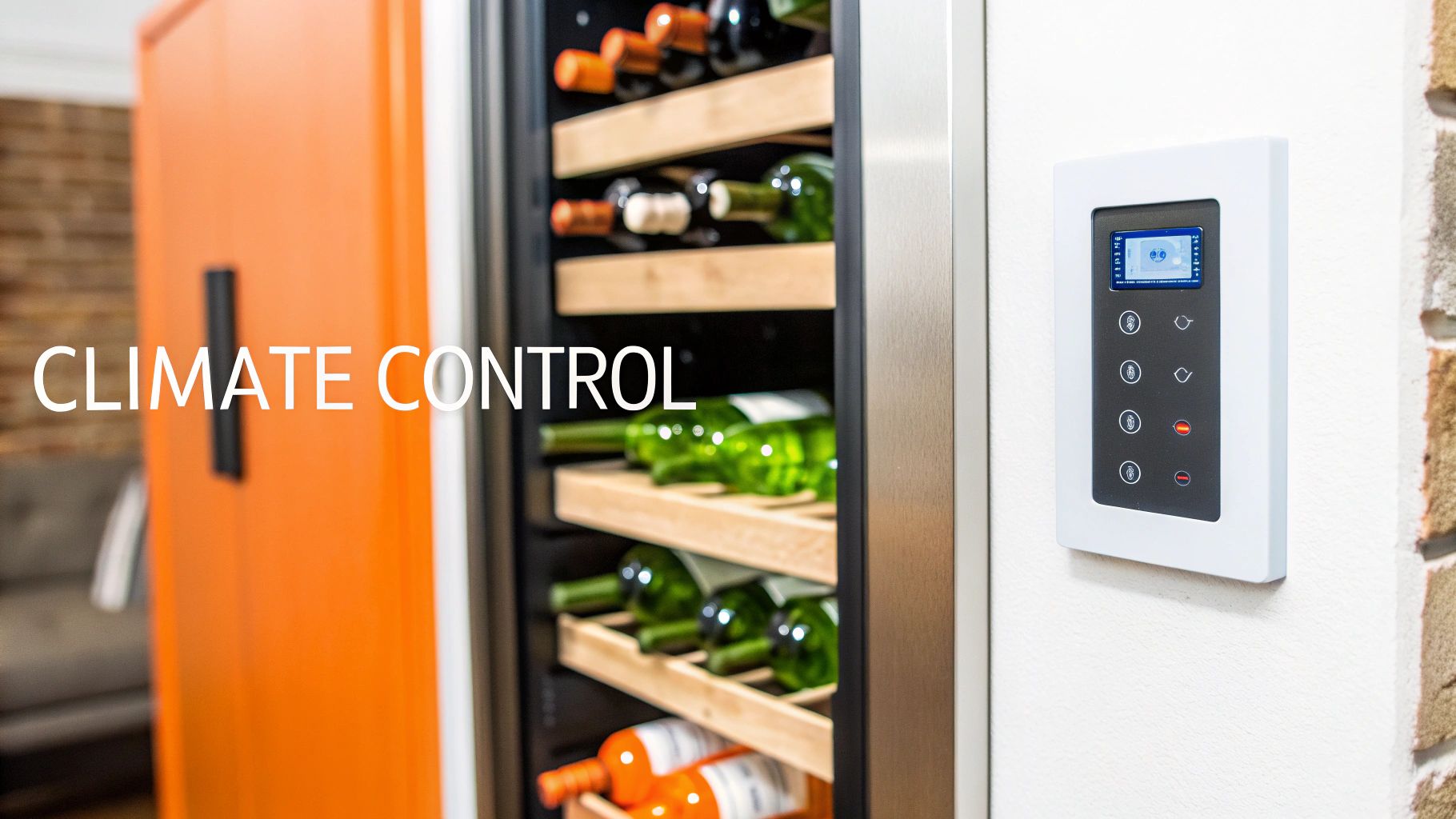
If the structure is the body of your wine cellar, the climate control system is its beating heart. This is the single most important technology for preserving your wine collection and ensuring every bottle matures perfectly. Without it, even the most beautiful cellar is merely a storage closet.
The primary goal is consistency. Wine abhors fluctuation, which is why any custom wine cellar design must include a system engineered to maintain a very specific environment. The industry standard is a steady temperature around 55°F with relative humidity between 50-70%.
Deviating from this narrow range causes problems. If the temperature is too high, wine ages too quickly, "cooking" and destroying its nuanced flavors. Too cold, and the aging process halts. Humidity is equally critical; too low, and corks dry out, allowing oxygen to spoil the wine, while too high invites mold and ruins labels.
Choosing the Right Cooling System
Selecting the right climate control unit is not a one-size-fits-all decision. The ideal system for your Orange County home depends on the cellar's size, its location, your budget, and your aesthetic goals.
There are generally three types of systems available:
- Self-Contained Units: These are the most straightforward and budget-friendly options. A single unit is mounted through the wall, functioning much like a window air conditioner. They are best for smaller cellars or converted closets where you can easily vent into an adjacent space.
- Split Systems: This is the preferred choice for most serious custom cellars. The evaporator (cooling component) is inside the cellar, while the noisy, heat-producing condenser is located elsewhere—a garage, utility room, or even outside. This provides top-tier performance, quiet operation, and a cleaner aesthetic.
- Ducted Systems: For a completely invisible solution, a ducted system is the answer. The entire mechanical unit is hidden away, delivering cold air into the cellar and removing warm air through insulated ducts. It is the ultimate seamless solution for larger cellars and discerning homeowners.
The Importance of Professional Installation
Regardless of the system you choose, professional installation is non-negotiable. An improperly installed or incorrectly sized unit will struggle to maintain the correct temperature, run inefficiently, and fail prematurely. This is a technical job that requires a professional understanding of load calculations, ventilation, and condensation management.
A professional ensures every component works together flawlessly. This includes optimizing airflow within the room, which is crucial for maintaining consistent conditions from top to bottom. Proper airflow is a vital part of a healthy home, and you can learn more by exploring our professional HVAC system cleaning services.
A wine cellar's cooling system does more than just chill the air; it creates the perfect, stable conditions for alchemy. It’s the invisible guardian that allows time, chemistry, and craftsmanship to transform a simple grape into a masterpiece.
Ultimately, investing in the right climate control is an investment in your collection's future. It provides the peace of mind that every bottle is protected and aging exactly as the winemaker intended. At Sparkle Restoration Services, our expertise as both a Licensed General Contractor and an IICRC Master Certified firm ensures your cellar's climate system is integrated flawlessly, turning your design vision into a perfectly preserved reality.
Integrating Smart Technology for Modern Collectors
Today’s luxury homes in Orange County are defined by the blend of sophisticated design with effortless control, and your custom wine cellar should be no different. By integrating smart technology, you transform your cellar from a static storage space into a dynamic, responsive environment that actively protects every bottle. This is about more than convenience—it’s about precision, security, and total peace of mind.
Imagine adjusting your cellar’s humidity from your phone while on vacation or receiving an instant alert if the temperature rises unexpectedly. This level of oversight is now easily achievable, giving collectors a degree of control once possible only in commercial wineries.
Automated Climate and Security Systems
The core of any smart cellar is its automated climate control system. Unlike traditional thermostats, modern smart systems provide real-time data and complete remote access. You can monitor temperature and humidity from anywhere, receive alerts for fluctuations, and review historical data logs to track your cellar's performance.
This proactive monitoring is critical for protecting a valuable collection. Furthermore, advanced security features can be tied directly into your home's existing smart ecosystem.
- Temperature and Humidity Sensors: Receive instant notifications on your phone if conditions deviate from your preset optimal range, allowing you to address a problem before it can harm your wine.
- Leak Detectors: Place sensors on the floor to get an immediate alert about potential water intrusion from a cooling unit malfunction or plumbing issue—a simple but crucial safeguard.
- Door and Motion Sensors: Enhance security by integrating sensors that notify you of unauthorized access, adding a vital layer of protection for your high-value assets.
To manage these devices cohesively, you can explore various smart home hub options that unify everything for streamlined management.
Smart technology is the ultimate insurance policy for your wine collection. It’s a silent guardian, working 24/7 to protect your investment from the environmental threats that can ruin a lifetime of collecting.
Digital Inventory Management
For any serious collector, tracking every bottle—its location, drinking window, and purchase history—can become a significant task. Smart inventory management apps like CellarTracker and VinCellar completely change the game by turning your physical collection into a searchable, digital database on your phone.
Simply scan a bottle's barcode as you add it to the cellar, and it’s instantly logged. You can view your entire collection at a glance, sort by region or varietal, and access professional reviews and optimal drinking windows. No more searching through racks for a specific bottle or letting a prized vintage age past its prime.
Here's a quick look at how a smart cellar stacks up against a traditional one:
Smart Cellar Features vs Traditional Cellar Features
| Feature | Traditional Wine Cellar | Smart Wine Cellar |
|---|---|---|
| Climate Control | Manual thermostat, periodic checks needed. | Automated, real-time monitoring with remote adjustments and alerts. |
| Inventory | Manual logs, spreadsheets, or memory. Prone to errors. | Digital database with barcode scanning, search, and sort functions. |
| Security | Standard lock and key. | Integrated sensors for unauthorized access, leaks, and motion. |
| Data & Insights | None. Relies on external research. | Historical data logs, professional reviews, and drinking window alerts. |
| Accessibility | Physical presence required to check conditions or find a bottle. | Remote access to all cellar data and controls from a smartphone or tablet. |
The trend towards smart features marks the future of wine storage. While the traditional wine cellar market is projected to grow at a steady 5.1% CAGR from 2025 to 2034, the smart cellar segment is expected to expand at a much faster rate of around 8.6% CAGR during the same period. This shows a clear preference for tech-forward solutions that offer superior protection and effortless management.
Integrating these smart features into your custom wine cellar design from the start is key to a flawless result. At Sparkle Restoration Services, our design-build process seamlessly incorporates these technologies, creating a cellar that is not only beautiful but also intelligent, secure, and perfectly suited to the modern Orange County lifestyle.
Choosing Your Racking, Lighting, and Finishes
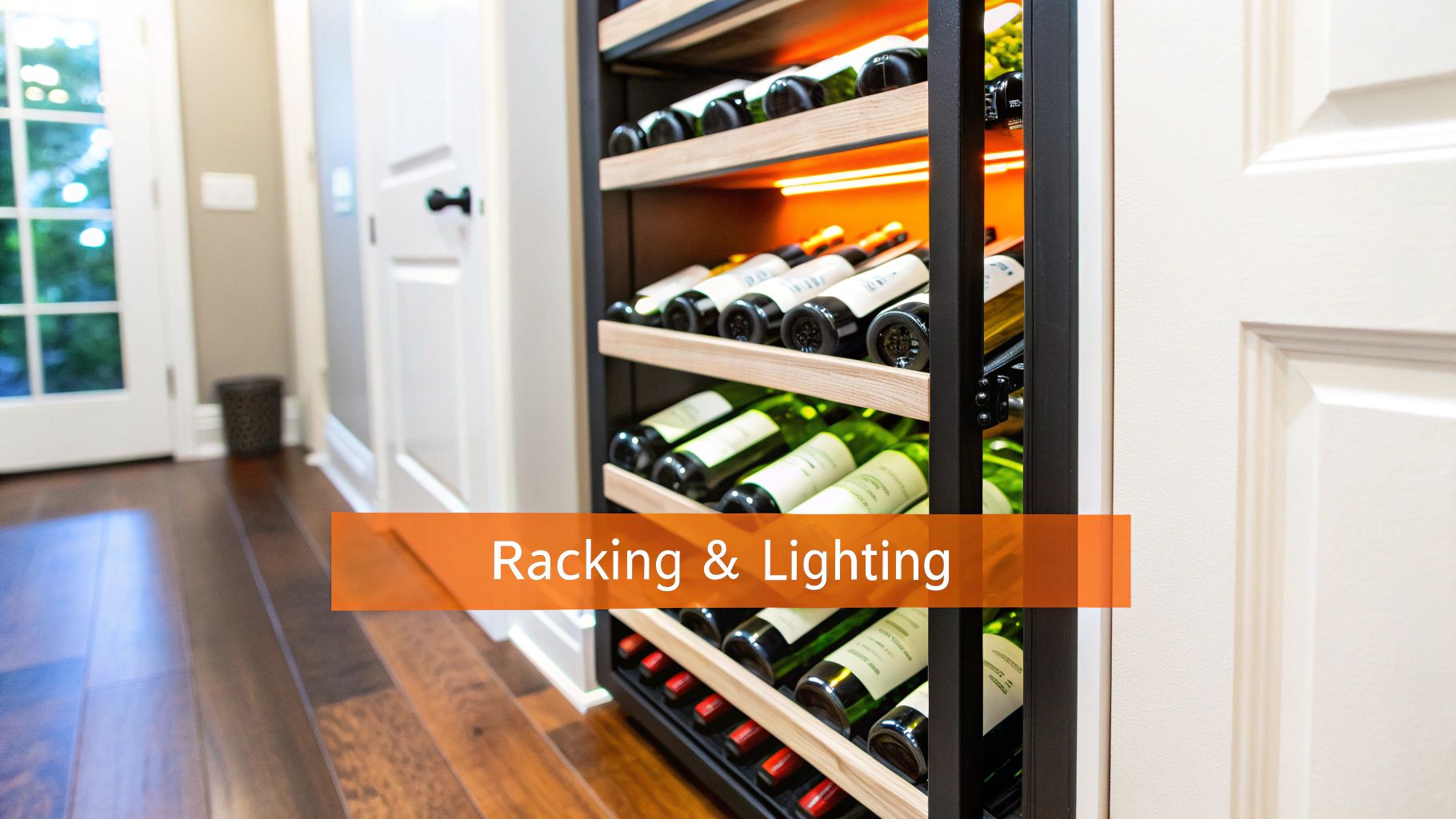
Once the structural work is complete and the climate control system is in place, we can bring the personality of your custom wine cellar design to life. Your choices in racking, lighting, and finishes will define whether your cellar feels like a timeless, old-world retreat or a sleek, modern gallery.
These elements are more than just aesthetic; they are critical to the cellar's performance. The racking system dictates storage capacity and how you interact with your collection. The right lighting creates an incredible ambiance, but the wrong kind can ruin your wine. Every material, from the floor to the ceiling, must withstand the cellar’s cool, humid environment.
Selecting the Perfect Wine Racking System
Think of wine racking as the furniture of your cellar. The options are nearly endless, and your final decision will balance bottle capacity, accessibility, and the overall aesthetic you want to achieve.
For a classic, traditional feel, wood remains the undisputed champion. However, not just any wood will do. You need species that are naturally resistant to cool, humid conditions to prevent rot and warping.
- Redwood: A perennial favorite for its beautiful reddish tones and natural resilience to decay.
- Mahogany: Provides a rich, luxurious look with exceptional durability and a clean, straight grain.
- Walnut: Known for its deep, dark color that adds a sense of warmth and sophistication.
If you are leaning toward a more contemporary style, metal and acrylic systems offer clean lines and a minimalist feel. These are perfect for creating dramatic "wine walls" or display-focused cellars where the bottles themselves become art. Metal racks are fantastic for maximizing bottle density, while acrylic can create a stunning "floating bottle" effect.
The best racking system is one that grows with your collection. We always advise clients to incorporate a mix of bulk storage for cases, individual bottle slots, and a few high-profile display rows. This provides the flexibility to both age your workhorse wines and showcase your prized bottles.
The investment in high-end wine storage has grown significantly. The global wine cellar market was recently valued at USD 3.2 billion, demonstrating how seriously homeowners are taking the protection of their collections. That figure includes everything from small freestanding cabinets to the custom walk-in cellars we specialize in. You can discover more insights about the wine cellar market on gminsights.com.
Illuminating Your Collection—Safely
Lighting is perhaps the most dramatic element in a wine cellar, but it's also the most dangerous if improperly implemented. Wine is incredibly sensitive to both heat and UV light, which can damage delicate compounds and prematurely age your bottles. This means standard incandescent or halogen bulbs are completely unsuitable.
The only safe and effective choice is low-voltage LED lighting. LEDs produce almost no heat and emit zero UV radiation, making them perfectly safe for long-term wine storage. They are also incredibly versatile, allowing for creative and sophisticated designs.
- Backlit Panels: We can install these behind racks to create a soft, ambient glow for a modern, ethereal look.
- Accent Lighting: Using small, focused spotlights to highlight specific bottles, magnum displays, or unique architectural details is a refined touch.
- Integrated Rack Lighting: LED strips can be built directly into the racking, illuminating entire rows of bottles and making labels easy to read without flooding the space with light.
Well-designed lighting transforms a cellar from a simple storage room into a breathtaking showroom that invites you and your guests to explore the collection.
Curating Floors, Doors, and Finishes
The final touches—flooring, doors, and other finishes—are what unify the entire design. As with everything else in the cellar, material choices here are critical. They must be durable and resistant to the cool, damp environment.
For flooring, materials like natural stone, porcelain tile, or cork are excellent choices, as they are impervious to moisture and easy to clean. If you love the look of wood, engineered hardwood is the only suitable option; solid wood will warp in a cellar environment. Our team can guide you through a wide range of beautiful and durable options with our expert flooring sales and installation services.
The cellar door is not just an entryway; it's a critical piece of equipment. It must be an exterior-grade door, fully insulated with weather stripping to create an airtight seal that keeps cool air in and warm air out. If you opt for glass, it must be dual-paned and UV-protected. From reclaimed barrel wood ceilings to slate accent walls, these are the final details that complete your vision, turning a functional space into a true personal sanctuary.
Building Your Legacy Cellar with an Expert Partner
Bringing an exceptional custom wine cellar design from concept to reality is a unique challenge. This is not an average remodeling project; it demands a partner with a rare combination of skills in both high-end construction and the nuanced science of climate control. This is precisely where Sparkle Restoration Services excels for homeowners across Orange County.
A stunning design is just the starting point. The true test—the longevity of your cellar and the safety of your collection—lies in the details you can't see. Our credentials as a Licensed General Contractor ensure every structural element is handled with absolute precision. Paired with our IICRC Master Certification, we bring an expert understanding of moisture and humidity—the two factors that can make or break a cellar.
The Sparkle Design-Build Advantage
Selecting the right builder transforms a complex, multi-layered project into a smooth and exciting experience. We manage every detail under one roof, from the initial architectural draft to the final calibration of your cooling system. This integrated approach eliminates the communication breakdowns and delays that are common when juggling separate designers and contractors.
Our process is built around your vision. We blend your personal taste with our deep technical expertise to create a cellar that is not only beautiful but engineered to perform flawlessly for decades.
At Sparkle Restoration Services, we don't just build wine cellars; we craft legacy spaces. Our commitment, recognized by our BBB Torch Award for Ethics, is to deliver an extraordinary experience rooted in trust, quality, and meticulous craftsmanship.
We understand the specific challenges of building in Southern California homes. Whether it’s managing the coastal air in Newport Beach or integrating the smart home technology popular in Irvine, our local expertise is a critical asset.
Ready to begin the conversation about your dream cellar? Learn more about our specialized design-build services and book a complimentary consultation today. Let us show you how we turn chaos into calm, fast.
Common Questions About Custom Wine Cellar Design
When considering a custom wine cellar design, many questions naturally arise. Here in Orange County, homeowners want to understand the key variables from the start to ensure their investment aligns with both their vision and their budget.
One of the first questions we receive is, "What will a custom wine cellar cost?" The honest answer is that it varies significantly. A beautifully designed, compact cellar might start around $25,000. In contrast, larger, more intricate cellars with premium finishes, smart home integration, and fully custom racking can easily exceed $100,000. The final cost depends on the size of the space, your material selections, and the sophistication of the climate control system.
Timelines and Ongoing Care
"How long will my home be under construction?" is another frequent question. From design finalization to the day you stock the first bottle, a typical project takes between 8 to 16 weeks. This timeframe allows for proper framing, insulation, installation of the cooling system, and all the detailed finish work—such as racking and lighting—that makes the space truly special.
Finally, clients often ask, "What kind of maintenance is required?" To keep your cellar and your collection in perfect condition, the most important task is an annual service for your climate control system. Similar to your home's main HVAC unit, a yearly check-up ensures it runs efficiently. Beyond that, maintenance involves keeping the space clean and enjoying the process of organizing your collection.
A well-maintained cellar is a worry-free sanctuary for your wine. Simple, consistent care of its core systems guarantees flawless performance and protects your collection for years of enjoyment.
This minimal upkeep prevents small issues from becoming major problems. It’s the final piece of the puzzle, ensuring the environment you’ve carefully created performs just as beautifully as it looks.
Ready to transform your vision into a stunning reality? The experts at Sparkle Restoration Services combine award-winning craftsmanship with technical precision to build the custom wine cellar you've always dreamed of. Schedule your complimentary consultation with our Orange County design-build team today.
Ready to create a space that’s as beautiful as it is functional? Schedule your complimentary design consultation today by visiting Ready to Work with Sparkle?