



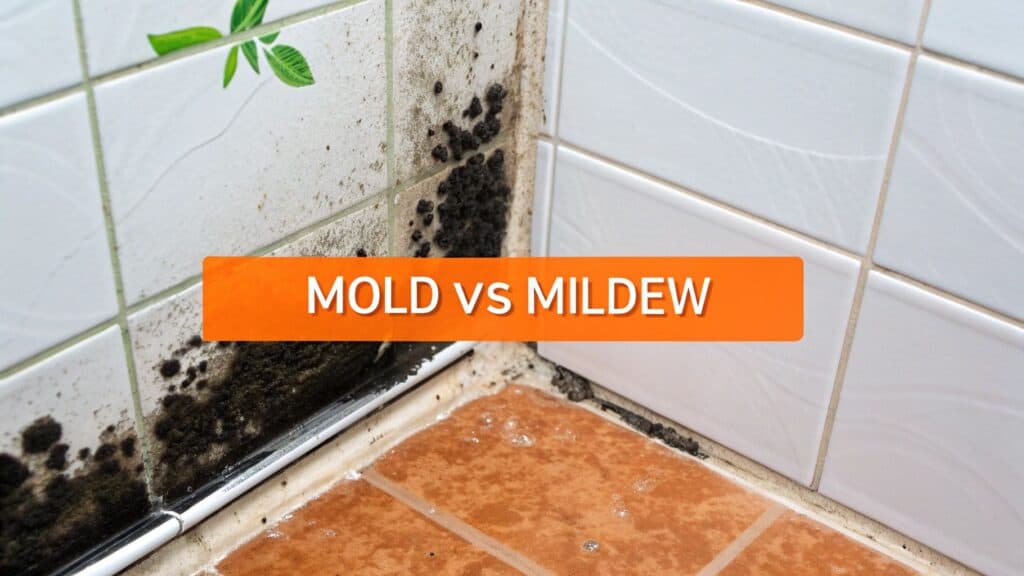
The key difference between black mold and mildew boils down to their appearance and the damage they can inflict. Consider mildew a surface-level fungus that appears flat and powdery. Black mold, on the other hand, is often slimy or fuzzy and grows into materials, posing a much more serious threat to your Orange County home and your family's health.
For discerning homeowners and property managers in communities like Newport Beach and Irvine, understanding which one you're facing is the first critical step toward protecting your investment and ensuring a safe indoor environment.
Identifying Fungal Growth in Your Home
Discovering a strange patch of growth in your home is always unnerving, but not all fungi are created equal. Both black mold and mildew thrive in the damp, humid environments common throughout Southern California—from a steamy bathroom in a coastal home to a poorly ventilated laundry room. However, their characteristics, the risks they pose, and the remediation strategies they require are vastly different.
Mildew is typically a minor, surface-level issue. You’ll see it as a gray, white, or sometimes yellowish powdery patch on shower grout, window sills, or even damp fabrics. The good news is that it’s relatively easy to clean with household products because it doesn't root itself deep into surfaces.
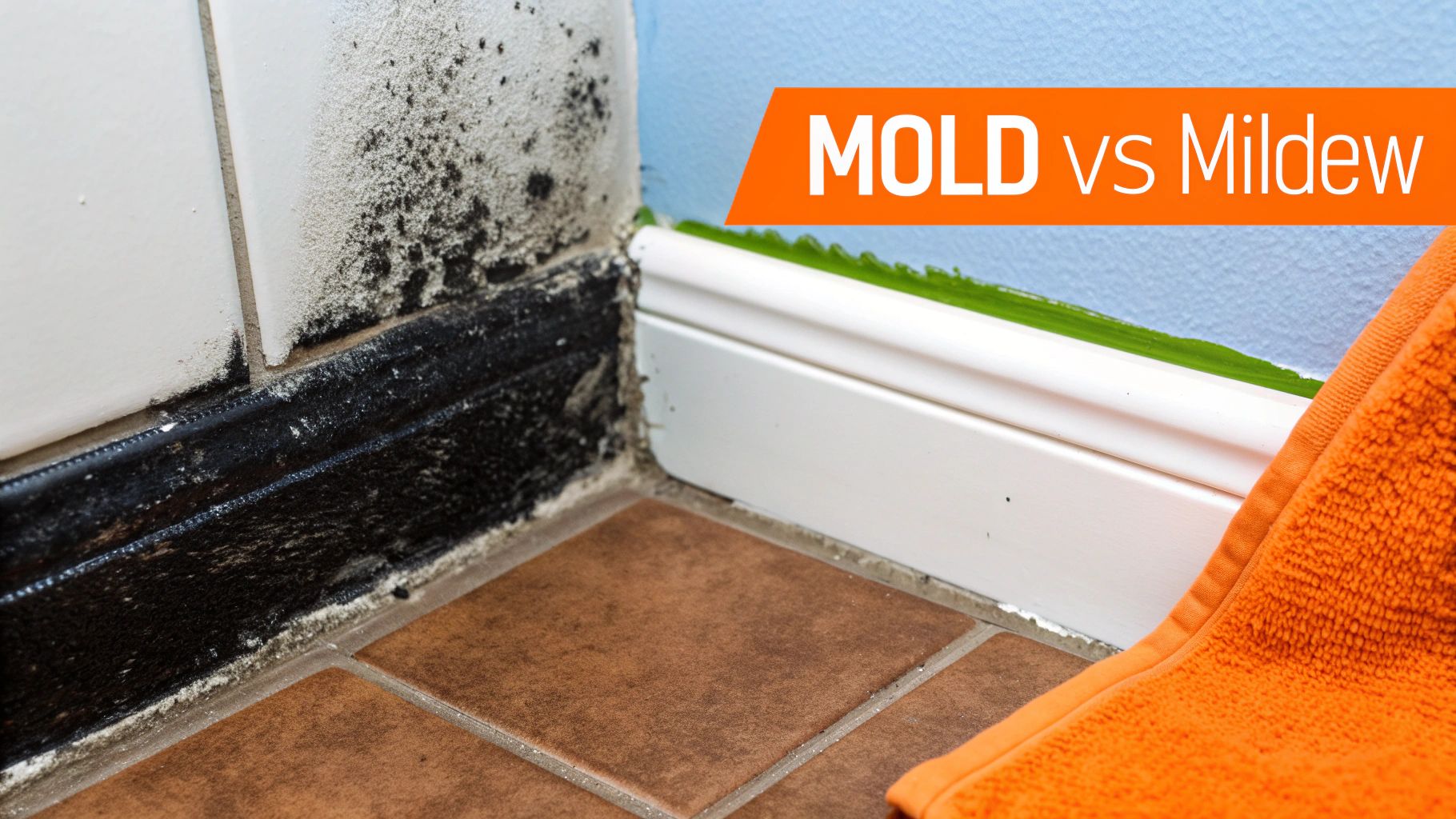
Black mold, known scientifically as Stachybotrys chartarum, is far more invasive. It presents as dark green or black spots, often with a slimy or fuzzy texture. Its presence is a major red flag for an ongoing moisture problem, as it requires a constant water source to colonize materials like drywall, wood framing, and insulation.
The most critical distinction for homeowners is that black mold develops roots, known as hyphae, that burrow deep into porous materials. This makes surface cleaning ineffective and requires IICRC-certified professional remediation to fully eradicate the problem and prevent its return.
This structural difference has significant financial implications. Black mold's ability to root deeply means the problem is often far more extensive than what is visible. Mildew remains on the surface. This creates a massive gap in remediation timelines and costs. While mildew can usually be handled with targeted surface cleaning, black mold often demands professional containment, specialized equipment, and sometimes even HVAC system decontamination, resulting in a much larger investment. You can discover more insights about mold growth patterns on jmenvironmental.net.
To help you make a preliminary identification, here is a quick guide to their most common characteristics.
Quick Guide Black Mold vs Mildew at a Glance
Use this side-by-side comparison to help you identify fungal growth in your home. While this table can help you make an informed guess, only professional testing can provide a definitive answer.
| Characteristic | Mildew | Black Mold (Stachybotrys chartarum) |
|---|---|---|
| Appearance | Powdery or downy texture; flat growth | Slimy or fuzzy texture; can be slightly raised |
| Color | Typically white, gray, or yellowish | Dark green, dark gray, or jet black |
| Odor | Mild, musty smell, similar to damp socks | Strong, earthy, and persistent musty odor |
| Location | Surfaces with high humidity like grout, fabrics, and plants | Areas with constant water damage like behind walls, under floors, or ceilings |
| Health Risk | Mild allergic reactions, respiratory irritation | Potentially severe reactions due to mycotoxins, including chronic respiratory issues |
Ultimately, mildew is an annoyance you can often manage yourself. Black mold, however, is a serious threat that can compromise your home's structural integrity and your family's well-being, almost always requiring the expertise of a certified professional.
Comparing Growth Conditions and Common Locations
Understanding what invites mold and mildew into your home is the first step toward preventing them. While both are fungi that thrive on moisture, the specific environments they require are vastly different. This is a crucial part of understanding the difference between black mold and mildew.
Think of it this way: mildew is like an annoying houseguest who appears when things get a little steamy. Black mold is a destructive squatter that moves in following a serious, long-term plumbing or water intrusion failure.
Mildew is relatively low-maintenance. It only needs surface moisture and high humidity to get started—conditions found in almost any Orange County home after a hot shower or on window sills where condensation gathers. It’s a surface-level problem that lives on top of materials without consuming them.
Black mold, on the other hand, is much more demanding. It requires a constant, direct water source to take hold. This isn’t about a little humidity; this fungus needs a persistent leak, previous flood damage, or a chronic moisture issue that keeps its food source—cellulose-based materials like drywall and wood—continuously wet.
Where Mildew Typically Appears
Because mildew only needs temporary dampness to grow, you'll usually find it out in the open. Its presence is often a sign of poor ventilation, not a major water disaster.
You're most likely to spot mildew in these places:
- Bathroom Grout and Tiles: Constant steam from showers creates the perfect breeding ground.
- Window Sills and Frames: Condensation provides just enough moisture for it to grow.
- Shower Curtains and Liners: These surfaces trap dampness and are slow to dry.
- Damp Fabrics or Upholstery: A pile of wet towels left for too long is a magnet for mildew.
In most cases, improving airflow or wiping down surfaces regularly is enough to keep it at bay.
Where Black Mold Hides
Black mold is far more sinister. Its need for a constant water source and its appetite for cellulose mean it almost always grows in hidden, undisturbed areas. If you see it on a wall, the problem behind that wall is likely much worse.
The discovery of black mold is a clear signal of a serious, ongoing water leak. It doesn't just appear because a room is humid; it's a symptom of a deeper issue like a hidden pipe leak, a failing roof, or a compromised foundation.
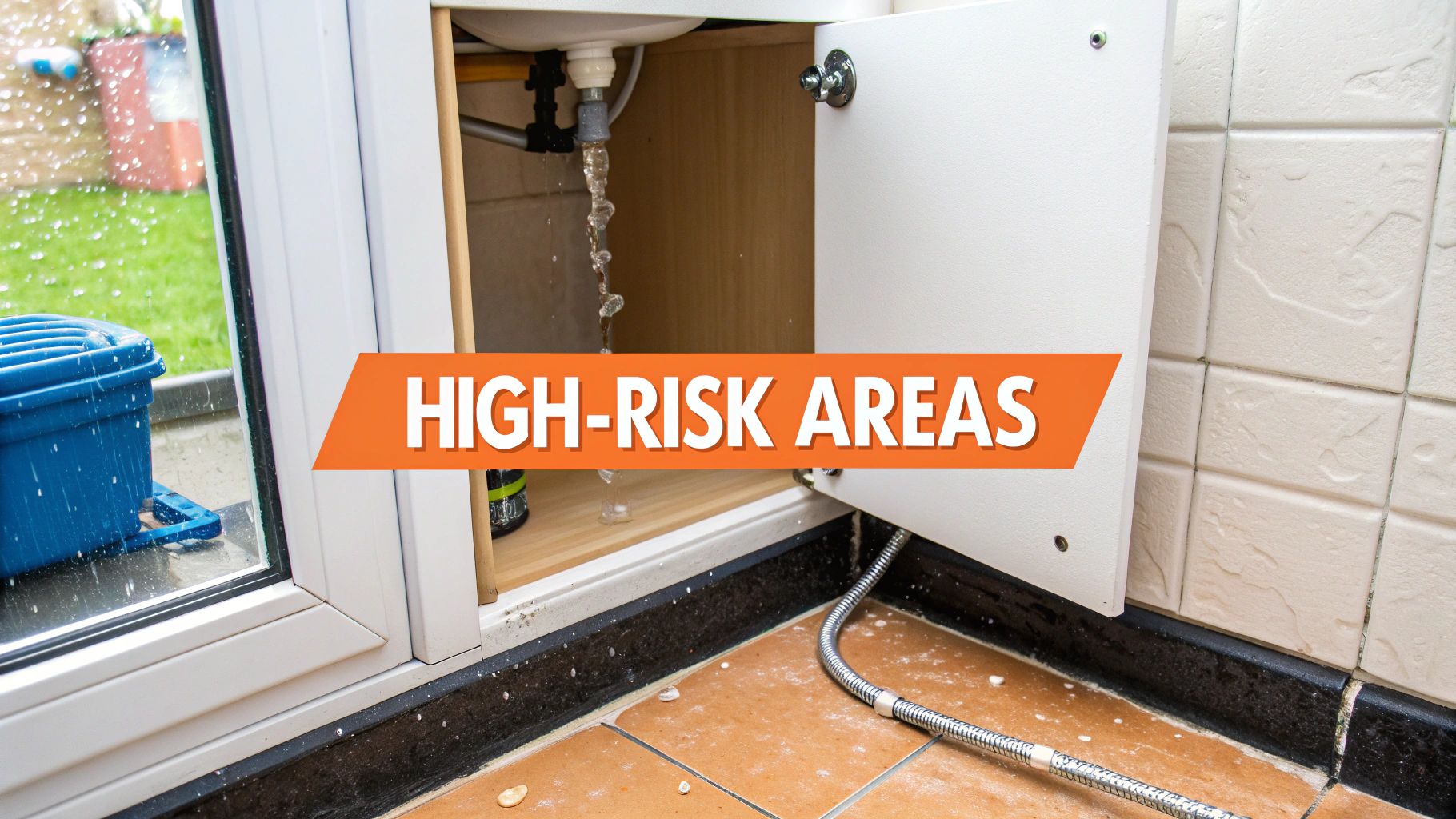
High-risk areas for black mold in Southern California homes often include:
- Behind Drywall: A slow, dripping pipe will saturate the paper backing on drywall, creating a buffet for black mold.
- Underneath Flooring or Carpets: Leaks from appliances can seep under floors, creating a dark, damp, and ideal breeding ground.
- In Attics and Crawl Spaces: Poor ventilation combined with small roof leaks can turn these spaces into massive mold colonies.
- Within HVAC Systems: Condensation in ductwork can mix with dust (which contains organic material), allowing mold to grow and spread spores throughout your entire home.
That last point is critical, as your HVAC system can effectively deliver mold spores to every room. Proper maintenance is non-negotiable, and a professional assessment is often the only way to know if your system is clean. Our guide on the benefits of HVAC system cleaning offers valuable insights for homeowners. Because black mold thrives in the dark, finding it often requires a trained eye and professional moisture detection equipment.
Understanding the Health Risks of Mold and Mildew
While both mold and mildew can degrade your home's air quality, the health risks they present are worlds apart. Grasping this core difference between black mold and mildew is essential for protecting your family. It’s like comparing a common cold to a serious infection—you want to avoid both, but one demands a much more urgent and specialized response.
Mildew exposure typically causes mild, temporary issues for most healthy people. Its spores can trigger allergic reactions similar to seasonal pollen, leading to symptoms like a nagging cough, sneezing, a sore throat, or a minor skin rash. While annoying, these issues usually resolve once the mildew is removed and the area is ventilated.
Black mold, specifically Stachybotrys chartarum, is another story entirely. This is because certain strains can produce microscopic toxins known as mycotoxins. When these toxins become airborne and are inhaled, they can trigger a host of severe and sometimes chronic health problems.
The Impact of Black Mold Mycotoxins
Unlike the allergenic effects of mildew, mycotoxin exposure can lead to more profound health issues. Everyone reacts differently, but long-term exposure is consistently linked to a significant decline in health. This is especially true for children, the elderly, and anyone with a compromised immune system.
Potential health problems from black mold exposure can include:
- Chronic Respiratory Issues: A persistent cough, wheezing, and shortness of breath that is more intense than typical allergy symptoms.
- Asthma Complications: For those with asthma, exposure can trigger severe and more frequent attacks.
- Neurological Symptoms: Some individuals report persistent headaches, memory problems, and a "brain fog" that impairs concentration after prolonged exposure.
- Severe Fatigue: A debilitating sense of exhaustion that rest does not alleviate.
The gravity of these health risks is precisely why professional remediation is more than just cleaning a stain—it's a critical health and safety intervention. If you're worried about the potential health effects, you can learn more about the connection between mold contamination and your health in our in-depth guide.
Scientific Evidence and Remediation Benefits
The link between professional mold removal and improved health is well-documented. Following major floods like Hurricane Katrina, researchers observed a significant spike in mold-related asthma among children. A study supported by the National Institute of Environmental Health Sciences found that professional mold remediation, combined with environmental controls, reduced asthma symptom days by an incredible 45%.
For Orange County homeowners, this data highlights a critical point: addressing a black mold problem is a direct investment in your family's health and well-being.
For discerning homeowners, the decision to hire a certified professional is not just about protecting property value—it's about ensuring a safe and healthy living environment. The potential long-term health complications associated with mycotoxin exposure far outweigh the cost of proper, IICRC-certified remediation.
At the end of the day, mildew is a nuisance that can often be managed with surface cleaning. Black mold, however, is a serious health hazard that demands a professional strategy. Recognizing the symptoms of exposure and understanding the science behind the risks empowers you to take swift, decisive action. At Sparkle Restoration, our approach is built on making your home not just clean, but fundamentally safe, turning the chaos of a mold discovery into the calm of a healthy home.
Choosing Between DIY Cleaning and Professional Remediation
Knowing when to use a scrub brush versus when to call a certified expert is the most critical decision an Orange County homeowner will make when facing mold. This choice impacts your property’s value and, more importantly, your family's health. Getting it wrong can escalate a small problem into a full-blown contamination event.
The fundamental difference between black mold and mildew guides this decision. Mildew is a surface-level fungus, often found on non-porous surfaces like bathroom tile. In these cases, a DIY approach with a quality cleaning solution and some elbow grease is usually sufficient for small, contained spots.
But the moment you suspect black mold, DIY is no longer a safe or effective option.
When DIY Is Not an Option
Attempting to remove black mold without professional training and equipment is a serious gamble. When you disturb a Stachybotrys chartarum colony without proper containment, you can release a massive cloud of toxic spores into your home's air. This is called cross-contamination, and it’s a common result of well-intentioned but improper cleaning attempts, spreading the problem far beyond the original area.
Furthermore, scrubbing the visible mold off drywall or wood does nothing to address the deep, root-like structures (hyphae) that have burrowed into the material. The mold will inevitably return, often more aggressively, because the underlying moisture source and hidden growth haven't been resolved.
For discerning homeowners, the decision to hire a certified professional is not just about protecting property value—it's about ensuring a safe, healthy living environment. The potential long-term health complications from mycotoxin exposure far outweigh the cost of proper, IICRC-certified remediation.
This decision tree provides a simple framework for evaluating potential health risks when you find growth in your home.
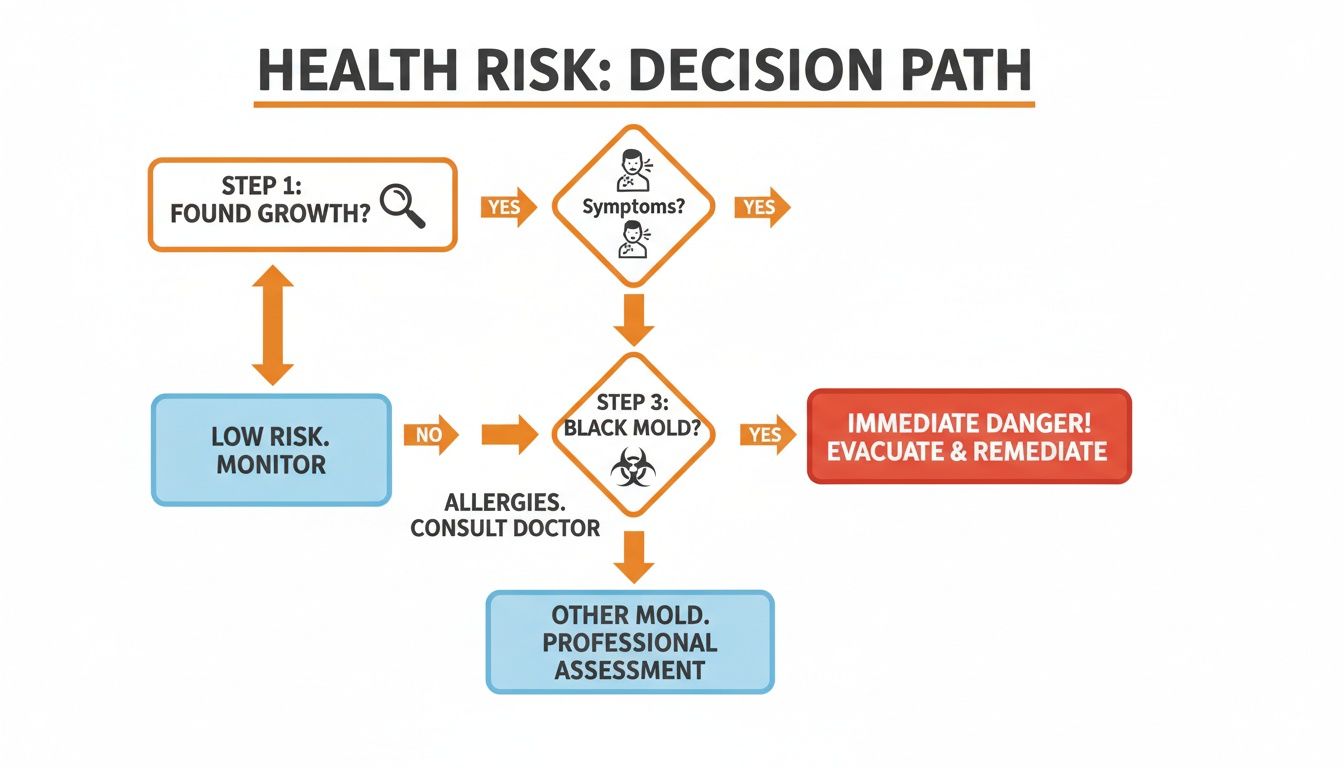
As the chart shows, if anyone in your home develops new symptoms after you discover the growth—especially if you suspect black mold—it's time to call a professional immediately to protect your family's well-being.
Decision Matrix DIY Cleaning vs Professional Remediation
To make this decision clearer, here’s a straightforward guide. Use this matrix to assess your situation and choose the safest, most effective course of action.
| Situation | Recommended Action | Rationale & Risk |
|---|---|---|
| Small, white/gray powdery spots on shower tile | DIY Cleaning | This is likely mildew on a non-porous surface. Standard household cleaners should work. Low risk of spore release. |
| Growth area is larger than 10 square feet | Professional Remediation | The EPA recommends professional help for areas this large, as it indicates a significant underlying moisture problem. |
| Splotchy black or dark green spots on drywall | Professional Remediation | High probability of toxic black mold. Disturbing it without containment will spread spores and mycotoxins throughout the home. |
| Musty smell but no visible growth | Professional Inspection | Mold could be growing inside walls, under floors, or in the HVAC system. Professionals have tools to find hidden sources. |
| Anyone in the home has allergies or asthma | Professional Remediation | Even non-toxic mold can trigger severe reactions. Professionals use air scrubbers and containment to protect indoor air quality. |
| Growth is on porous materials (wood, carpet) | Professional Remediation | Mold roots grow deep into porous surfaces. Simple surface cleaning won't remove it, and the mold will return. |
Ultimately, when there's any doubt about the type of growth or its extent, erring on the side of caution and calling an expert is always the wisest choice.
The Professional Remediation Process
Engaging an IICRC Master Certified firm like Sparkle Restoration Services ensures a systematic, science-backed approach that DIY methods cannot match. Our process is not just about cleaning what you can see; it's about complete eradication and future prevention.
Here’s what certified remediation looks like:
- Assessment and Inspection: We don’t just look; we investigate. Using moisture meters and thermal imaging, we pinpoint the full extent of water damage and find every hidden mold colony.
- Containment: The affected area is completely sealed off with physical barriers and negative air pressure. This ensures that no spores can escape into the rest of your home during removal.
- Air Filtration: High-efficiency particulate air (HEPA) scrubbers run continuously, capturing airborne spores and purifying the air while we work.
- Safe Removal: Mold-infested porous materials like drywall and insulation are carefully removed, bagged, and disposed of according to strict environmental regulations.
- Cleaning and Sanitization: All non-porous surfaces are cleaned with professional-grade antimicrobial agents. We then meticulously HEPA-vacuum every surrounding surface.
- Verification: Upon completion, we often recommend third-party testing to confirm the area is officially clear of contamination, giving you documented proof and total peace of mind.
This methodical process is the only way to guarantee black mold is gone for good and your home is a truly healthy environment again. To learn more about our meticulous work, explore our guide to professional mold remediation services. At Sparkle, we turn the chaos of a mold discovery into the calm of a restored and safe home.
Proactive Strategies to Prevent Mold and Mildew Growth
The most effective way to deal with black mold and mildew is to prevent them from establishing a foothold in the first place. For savvy Orange County homeowners, a proactive approach isn't just about cleanliness—it’s about protecting your property value and your family’s well-being.
The cardinal rule in the fight against fungi is moisture control. Without water, these unwanted guests cannot survive. Your primary goal is to eliminate excess humidity and dampness—a significant challenge in Southern California where coastal air can easily infiltrate homes.
Master Your Indoor Environment
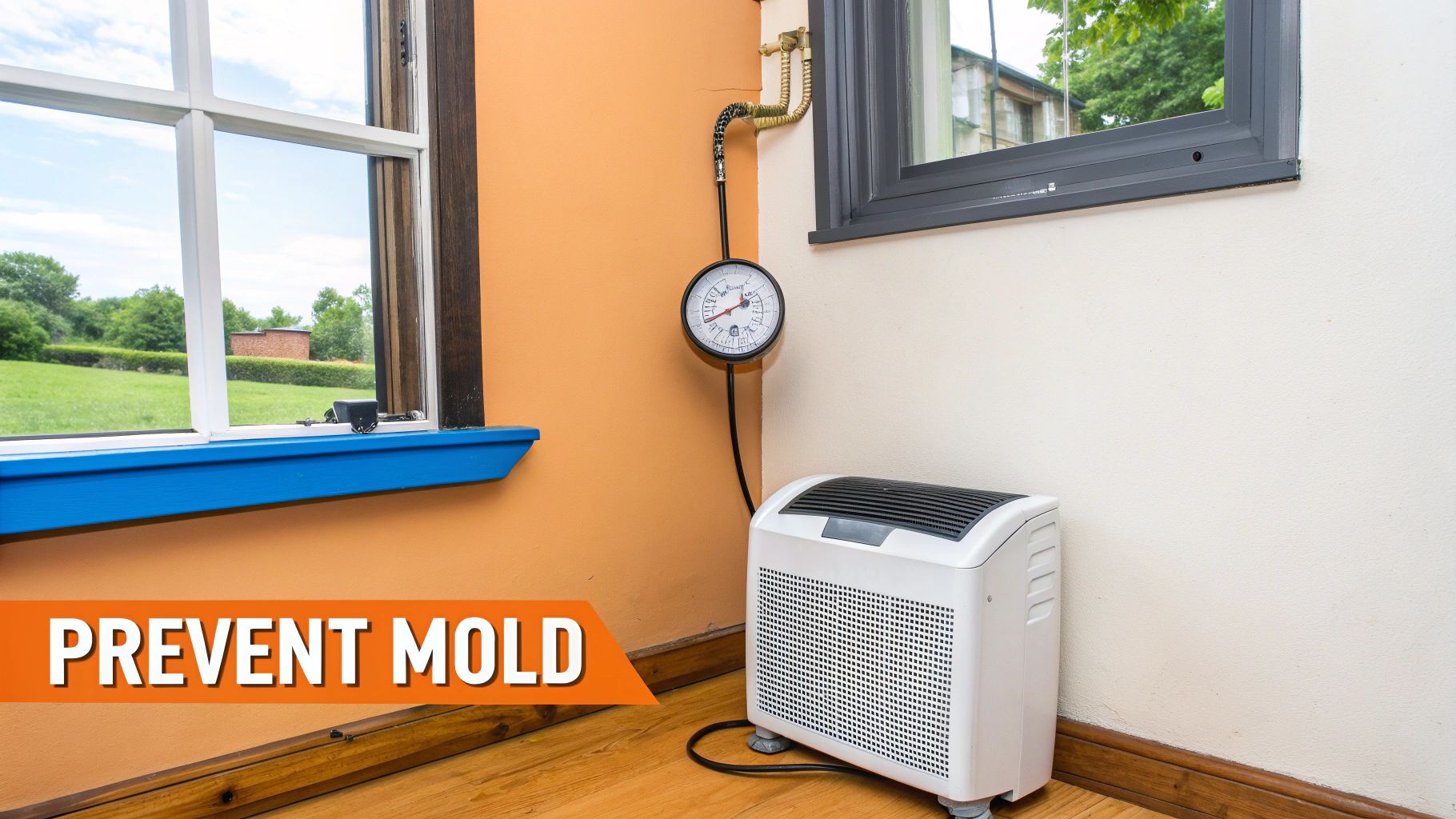
Controlling your home's atmosphere starts with humidity. Aim to keep indoor humidity levels between 30% and 50%. Once you exceed 50%, you are essentially rolling out the welcome mat for mold and mildew spores to activate and colonize.
Here’s how you can maintain that optimal balance:
- Invest in Dehumidifiers: Place these in chronically damp areas: basements, crawl spaces, and laundry rooms. Many modern units can automatically maintain your target humidity level.
- Use Your Exhaust Fans: This is non-negotiable. Run the fan in your bathroom during showers and for at least 30 minutes afterward. Do the same in the kitchen when cooking to exhaust steam and moisture.
- Maintain Your HVAC System: Your air conditioner is a natural dehumidifier. Regular service ensures it runs efficiently, while clean ducts prevent it from circulating spores throughout your home.
Fortify Your Home Against Water Intrusion
Even with perfect humidity control, a single persistent leak is all it takes for black mold to establish itself. Vigilance is your best defense against the hidden water damage that can escalate into a massive remediation project.
Think of routine property inspections as a form of insurance, not a chore. A quick five-minute walkthrough of key areas each month can catch a small drip before it leads to thousands of dollars in structural rot and mold contamination.
For homeowners looking to secure common trouble spots, a good guide to preventing mold in basements can be a valuable resource.
Make a consistent inspection routine second nature. Regularly check these vulnerable spots:
- Under Sinks: Look inside kitchen and bathroom cabinets for tell-tale water stains or slow drips.
- Appliance Hoses: Inspect the water lines for your washing machine, dishwasher, and refrigerator for cracks or leaks.
- Windows and Doors: Condensation between panes or water stains on sills may indicate failing seals.
- Attics and Crawl Spaces: After a heavy rain, check for any signs of water intrusion or damp insulation.
Ultimately, a dry home is a healthy home. By actively managing humidity, ensuring good ventilation, and performing regular check-ups, you create an environment where mold and mildew cannot thrive. To take your home protection a step further, review our expert advice on if your home is truly leak-proof. At Sparkle Restoration, we are committed to empowering homeowners with the knowledge to turn potential chaos into lasting calm.
Why Orange County Homeowners Trust Certified Mold Experts
When you discover what looks like mold in your home, the next step you take is critical. For discerning homeowners and property managers across Orange County, from coastal Newport Beach to the inland communities of Irvine, choosing a certified expert isn't just a preference—it's essential for safeguarding their property and family. This isn’t about merely wiping a stain off a wall; it’s about surgically removing a threat and correcting the underlying cause to ensure it never returns.
This is where verifiable expertise is non-negotiable. At Sparkle Restoration Services, our team holds IICRC Master Certifications in Water, Fire, and Cleaning. This isn't just a title; it represents the highest level of training in our industry and signifies a deep commitment to ethical, science-backed remediation methods.
The Power of Combined Expertise
What truly distinguishes Sparkle Restoration is that we are both an IICRC Master Certified firm and a Licensed General Contractor. For a homeowner facing a mold issue, this dual expertise is invaluable. It means we don’t just eliminate the mold; we have the in-house capability to pinpoint and repair the structural failure that allowed it to grow—whether it's a slow leak behind a wall or a flaw in the building envelope.
This integrated approach eliminates the frustrating coordination and potential blame game that can occur between separate contractors. It streamlines the entire project, truly turning a chaotic situation into a calm, controlled process from start to finish.
Choosing a firm that is both a restoration specialist and a licensed contractor ensures a comprehensive, seamless solution. We manage everything from initial moisture detection and mold eradication to the final high-end reconstruction, guaranteeing quality and accountability from start to finish.
A Smart Investment in Your Property
Understanding how quickly mold proliferates underscores why immediate, expert action is so critical. Black mold can begin colonizing a damp area within just 24 to 48 hours if moisture is not controlled. For high-value properties in Orange County, what starts as a minor leak can escalate into a remediation project costing anywhere from $15,000 to $50,000, a world away from the $200-$500 it might cost for simple mildew cleaning.
Understanding the importance of regular property maintenance is the first line of defense against these scenarios. By engaging a certified expert at the first sign of trouble, you protect your home’s value and avoid the compounding costs of failed DIY attempts or incomplete work from unqualified contractors. It’s a proactive choice that delivers true peace of mind.
Common Questions About Mold and Mildew
Even after understanding the differences between black mold and mildew, Orange County homeowners often have specific questions. Getting clear, accurate answers is crucial for making confident decisions that protect your home and family. Let's address some of the most common inquiries we receive.
Can I Use Bleach to Kill Black Mold?
This is perhaps the biggest myth in home maintenance, and it's a dangerous one. While bleach may appear to remove the surface stain on a non-porous surface like tile, both the EPA and OSHA strongly advise against using it for mold remediation. The reason is simple: bleach is mostly water and cannot penetrate porous materials like drywall or wood where mold's roots are embedded.
So, while it looks like the problem is solved, you've only killed the surface growth. The deep root system remains untouched. Worse, the water in the bleach can feed the remaining roots, often causing the mold to grow back even more aggressively. Professionals use specialized, EPA-approved antimicrobial agents that eliminate the problem at its source. For a deeper look at this and other common myths, explore our guide on the facts and myths about mold remediation.
Does Homeowners Insurance Cover Mold Removal?
This is a complex question, and the answer is almost always: it depends on the source of the water. Typically, if the mold resulted from a "sudden and accidental" event covered by your policy—like a burst pipe—you may have limited coverage for the removal.
However, if the mold is due to a slow leak, chronic high humidity, or poor maintenance, coverage is almost certainly excluded from a standard policy.
The single most important action you can take is to review your specific policy. We always recommend partnering with a certified restoration company like Sparkle. We meticulously document the source and extent of the damage, which provides invaluable support when navigating the insurance claim process.
What Does a Professional Mold Inspection Involve?
An IICRC-certified mold inspection is far more than a quick visual glance. It's a systematic investigation designed to uncover the full scope of a contamination problem, including both visible and hidden growth.
A comprehensive inspection includes:
- A thorough visual assessment of the entire property, focusing on high-risk areas.
- The use of advanced tools like moisture meters and thermal imaging cameras to detect hidden water sources behind walls, under floors, and in ceilings.
- Strategic air and surface sampling when necessary. These samples are sent to an accredited third-party laboratory for analysis.
This lab analysis identifies the specific types of mold present and their concentration levels. This data-driven approach allows us to develop a precise, effective remediation plan tailored to your home, guaranteeing complete removal and a return to a safe environment.
If you suspect a mold issue or have more questions, don't leave your family's health and your property's integrity to guesswork. The IICRC Master Certified experts at Sparkle Restoration Services are here to provide clear answers and a definitive solution. As a BBB Torch Award winner for ethics, we are Orange County's trusted partner for turning chaos into calm, fast. Schedule your free, no-obligation consultation by visiting us at https://www.sparklerestoration.com today.
Ready to create a space that’s as beautiful as it is functional? Schedule your complimentary design consultation today by visiting Ready to Work with Sparkle?