



Choosing the right tile is the single most important decision you'll make when remodeling your bathroom. It establishes the aesthetic for the entire space and, more critically, dictates its long-term durability against moisture. A wise choice creates a beautiful, water-resistant sanctuary that adds value to your home. The wrong one can lead to a cascade of issues, including hidden water damage, mold growth, and repairs far costlier than getting it right the first time.
This guide on how to choose bathroom tile is designed to give you the clarity and confidence needed to make an exceptional choice for your Orange County property.
Your Blueprint for a Flawless Bathroom Remodel
When remodeling a bathroom in Orange County, you're investing in your property's value and your daily quality of life. The tile you select is the cornerstone of the entire project, influencing every other design choice, from the vanity style to the lighting. Making the right decision isn't just about picking a beautiful color; it requires a strategic approach to ensure the result is as functional and durable as it is stunning.
As a BBB Torch Award Winner for Ethics, we believe in empowering our clients with the knowledge to make informed decisions. This guide pulls back the curtain on the professional process we've refined over years of executing high-end remodels and complex water damage restorations. We’ll walk you through the key considerations so you can avoid common pitfalls and achieve a result that’s not only beautiful but structurally sound.
Setting the Stage for Success
Before you step into a tile showroom, it's essential to define the scope of your project. A successful remodel begins with a clear vision and a practical plan. The tile market is vast, driven by a booming global demand for innovative ceramic and porcelain products. This industry's constant evolution means more sophisticated finishes and advanced water-resistant technologies are always becoming available, offering homeowners like you more incredible options than ever. You can explore the full research on ceramic tiles market trends to see these dynamics for yourself.
A well-planned project ensures every detail, from the tile selection to the final grout seal, integrates seamlessly.
At Sparkle Restoration Services, our philosophy is simple: a flawless finish starts with a flawless plan. As a licensed General Contractor, we blend design expertise with deep building science knowledge to protect your home from the inside out.
Thinking through these initial steps is non-negotiable for a smooth process. For a complete overview of the journey, from concept to completion, review our guide to a stress-free bathroom remodel. It’s the perfect resource to help you build a solid foundation for your project, ensuring your investment is protected for years to come.
Matching Your Tile Choice to Real-World Bathroom Use
Before getting lost in the sea of beautiful tile samples, the most critical step is to consider how your bathroom is actually used. Not all bathrooms are created equal. A high-traffic kids’ bathroom in Irvine has vastly different requirements than a serene master ensuite in Newport Beach or a rarely used powder room.
Aligning your choice with the room's function is the secret to selecting tile that not only looks incredible but also performs flawlessly for years.
Think of your bathroom in terms of different "zones." The shower floor, for instance, is a high-moisture, high-slip-risk area. The wall behind your vanity might see an occasional splash, but its exposure is minimal. Each zone demands a tile with specific performance characteristics.
For a busy family bathroom, durability and safety are paramount. This is where materials like textured porcelain excel. They offer outstanding water resistance and a higher coefficient of friction to help prevent slips—providing peace of mind without compromising on style. A guest powder room, on the other hand, is the perfect place to prioritize aesthetics. Here, you can indulge in more delicate materials like polished marble or glass that wouldn't be practical in a primary bathroom.
A Practical Framework for Selection
To simplify the process, we guide our clients to focus on three key factors: style, durability, and water resistance. It’s a straightforward framework that cuts through the noise and helps you find the perfect fit. This flowchart illustrates the exact thought process we use.
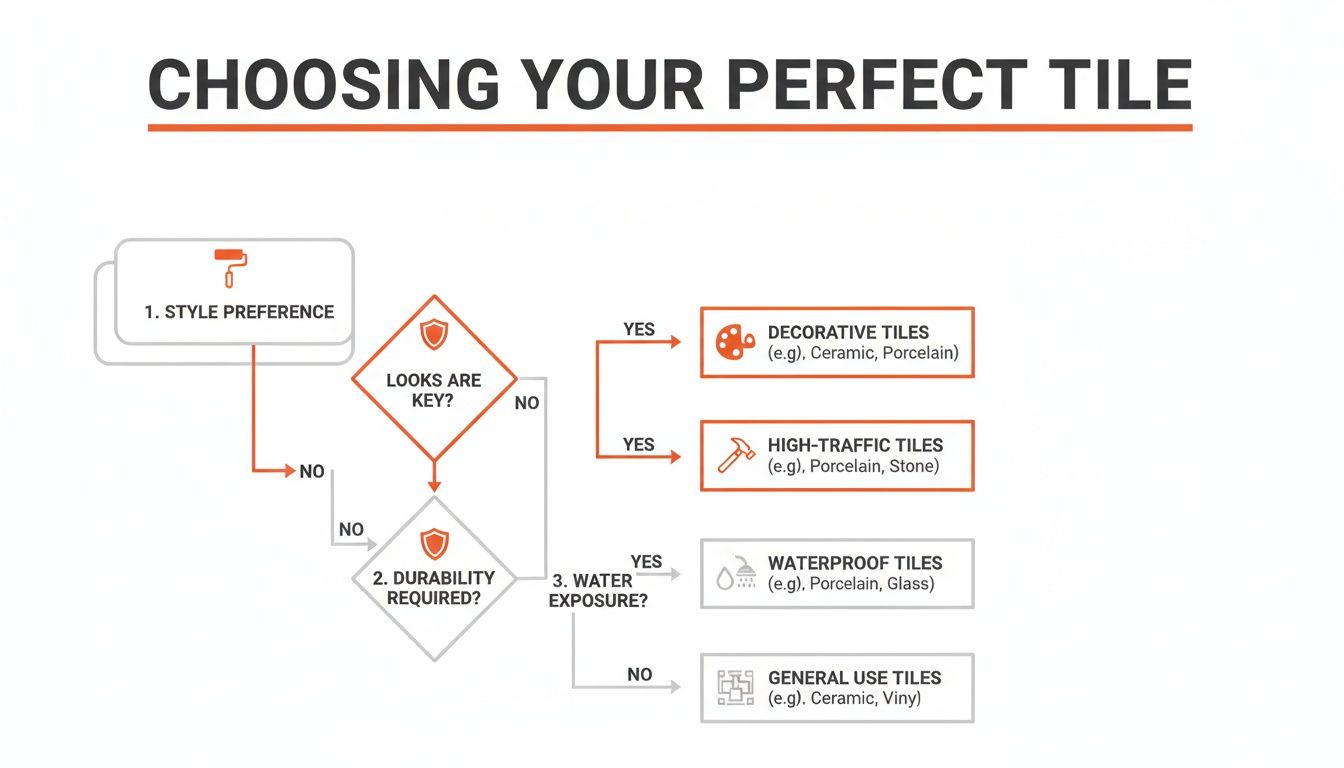
As you can see, the ideal choice lies at the intersection of your design vision and the room's practical demands. This is how you achieve a result that is both beautiful and built to last.
From Steam Showers to Dry Walls
Let's apply this framework. A master bathroom with a steam shower represents an extreme environment with constant, high humidity. In this scenario, a non-porous material isn't just recommended; it's essential. Porcelain, with a water absorption rate of less than 0.5%, is the undisputed champion. It creates a virtually waterproof barrier that protects your home's structure from moisture intrusion.
Now, consider a decorative accent wall located far from direct water contact. This is your opportunity to be creative. You could introduce a stunning natural stone or an intricate mosaic that would be too high-maintenance for a wet zone.
As an IICRC Master Certified firm specializing in water damage, we've seen firsthand how the wrong tile in a wet environment can lead to costly hidden damage. Aligning tile properties with moisture exposure isn't just a design choice—it's a critical preventative measure.
By methodically evaluating each area of your bathroom, you can create a cohesive and beautiful design that is also perfectly engineered for its function. This strategic thinking is central to our process for both bathroom remodeling and professional flooring sales and installation, ensuring every surface is optimized for longevity and performance.
Decoding Tile Materials for Lasting Beauty and Performance
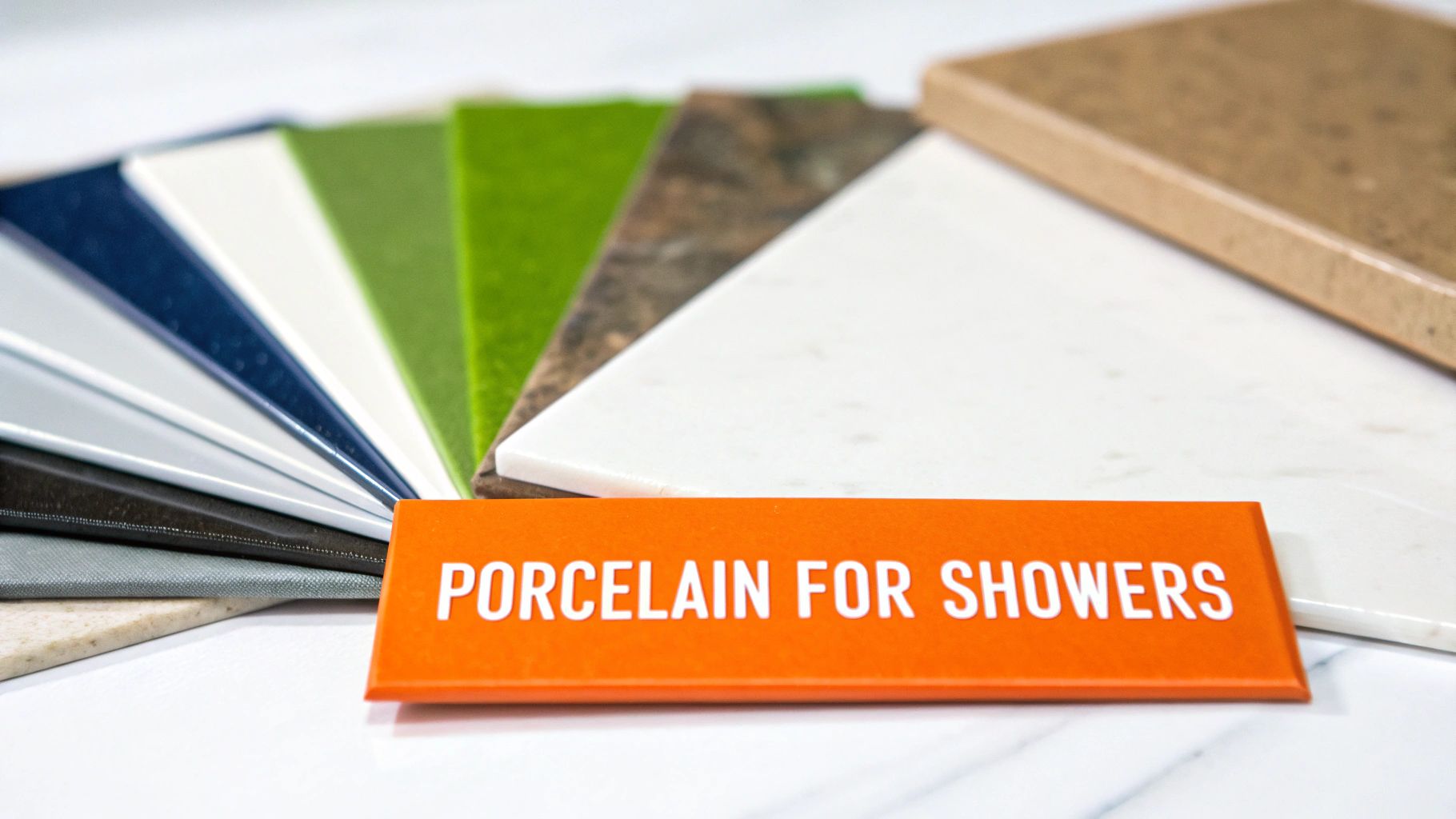
The tile material you choose is the foundation of your bathroom’s look, feel, and long-term durability. While aesthetics capture your attention, it’s the technical specifications that truly protect your investment. As an IICRC Master Certified firm, we’ve seen how improper material selection can lead to significant problems. Our focus is always on preventing water intrusion and mold growth—the two greatest threats to any bathroom.
Let's look beyond the showroom appeal and discuss what truly matters in a wet, high-use environment. We'll break down the most common luxury options to explain why certain tiles are non-negotiable for showers and other high-moisture zones.
Porcelain vs. Ceramic Tile
At first glance, porcelain and ceramic tiles can appear nearly identical. However, their manufacturing process creates a significant difference in performance. Ceramic tile is made from a coarser clay and fired at lower temperatures, resulting in a softer, more porous material. It is a suitable choice for dry areas, like a vanity backsplash or a wall far from the shower.
Porcelain, in contrast, is forged from a finer clay and fired at extremely high temperatures. This process creates a tile that is incredibly dense, durable, and—most importantly—almost completely waterproof.
Expert Insight: For shower floors, walls, and any surface that is consistently exposed to water, we almost exclusively recommend porcelain. Its structural integrity is the single best defense against the hidden water damage we so often uncover during restoration projects.
The performance gap is measurable. Porcelain tiles have a water absorption rate under 0.5%, while many ceramic tiles absorb significantly more. This low porosity is precisely why porcelain is the superior choice for wet areas, translating to less maintenance and a drastically lower risk of costly water damage.
Natural Stone and Glass Tiles
There's no denying the organic luxury that natural stone like marble or travertine brings to a space. Each tile is unique, delivering a timeless and sophisticated aesthetic. That beauty, however, comes with a commitment to maintenance.
- Marble: Known for its elegant veining, marble is a soft, porous stone. It must be sealed regularly to resist stains and water absorption. It is also susceptible to etching from common acidic bathroom cleaners.
- Travertine: This stone offers a warm, earthy aesthetic but is also quite porous. It requires diligent sealing to withstand the demands of an Orange County bathroom.
- Glass: Glass tiles are excellent for creating bright, modern accent walls and backsplashes. Being non-porous, they are 100% waterproof. However, they can scratch and are often too slippery for floor applications, making them better suited for walls.
To give you a clearer picture, here’s a quick comparison of how these materials stack up for a high-end bathroom.
Bathroom Tile Material Comparison
| Material | Water Absorption | Durability (PEI) | Best For | Maintenance Level |
|---|---|---|---|---|
| Porcelain | Very Low (<0.5%) | 3-5 | Floors, showers, high-traffic areas | Low |
| Ceramic | Low to Moderate | 1-4 | Walls, backsplashes, low-traffic floors | Low to Moderate |
| Marble | High (Porous) | 1-2 | Accent walls, vanity tops, low-traffic areas | High (Sealing) |
| Travertine | High (Porous) | 2-3 | Floors (honed), walls, shower surrounds | High (Sealing) |
| Glass | None (Impervious) | 0-1 | Backsplashes, shower accent walls | Low |
Ultimately, selecting the right material involves balancing aesthetics, budget, and real-world performance. Exploring the top 10 bathroom tile types can provide further inspiration. The core principle remains: choose a material engineered for its specific location in your bathroom to ensure it remains beautiful and functional for decades.
Mastering the Details with Size, Pattern, and Grout
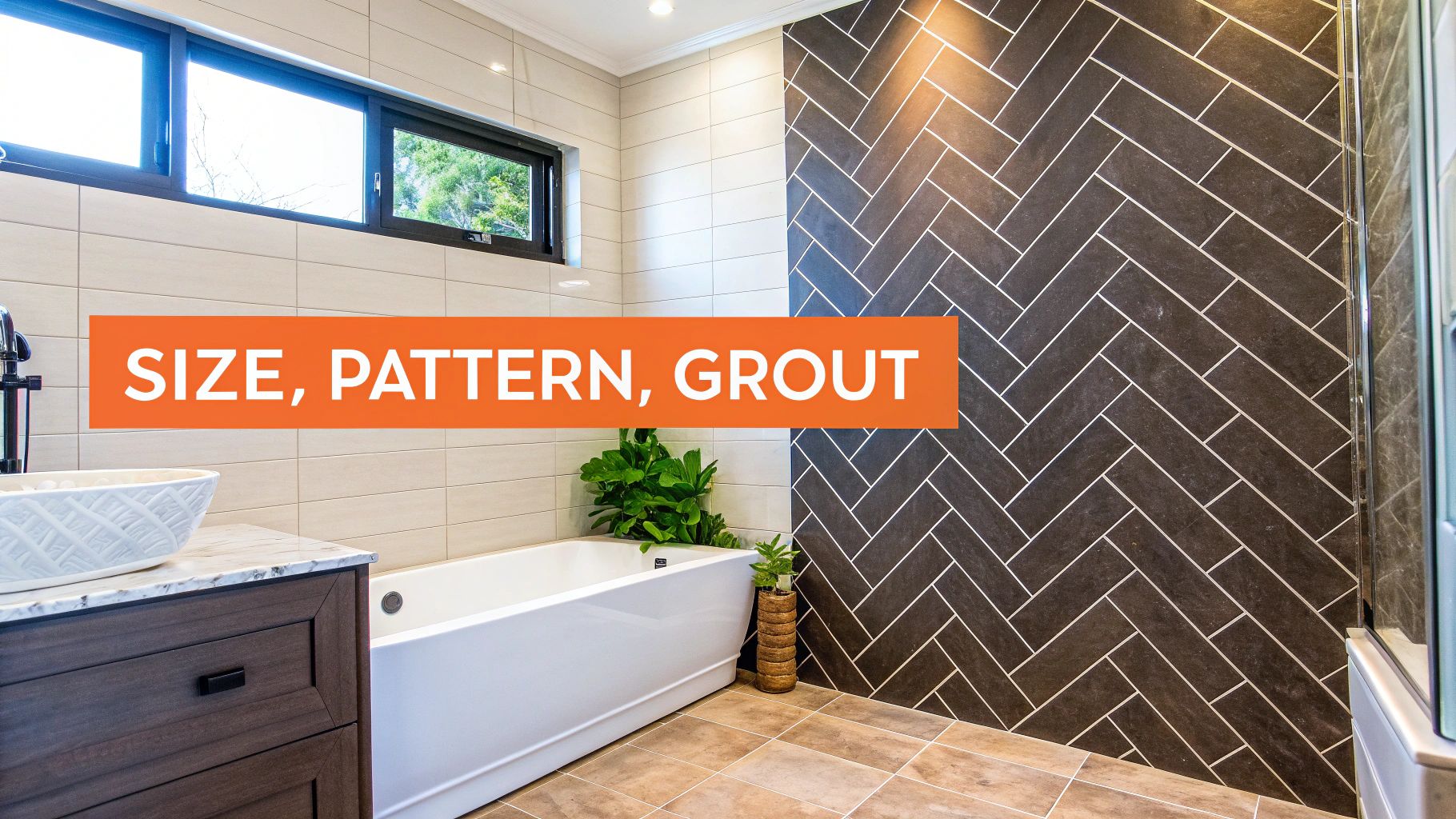
The true artistry of a luxury bathroom emerges in the details. Once you’ve selected a beautiful porcelain or natural stone, the subsequent choices—tile size, layout pattern, and grout—will define your bathroom’s personality and long-term durability.
These are not merely aesthetic touches; they are functional decisions that can either protect your bathroom from moisture or create vulnerabilities. As a design-build firm, we guide our Orange County clients through these subtle but crucial selections, ensuring every detail contributes to both form and function.
The Impact of Tile Size and Pattern
The size of your tile can completely transform the perception of a room. In many of the modern Newport Beach and Irvine homes we remodel, large-format tiles—such as 24×48 inches or larger—are a popular choice. They create a clean, expansive look with minimal grout lines, making even a compact bathroom feel more spacious and upscale.
From a maintenance perspective, fewer grout lines are a significant advantage, meaning less cleaning and fewer potential entry points for water. Conversely, smaller tiles like classic hex or penny rounds introduce texture and intricate detail. The increased number of grout lines enhances slip resistance, making them an excellent and safe choice for shower floors.
The pattern is where you can truly express your personal style.
- Herringbone: This layout adds a sense of dynamic movement and sophistication. It’s perfect for creating a stunning feature wall behind a vanity or in a shower.
- Stacked (Grid): For a clean, contemporary aesthetic, a stacked pattern delivers. The straight, linear lines feel crisp and modern.
- Brick Lay (Subway): This is a timeless classic. It’s a versatile pattern that complements almost any design, from traditional to transitional.
Each pattern sets a different mood. A stacked layout feels structured and serene, while a herringbone pattern signals a higher level of custom craftsmanship.
Why Epoxy Grout Is a Non-Negotiable Upgrade
If there's one piece of advice we give every single client, it is this: upgrade to epoxy grout, especially in your shower and other wet areas. It is a game-changer. Standard cement-based grout is porous; it acts like a tiny sponge, absorbing water, soap scum, and bacteria. Over time, this leads to stained, discolored grout lines and, eventually, mold growth.
Epoxy grout is fundamentally different. It’s a non-porous resin that is waterproof, stain-proof, and incredibly durable. As restoration experts, we view it as one of the most effective preventative measures you can take to protect your investment.
While epoxy has a higher upfront cost, it eliminates the need for regular sealing and withstands tough cleaning products without deteriorating. Consider it a small premium paid now to avoid significant costs for deep cleaning or repairs later. Your grout will look new for years, and the need for professional tile and stone cleaning and sealing will be a rare occasion rather than an annual necessity. Choosing epoxy is choosing long-term peace of mind.
Budgeting Smartly and Ensuring Flawless Installation
Two factors determine the success of a bathroom remodel: a realistic budget and expert installation. The price per square foot for tile is just the starting point. To avoid unforeseen costs, it’s crucial to understand the complete financial picture and protect your investment with superior craftsmanship.
The true cost of tiling extends beyond the material itself. A comprehensive budget must account for high-quality setting materials, specialized waterproofing systems for wet areas, and meticulous surface preparation. An uneven subfloor, for example, is a guaranteed cause of cracked tiles—a costly mistake that proper prep work easily prevents.
The Non-Negotiable Value of Professional Installation
Hiring a licensed and certified installer isn't just another line item; it's insurance against project failure. The technical skill required for today's luxury materials, especially large-format porcelain slabs and intricate mosaics, is immense. It demands precision, specialized tools, and a deep understanding of material science.
As a Licensed General Contractor, we are often called to remedy installation failures. The most common issues—improper waterproofing, incorrect mortar coverage, and uneven tiles (lippage)—all stem from cutting corners on professional labor. A flawless finish is impossible without a flawless foundation.
Choosing the right team is paramount. When vetting contractors, ask specific questions about their experience with the materials you've selected. For a deeper dive, our guide on hiring the right contractor for your bathroom remodel provides a detailed checklist to help you make a confident decision and find a team that shares Sparkle's commitment to excellence.
Calculating Your Material Needs
Accurately calculating your tile quantity is essential for keeping your project on schedule and within budget. A sound rule of thumb is to order 10-15% extra material. This overage covers cuts, waste, and potential breakage.
More importantly, it prevents the nightmare scenario of running short mid-project, only to find the manufacturer's new dye lot doesn't match the original batch. This happens more often than you might think.
To get a precise estimate and avoid the stress of over- or under-ordering, a tile quantity calculator can be an invaluable tool. It translates your room’s measurements into an accurate material order, allowing you to plan with confidence. By pairing smart budgeting with an unwavering commitment to professional installation, you're not just creating a beautiful new bathroom—you're making a lasting investment in your home.
Common Questions About Choosing Bathroom Tile
Choosing the right bathroom tile prompts many questions, which is perfectly normal. With years of experience in luxury remodels and water damage restoration here in Orange County, we've heard them all. Here are the answers to the questions we are asked most often, designed to help you proceed with your project confidently.
What Is the Best Tile for a Shower Floor to Prevent Slips
For shower floors, safety is non-negotiable. The ideal choice combines low water absorption with high slip resistance.
In our experience, the best option is a porcelain mosaic tile. These are typically small—2×2 inches or smaller—with a textured or matte finish. The smaller size creates more grout lines, which act like treads on a tire, providing your feet with extra grip.
When shopping, look for a tile with a DCOF (Dynamic Coefficient of Friction) rating of 0.42 or higher. This is the industry standard for surfaces that are regularly wet. A properly rated porcelain mosaic is our top recommendation for a shower floor that is both safe and durable.
Can I Use Marble in My Master Bathroom Shower
We understand the appeal—the look of marble is undeniably luxurious. However, using it in a shower is a high-maintenance commitment. As a porous natural stone, marble requires significant upkeep to maintain its beauty. It must be sealed regularly (often annually) to resist staining and water absorption. If this maintenance is neglected, soaps, hard water minerals, and common cleaners can easily damage the stone.
For clients who love the aesthetic but not the liability, we almost always recommend a high-end, marble-look porcelain. Modern manufacturing technology can now perfectly replicate the veining and depth of natural stone while providing the superior durability and near-zero water absorption of porcelain. It truly offers the best of both worlds.
How Important Is Grout and What Type Should I Choose
Grout is far more important than many homeowners realize. An incorrect choice here can quickly become the weakest link in your entire bathroom. For any wet area—including showers and bathroom floors—we strongly recommend upgrading from traditional cement-based grout to an epoxy grout.
Expert Takeaway: Epoxy grout is non-porous, making it waterproof and exceptionally resistant to stains, mold, and mildew. It never requires sealing and is far more durable than its cement-based counterparts.
While the initial material cost for epoxy is higher, consider it an investment in longevity. It prevents water from penetrating behind your walls and keeps your tile looking pristine for years with minimal cleaning.
How Do Large-Format Tiles Affect My Project
Large-format tiles are a leading trend in Orange County design. They create a clean, modern aesthetic with minimal grout lines, which makes a space feel larger and easier to clean. However, their installation is more complex.
Due to their size, these tiles demand a perfectly flat substrate. If the floor or wall has any imperfections, you’ll get "lippage"—where one tile edge sits higher than its neighbor, creating a trip hazard and an unprofessional finish. The installation process is more demanding and requires specialized tools and skills, especially when handling heavy porcelain slabs.
As Licensed General Contractors, our teams are trained in the advanced preparation and setting techniques required to achieve a flawless, lasting installation. For more answers to common remodeling questions, feel free to explore our comprehensive FAQ page.
Ready to create a space that’s as beautiful as it is functional? Schedule your complimentary design consultation today by visiting Ready to Work with Sparkle?