


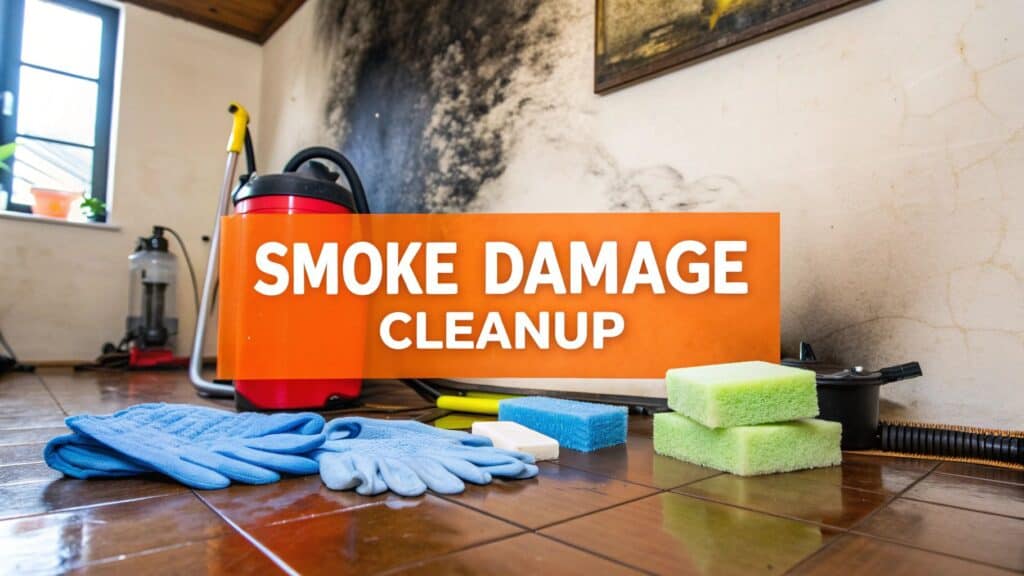
Walking into your home after a fire is an incredibly stressful and overwhelming experience for any Orange County homeowner. The natural instinct is to jump right in and start cleaning, but the first few actions you take are critical for your safety and for preventing further damage. Knowing how to clean smoke damage correctly from the start involves a careful sequence of steps: ventilating the space, documenting everything for your insurance claim, and knowing what not to do to avoid costly mistakes.
Your First Moves After Discovering Smoke Damage
That moment you discover smoke damage can feel like chaos. A methodical, calm response is your best defense against making a bad situation worse. Before you even think about grabbing a sponge, your top priorities must be safety and setting the stage for a successful restoration. As IICRC Master Certified professionals, we at Sparkle Restoration can tell you that what you do in these first few hours can make a significant difference in your insurance claim and the effectiveness of the cleanup.
Prioritize Safety and Ventilation
Your first thought might be to throw open every window, but this must be done strategically. If there’s still smoke in the air outside from a nearby wildfire—a real concern here in Southern California—opening windows will just pull more contaminants inside.
A better approach is to place box fans in windows, facing outwards. This pushes contaminated air out, creating negative pressure that helps prevent more soot and smoke from entering.
Here’s a critical tip: do not turn on your HVAC system. This is one of the most common and costly mistakes we see homeowners make. Activating your furnace or AC will spread soot, ash, and toxic particles through your entire ductwork and into rooms that might have been untouched. Dealing with a contaminated HVAC system requires specialized work, which you can read about in our guide to professional https://sparklerestoration.com/hvac-system-cleaning/.
Document Everything Meticulously
Before a single item is moved, you need to become a detective for your insurance claim. Thoroughly documenting the damage is non-negotiable for a smooth process.
- Take Photos: Use your phone to capture everything. Start with wide shots of each affected room to show the overall scope, then get close-ups of specific damage on furniture, walls, and personal items.
- Record Videos: A slow video walkthrough is incredibly powerful. As you record, narrate what you’re seeing, pointing out the thickness of the soot, describing odors, and showing the extent of the damage.
- Create an Inventory: Begin a detailed list of every damaged item. Be specific about furniture, electronics, clothing, and other belongings.
This detailed evidence is the proof your insurance provider will need to process your claim fairly and accurately.
“The key takeaway is that the mere presence of smoke, ash, or soot does not automatically qualify as property damage without evidence. You must demonstrate that the smoke caused a lasting alteration, like staining or corrosion, making thorough documentation absolutely essential.”
Avoid Common Cleaning Mistakes
Fight the urge to reach for your usual household cleaners. Many common products, especially those with ammonia or bleach, can react with soot to permanently set stains into surfaces like paint, countertops, and upholstery.
Likewise, don’t use your regular vacuum. A standard vacuum isn’t equipped with the right filters and will likely spew microscopic soot particles back into the air. For a deeper dive into the entire process, this comprehensive smoke damage restoration guide is an excellent resource.
The disaster restoration industry, valued at around $41.2 billion globally in 2023, exists because smoke damage requires specific expertise and equipment. By taking these careful first steps, you build a solid foundation for a safe and successful restoration of your home.
Identifying the Type of Smoke You Are Dealing With
Before you can properly understand how to clean smoke damage, you must identify what you’re up against. This isn’t a one-size-fits-all problem. Using the wrong cleaning method can smear soot deeper into walls and furniture, turning a fixable issue into a permanent stain.
At Sparkle Restoration Services, our IICRC Master Certified technicians have seen every type of smoke damage across Orange County. The type of fire dictates the kind of residue it leaves behind, and each demands a unique game plan. Getting this first step right is the single most important part of the entire cleanup.
Understanding Dry vs. Wet Smoke
Think about the difference between a roaring bonfire and a smoldering plastic container. That’s the core of dry versus wet smoke.
A hot, fast-burning fire—usually fueled by wood or paper—creates a fine, powdery residue called dry smoke. The good news is that its particles don’t cling aggressively, making it easier to clean with specialized dry cleaning sponges and a good HEPA-filtered vacuum.
On the other hand, a low-heat, smoky fire involving materials like plastics or rubber produces a greasy, sticky film known as wet smoke. This residue is a nightmare to deal with. It smears at the slightest touch and requires powerful degreasing agents to break it down before you can attempt to wipe it away.
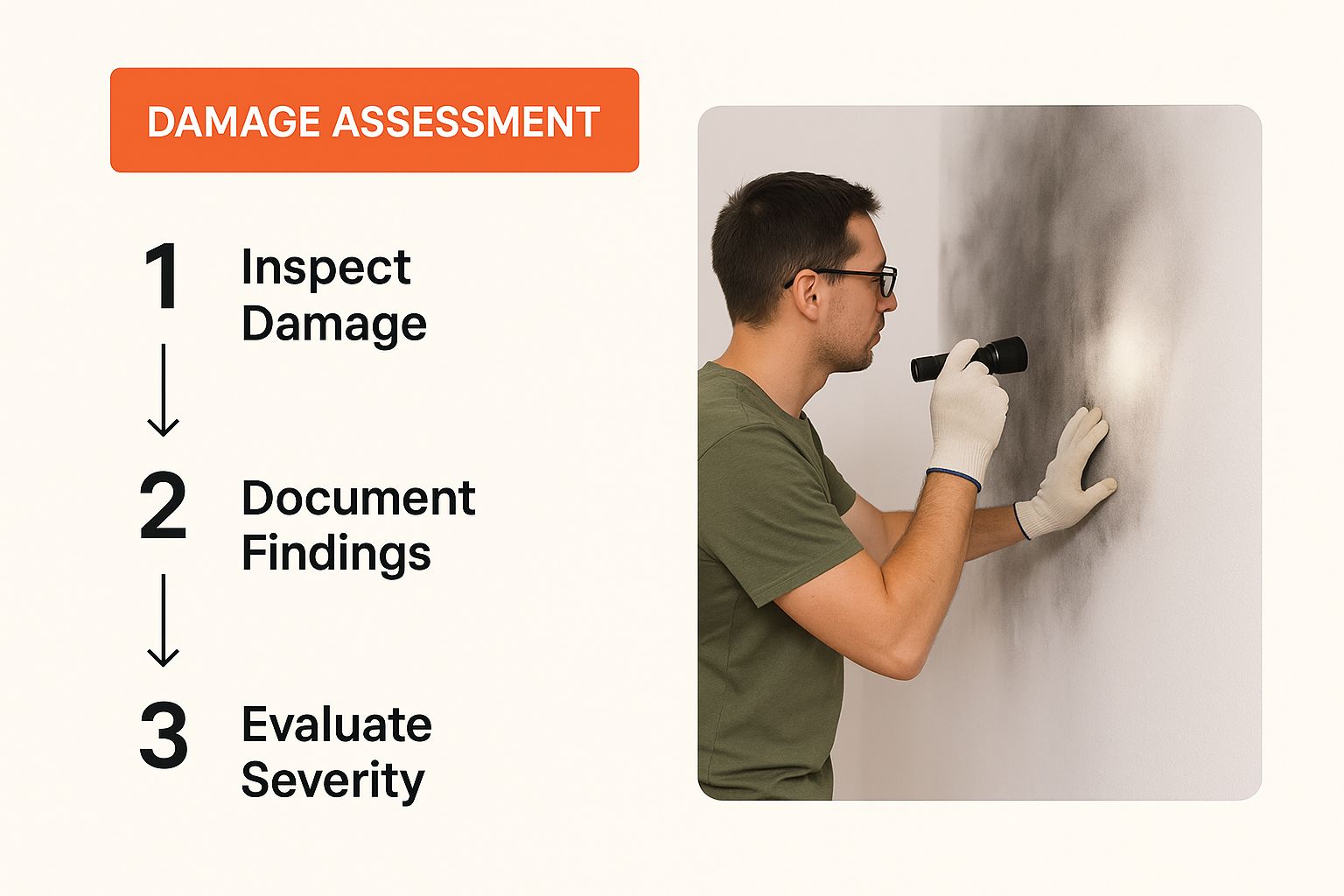
A thorough initial inspection like this is non-negotiable. It helps you understand the scope of the problem and tells you which type of smoke you’re primarily facing.
The Challenge of Protein and Fuel-Based Soot
Kitchen fires are a different beast entirely. When food—especially meat—burns, it creates protein soot. What’s tricky is that it can be nearly invisible, but it leaves behind an incredibly strong, foul odor that permeates everything. Over time, it will also yellow and discolor paint and varnishes.
Finally, if you’ve had a furnace puff-back, you’re likely dealing with fuel oil soot. This is a dark, dense, and sticky residue that won’t budge without specific solvents designed to tackle petroleum-based messes.
Understanding the source of the fire is your best clue. A grease fire in your Newport Beach kitchen will require a completely different strategy than residue from a wildfire that entered your Irvine home.
These distinctions are vital because soot isn’t just dirty—it’s acidic. If left sitting, these tiny particles will corrode and etch surfaces, causing irreversible damage. Lingering smells are also a red flag, signaling the presence of volatile organic compounds (VOCs) that degrade your home’s air quality. For a deeper dive, you can learn about the different sources of indoor air pollution and how to tackle them.
To make things easier, we’ve put together a quick reference table to help you identify what you’re dealing with.
Identifying Smoke and Soot Types
| Soot Type | Appearance | Odor | Cleaning Challenge |
|---|---|---|---|
| Dry Smoke | Fine, powdery, gray to black | Light smoke smell | Can be smeared without proper technique; requires careful vacuuming. |
| Wet Smoke | Greasy, sticky, smeary film | Strong, pungent, acrid | Smears easily; requires powerful degreasers and solvents. |
| Protein Soot | Nearly invisible, light-colored film | Intense, rancid, burnt food smell | Odor is very difficult to remove; can discolor surfaces over time. |
| Fuel Oil Soot | Dark, sticky, dense residue | Strong oil or diesel smell | Requires specific petroleum-based solvents for effective removal. |
Looking at this, you can see why grabbing an all-purpose cleaner is a bad idea. Taking a moment to assess the situation will save you frustration and ensure you’re solving the problem, not making it worse.
Gathering Your Safety Gear and Cleaning Supplies
Before you begin to how to clean smoke damage, you must get serious about your own safety. Those microscopic soot particles floating in the air and clinging to every surface aren’t just a mess; they’re hazardous.
Inhaling these particles can lead to serious respiratory problems. It’s exactly why our IICRC-certified professionals never step onto a fire damage site without full personal protective equipment (PPE). You must treat this project with the seriousness it deserves—proper protection is non-negotiable.
Essential Personal Protective Equipment (PPE)
Your health comes first. We can’t stress this enough: do not start cleaning without the proper gear. Even if the damage looks minor, the invisible particles pose the real risk.
- N95 or P100 Respirator Mask: This is the single most critical piece of equipment. A simple dust mask won’t cut it. You need a properly fitted N95 or P100 respirator to filter out fine particulate matter and protect your lungs.
- Safety Goggles: Soot and the powerful cleaners needed to remove it can severely irritate your eyes. Full-seal safety goggles are essential to keep airborne particles and chemical splashes out.
- Nitrile Gloves: Soot is acidic and the cleaning chemicals are strong. Nitrile gloves are far more resistant to chemical breakdown than standard latex, offering superior protection for your skin.
- Full-Body Coveralls: Use disposable coveralls with a hood. This simple step keeps soot from embedding in your clothes and skin, preventing you from tracking contaminants through clean areas of your home.
Professional-Grade Cleaning Supplies
Once you’re safely geared up, you’ll need a specific set of cleaning supplies designed for fire and smoke remediation. Everyday household cleaners aren’t up to the task and can often smear the soot, setting the stain permanently.
Here’s what our pros at Sparkle Restoration Services carry in their kits for jobs across Orange County:
- HEPA-Filter Vacuum: This is a must. A vacuum with a certified HEPA filter is engineered to capture particles as small as 0.3 microns, ensuring you’re removing the soot, not just kicking it back into the air.
- Dry Cleaning Sponges: Also called chemical sponges, these are miracle workers but must be used completely dry. Their job is to lift loose soot off surfaces like painted walls and ceilings without smearing. This is always your first cleaning step before introducing any liquids.
- Trisodium Phosphate (TSP): For tough, greasy residue from a smoky fire, TSP is a powerhouse degreaser. It’s incredibly effective on hard surfaces but is also a potent chemical. Always read and follow all safety instructions.
How to Clean Soot from Different Household Surfaces
Once you’re suited up with safety gear and have your supplies, it’s time to face the visible soot. The secret to success isn’t just elbow grease; it’s using the right technique for each surface. What works on painted walls could ruin hardwood furniture, so a methodical plan is essential.
A non-negotiable rule we follow at Sparkle Restoration is to always work from the ceiling down. Soot dust settles everywhere. If you start with the floors, you’ll just have to clean them again after tackling the walls and light fixtures. Start at the top.
Cleaning Painted Walls and Ceilings
Your walls and ceilings usually bear the brunt of the damage. Cleaning them properly is a careful two-step process, and the most important rule is to start dry before introducing any liquids.
First, grab a dry cleaning sponge (chemical sponge). Wipe the surface using straight, parallel strokes—never scrub in circles, which grinds soot deeper into the paint. You’ll see the sponge get dirty quickly. Simply slice off the dirty layer with a utility knife to reveal a fresh surface and keep going. This step removes the thick, loose layer of soot.
Only after you’ve dry-sponged the surface should you move to wet cleaning. Mix a solution with a good degreaser like Trisodium Phosphate (TSP) and warm water, following the package directions. Use two buckets: one for your cleaning mix and one for clean rinse water. Work in small sections, gently washing a patch and then immediately rinsing it with a clean, damp cloth to prevent residue.
Always test your cleaner on a small, hidden spot first to ensure it won’t affect your paint color.
Restoring Wood Furniture and Cabinets
Wood is porous and can absorb soot and odors like a sponge. The approach here needs to be effective but gentle.
Start by vacuuming every surface with a HEPA vacuum fitted with a soft brush attachment. This lifts away loose particles without scratching the finish. Follow that with a dry cleaning sponge to pick up any remaining soot.
For the final clean, a mix of mild, wood-safe soap and water often works. If you’re dealing with greasy soot, you may need a specialized wood cleaner. Be sure to wipe the surface completely dry immediately after cleaning to avoid water spots.
Addressing Soot on Fabrics and Upholstery
Soft surfaces are magnets for soot and odors. Curtains, carpets, and upholstery are delicate and usually require a professional touch to avoid making things worse.
If the damage is very light, you can start with a thorough pass of a HEPA vacuum using the upholstery attachment. For anything more serious, you’ll need specialized techniques. Our team uses advanced equipment to safely deep clean and deodorize fabrics. You can see how we handle deeply embedded contamination in our professional carpet and furniture cleaning services.
Expert Insight: Never use a standard steam cleaner on smoke-damaged carpets or upholstery. The heat can permanently set soot stains and bond smoke odor molecules to the fibers, making them nearly impossible to remove.
Tackling Hard Flooring and Surfaces
Thankfully, hard floors like tile, vinyl, or laminate are more straightforward. Start by vacuuming all loose debris.
Next, mop the floor with a degreasing cleaner that’s safe for your specific flooring. The key is to change your mop water frequently. Otherwise, you’re just spreading a thin film of greasy soot across the floor.
Don’t forget your HVAC system. Soot particles get everywhere, including your air ducts. A contaminated system will keep blowing soot and that smoky smell back into your clean rooms. This guide on how to clean your air conditioning coils is a great resource for getting that handled.
Getting Rid of That Lingering Smoke Smell for Good
Even after you’ve cleaned every last bit of visible soot, that unmistakable smoke smell can hang in the air, a constant reminder of what happened. It makes your Orange County home feel anything but restored.
This isn’t just an unpleasant scent; it’s a sign that microscopic odor particles have penetrated deep into porous materials like drywall, wood, carpet, and furniture. An air freshener simply masks the problem. To truly reclaim your home, you must neutralize these odor molecules at their source. This is where professional deodorization comes in—it’s the crucial final step that makes a house feel like a home again.
Odor Absorption and Neutralization Methods
For a very minor smoke smell, you might have some luck with DIY methods. Placing bowls of activated charcoal or white vinegar in a room can absorb some of the odor from the air, as their porous structures can trap smell-causing compounds.
However, for anything more than a faint odor, these passive methods are insufficient. This is where you cross the line from a DIY project to needing professional intervention.
That smoke smell is more than just an annoyance. It’s a sign that volatile organic compounds (VOCs) could still be lingering in your air. Eliminating it completely is non-negotiable for your peace of mind and your family’s health.
Advanced Professional Deodorization Technology
When basic methods aren’t enough, our IICRC-certified technicians at Sparkle Restoration utilize advanced equipment. These are not machines you can rent from a local store; they require specific training to be used safely and effectively.
Here are two of the go-to technologies we use:
- Ozone Generators: These machines produce O3 (ozone), a powerful, highly reactive molecule. Ozone works by chemically altering the structure of smoke particles it contacts, effectively destroying the odor. This process is a serious undertaking and requires the home to be completely unoccupied—no people, pets, or plants—as high concentrations of ozone are harmful to breathe.
- Thermal Foggers: This technique is a game-changer for stubborn, greasy smoke residue. A thermal fogger heats a special deodorizing agent, turning it into a fine mist. This fog behaves just like the original smoke, penetrating every crack and crevice to neutralize odor molecules on contact.
Choosing the right technology depends on the type of fire and materials burned. Our approach to professional odor removal focuses on using the right tool to safely restore your home’s air quality.
This focus on targeted, effective solutions is part of a larger trend in the restoration industry toward environmental responsibility. As climate change projections suggest more frequent fires, the need for effective, large-scale smoke damage cleanup will only grow. You can discover more insights about this trend and the disaster restoration market to see where the industry is headed.
Knowing When to Call an Orange County Pro
The desire to restore your space after a fire is understandable. But when it comes to smoke damage, knowing your limits is critical. Taking on a major cleanup yourself can be ineffective and unsafe for both your property and your health. Recognizing the red flags that a job is too big to handle is one of the smartest decisions a homeowner can make.
For homeowners here in Orange County, some situations are non-negotiable and demand an IICRC Master Certified team. These are complex restoration projects that require specialized equipment, expert training, and strict safety protocols.
Signs You Need Professional Restoration
If you’re facing any of the scenarios below, it’s time to put down the sponge and pick up the phone. Attempting to tackle these on your own almost always leads to bigger problems, like stubborn odors, hidden contamination, and even structural dangers.
- Widespread Damage: If smoke and soot have affected more than one or two rooms, the problem is deeper than what you can see. Soot travels through tiny cracks, vents, and wall cavities, contaminating your entire house.
- HVAC System Contamination: Once soot enters your HVAC system, it’s a completely different challenge. Every time you turn on the heat or AC, your ducts will circulate toxic particles and that awful smoke smell back into cleaned rooms. This requires professional duct cleaning and system sanitization that’s impossible to do without the right equipment.
- Fires Involving Synthetics: A fire that burned plastics, rubber, or other synthetic materials creates a nasty chemical cocktail. The “wet smoke” residue is greasy, acidic, and incredibly stubborn—a nightmare to remove safely.
- Structural Integrity Concerns: This is a major concern. Any time a fire may have weakened structural elements like beams, joists, or subflooring, you need a licensed general contractor involved. Assessing and repairing this type of damage is far beyond a DIY cleaning job and is crucial for your family’s safety.
At Sparkle Restoration Services, our philosophy is simple: “Turning Chaos Into Calm, Fast.” We understand the stress you’re under, which is why our 24/7 emergency response team is always ready to help our Orange County neighbors make the safest, most effective choices for their homes.
When facing these challenges, you need a team with proven expertise. As a BBB Torch Award Winner for Ethics, we don’t just restore your property; we provide the peace of mind that comes from hiring a certified, reputable expert. You can learn more about our comprehensive approach in our guide to professional fire damage restoration services.
Your Top Smoke Damage Questions Answered
When you’re dealing with the aftermath of a fire, you have a lot on your mind. We understand. To help clear up the confusion, here are direct answers to the questions we hear most often from homeowners here in Orange County.
Can I Clean Smoke Damage Myself?
For a very minor incident—like a tiny bit of soot on a countertop from burnt toast—you can likely handle it. However, for anything more significant, a DIY approach can backfire. Soot is acidic, toxic, and incredibly invasive. What you see on the surface is almost always just the tip of the iceberg.
Trying to scrub it yourself can smear soot, permanently setting the stain into paint or upholstery. Worse, you could spread the contamination through your HVAC system, turning a localized problem into a whole-house issue. You also face serious health risks without the right protective gear.
How Long Does the Smoke Smell Last After a Fire?
Without professional treatment, that awful smell can linger for months, sometimes even years. The odor isn’t just “in the air”; it’s from microscopic Volatile Organic Compounds (VOCs) that have penetrated porous materials like drywall, wood, and carpet.
These particles will continue to off-gas and release odors, especially in warm, humid weather. Air fresheners only mask the problem. True deodorization requires specialized equipment, like thermal foggers, that neutralize the odor-causing molecules at their source.
Does Homeowners Insurance Cover Professional Smoke Damage Cleaning?
In most cases, yes. Standard homeowners insurance policies list smoke as a “named peril,” which means it is a covered event. Your policy should cover the costs for professional cleaning, deodorization, and repairs needed to return your home to its pre-loss condition.
Before touching anything, document everything with photos and videos. Then, call your insurance provider immediately to start the claims process. We have extensive experience working with all major insurance companies and can help you navigate the process smoothly.
What Are the Health Risks of Lingering Smoke Damage?
Don’t underestimate the health risks. Living in a home with untreated smoke damage is a serious concern. Soot is a toxic cocktail of substances, and breathing in these microscopic particles can cause a range of problems, from respiratory irritation and headaches to worsening conditions like asthma. If you can still smell smoke, it’s a clear sign that potentially harmful VOCs are in your air. Protecting your family’s health is the most important reason to have the cleanup handled correctly and completely.
When you need to turn chaos into calm fast, don’t leave your family’s health and your home’s safety to chance. For expert, IICRC Master Certified smoke damage restoration in Orange County, trust the professionals at Sparkle Restoration Services. Schedule your free consultation today and let us restore your peace of mind.
Ready to create a space that’s as beautiful as it is functional? Schedule your complimentary design consultation today by visiting Ready to Work with Sparkle?