



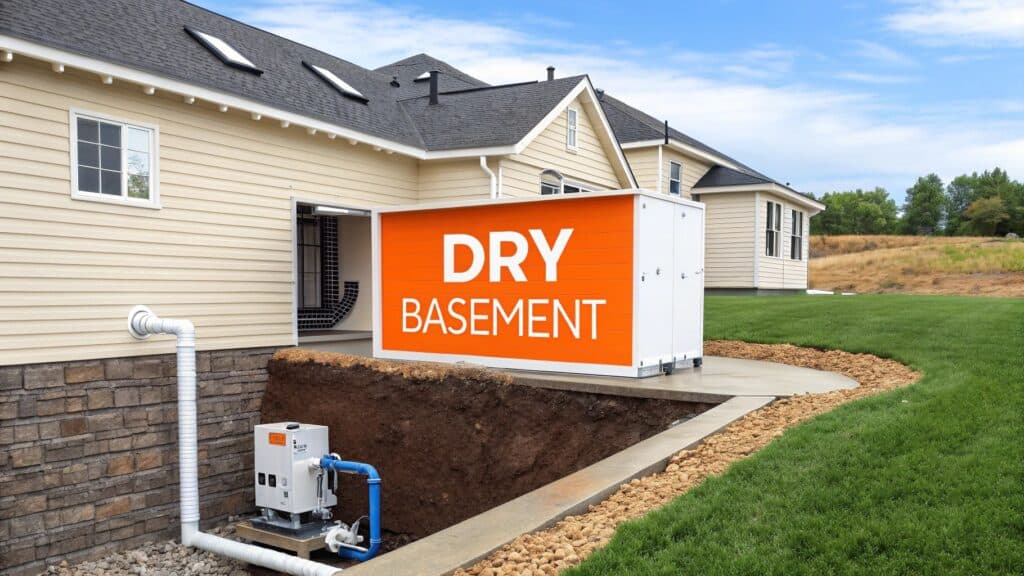
Knowing how to prevent basement flooding is not about a single quick fix; it’s about implementing a smart, layered defense system for your property. The strategy is to manage water flow away from your foundation, meticulously seal any potential entry points, and have a reliable interior system as a final failsafe. For discerning homeowners in Orange County, mastering these steps is essential to protecting your valuable asset and ensuring long-term peace of mind.
Your Blueprint for a Permanently Dry Basement
That subtle damp, musty odor in a basement is more than an inconvenience; it’s a clear warning sign. It signals a potential threat to your home’s structural integrity, indoor air quality, and your family’s health. For homeowners here in Southern California, where sudden downpours can test a property’s limits, understanding how to prevent basement flooding is a cornerstone of responsible ownership.
This is not about reacting during a crisis. It’s about constructing a robust, proactive defense that keeps water out for good.
This comprehensive guide, developed by the IICRC Master Certified experts at Sparkle Restoration Services, provides a clear roadmap. We will cover everything from simple, high-impact exterior maintenance to sophisticated interior systems that deliver true security and peace of mind.
The Sobering Reality of Water Damage
An unfortunate truth for property owners is that basement water intrusion is remarkably common. Industry data suggests that a staggering 98% of basements in the U.S. will experience some form of water damage. This statistic underscores the universal risk homeowners face, making a preventative mindset absolutely critical.
Waiting until after a flood occurs can lead to devastating consequences, including thousands in repair costs, hazardous mold growth, and the loss of irreplaceable personal belongings. Our mission is to shift your approach from reactive to proactive, turning potential chaos into lasting calm.
As a BBB Torch Award Winner for Ethics, our commitment is to provide homeowners with honest, expert guidance. We believe in empowering you with the knowledge to protect your property before a disaster has a chance to strike.
Of course, when an emergency does occur, a rapid response is crucial. Our team specializes in comprehensive water damage restoration in Orange County, but our primary goal is to help you avoid ever needing our 24/7 services. Consider this guide your definitive plan for a dry, healthy, and secure home.
For homeowners ready to take immediate action, we’ve summarized the most critical tasks into a simple checklist. Addressing these items first will provide the greatest impact for your efforts.
Your Quick-Action Checklist for Flood Prevention
| Prevention Area | Action Item | Key Benefit |
|---|---|---|
| Grading & Gutters | Clean gutters and extend downspouts at least 6-10 feet from the foundation. | Directs the majority of roof runoff safely away from your home’s vulnerable perimeter. |
| Foundation Inspection | Walk the interior and exterior of your basement, looking for cracks or gaps. | Identifies obvious water entry points that can be sealed with hydraulic cement or epoxy. |
| Sump Pump Test | Pour a bucket of water into the sump pit to ensure the pump activates and discharges water. | Confirms your primary interior defense system is operational before the next heavy rain. |
| Window Wells | Clear debris from window wells and check that drains are not clogged. | Prevents water from pooling against basement windows, a common source of leaks. |
Completing this checklist is a powerful first step. By addressing these key areas, you significantly reduce your risk and build a strong foundation for a permanently dry basement.
Fortifying Your Home’s Exterior Defenses
Think of exterior water management as your first and most critical line of defense. The entire strategy for how to prevent basement flooding begins here, outside your walls. If you can effectively manage grading and surface drainage, you prevent rainwater from ever pooling against your foundation.
The easiest way to assess your property is to walk around it after a steady rain. You are looking for one simple outcome: does the ground slope away from your foundation walls? You should have at least a 6-inch drop over the first 10 feet. This visual check instantly reveals if your property is successfully guiding water away from your home.
- The goal is a consistent, gentle slope away from the house for optimal runoff.
- If you’re unsure, you can use a line level or even a long garden hose to measure the drop over that 10-foot distance.
- If the slope is flat or, even worse, angled toward the house, you’ll need to add fill soil or have a professional regrade the area.
Landscaping, Gutters, and Downspouts
Even your garden can be an unwitting source of water problems. Landscaping beds should be set back at least 2 feet from your foundation. Overwatering plants adjacent to the house saturates the soil and pushes moisture directly toward your basement walls. You can also build shallow, decorative berms with compacted soil to redirect water flow before it gets close.
Now, let’s look up. Roof runoff is a massive contributor to basement water issues. It starts with keeping the roof clear. A pile of wet leaves in a roof valley can create a dam, allowing water to seep under shingles and down to the eaves. A periodic roof inspection is all it takes to keep things flowing freely toward the gutters.
Clogged gutters are a classic villain. When they back up and overflow, they dump a concentrated sheet of water right next to your foundation’s most vulnerable points. Regular gutter cleaning is non-negotiable for any homeowner.
Once water is in the gutters, it must be directed away. Ensure your downspouts extend at least 10 feet from your foundation. You can use simple flexible extensions or splash blocks to ensure water is discharged safely away from your home.
Keep a Close Eye on Your Drainage System
- Check your gutters at least quarterly for leaves, twigs, and any signs of rust or corrosion.
- Confirm the brackets are secure and seal any leaky joints with a high-quality waterproof caulk.
- Ensure your downspout extensions are clear of blockages and resting on stable ground.
Proper gutter upkeep is absolutely key. Maintaining this one system can prevent up to 40% of potential water intrusion around your foundation.
Window wells are another sneaky entry point for runoff. A sturdy cover combined with a properly installed drain can keep water out while letting light in.
We offer expert advice on choosing durable covers that block water without sacrificing daylight in our guide on leak-proofing your home.
- Clear leaves, dirt, and debris out of the wells monthly to keep the drains from clogging.
- Adding a layer of coarse gravel around the drain can help improve percolation.
- Inspect metal frames for rust and replace any covers that are cracked or damaged.
Smart Runoff Solutions
To be truly proactive with water management, you can turn runoff into a resource. Consider setting up a DIY rainwater harvesting system. Homes that redirect roof water into storage tanks can reduce their total runoff by as much as 30%.
Be sure to pair rain barrels or cisterns with overflow lines directed well away from your foundation. A little seasonal maintenance will keep filters clear and the system working when you need it most.
- Clean out the debris screens every spring to maintain good flow.
- Inspect your tanks for any cracks or leaks before the heavy rain season hits.
- Install mosquito-proof covers to keep the water fresh and prevent pests.
By shoring up your grading, gutters, and runoff systems, you create a powerful, resilient defense against basement flooding. Next, we’ll move inside to inspect your foundation’s integrity.
How to Inspect and Seal Your Foundation
Even with a perfect exterior drainage system, a crack in your foundation is an open invitation for water. A thorough inspection of your basement walls and floor is essential to spotting signs of trouble before they escalate into a full-blown crisis.
Think of it as forensic investigation for your home. With a powerful flashlight, take a slow walk around your basement. You’re not just looking for obvious puddles; the real clues are often much more subtle.
Pay extra attention to points where pipes or utility lines penetrate the concrete. Over time, the seals around these entry points can degrade, creating pathways for water intrusion.
Spotting the Early Warning Signs
Water is a persistent intruder—it almost always leaves evidence behind. If you know what to look for, you can identify these vulnerabilities early and prevent a small issue from becoming an expensive catastrophe.
Here’s what should be on your inspection checklist:
- Efflorescence: Have you noticed a white, chalky substance on the concrete? These are mineral deposits left behind as water evaporates—a definitive sign that moisture is seeping through your foundation.
- Damp Spots or Dark Stains: Discolored patches on the walls or floor are a clear indication that water is wicking through the concrete from the soil outside.
- Peeling Paint or Bubbling Drywall: In a finished basement, blistering paint or warped drywall, especially near the floor, is a classic symptom of a hidden moisture problem.
These initial signs are your cue to act. To understand how quickly these small clues can escalate, review our guide on the fundamentals of water damage.
Differentiating Minor and Major Cracks
Not all cracks signal disaster. Some are a normal part of a home’s life, while others demand immediate professional attention. Knowing the difference is key.
Tiny, hairline cracks that run vertically are typically from concrete settling and curing. While sealing them to block moisture vapor is wise, they are not usually a sign of a major structural problem. These can often be addressed with a high-quality epoxy injection kit.
However, some cracks are serious and require a call to a licensed general contractor immediately.
Any crack wider than 1/8 of an inch, running horizontally, or showing displacement (one side pushed out farther than the other) is a major red flag. This can indicate immense hydrostatic pressure or foundation shifting, issues far beyond a DIY repair.
Now, let’s break down what you might be seeing and what to do about it.
Foundation Crack Types and Recommended Actions
| Crack Type | Description & Risk Level | Recommended Solution |
|---|---|---|
| Hairline Vertical/Diagonal Cracks | Less than 1/8 inch wide. Usually from normal concrete curing. Low risk, but can allow moisture vapor. | DIY-friendly. Seal with a high-quality epoxy or polyurethane injection kit to block moisture. |
| Wide Vertical/Diagonal Cracks | Wider than 1/8 inch. May indicate soil settlement or some hydrostatic pressure. Moderate risk. | Monitor closely. Sealing is necessary, but it’s best to have a foundation specialist evaluate the cause. |
| Horizontal Cracks | Cracks running sideways, often on basement walls. Caused by heavy external pressure from soil or water. High risk. | Call a professional immediately. This indicates potential structural failure and requires expert repair, like carbon fiber straps or wall anchors. |
| Stair-Step Cracks (in blocks/bricks) | Zig-zag cracks following the mortar joints in concrete block or brick walls. Signals foundation settling or wall bowing. High risk. | Professional assessment is critical. This is a structural issue that DIY methods cannot solve. |
Once you’ve identified and addressed the cracks, the best long-term defense is applying a robust waterproofing membrane to the exterior of your foundation.
Yes, this involves excavating soil down to the footing, but it’s the most effective method for creating a seamless barrier. A specialized coating is applied directly to the foundation, stopping water before it can touch the concrete. Addressing these entry points is the cornerstone of keeping your home safe, secure, and completely dry.
Installing Essential Interior Waterproofing Systems
After fortifying your home’s exterior and sealing the foundation, the final layer of defense moves inside. For the highest level of protection, an interior waterproofing system is not a luxury—it’s an essential investment in your home’s longevity and your peace of mind. These systems work silently in the background, ready to manage any water that breaches your outer defenses.
The two most vital components are a sump pump and a backwater valve. Think of them as the silent guardians of your lower level, each serving a unique and critical purpose in keeping your Orange County home dry.
The Sump Pump: Your Silent Guardian
A sump pump is your primary defense against groundwater seeping into your basement. It is installed in the lowest part of the basement floor within a specially designed basin called a sump pit. When the water level in the pit rises, a float switch activates the pump, which immediately discharges the water through a pipe, safely away from your foundation.
It’s crucial to select the right type of pump for your home.
- Submersible Pumps: These are the most common and powerful choice. The entire unit sits inside the sump pit, submerged in water, which makes them quieter and keeps them out of sight. The water also helps cool the motor during operation.
- Pedestal Pumps: With this design, the motor sits on a pedestal above the pit, with an intake hose extending into the water. They are generally less expensive and easier to service, but they are also noisier and occupy more physical space.
For most high-value homes in communities like Newport Beach or Irvine, a high-quality submersible pump is the superior investment.
A sump pump is only as good as its power source. Power outages often occur during severe storms—precisely when the pump is needed most. A battery backup system is non-negotiable; it ensures your pump continues to operate when the lights go out, preventing a catastrophic failure at the worst possible moment.
Preventing Sewer Nightmares with a Backwater Valve
While a sump pump handles groundwater, a backwater valve protects you from a far more unpleasant threat: sewer backups. During intense rainstorms, municipal sewer systems can become overwhelmed. When this happens, raw sewage can be forced to flow backward through your home’s pipes—a hazardous and deeply distressing situation.
A backwater valve is a simple, one-way gate installed on your home’s main sewer line. It allows wastewater to flow out but slams shut automatically if it detects sewage flowing back in. It is an unsung hero that prevents one of the most destructive types of basement floods, providing a layer of defense many homeowners overlook until it is too late.
Municipal efforts in other regions highlight the importance of these devices in combating widespread urban flooding. You can learn more about how these measures contribute to community-wide flood prevention efforts on academic.daniels.utoronto.ca.
Having these systems in place is a powerful step, but it is also wise to be prepared for any water-related issue. Keeping essential supplies on hand can make a massive difference in an emergency. That’s why we created a guide on building a water emergency first aid kit. Proper preparation is what turns chaos into calm, fast.
Building a Year-Round Maintenance Routine
Protecting your basement from water is not a one-and-done task; it is an ongoing commitment. A consistent, year-round maintenance schedule is your best defense, allowing you to identify and address small problems before they escalate into costly disasters.
Think of it like caring for a high-performance vehicle. You wouldn’t neglect oil changes and expect it to run flawlessly. Your home’s waterproofing systems are no different—they require regular attention to perform when a major storm hits.
The most effective approach is a simple, seasonal one. Breaking the work into manageable tasks ensures nothing is overlooked. By aligning your to-do list with the seasons here in Orange County, you remain one step ahead of the weather.
Your Seasonal Maintenance Checklist
This simple framework helps you focus on the most critical tasks as the year progresses.
- Spring (March – May): After the winter rains subside, it’s inspection time. Walk your home’s perimeter to check for soil erosion near the foundation. Clear any leaves or debris from your window wells. Most importantly, test your sump pump by pouring a bucket of water into the pit to ensure it activates correctly.
- Summer (June – August): The dry weather provides the perfect opportunity for repairs. Inspect your foundation walls for any new cracks and seal them with epoxy or polyurethane injections. It’s also an excellent time to examine the seals around basement windows and where pipes or utilities enter the house.
- Fall (September – November): This season is about preparing for winter rains. Your top priority is to thoroughly clean all gutters and downspouts. Double-check that downspout extensions direct water at least 10 feet away from the foundation and that the water’s path is unobstructed.
- Winter (December – February): Your focus now moves inside. During heavy downpours, conduct quick visual checks in the basement for damp spots or signs of moisture. Listen for the sump pump to ensure it is running when needed, and confirm your battery backup system is fully charged and ready.
This level of consistent attention is what separates a prepared homeowner from one caught by surprise.
At Sparkle Restoration Services, we believe proactive maintenance is the cornerstone of protecting your property’s value and your family’s health. A few hours of prevention each season can save you from weeks of stressful, expensive restoration work down the line.
For those who travel or own a second home in Southern California, maintaining this schedule can be challenging. If your property will be vacant, consider engaging professional vacant home caretaker services. They can ensure someone is monitoring your property and can address potential issues before they cause a flood—a small investment for significant peace of mind.
Answering Your Flood Prevention Questions
As IICRC Master Certified professionals serving homeowners across Orange County, we have addressed nearly every concern related to basement flooding. The homeowners who maintain dry, secure properties are often the ones who ask the right questions proactively. Knowledge is your first line of defense, so let’s tackle some of the most common questions we receive.
How Often Should I Test My Sump Pump?
We advise all our clients to test their sump pump at least twice a year—once before the winter rainy season and again in the spring. This simple test is absolutely critical.
Pour a five-gallon bucket of water slowly into the sump pit. You are watching for one thing: the float should rise, activate the pump, and discharge the water smoothly. If this occurs, you know the float switch and motor are functioning correctly.
While you’re at it, walk outside to inspect the discharge pipe, ensuring it is not clogged with leaves, dirt, or other debris. If you have a battery backup, check the terminals and fluid levels quarterly. This brief routine is the best insurance policy against pump failure during a downpour.
Are Small Hairline Cracks a Serious Problem?
Not always, but they should never be ignored. Thin, vertical hairline cracks are often a normal result of concrete curing and minor home settling. While they likely do not indicate a structural emergency, they can act as pathways for moisture vapor, which leads to that damp, musty basement odor.
The key is to monitor any crack you discover.
If a crack begins to widen, runs horizontally across the wall, or you see signs of moisture—such as dark streaks or a chalky white powder (efflorescence)—it is time to call a professional. Horizontal cracks are a significant red flag, as they typically indicate serious external pressure on your foundation.
When in doubt, having a licensed general contractor like Sparkle Restoration Services provide a definitive evaluation offers true peace of mind.
Does Homeowners Insurance Cover Basement Flooding?
This is a critical point of confusion for many homeowners. A standard homeowners policy will almost never cover flooding from an external source, such as a torrential rainstorm or groundwater seepage. That policy is designed to cover internal incidents, like a burst washing machine hose or a ruptured pipe.
For protection against weather-related floods, you need a separate flood insurance policy.
Furthermore, damage from a sewer backup is another common exclusion. You typically must add a specific “sewer backup endorsement” to your policy for this coverage. We cannot stress this enough: sit down with your insurance agent annually to review your policy. You must know exactly what is—and is not—covered before you need to file a claim. For more answers, you can find extensive information in our comprehensive FAQs section.
What Is the First Thing I Should Do If My Basement Floods?
Prioritize safety above all else. Do not step into a flooded basement if the power is still on. Water and electricity are a lethal combination.
If you can access your main breaker from a safe, dry location, shut off the power to the house immediately. If you cannot, do not take the risk; call a licensed electrician before doing anything else.
Once the area is safe from electrical hazards, try to identify and stop the source of the water. Your very next call should be to a 24/7 emergency restoration company. Our motto at Sparkle, “Turning Chaos Into Calm, Fast,” is a promise we deliver on. Getting certified professionals on-site quickly to extract water and set up drying equipment is the only way to mitigate damage and prevent mold, which can begin to grow in as little as 24-48 hours.
If you’re facing a water emergency or want a professional consultation to protect your Orange County property, the experts at Sparkle Restoration Services are here to help. As an IICRC Master Certified firm and a licensed general contractor, our team is on call 24/7 with emergency response and expert advice. Contact us today for a consultation at https://www.sparklerestoration.com.
Ready to create a space that’s as beautiful as it is functional? Schedule your complimentary design consultation today by visiting Ready to Work with Sparkle?