


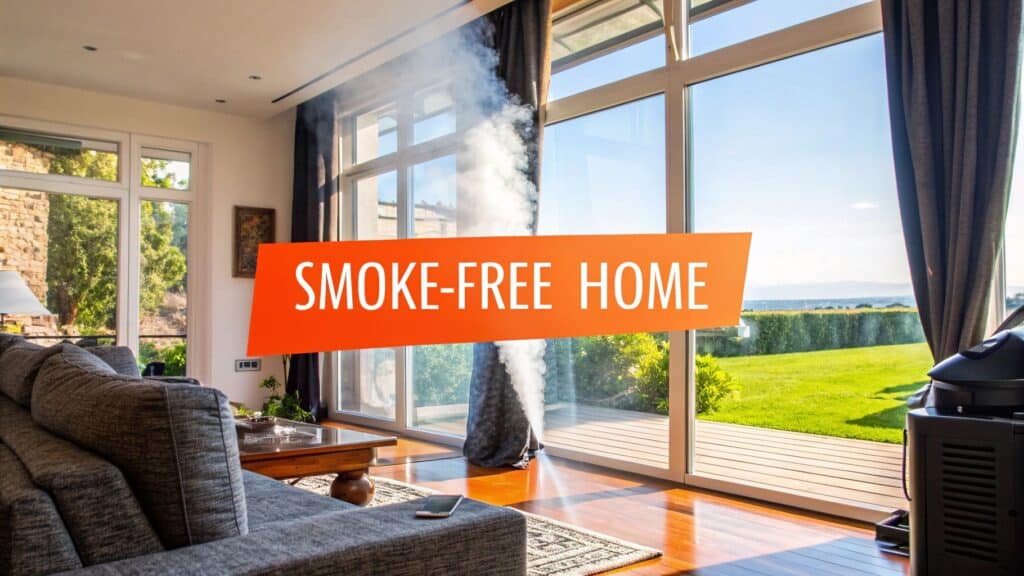
Learning how to remove fire smoke smell from house is about more than just cleaning visible soot. It's a meticulous process of decontaminating your property by eliminating microscopic chemical residues that penetrate deep into your home's structure and furnishings. True smoke remediation requires containing the damage, deep-cleaning every surface with proven methods, and using professional-grade equipment to neutralize stubborn, invisible odors at a molecular level.
At Sparkle Restoration Services, we understand the stress and disruption a fire causes. As Orange County’s premier IICRC Master Certified restoration experts, our goal is to turn chaos into calm by restoring not just your property, but your peace of mind.
Understanding the Lingering Threat of Smoke Odor
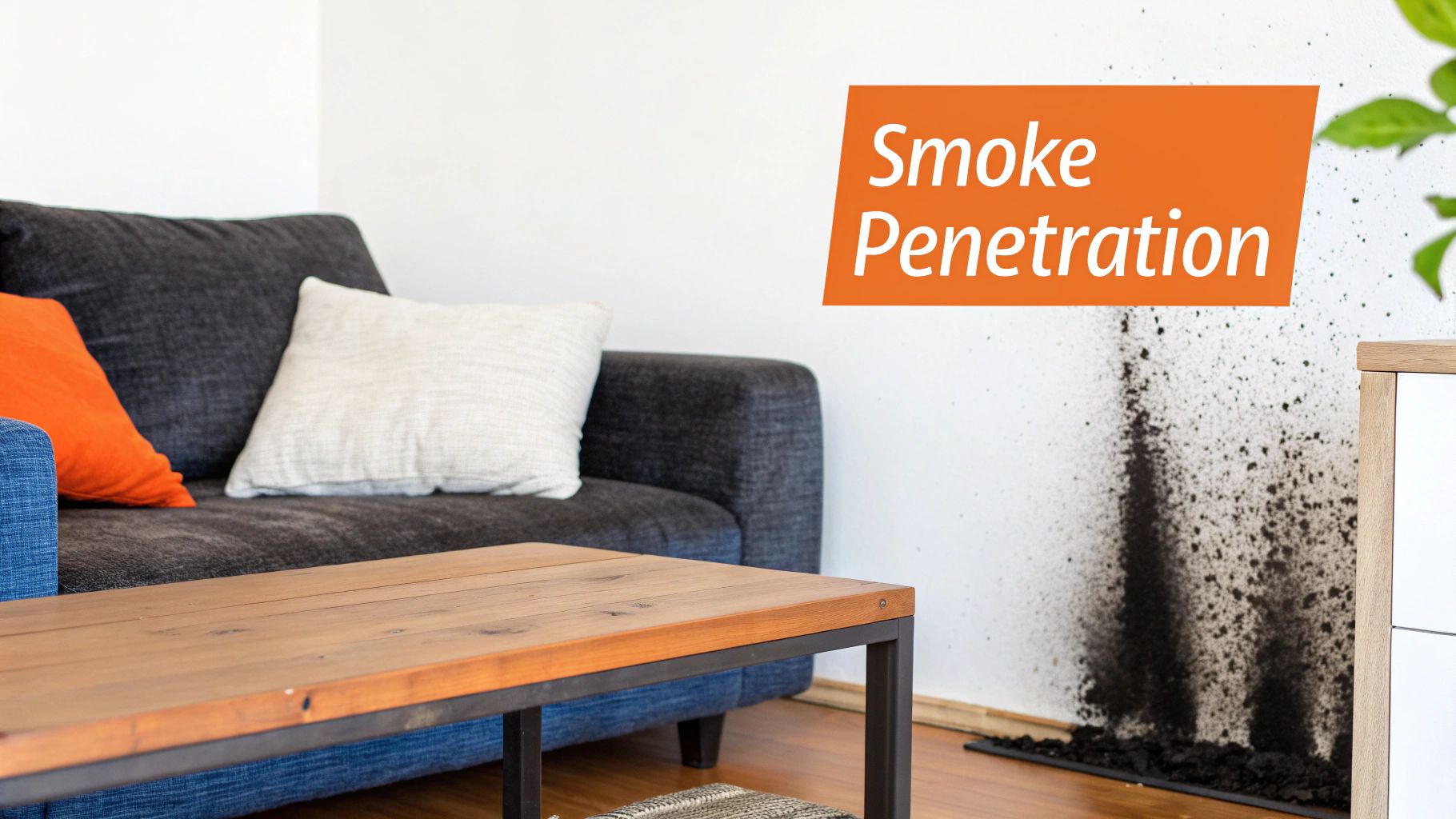
Long after the flames are extinguished, the most invasive reminder of a fire is the smell. This isn't just an unpleasant scent—it’s a complex cocktail of microscopic particles like soot, ash, and chemical residues. Driven by intense heat, these particles are forced into every imaginable nook and cranny of your Orange County home.
Many of these particles are smaller than 0.3 microns, allowing them to penetrate deep into porous materials and remain suspended in the air for extended periods.
This is precisely why simply opening windows or using an air freshener is ineffective. The smoke particles have already embedded themselves into:
- Porous Surfaces: Drywall, unsealed wood, insulation, and even concrete act like sponges, absorbing these odor-causing residues.
- Textiles and Furnishings: Your carpets, upholstery, draperies, and clothing are magnets for these particles, becoming constant sources of the foul smell.
- Hidden Cavities: Smoke is insidious. It travels through wall cavities, attic spaces, and beneath flooring, creating hidden pockets of odor that are nearly impossible to reach with DIY methods.
The Science of Stubborn Smoke Smell
What makes the odor so difficult to eliminate is its complex chemistry, which varies depending on what burned. A fire that consumed natural materials like wood leaves a very different residue than one involving synthetics such as plastics, foams, or electronics.
When synthetic materials burn, they release volatile organic compounds (VOCs) and other hazardous chemicals. This creates a uniquely acrid, pungent odor that clings tenaciously and is significantly harder to remove. More importantly, these lingering particles can pose serious health risks.
These particles do more than just smell bad; they degrade your indoor air quality and can impact your family's health long after the incident. For affluent homeowners in Southern California, protecting this environment is paramount.
At Sparkle Restoration Services, we don’t treat smoke odor as just a bad smell—we treat it as a contamination issue. Our philosophy is that you can't just mask the odor; you must remove the source completely. This is the only way to ensure your Orange County home is truly safe, healthy, and comfortable again.
Understanding the pervasive nature of smoke makes it clear why a thorough, multi-stage professional approach is non-negotiable. The goal isn't just to make the house smell better—it's to systematically hunt down and remove these embedded particles from every affected surface and purify the air, turning the chaos of a fire's aftermath back into the calm and comfort you deserve.
Immediate Steps for Safety and Damage Containment
When you’re dealing with the aftermath of a fire, the urge to jump in and start cleaning is understandable. However, you must prioritize safety above all else. Your first move isn't about the smoke smell—it's about ensuring the environment is secure for you and your family. Rushing this critical first phase can expose you to hidden dangers and accidentally spread soot and contaminants throughout your Newport Beach home.
This initial stage is all about assessment, protection, and containment. Getting these steps right lays the foundation for a successful restoration and is absolutely essential for your insurance claim.
Your Safety Checklist Before Entering
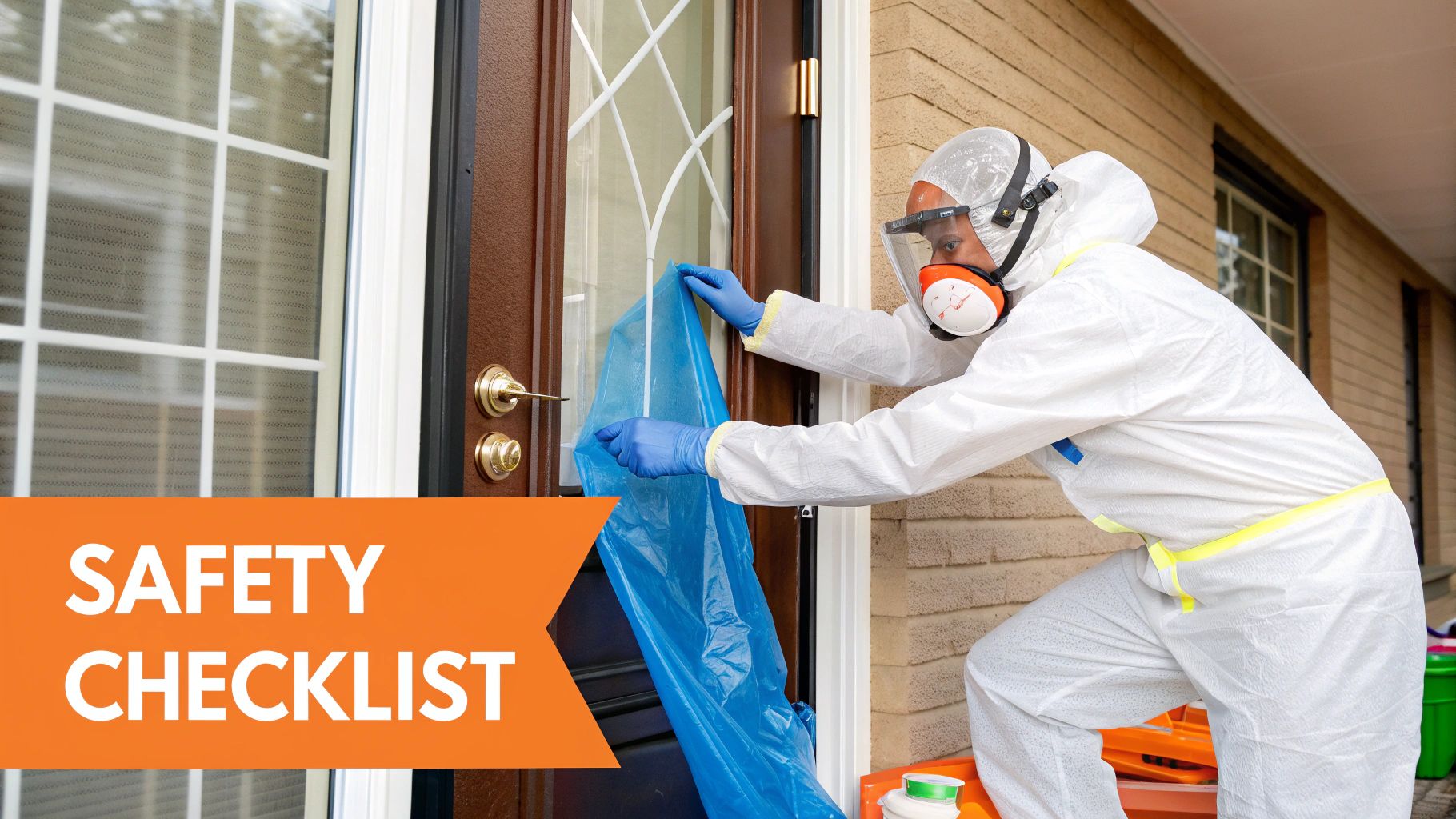
Never re-enter your property until the fire department has officially given you the all-clear. Once they have, your next responsibility is to protect yourself from the microscopic soot and chemical particles suspended in the air.
- Personal Protective Equipment (PPE): This is completely non-negotiable. At a minimum, you need an N95 or P100 respirator mask, safety goggles, and heavy-duty gloves. Soot contains toxic compounds that can be inhaled or absorbed through the skin.
- Structural Awareness: Pay close attention to your surroundings. Look for any signs of weakened floors, sagging ceilings, or compromised support beams. If anything appears questionable, do not risk it. Exit immediately and call a professional.
- Utilities Check: Before spending significant time inside, ensure all utilities—especially gas and electricity—have been shut off and inspected by a qualified professional.
Dealing with the smoke odor comes later. Right now, it's crucial to follow a comprehensive plan. For a broader look at immediate post-fire actions, we recommend reading through a practical recovery guide after a house fire.
Contain the Damage and Document Everything
Once it's safe to move around, your next goal is to prevent cross-contamination. Soot particles are greasy and easily tracked from damaged areas into clean ones, which can complicate the restoration process significantly.
Isolate the most affected rooms. Use heavy plastic sheeting and painter's tape to seal off doorways, and be sure to cover any vents or other openings connecting these spaces to the rest of the house. This simple step is remarkably effective at stopping soot and odor from spreading.
Now, before touching anything, document everything for your insurance provider. Use your smartphone to take dozens of photos and videos of every affected room from multiple angles. Capture wide shots showing the overall scope of the damage, then get close-ups of specific items. This visual evidence is invaluable for validating your claim and securing the compensation you are entitled to.
Expert Insight: Think of soot as a fine, oily powder. Every step you take can kick it back into the air, where your HVAC system can then circulate it to previously unaffected areas of your home. Containment isn't just a suggestion; it's a critical step to limit the scope and cost of the restoration.
By focusing on safety, documenting the damage, and containing the affected areas first, you're setting the stage for the real cleaning and deodorization work to begin. Our IICRC-certified team at Sparkle Restoration Services specializes in comprehensive fire damage restoration services, and we handle these critical first steps with the precision and care your home deserves.
A Systematic Approach to Cleaning Soot and Smoke Residue
Once your home is safe and the affected areas are contained, the true restoration work can begin. This is a methodical process focused on removing the source of the odor—the sticky, oily soot and smoke residue clinging to everything.
Attempting to deodorize before you clean properly is a classic mistake. It’s like painting over a stain; you might cover it up temporarily, but the smell will always return. The key is to tackle different materials with the right techniques, in the right order. Rushing this or using the wrong cleaner can grind soot deeper into surfaces, turning a restorable item into a permanent loss.
The Professional "Dry-First" Cleaning Method
One of the most significant missteps homeowners make is immediately reaching for a wet rag and a bottle of cleaner. Soot is greasy, and mixing it with water without the proper technique creates a smeared, soupy mess that soaks into porous surfaces like drywall and unsealed wood, making it nearly impossible to ever get fully clean.
This is precisely why IICRC-certified professionals like us always begin with a dry cleaning process. The goal is to lift as much loose soot as possible before any liquid touches the surface.
- HEPA Vacuuming: The first pass is always with a vacuum equipped with a high-efficiency particulate air (HEPA) filter. We meticulously go over every surface—walls, ceilings, floors, and upholstery—using a soft brush attachment and gentle, overlapping strokes. Using a standard vacuum is a critical error; it will simply recirculate microscopic soot particles back into the air, worsening the contamination.
- Chemical Sponges: After a thorough vacuuming, we utilize dry cleaning sponges, often called chemical or soot sponges. These specialized tools are never meant to be wet. Their unique composition allows them to attract and grip soot and smoke residue. We use straight, parallel strokes, slightly overlapping each one. As the sponge becomes saturated with soot, we slice off the dirty layer with a utility knife to reveal a fresh surface.
This dry-first strategy is the bedrock of effective fire damage restoration and is the exact method we employ on projects from Newport Beach to Irvine. It removes the bulk of contaminants from the surface without driving them deeper into the material.
Wet-Cleaning Non-Porous Surfaces
Only after all loose soot has been removed can you begin wet-cleaning hard, non-porous surfaces. This includes items like sealed wood furniture, metal fixtures, cabinets, countertops, and most painted walls (if the paint has a washable finish, like semi-gloss or satin).
Always test your cleaning solution on a small, inconspicuous area first to ensure it won’t cause discoloration or damage. An effective mixture often involves a good degreasing agent, like trisodium phosphate (TSP) or a professional-grade soot remover, diluted in warm water. Work in small, manageable sections, and clean from the bottom up to prevent streaking. As you complete a section, rinse it with a separate, clean damp cloth.
Pro Tip: When cleaning walls, working from the floor up toward the ceiling is a non-negotiable professional technique. It prevents dirty runoff from creating streaks over the areas you’ve just cleaned. This small detail makes a significant difference in the final result.
This methodical approach is absolutely critical. In fact, many principles for eliminating persistent problems, such as learning how to get rid of mould in your home, are the same here—thorough source removal is the only way to achieve a lasting solution.
Managing Damaged Textiles and Upholstery
Textiles present a unique challenge. Their porous fibers act like magnets for tiny smoke particles and will retain that acrid smell until treated correctly. This applies to everything from curtains and clothing to bedding and area rugs.
The appropriate handling depends on the material and the extent of the damage:
- Machine-Washable Items: Items like everyday clothing, sheets, and durable curtains can often be salvaged. Try washing them in hot water with your usual detergent plus one cup of white vinegar or a specialty smoke odor remover additive. It may take several wash cycles to completely eliminate the smell.
- Dry-Clean-Only Fabrics: For more delicate items—silk blouses, wool suits, certain drapes—do not take any chances. They require a professional dry cleaner with specific experience in fire and smoke restoration.
- Upholstery and Carpets: These items almost always require professional intervention. The soot and odors become trapped deep within dense carpet fibers and furniture foam, making them nearly impossible for a homeowner to remove without the specialized equipment and cleaning solutions we use.
At Sparkle Restoration Services, our expert carpet and upholstery cleaning services are designed for precisely these kinds of tough situations. Our IICRC-certified technicians use advanced, industry-approved techniques to safely restore these valuable items, which is a critical step in making your house finally feel like home again.
Advanced Odor Neutralization Techniques
You’ve cleaned, scrubbed, and aired everything out, but a faint, frustrating smoke smell still lingers. What’s going on?
The reality is, microscopic soot and smoke particles are masters of concealment. They penetrate deep into porous materials like drywall, wood studs, and even insulation—places no sponge or surface cleaner can reach. At this stage, you've moved beyond cleaning and into the realm of molecular odor destruction.
This is where professional restoration science takes over. These are not DIY jobs that can be tackled with a rental machine. They involve sophisticated equipment that breaks down odor molecules at their source, ensuring the smell is gone for good, not just masked. This is the level of detail our IICRC-certified technicians bring to every Orange County home we restore.
Professional Odor Removal Methods: A Comparison
When a certified firm like ours evaluates a home, we don't just pick a machine at random. We diagnose the problem and prescribe the right technology for the job. Each method has its place, and understanding the differences is key to a successful outcome.
| Method | How It Works | Best For | Safety Considerations |
|---|---|---|---|
| Thermal Fogging | Heats a solvent-based deodorizer into a fine mist that penetrates porous surfaces just like the original hot smoke did. | Reaching deep, hidden odors within wall cavities, attics, and subfloors. Excellent for stubborn structural smells. | Requires the property to be unoccupied during treatment and for a period afterward to allow for ventilation. |
| Ozone (O₃) Generators | Fills a sealed area with ozone gas, a powerful oxidizing agent that breaks down odor molecules through a chemical reaction. | Aggressive, widespread odors in the air and on surfaces throughout an entire structure. | Must be used in an unoccupied, sealed space. Ozone is harmful to people, pets, and plants. Requires thorough ventilation before re-entry. |
| Hydroxyl (OH) Generators | Uses UV light to create naturally occurring hydroxyl radicals, which "scrub" the air of odors and VOCs without harsh chemicals. | Occupied spaces or situations needing a gentler, continuous approach. Great for air purification during the restoration process. | Completely safe for use around people, pets, and plants. The process is slower than ozone but much more flexible. |
Selecting the right tool—or combination of tools—depends entirely on the specifics of the fire, the materials that burned, and whether the home can be vacated. It’s a strategic decision made by an experienced professional.
Thermal Fogging for Deep Penetration
One of the most powerful tools in a professional’s arsenal is the thermal fogger. Its genius lies in its ability to replicate the behavior of smoke itself. The machine heats a specialized deodorizing solvent, creating a dense, hot fog.
Because this fog is heated, it expands and drives itself deep into the exact same cracks, crevices, and porous materials that the smoke invaded. It’s a brilliant way to ensure the deodorizing agent reaches every hidden pocket of odor. It essentially chases the smoke smell down and neutralizes it on the spot.
Expert Insight: I like to think of thermal fogging as fighting fire with fire, but without the damage. By creating a deodorizing fog that acts just like hot smoke, we can guarantee that no hidden odor source is missed. It's a precise, targeted attack.
Oxidizing Agents: Ozone and Hydroxyl Generators
For stubborn odors lingering in the air and on every surface, we often turn to powerful oxidizing agents. These machines release molecules that actively seek out and dismantle smoke particles.
- Ozone (O₃) Generators: This is the heavy hitter. An ozone generator floods a sealed, unoccupied space with O₃ gas. Ozone is a highly reactive molecule that effectively shatters the chemical structure of odor-causing compounds. It’s incredibly effective, but safety is paramount. The property must be completely vacant of all people, pets, and plants during treatment and then aired out thoroughly.
- Hydroxyl (OH) Generators: This is the safer, more modern approach. Hydroxyl generators use UV light to create hydroxyl radicals—the same molecules that Mother Nature uses to clean the atmosphere. While it works more slowly than ozone, its biggest advantage is that it's 100% safe to use in occupied spaces. This makes it the perfect choice for homes where families need to remain on-site during the restoration process.
Before any of this advanced work can begin, the initial surface cleaning has to be done correctly. Getting this wrong can make the problem worse.
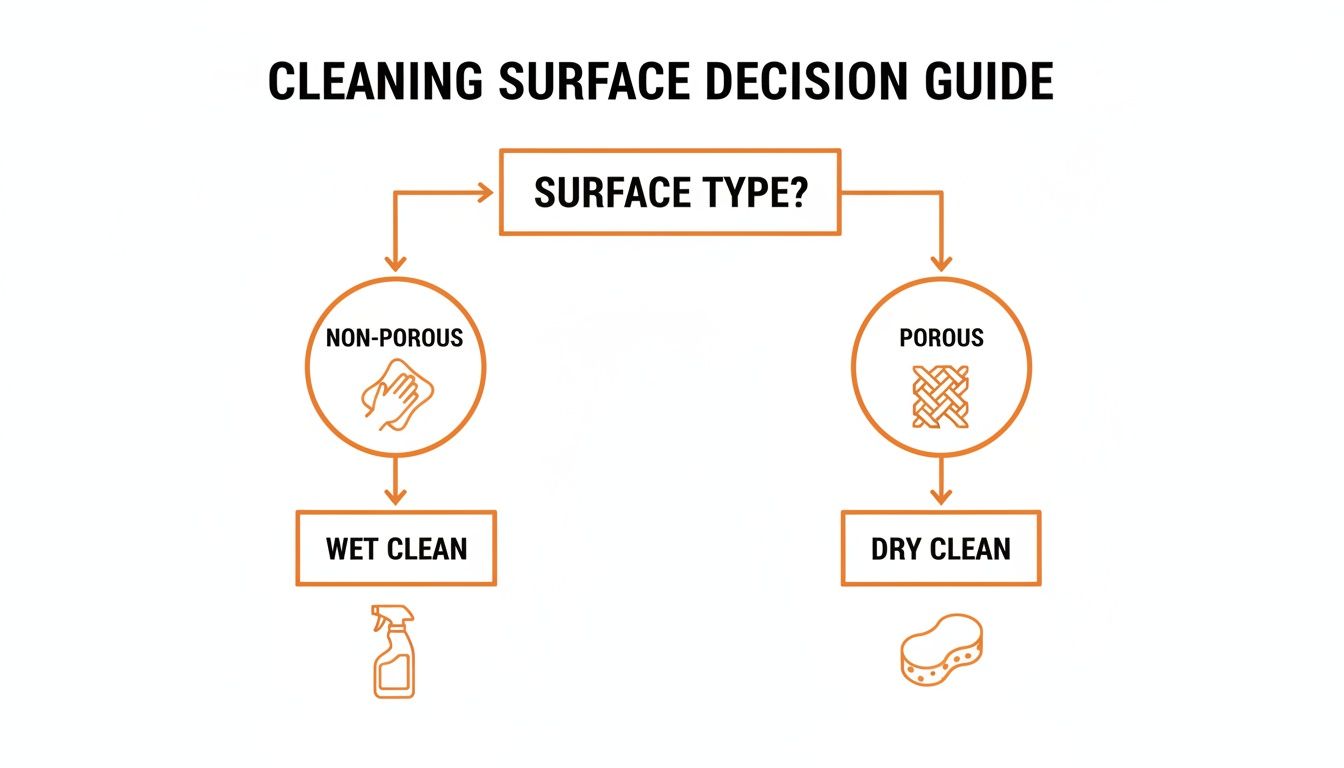
Why does this matter so much? Because hitting a soot-covered porous surface with a wet cleaner can drive the stain and the smell deeper, essentially setting it permanently. It’s a rookie mistake that complicates the entire deodorization effort.
While thorough cleaning removes the visible evidence of a fire, it’s these advanced technologies that eliminate the invisible enemy. If that phantom smoke smell is keeping you from feeling comfortable in your own home, you can learn more about our professional Orange County odor removal services and how we bring clean, healthy air back where it belongs.
Making Your HVAC System and Air Quality Safe Again
Even after you've cleaned every last surface in your Orange County home, there’s a major source of contamination that can undo all that hard work: your HVAC system.
Think of it as the lungs of your home. If it inhaled smoke and soot during the fire, it will continue to exhale those same particles and odors back into your living space. Addressing the HVAC isn't a final touch-up; it's a critical component of the entire restoration. Ignoring it means the smell will inevitably return.
The goal here is to transform this system from a source of re-contamination into a powerful air purifier for your home.
Start with the Filters, Then Tackle the Ducts
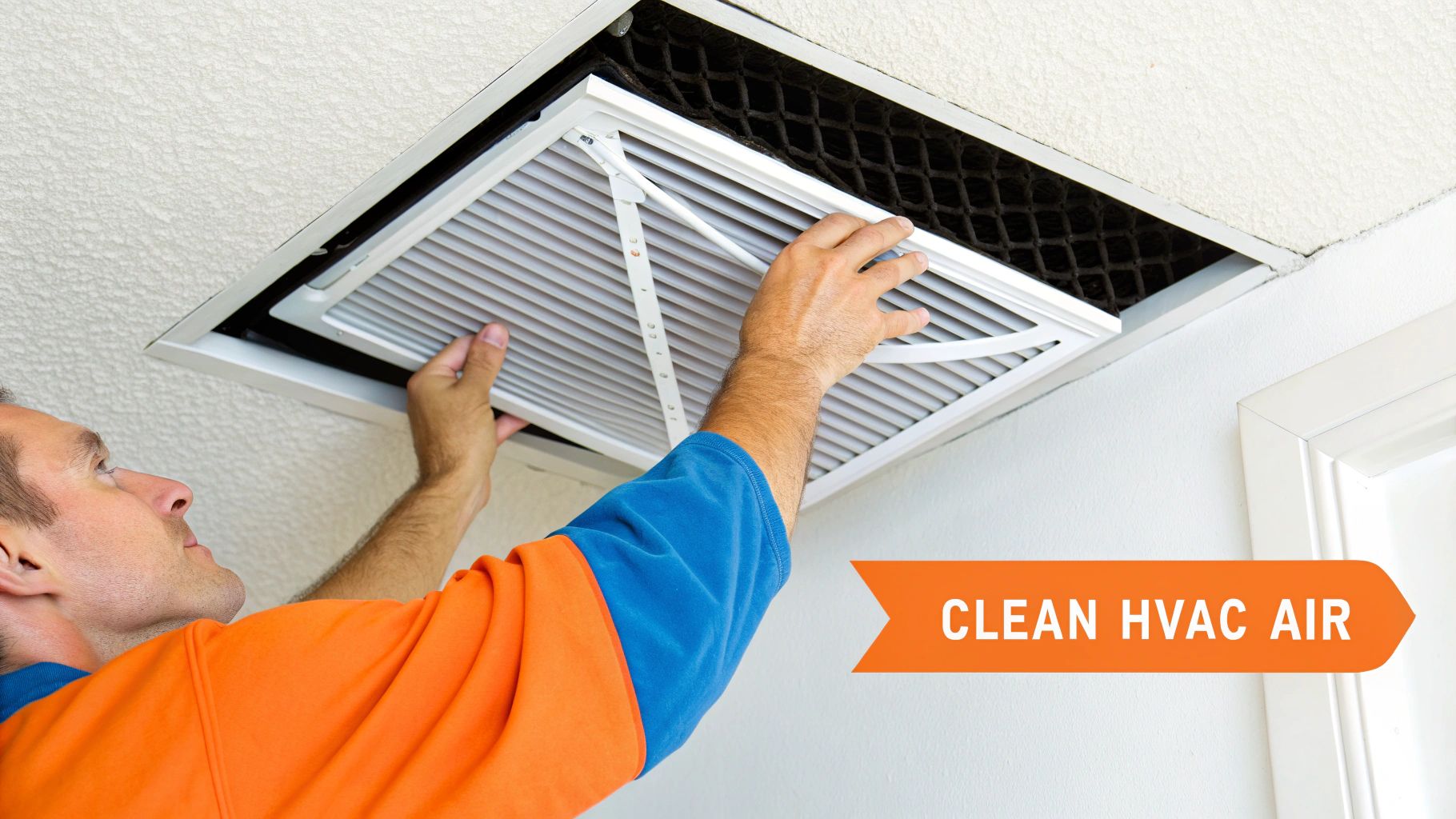
The very first thing you must do is replace every single air filter in your system. A filter saturated with soot isn't filtering anything—it's actively pushing foul odors through your home every time the heat or AC kicks on.
However, swapping the filter is only scratching the surface. Your entire network of air ducts is likely coated in a fine, greasy layer of soot that requires professional assessment.
An IICRC-certified technician will perform a thorough inspection of the ductwork to determine the extent of contamination. If cleaning is necessary, they will bring in specialized equipment designed to scrub the system clean without distributing soot throughout your house.
The process typically involves several key steps:
- Creating Negative Pressure: High-powered, HEPA-filtered vacuums are connected to the system to suck all dislodged soot and debris out of the ducts and into a contained unit.
- Agitation Tools: To break stubborn soot free from the interior of the ductwork, technicians use tools like rotating brushes and high-pressure air whips.
- Cleaning Key Components: It’s not just the ducts. The technician will also meticulously clean other critical parts like the blower motor, fan housing, and evaporator coils where soot loves to hide.
Why This Matters for Your Family's Health
The health risks associated with lingering smoke particles are serious, especially for us here in Southern California, where wildfire season is a constant concern.
A sobering report from The Lancet Countdown 2025 revealed that fine particulate matter from wildfires is responsible for over 100,000 premature deaths globally each year. These tiny PM2.5 particles are often more toxic than typical urban pollution, which is why professional-grade remediation is a non-negotiable investment in your family’s health. You can read the full report on wildfire particle impacts to see the data for yourself.
At Sparkle Restoration Services, we treat HVAC systems with surgical precision. Our commitment to ethics—the very principle that earned us a BBB Torch Award—means we don't just clean what you can see. We restore the entire system to ensure the air your family breathes is genuinely clean and safe.
After a deep cleaning, we almost always recommend upgrading to a higher-rated air filter. A filter with a MERV 13 rating is incredibly effective at trapping the microscopic smoke particles that cause stubborn odors and potential health problems. It's a simple change that makes a huge difference in maintaining excellent indoor air quality long after the restoration is complete.
Ensuring your ventilation system is handled correctly is the final piece of the puzzle. It's what guarantees the fire and smoke smell is gone for good. For a more detailed look at what this process involves, check out our guide on professional HVAC system cleaning services in Orange County.
Knowing When to Call a Professional Restoration Expert
Some home projects are perfect for a hands-on approach. Tackling the lingering smell after a minor kitchen flare-up, for instance, is often manageable. But knowing how to remove fire smoke smell from house after significant damage is a completely different challenge.
Misjudging this can lead to more than just a stubborn odor; it can result in hidden structural problems, incomplete decontamination, and long-term health risks for your family. Understanding the limits of DIY is the first step toward a true, lasting recovery for your property.
The Telltale Signs You Need Professional Help
Certain situations are immediate red flags, signaling that the damage is far beyond what household cleaners and elbow grease can handle. If you're facing any of these issues, it’s time to bring in a certified restoration firm.
- A Stubborn, Pervasive Odor: You've aired out the house for days, washed every curtain and cushion, and scrubbed every visible surface, but that unmistakable smoky smell just won't quit. This is the classic sign that odor particles have burrowed deep into porous materials like drywall, insulation, and even the wood framing of your home.
- Widespread, Oily Soot: If you're seeing a greasy film of soot clinging to walls, ceilings, and your personal belongings, this requires specialized cleaning agents. Trying to wipe it away with standard cleaners will likely just smear the residue and cause permanent staining.
- HVAC System Involvement: Did smoke get pulled into your ventilation system? If so, professional HVAC decontamination is non-negotiable. Otherwise, your system will just keep circulating soot and odor particles through your home indefinitely.
- Structural and Electrical Worries: Any visible charring on support beams, warped drywall, or concerns about electrical outlets and wiring that were exposed to heat or extinguisher chemicals demand an immediate expert assessment. This is a matter of safety, not just cleaning.
As wildfires become a more frequent reality, the need for professional intervention has never been clearer. It's now estimated that a staggering 1.009 billion individuals globally are exposed to at least one significant indoor smoke pollution event each year. That data really drives home why a comprehensive, professional restoration is so vital for protecting your health and the value of your property, especially here in Orange County. You can explore the full research on indoor wildfire pollution to get a better sense of the scale of this issue.
A licensed, IICRC Master Certified firm like Sparkle Restoration Services doesn't just clean—we decontaminate. Our process, recognized by our BBB Torch Award for Ethics, is designed to track down and neutralize every last hidden particle. We turn the chaos of a fire's aftermath back into the calm and safety your home should be.
Answering Your Smoke Odor Removal Questions
When you're dealing with the fallout from a fire, a million questions run through your mind. It’s completely normal. As a trusted partner to homeowners and property managers throughout Orange County, we believe in providing clear, authoritative answers. Here are some of the most common questions we receive.
How Long Does It Take to Get Rid of Smoke Smell?
The timeline is directly related to the severity of the fire. A small protein fire on the stovetop might be resolved within a few days. However, for a more serious fire with structural involvement, you are likely looking at a multi-week process that includes intensive cleaning, HVAC system decontamination, and advanced deodorization.
The timeline really depends on several key factors:
- What materials burned? Synthetics and plastics create a much more stubborn, oily soot than natural materials like wood.
- What was the size of the affected area?
- How long did the smoke and soot sit before cleanup began?
After a thorough, in-person inspection, a certified restoration professional can provide a much more accurate timeline.
Will My Insurance Policy Cover Smoke Odor Removal?
For the vast majority of homeowners, the answer is yes. A standard homeowner's insurance policy covers damage from fire and smoke, which absolutely includes the professional services needed to remove soot and neutralize the lingering odor. The key is meticulous documentation. Before anyone touches anything, take photos and detailed notes to build a strong foundation for your claim.
Pro Tip: Keep a running log of every conversation you have with your insurance adjuster. Note the date, time, and a quick summary of what was discussed. This simple habit can be a lifesaver in making sure the claims process goes smoothly and fairly.
Can I Get the Smoke Smell Out of Clothes and Furniture Myself?
For items with very light smoke exposure, you might have some success with DIY methods. Washing machine-safe clothes a couple of times with a cup of white vinegar can sometimes work. But for the deep, set-in smell in your sofa, carpets, or delicate fabrics, professional treatment is almost always the only real solution.
The difference lies in the technology and chemistry. We use specialized equipment and professional-grade solutions designed to break down soot particles and eliminate odor molecules at the source, all without damaging your valuable belongings. Consumer products simply cannot compete.
Do I Have to Move Out During the Restoration Process?
Whether you need to temporarily relocate depends entirely on the deodorization methods being used. For instance, if the situation calls for ozone generation, the house must be completely empty of all people, pets, and even plants. Ozone is a powerful oxidizing agent, but it's harmful to breathe.
On the other hand, newer technologies like hydroxyl generation are 100% safe to use while a home is occupied. An ethical, client-focused firm like Sparkle Restoration Services will walk you through the entire plan beforehand, always making your family’s safety and comfort the top priority.
Facing the overwhelming task of fire and smoke restoration, you don't have to go it alone. The IICRC Master Certified team at Sparkle Restoration Services has the expertise and advanced technology to permanently eliminate smoke odor and restore your home to its pre-loss condition. Trust the firm that earned a 2024 BBB Torch Award for Ethics to turn chaos into calm, fast.
Schedule your free, no-obligation consultation today by visiting https://www.sparklerestoration.com.
Ready to create a space that’s as beautiful as it is functional? Schedule your complimentary design consultation today by visiting Ready to Work with Sparkle?