



Removing the smoke smell from your furniture requires more than a simple surface-level wipe-down. It’s a deep treatment process because stubborn odor particles become trapped in porous materials. For many Orange County homeowners, the first instinct is to open the windows and use baking soda or vinegar. While these are good first steps for minor incidents, knowing how to remove smoke smell from furniture effectively, especially after significant exposure, often requires professional techniques to truly neutralize the lingering odor.
The first step toward restoring your home’s comfort and air quality is understanding exactly what you're up against.
Why Smoke Smell Clings to Your High-End Furniture
Ever wonder why the smell of smoke seems to move in and never leave, embedding itself into your most cherished furniture? It’s because smoke isn’t just a scent—it’s a physical cocktail of microscopic, oily, and often acidic particles that aggressively latch onto any surface they land on.
When there’s a fire—whether from a kitchen flare-up, a nearby Southern California wildfire, or even cigarettes—these tiny particles are launched into the air. They eventually settle, burrowing deep into porous surfaces and making your high-end furniture a prime target.
The Science of Smoke Penetration
It helps to think of your furniture as a collection of sponges. Every material has a unique structure that is practically designed to trap these tiny smoke particles:
- Upholstered Furniture: Fabrics like linen, cotton, and velvet are made of millions of tiny fibers. This creates a massive surface area for smoke particles to grab onto. The oily residue gets tangled up in the weave, making it nearly impossible to remove with regular cleaning.
- Wood Furniture: You might think solid wood is safe, but it’s not. The grain, microscopic pores, and even the protective finish can absorb smoke. Worse, the acidic nature of soot can actually cause discoloration and eat away at lacquers and varnishes over time.
- Leather Goods: Leather is a natural, porous hide. Smoke particles can work their way right through the surface, and the oils in the smoke can dry out the leather, leading to cracking and permanent odor if it’s not treated correctly and quickly.
This deep penetration is exactly why just airing out a room or spraying an air freshener never really works. Those are just temporary masks for the odor. The real source—the embedded particles—is still buried deep within the material, constantly releasing that unpleasant smell.
The impact of these smells is no small thing. Industry tests have shown that 60% of hotel visitors consider lingering cigarette smoke the absolute worst smell they could encounter. It's a powerful reminder of just how persistent and off-putting these odors can be, often causing significant downtime for businesses until the smell is professionally removed.
As IICRC Master Certified professionals, we’ve seen countless cases where homeowners in Orange County have tried DIY methods, only to have the smell creep back weeks later. The key is understanding that you aren't just fighting a smell; you're removing a physical contaminant.
Not All Smoke Is Created Equal
The type of smoke you’re dealing with also plays a huge role in how it damages your furniture. To give you a better idea, here’s a quick breakdown of how different smoke sources impact various materials.
Smoke Source Impact on Different Furniture Materials
| Smoke Source | Affected Materials | Primary Challenge |
|---|---|---|
| Wood Fires | Upholstery, unfinished wood | Dry, powdery soot that is easier to clean but can still embed deeply. |
| Synthetic/Plastic Fires | All materials, especially plastics and varnishes | Wet, oily soot that smears easily and is highly acidic, causing permanent stains. |
| Cigarette/Tobacco Smoke | Fabric, leather, painted surfaces | Oily, sticky residue that yellows surfaces and requires specialized deodorizers. |
| Kitchen/Protein Fires | All porous surfaces | Greasy, invisible residue that is incredibly difficult to break down and has a potent, acrid smell. |
As you can see, a fire fueled by natural materials like wood creates a dry, powdery soot that's somewhat easier to manage. But a fire involving synthetics—like the plastics and fabrics in most modern homes—produces a wet, oily soot that smears at the slightest touch and is incredibly stubborn.
That oily residue needs specialized cleaning agents to break it down without ruining the furniture underneath. This is especially true for delicate antiques or custom pieces where the wrong approach can be a disaster. Ultimately, the challenge of smoke removal directly impacts the air you breathe. You can learn more about the hidden dangers of indoor air pollution and how to fix them in your own home.
Knowing exactly what you're up against is the first step in restoring not just your furniture, but the peace and comfort of your home.
Practical DIY Methods for Tackling Initial Smoke Odors
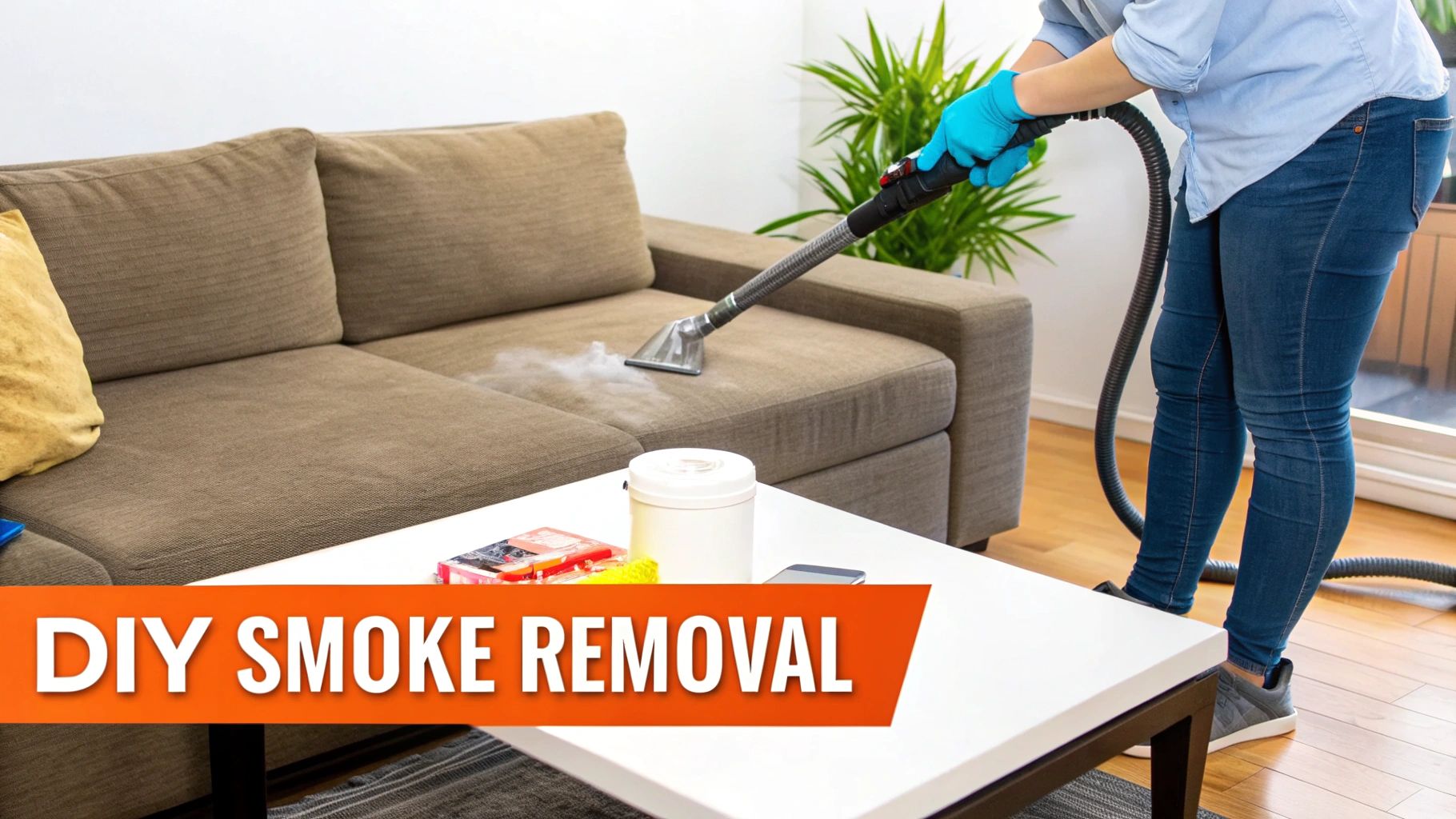
After a minor smoke incident, immediate action is key. The good news is, for light to moderate surface smells, there are several effective first-response methods you can try before calling in professionals. These DIY techniques, when performed correctly, can make a significant difference in clearing the air quickly.
The trick is to match your approach to the material, as a method that saves a fabric sofa might ruin a leather armchair. First, ventilate the area thoroughly by opening windows and using fans to create a cross-breeze. This simple step helps clear out loose smoke particles still lingering in the air.
And a word of caution: always test any cleaning solution on a small, inconspicuous area first—like the underside of a cushion or the back of a table leg. This quick check can save you from heartbreaking discoloration or damage.
Reviving Upholstered Furniture
Upholstered furniture like sofas and chairs act as magnets for smoke particles due to their porous fibers. The strategy here is to extract those particles and absorb the odors they leave behind.
Start with a very thorough vacuuming using a vacuum cleaner equipped with a HEPA (High-Efficiency Particulate Air) filter. This is non-negotiable; a standard vacuum will simply recirculate microscopic smoke particles back into the air. Use the upholstery attachment and go over every square inch—cushions, arms, back, and base—with slow, overlapping passes.
Next, use a proven deodorizer: baking soda. Sprinkle a generous, thick layer over the entire fabric surface. Don't be stingy; you want a visible coating. Let it sit for at least a few hours, though overnight is ideal. The baking soda will absorb the oily, smelly residue. Once it’s had time to work, vacuum it all up meticulously with your HEPA vacuum.
As a BBB Torch Award for Ethics Winner, we believe in empowering homeowners with honest advice. While baking soda is excellent for surface odors, it cannot penetrate the foam and padding deep within the furniture. If the smell persists after this treatment, it’s a sign that the smoke particles are embedded far deeper than DIY methods can reach.
For more routine cleaning tips, many homeowners find guides on how to clean a fabric sofa at home to be quite helpful.
Treating Wood and Hard Surfaces
Wood furniture, from dining tables to antique dressers, can trap smoke smells in its grain and finish. The approach here is different since you're cleaning a surface rather than extracting particles from deep within.
A simple and effective solution is a mixture of equal parts white vinegar and warm water. Vinegar is a natural deodorizer, and its acidity helps cut through the greasy film that smoke often leaves behind.
Here’s how to tackle wood surfaces:
- Dampen a soft microfiber cloth with the vinegar solution. It should be damp, not sopping wet, as excess water can damage a wood finish.
- Wipe down every surface, always moving with the wood grain.
- Follow up with a second cloth dampened with plain water to rinse off any vinegar residue.
- Immediately dry everything completely with a third, dry cloth to prevent water spots.
If the odor lingers after cleaning, it has likely penetrated the wood's finish. Sometimes, applying a fresh coat of sealant or varnish can lock in the smell, but this is a much larger project. For valuable or antique pieces, we always recommend consulting a professional before attempting to refinish.
Safely Cleaning Leather Goods
Leather requires a gentle approach. Harsh chemicals, including vinegar, will dry it out and can lead to cracking and fading. For leather furniture, it is essential to use products specifically designed for it.
Start by wiping the leather with a clean, dry cloth to remove any surface soot. Then, apply a high-quality leather cleaner to a soft cloth and work it into the surface with gentle, circular motions.
After cleaning, the next step is critical: apply a leather conditioner. The cleaning process can strip away natural oils, and a good conditioner replenishes that moisture, keeping the leather supple and protected. This two-step process—clean then condition—is the only way to properly care for leather furniture and maintain its value.
These initial steps can make a real dent in the problem. Just like regular spring cleaning helps keep your home fresh, this kind of upkeep makes a difference. For more on that, you can check out our guide on the essentials of spring cleaning and combating dust. But if these DIY efforts don't suffice, it's a clear signal the smoke damage is more severe and it's time to bring in IICRC-certified restoration professionals with specialized equipment.
Knowing When to Call a Restoration Professional
While DIY methods can certainly help with minor, surface-level odors, there comes a point where household remedies just can't touch the microscopic tenacity of smoke particles. Knowing when you've reached that limit is key to protecting your furniture, your time, and the air you breathe at home. Pushing too hard with the wrong cleaner can sometimes do more harm than good, especially on delicate or expensive pieces.
So, how do you know when you’ve crossed from a weekend cleaning job into a full-blown restoration project? A few clear signs tell you it's time to bring in the pros.
The Smell Just Won’t Quit
This is the number one reason homeowners in Orange County give us a call. You’ve aired out the room for days, vacuumed with a HEPA filter, and tried every baking soda or vinegar trick you could find. Still, that stubborn smoky smell lingers, rearing its ugly head on humid days or whenever the house has been closed up.
A persistent odor is a clear indicator that smoke particles have penetrated deep into the core materials of your furniture—the foam cushions, the wood grain, and the inner padding. At this point, no amount of surface scrubbing will reach the source.
A smell that keeps coming back means the contamination is no longer on the surface. It's embedded deep inside, where only advanced restoration technology can find and neutralize it. This is where DIY efforts stop working.
The Source Was a Major Fire Event
The source of the smoke is a critical factor. The smell from a few forgotten cigars is one thing, but the aftermath of a house fire, an electrical short, or heavy smoke from a nearby wildfire is an entirely different beast.
Smoke from a serious fire is a toxic cocktail of chemicals and acidic soot that requires a professional approach. Here’s why this isn’t a DIY situation:
- Invisible Residue: Soot from burnt synthetic materials is often oily and nearly invisible, but it will cause long-term discoloration and corrosion.
- Structural Penetration: The intense heat from a fire forces smoke particles deep into walls, flooring, and furniture, making them impossible to get out with standard equipment.
- Health Hazards: Lingering soot and chemical residues can seriously compromise your home’s air quality, posing health risks long after the fire is out.
If the smoke damage is part of a larger fire incident, you’ll need comprehensive fire damage restoration services to ensure your home is truly safe and clean again.
Your Furniture Is Delicate or Irreplaceable
Do you have custom-built furniture, valuable antiques, or pieces with a fragile finish? Trying to remove smoke smell from these items on your own is a huge gamble. The wrong cleaning agent or excessive scrubbing can cause permanent damage. We’ve seen it all:
- The finish stripped from an antique wood table.
- Leather dried out to the point of cracking.
- Permanent water stains on delicate fabrics like silk or velvet.
As IICRC Master Certified technicians, we are trained in material science. We use specific, pH-balanced cleaning solutions designed for each surface, protecting your investment while we restore your furniture. For odors that have soaked deep into wood, more intensive work like learning how to refinish wood furniture might be the only answer, but that's a major project best left to experts when fire damage is involved.
Professional-grade tools like thermal fogging and ozone treatments are designed to destroy odors at the molecular level—something no home remedy can do. Thermal fogging creates a fine mist that mimics the behavior of smoke, allowing a deodorizing agent to penetrate every single place the smoke went. Ozone generators, which must be used safely by a certified team, break down the chemical structure of the odor molecules, completely wiping them out.
Trusting a certified professional isn't just about cleaning; it’s about restoring your home and your belongings with precision and care.
Inside Our Advanced Smoke Odor Removal Process
When DIY methods fall short, it’s not because you did anything wrong. It’s because the problem has shifted from a simple surface issue to a microscopic, chemical one. This is precisely where Sparkle Restoration Services excels, bringing a meticulous, science-backed process that homeowners across Orange County have trusted for over two decades. We don't just clean; we restore your furniture and your peace of mind.
To illustrate the difference, let’s walk through a common scenario we handle: an Irvine home dealing with stubborn smoke smell from a nearby wildfire. The homeowners tried everything, but the odor was deeply embedded in their custom upholstery and antique wooden furniture. Their experience highlights why our professional, multi-step approach is the only way to guarantee the smell is gone for good.
Initial Assessment and Containment
Our first on-site action is a comprehensive assessment. We don't just walk in and start spraying. Our IICRC Master Certified technicians use specialized tools to determine how deeply the smoke has penetrated. We identify which materials are most affected and the type of soot we're dealing with—whether it's dry and powdery or the oily, acidic residue from burnt synthetic materials.
This initial diagnosis is critical. Based on our findings, we immediately establish containment protocols. Using heavy-duty plastic sheeting and negative air pressure machines, we completely isolate the affected areas. This non-negotiable step prevents microscopic soot and odor particles from spreading through your HVAC system and contaminating the rest of your home. It's a core part of our promise of “Turning Chaos Into Calm, Fast.”
This infographic breaks down when it's time to call in a professional restoration team.
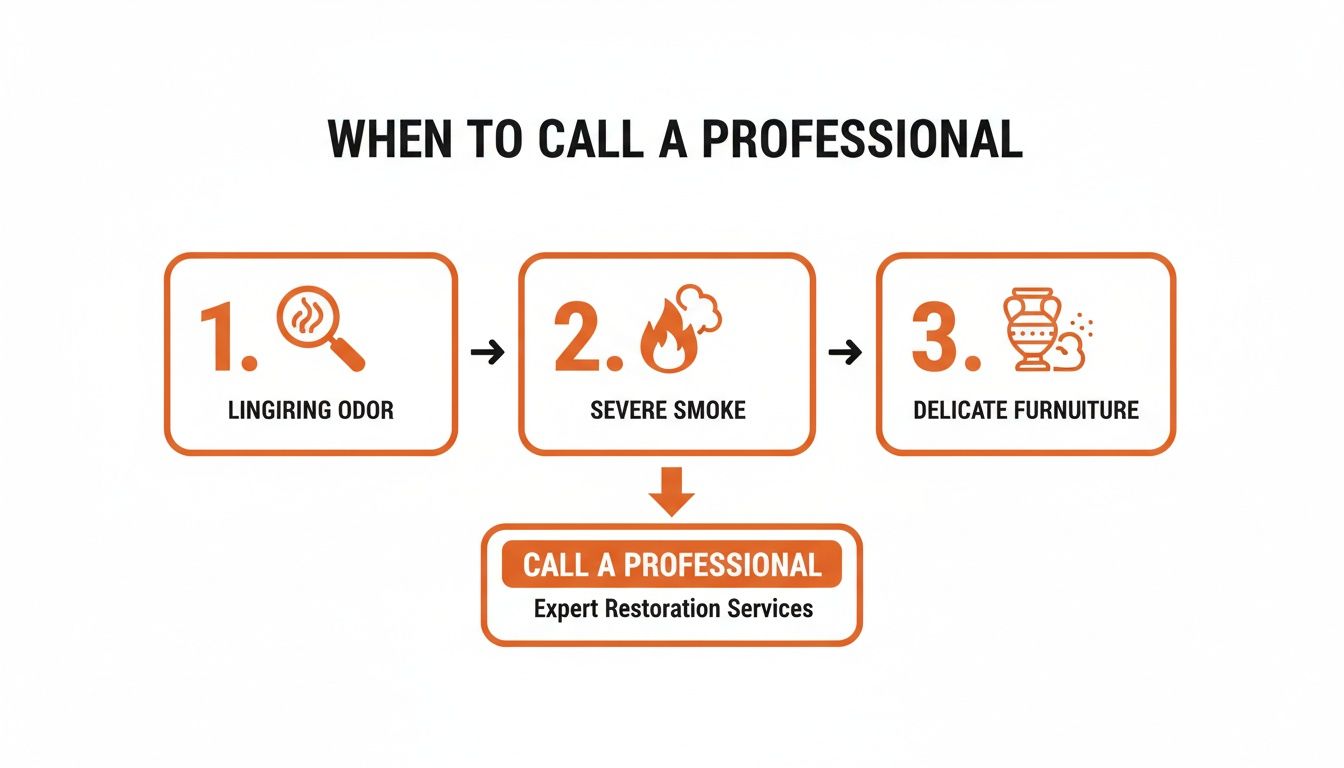
The key takeaway? Persistent smells, severe smoke events, or valuable items are all clear signs that it’s time to move past DIY solutions.
Demystifying Our Advanced Technology
Once the scene is secure, we deploy advanced restoration technologies that go far beyond simple surface cleaning. This is where the real science of odor removal comes into play. Smoke damage involves soot particles burrowed deep into the pores of your furniture, demanding specialized techniques that a spray bottle just can't handle. In fact, industry data shows that carpets and upholstered furniture hold 70% more smoke residues than hard surfaces, which is why they often need multiple deodorizing treatments.
Here are two of our most effective tools:
- Thermal Fogging: This is one of our most powerful techniques for removing smoke smell from furniture. We use a thermal fogger to heat a specialized deodorizing agent, converting it into a fine, dense fog. The particles in this fog are the same tiny size as smoke particles, allowing them to follow the exact same path the smoke took. They penetrate deep into wood grain, fabric fibers, and cushions to neutralize odor molecules right at the source.
- Hydroxyl Generators: When we're dealing with delicate antiques or there are sensitive electronics nearby, hydroxyl generators are our go-to. These machines use UV light to create hydroxyl radicals—naturally occurring molecules that safely break down odors and volatile organic compounds (VOCs) in the air and on surfaces. Unlike ozone, this technology is completely safe to use in occupied areas, making it an incredibly flexible and powerful solution.
As a BBB Torch Award for Ethics Winner, our commitment is to use the right tool for the right job, every time. We never take a one-size-fits-all approach. Our methods are always chosen to protect your valuable assets while delivering superior, long-lasting results.
Meticulous Cleaning and Final Verification
Technology is only one piece of the puzzle. Our skilled technicians also perform meticulous, hands-on cleaning of every single affected piece. This includes specialized upholstery and carpet cleaning techniques that gently lift and remove bonded soot and residue without harming delicate fibers. You can learn more about how this works by checking out our professional carpet and furniture cleaning services.
Finally, we don't consider a job complete until we've verified it. We conduct post-remediation testing and perform a final walkthrough with you to ensure every last trace of smoke odor has vanished. This thorough, methodical process is what sets a true restoration expert apart. It’s how we provide not just a clean home, but complete confidence that the problem has been solved for good.
Long-Term Furniture Protection and Air Quality Tips
Once your furniture is professionally restored, the goal is to protect that investment and maintain excellent indoor air quality for the long haul. Eliminating the smoke smell is a major victory, but a proactive approach is what keeps your home fresh and safe. This isn't just about cleaning; it's about establishing a new, healthy baseline for your home environment.
Think of this as your guide to long-term wellness for your living space. After a smoke event, your home's ecosystem is more sensitive. Taking a few key steps can prevent future issues while protecting your restored furniture.
Cultivating a Healthy Indoor Environment
Maintaining high air quality is your first line of defense. If not actively managed, lingering airborne particles can eventually re-contaminate surfaces and furniture.
A simple yet highly effective strategy is placing high-quality air purifiers in key living areas, like the master bedroom and living room. Look for models equipped with both a HEPA filter to capture fine particulates and an activated carbon filter, which excels at absorbing odors and volatile organic compounds (VOCs).
Additionally, routine maintenance of your home's HVAC unit is crucial. Regular filter changes and professional inspections ensure that your system isn't recirculating stale air or hidden contaminants. For a deeper understanding of how this impacts your home, explore our guide on professional HVAC system and air duct cleaning.
Proactive Furniture Care and Protection
Your beautifully restored furniture now requires a slightly different care routine to keep it looking and smelling pristine. Regular, gentle maintenance prevents the gradual buildup of dust and everyday household odors that can mimic the lingering effects of smoke.
Here are a few practical tips for ongoing protection:
- Regular Deep Cleaning: Schedule a professional upholstery deep cleaning at least once a year. This removes the accumulated oils, dust, and allergens that even the best vacuuming can't reach.
- Protective Sealants for Wood: After we've professionally removed smoke odor from your wood furniture, consider having a protective sealant or wax applied. This creates a barrier that makes the surface less porous, helping to prevent future odor absorption and simplifying your regular cleaning.
- Immediate Spill Management: Address any spills on fabric or leather right away. The longer a substance sits, the more likely it is to penetrate the material and create a new, unwanted scent.
As a company recognized with the BBB Torch Award for Ethics, we believe in empowering our Orange County clients with knowledge that goes beyond the immediate restoration. Our commitment isn't just to fix today’s problem, but to help you prevent tomorrow’s, ensuring your home remains a sanctuary of calm and cleanliness.
Common Questions About Smoke Odor Removal
After the smoke clears, homeowners are often left with many questions. We understand. Dealing with the aftermath of a fire or heavy smoke damage in Orange County can be incredibly stressful. Our job is to provide clear, straightforward answers so you can make the best decisions for your home and family.
Here are a few of the questions we hear most often when it comes to removing stubborn smoke smell from furniture.
How Long Does Professional Smoke Odor Removal Take?
The timeline for removing smoke smell is directly tied to the severity of the damage and the types of furniture involved. For a few lightly exposed pieces, our technicians might complete the job in a single day.
However, for furniture saturated with soot and odor from a major house fire, the process is much more involved and can easily take several days. This includes deep, meticulous cleaning, the use of advanced equipment like thermal foggers, and proper aeration. We provide a clear, realistic timeline right after our initial on-site assessment.
Are Ozone Treatments Safe for My Family and Pets?
This is an excellent question, and the answer is yes—but only when handled by certified professionals. Ozone generators are extremely effective at destroying odor molecules, but they are powerful. The treatment must be performed in a completely sealed-off, unoccupied space, as ozone gas is harmful to people and pets while the machine is running.
As IICRC Master Certified professionals, safety is our top priority. We ensure the area is properly contained, treated, and then thoroughly ventilated until all ozone has dissipated. The space is 100% safe before we permit you, your family, or your pets to re-enter.
Does My Homeowners Insurance Cover This Service?
In the vast majority of cases, yes. Standard homeowners insurance policies are designed to cover damage from fire and smoke, which absolutely includes the professional restoration of your belongings. Restoring your furniture is a key step in making your house feel like home again.
Sparkle Restoration Services has decades of experience working with every major insurance carrier in Southern California. As a licensed and certified firm, we know exactly what documentation they require and can help guide you through the claims process to make it as smooth and stress-free as possible.
Understanding the financial side is crucial. Acting quickly not only restores your furniture but can also control costs. Addressing smoke damage early often prevents it from becoming a whole-home issue, which can dramatically reduce the overall expense.
Having a professional treat smoke-damaged furniture early can significantly reduce remediation costs. A minor, single-room job might run $200-$1,200, while a whole-home situation after a wildfire can easily exceed $10,000. Why the big difference? Upholstery can act like a sponge, trapping up to 70% of volatile organic compounds (VOCs) from smoke. For more details, check out these smoke remediation cost insights on Angi.com.
What Makes Thermal Fogging Different from Standard Cleaning?
Think of it this way: standard cleaning only addresses the surface. Thermal fogging penetrates deep into the core of the material, just like the smoke did. It is a true restoration technique designed to neutralize odor at its source.
We use a special machine to heat a deodorizing agent into a thick, dry fog. The particles in this fog are microscopic—the same tiny size as the original smoke particles. This allows the fog to follow the exact same path the smoke took, seeping deep into upholstery foam, wood grain, and fabric fibers. It doesn't just mask the smell; it chemically bonds with and neutralizes the odor molecules. It's using science to solve a chemical problem.
If a lingering smoke smell is making your house feel less like a home, don't wait for the problem to worsen. The certified experts at Sparkle Restoration Services have the advanced tools and proven experience to restore your furniture and ensure your home's air is clean and safe again.
Contact us today for a free consultation. Let us help you turn chaos into calm. You can learn more by visiting us at https://www.sparklerestoration.com.
Ready to create a space that’s as beautiful as it is functional? Schedule your complimentary design consultation today by visiting Ready to Work with Sparkle?