


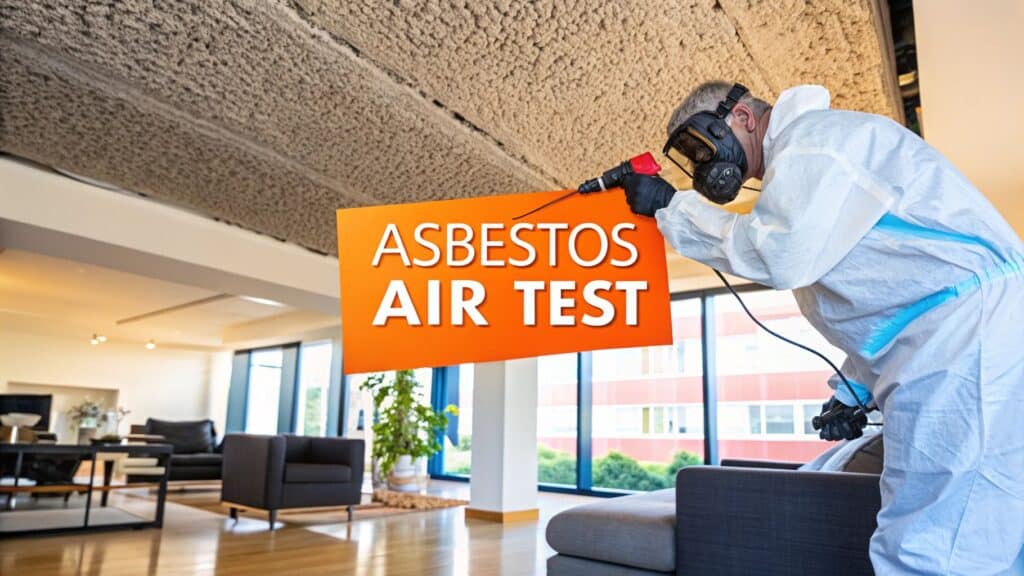
For homeowners in Orange County, especially those in properties built before the 1980s, the thought of asbestos lurking in the air is a genuine concern. The only way to know for sure if these invisible fibers are present is with professional indoor air quality testing for asbestos. This crucial step provides the hard data you need to protect your family and ensure your home is a truly safe sanctuary.
At Sparkle Restoration Services, our IICRC Master Certified team is dedicated to providing clarity and peace of mind. As a licensed General Contractor and a BBB Torch Award Winner for Ethics, we believe that turning chaos into calm begins with trustworthy, expert guidance.
The Hidden Danger Lurking in Your Home’s Air
Asbestos is a natural mineral that was a builder’s dream for decades. Its durability, fire resistance, and low cost made it a staple in thousands of common building materials. If your Southern California home was constructed before the major federal bans of the late 1970s, there’s a significant chance it’s hiding in materials you see every day.
This hidden danger is often right in plain sight. We frequently encounter asbestos-containing materials (ACMs) in places like:
- Popcorn ceilings and other textured ceiling finishes.
- Older vinyl floor tiles and the black mastic adhesive beneath them.
- Insulation around old pipes, ductwork, and furnaces, or laid in attics.
- The joint compound used in drywall taping and certain types of plaster.
For years, these materials can remain stable and harmless. The problem begins when they are disturbed. A home remodeling project, water damage from a burst pipe, or simply the natural degradation of materials can release microscopic asbestos fibers into the air. Once airborne, these fibers can be inhaled, leading to severe long-term health risks like mesothelioma, a particularly aggressive cancer.
Understanding the Airborne Risk
Our goal isn’t to cause alarm, but to empower you with essential information. The real risk stems from friable asbestos—material that is dry and can be easily crumbled by hand, allowing fibers to be released. Non-friable materials, like an intact sheet of vinyl flooring, are generally much safer until they are sanded, drilled, or broken.
This is precisely why professional air testing is so vital. We don’t guess; we measure. Research has confirmed that indoor sources are a major contributor to airborne asbestos. In fact, studies in U.S. buildings found that average indoor asbestos levels can be ten times higher than typical outdoor city air, a direct result of old or disturbed materials inside the home.
At Sparkle Restoration, our promise is “Turning Chaos Into Calm, Fast.” We believe that process starts with clear, honest information. Understanding why you need an asbestos test is the first step toward achieving peace of mind for you and your family.
Creating a healthy home involves a holistic approach. While asbestos is a specific hazard, overall home hygiene is equally important. For instance, understanding how regular carpet cleaning can prevent allergies and improve indoor air quality contributes to a safer living environment. You must address everything from visible dust to the invisible fibers you can’t see. To learn more, explore our detailed guide on the broader topic of indoor air pollution and what you can do about it.
Key Moments to Schedule Asbestos Air Testing
Knowing when to test your home’s air is just as important as knowing how. Asbestos-containing materials (ACMs) can remain harmlessly in your walls or floors for decades. However, certain events can disturb them, turning a stable material into an active airborne hazard.
For homeowners in Orange County, these moments often coincide with exciting life changes like a remodel or unfortunate events like water damage. This is when proactive indoor air quality testing for asbestos becomes a critical safety measure.
Consider this: are you planning a kitchen remodel in your Newport Beach home built in the 1970s? Tearing out old vinyl flooring or scraping off a “popcorn” ceiling could release millions of microscopic fibers into the air you breathe.
Even something that seems minor, like discovering crumbling insulation around pipes in your Irvine basement, is a major red flag. This is the difference between stable asbestos and friable asbestos—material that is dry, brittle, and can be crushed by hand, posing a much higher risk.
When Disturbance Creates Danger
The trigger for testing isn’t just about planned renovations. Any event that disturbs your home’s structure is a potential cause for concern.
You should strongly consider testing in these situations:
- After Water Damage: A flood or significant leak can saturate drywall, ceiling tiles, and insulation. As these materials break down, they can release trapped asbestos fibers, even long after the water is gone.
- Before a Renovation: This is non-negotiable for older homes. Before any demolition begins, testing identifies hazards so they can be managed safely, protecting your family and your contractors.
- Buying or Selling a Property: Due diligence is paramount. As a buyer, testing provides peace of mind. As a seller, it offers transparency and helps prevent future legal complications.
- Visible Material Damage: If you notice materials that are cracked, crumbling, or deteriorating and suspect they might contain asbestos, do not touch them. Your first call should be for an air test to assess the immediate risk.
Monitoring your home’s air quality is the only way to be certain you are managing or removing these hidden dangers before they become a serious health threat.
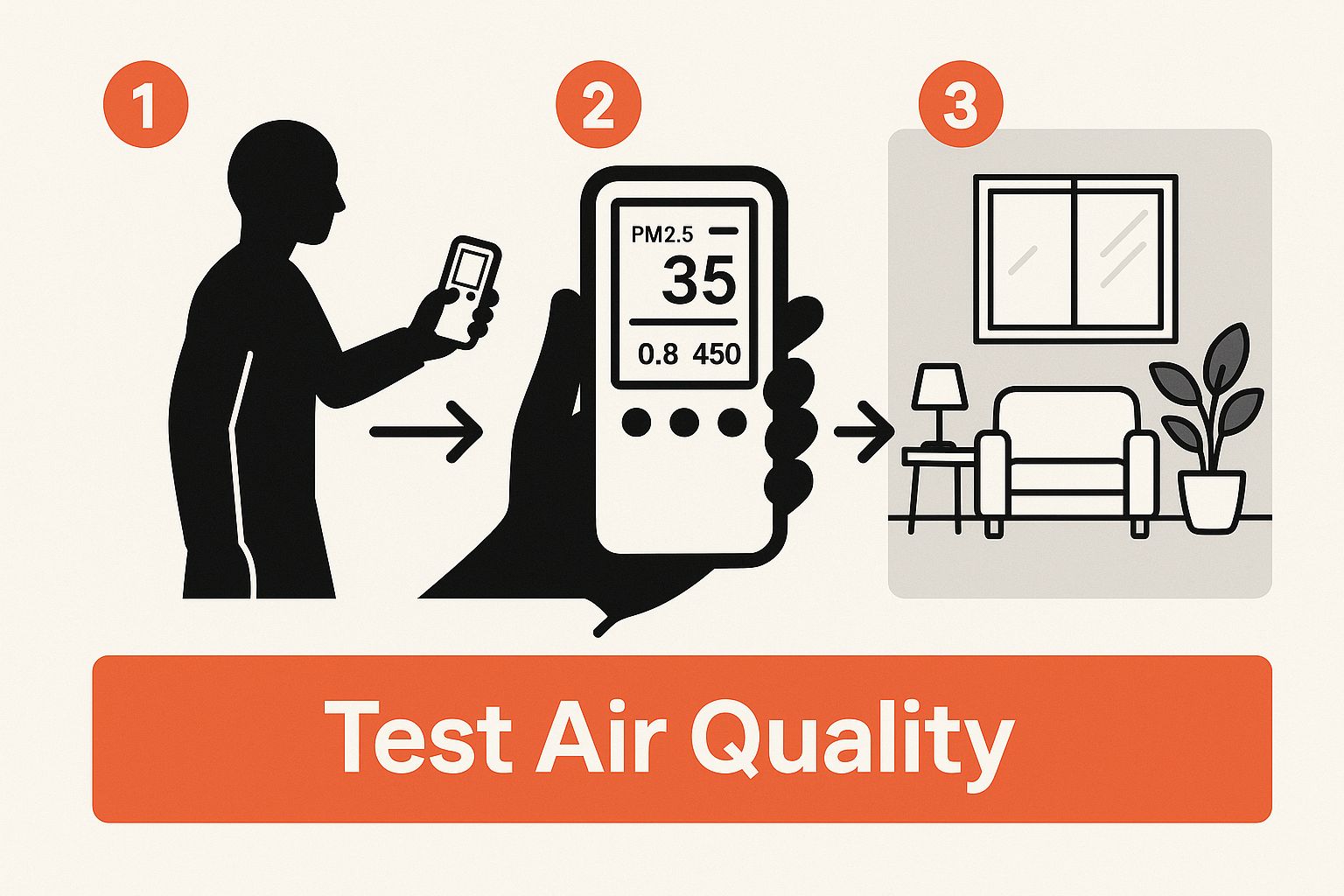
This visual reinforces the importance of being proactive about your home’s environment, which is the cornerstone of maintaining a healthy home.
The Pitfalls of DIY vs. Professional Expertise
In an attempt to save money, some homeowners might be tempted by a DIY asbestos test kit from a hardware store. This is almost always a mistake. These kits have significant limitations and pose safety risks that can create a false sense of security.
When you take a sample yourself, you risk disturbing the material and causing the very fiber release you’re trying to prevent. Worse yet, these kits only test a physical piece of material—they tell you nothing about the current concentration of airborne fibers in your living space.
Choosing between a DIY kit and a professional service is a critical decision. To make it clearer, here’s a straightforward comparison.
DIY vs. Professional Asbestos Testing: A Comparison
| Feature | DIY Test Kits | Professional Testing (Sparkle Restoration) |
|---|---|---|
| Method | You collect a physical sample and mail it to a lab. | An IICRC Master Certified technician conducts controlled air and/or material sampling on-site. |
| Accuracy | Prone to user error, leading to contaminated or unrepresentative samples. | Uses calibrated, high-volume pumps and follows strict EPA protocols for precise, reliable results. |
| Safety | High risk of releasing dangerous asbestos fibers during sample collection. No safety gear included. | Technicians use proper personal protective equipment (PPE) and containment measures to ensure safety. |
| Scope | Only tells you if asbestos is present in the physical sample. Does not measure airborne risk. | Measures the actual concentration of airborne fibers, giving you a clear picture of your indoor air quality. |
| Interpretation | You receive a basic lab report that can be difficult to understand without expert context. | Provides a comprehensive report with professional interpretation and clear, actionable recommendations. |
| Cost | Lower upfront cost, but high potential for inaccurate results and safety hazards. | Higher initial investment for guaranteed accuracy, safety, and peace of mind. |
As you can see, the DIY route leaves far too much to chance.
Professional, IICRC-certified testing is the only reliable method for an accurate assessment. Our technicians use calibrated air sampling equipment and follow strict EPA protocols to ensure the results are precise and your family remains safe throughout the process.
This professional approach is absolutely essential, especially when dealing with the hidden complexities of older homes. For a deeper look into the risks, we’ve outlined more in our guide on the dangers of asbestos and DIY home improvements.
Ultimately, choosing expert testing means choosing certainty and safety for your family.
What to Expect from Professional Asbestos Testing
The idea of having professionals in your home for asbestos testing can feel unsettling. We understand. At Sparkle Restoration, we’ve structured our process to be as clear, respectful, and stress-free as possible. Our mission is to turn a chaotic situation into a calm one, and that starts by ensuring you know exactly what to expect when our certified technicians arrive at your Orange County property.
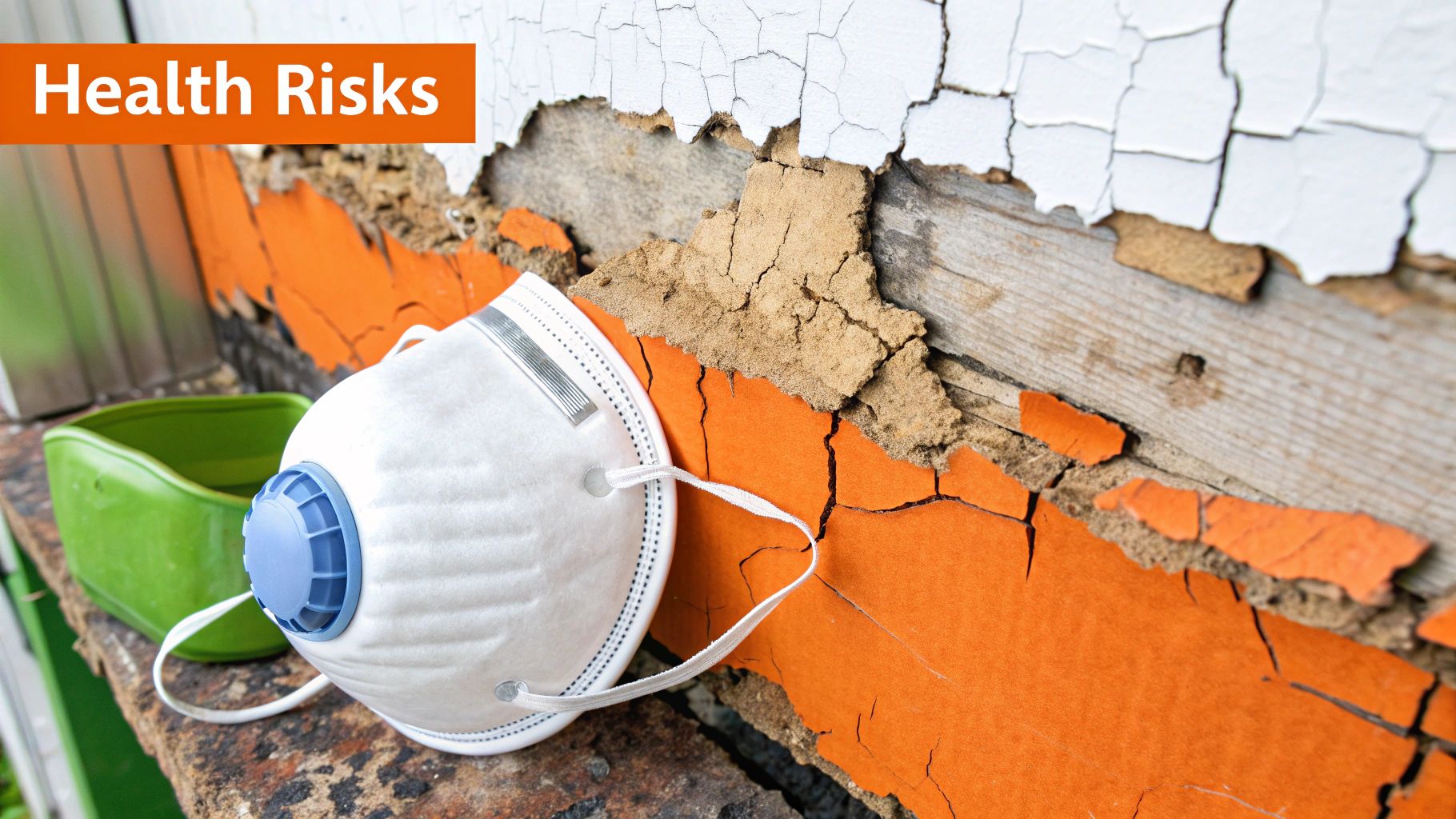
The process begins with a detailed consultation and a visual inspection. An IICRC Master Certified technician will carefully walk through your home, identifying potential asbestos-containing materials (ACMs) and looking for any signs of damage or disturbance. This initial assessment is critical for developing a strategic sampling plan tailored to your home’s specific layout and history.
The Science of Air Sampling
Once we’ve identified key areas, the indoor air quality testing for asbestos begins. This is far more sophisticated than a simple surface wipe; it requires specialized equipment and a methodical approach to get a true snapshot of what’s in your air.
Our technicians will set up specialized, low-volume air pumps fitted with collection cassettes. These are not placed randomly. They are strategically positioned in different rooms to pull a precise volume of air through a filter over a set period. This controlled method is the only way to achieve an accurate measurement.
We typically use one of two primary methods, depending on the situation:
- Passive Sampling: This test is conducted under normal, everyday conditions. It provides a baseline reading of the airborne fiber concentration you and your family are typically exposed to.
- Aggressive Sampling: If you’ve recently completed a renovation or a suspect material has been disturbed, we may use fans to agitate the air during the test. This approach reveals the “worst-case scenario” concentration, which is essential for confirming a space is completely safe after a potential exposure event.
Our team adheres to strict EPA-aligned protocols for every single test. This isn’t just about meeting a standard; it’s about providing you with hard data that you can absolutely trust.
This level of professional diligence is becoming more common as awareness of asbestos-related health risks grows. The global market for asbestos testing was valued at USD 242.3 million in 2025 and is projected to reach USD 345.5 million by 2032. This growth is driven by stricter regulations and a clearer understanding of the dangers of diseases like mesothelioma.
Sophisticated Laboratory Analysis
After the samples are collected, the cassettes are immediately sealed, labeled, and transported to an accredited laboratory for analysis. For the most definitive and reliable results, we insist on Transmission Electron Microscopy (TEM). This incredibly powerful method can detect even the smallest asbestos fibers that other techniques might miss, giving us unparalleled accuracy.
Understanding the science behind professional asbestos identification methods helps appreciate the level of expertise involved. Once the lab provides the detailed report, our job is to translate that complex data into clear, straightforward answers and actionable steps for you. Our BBB Torch Award-winning ethics demand total transparency, and you can learn more about what makes our team uniquely qualified by viewing our certifications.
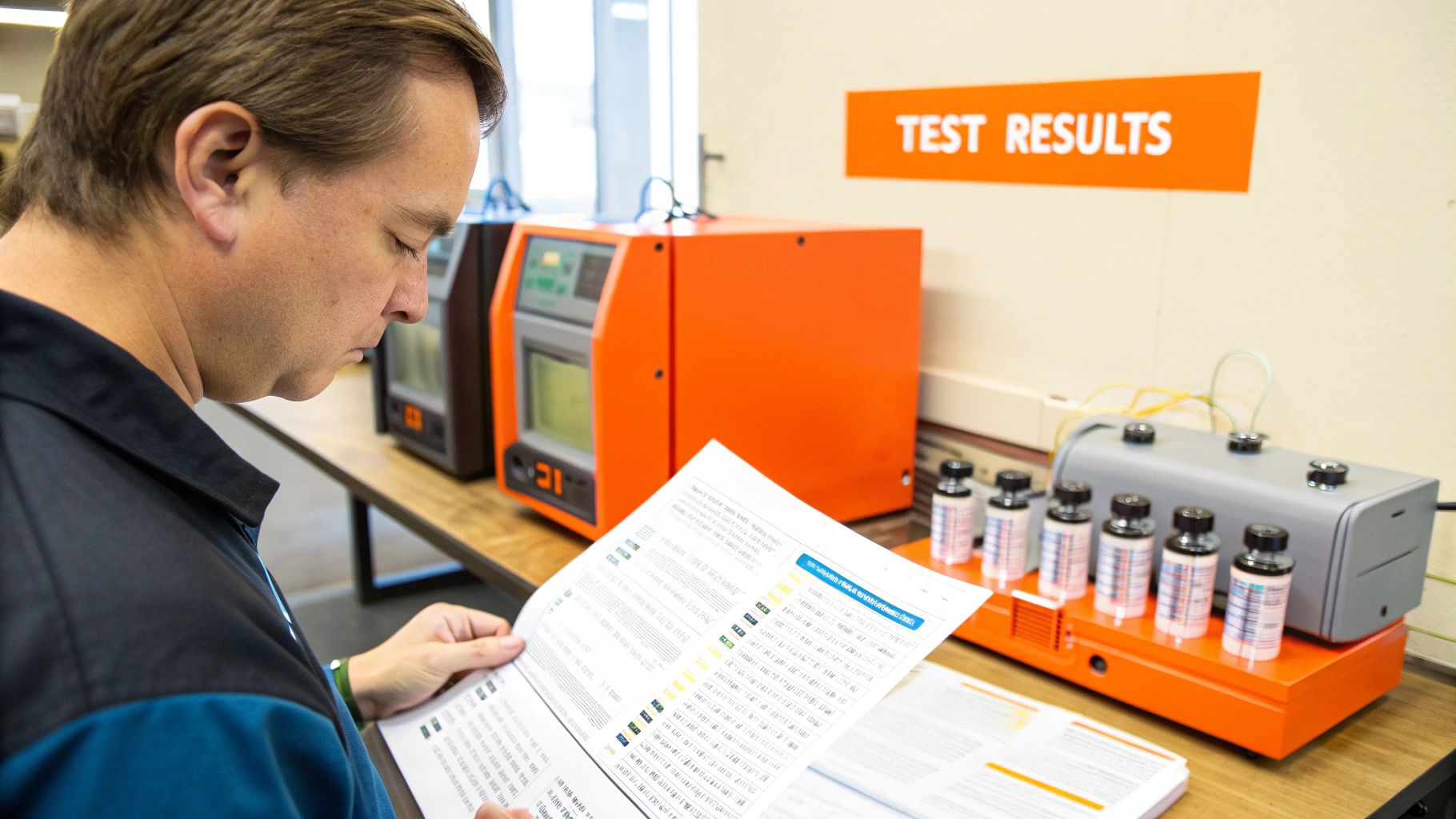
How to Read Your Asbestos Test Results
After the on-site sampling is complete, you will receive a laboratory report. From our experience helping Orange County homeowners, we know these documents can look intimidating at first glance—filled with technical terms and numbers. Our role is to walk you through it, translating the scientific data into plain English so you can make informed decisions for your home and family.
The most important number on the report is the fiber concentration. This key metric tells us the amount of asbestos fibers found in a specific volume of air, usually measured in fibers per cubic centimeter (f/cc). The best possible result is “No Asbestos Detected” or “NAD,” which means the lab did not identify any fibers above its minimum reporting limit.
If the report does show asbestos, you’ll see a specific number. For instance, a result of 0.005 f/cc means that for every cubic centimeter of air tested, the lab identified 0.005 asbestos fibers. While we take any detection seriously, the level of risk is directly related to this concentration.
Understanding the Numbers and Asbestos Types
So, what is a “safe” number? Regulatory bodies like the EPA have set clearance levels for professional asbestos removal projects. The industry standard is typically less than 0.01 f/cc. This is the benchmark we use to confirm a home is safe for re-occupancy after an abatement project is completed.
Your report will also detail the type of asbestos found. There are six regulated types, but in residential settings, we most commonly encounter three:
- Chrysotile: By far the most widely used type of asbestos, found in older roofing, ceilings (especially “popcorn” textures), walls, and flooring.
- Amosite: Frequently used in cement sheets, insulating boards, and particularly for pipe insulation.
- Crocidolite: Known for its exceptional heat resistance, it was a common choice for spray-on coatings and pipe insulation.
Identifying the asbestos type provides valuable clues to help us pinpoint the potential source in your home. Finding amosite, for example, might lead us directly to old pipe wrap in your basement, whereas chrysotile often points toward materials in ceilings or walls.
The core takeaway is this: the report gives us a precise, scientific measurement of your home’s airborne risk. It replaces uncertainty with facts, allowing us to create a targeted, effective plan if remediation is needed.
The importance of rigorous indoor air quality testing for asbestos cannot be overstated. Research has shown that airborne asbestos levels in some urban areas can be much higher than the standards recommended by the World Health Organization, which highlights why precise indoor measurements are so critical. You can learn more about these environmental findings from the study.
If you have more questions about your results or the testing process, we have compiled answers to common concerns on our frequently asked questions page.
Your Action Plan After a Positive Asbestos Test
Receiving a lab report that confirms asbestos fibers in your home’s air can be stressful. Take a deep breath. This is not a moment for panic, but for a calm, calculated response. A positive result from indoor air quality testing for asbestos provides the clear, data-driven starting point we need. As a BBB Torch Award Winner for Ethics, our mission is to guide you through this process safely and transparently, restoring both your home’s air quality and your peace of mind.
The next step is professional asbestos abatement, a highly regulated and technical process for safely removing or encapsulating the hazardous material. We cannot stress this enough: this is not a DIY project. The health risks are far too severe. Abatement must be handled by licensed and certified experts who follow strict, non-negotiable safety protocols.
The Abatement Process Explained
Our IICRC Master Certified team begins by constructing a full containment area around the affected space. This is far more than just hanging plastic sheets. We create a completely sealed, airtight environment to prevent any cross-contamination to other parts of your Orange County home.
We rely on several critical safety measures to execute this properly:
- Full Containment Barriers: We use heavy-gauge polyethylene sheeting to create an airtight enclosure, sealing every potential escape route—doorways, windows, and especially HVAC vents.
- Negative Air Pressure Machines: These high-efficiency particulate air (HEPA) filtered machines are the lungs of the operation. They run continuously, creating a vacuum effect that ensures air only flows into the work area, trapping any microscopic fibers that might become airborne.
Inside this controlled zone, our technicians wear full personal protective equipment (PPE), including specialized respirators and disposable coveralls. All asbestos-containing material is carefully wetted down to prevent fibers from breaking loose. Only then is it removed, double-bagged in specially marked disposal bags, and transported to a licensed hazardous waste facility.
This is where our unique advantage as a Licensed General Contractor and full-service remodeler comes into play. We don’t just remove the problem; we handle every step of the restoration that follows, from putting up new drywall to installing beautiful new flooring. We truly manage the entire process, turning chaos into calm.
Post-Abatement Clearance Testing
After the physical material is removed and every surface has been meticulously cleaned with HEPA vacuums, the job is still not finished. The final, most crucial step is clearance air testing.
We conduct another round of aggressive air sampling inside the contained area. The goal is to verify that the airborne fiber concentration has dropped below the EPA’s recommended clearance level of 0.01 f/cc. We do not dismantle the containment until we have a lab report in hand confirming the air is safe.
Once the immediate hazard is eliminated, it’s also a smart move to address the overall health of your home’s air systems. To learn more about getting your entire system clean and free of lingering contaminants, explore our comprehensive guide on professional HVAC system cleaning. This final verification isn’t just a box to check—it’s our promise to you that your home is not just clean, but certifiably safe for your family to enjoy again.
Your Asbestos Air Testing Questions Answered
When it comes to a serious topic like asbestos, questions are expected and encouraged. Over years of serving Orange County homeowners, we’ve heard nearly every concern and believe that clear answers are the best way to provide peace of mind. Here are some of the most common questions we receive.
My House Was Built After 1980. Do I Still Need to Worry About Testing?
This is the most frequent question we hear. While the major EPA bans on most asbestos-containing materials (ACMs) were enacted in the late 1970s, it created a common myth that any house built afterward is automatically safe.
The reality is more complex. Contractors and suppliers had large stockpiles of these materials and continued using them for years after the official bans. That’s why we always advise testing for any home built before 2000, especially before starting a renovation that disturbs drywall, flooring, or classic “popcorn” ceilings. It’s always better to know for sure.
How Long Does the Whole Testing Process Take?
The on-site sample collection is surprisingly fast. For a typical home, our IICRC-certified technicians can set up the equipment, run the air pumps, and gather everything needed in just a couple of hours.
The main waiting period is for lab analysis. For the most precise results using Transmission Electron Microscopy (TEM)—the gold standard in testing—the lab work typically takes 24 to 72 hours. Our priority is to get a clear, easy-to-understand report into your hands as quickly as possible.
Is This Going to Disrupt My Family’s Life?
We strive to make the process as minimally invasive as possible. Our air sampling pumps are compact and quiet, and you can absolutely remain in your home while the tests are running.
Our technicians work with the utmost respect for your space and routine. Our goal is to provide the critical answers you need without adding stress to your day.
What Factors Into the Cost of Testing?
The price for professional asbestos testing is not a simple flat fee, as it depends on your specific situation. The main factors that influence the cost include:
- Number of Samples: A larger home or one with multiple areas of concern will require more air or material samples to get a complete and accurate picture.
- Type of Analysis: TEM analysis is a more involved laboratory process, making it more expensive than older, less accurate methods. However, its reliability is worth the investment.
- Turnaround Time: If you need results urgently, labs can often expedite the analysis, though this rush service typically includes an additional fee.
Investing in professional testing is an investment in certainty. It provides the concrete data needed to protect your family’s health and your property’s value—a peace of mind you can’t put a price on.
At Sparkle Restoration Services, our mission is to turn chaos into calm with expertise you can count on. If you have any concerns about your home’s air quality, don’t wait. Schedule a consultation with our certified experts today.
Ready to create a space that’s as beautiful as it is functional? Schedule your complimentary design consultation today by visiting Ready to Work with Sparkle?