



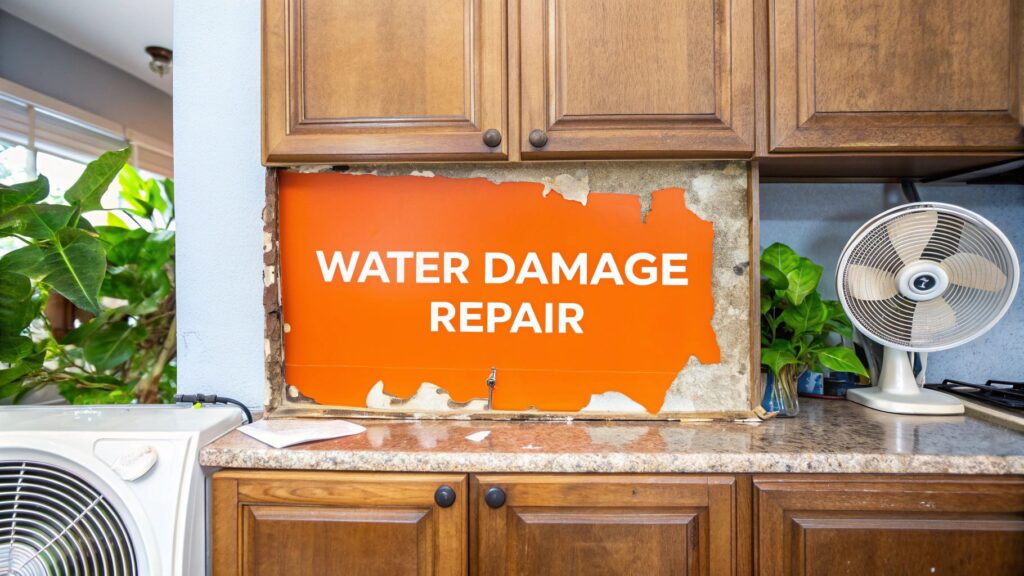
When you first spot a problem with your kitchen cabinets, it's rarely just a simple surface stain. Often, that small imperfection is a red flag for a much bigger issue, like a hidden leak that’s slowly compromising your cabinetry, inviting mold, and setting the stage for significant repairs. Discovering kitchen cabinets water damage can be stressful for any homeowner, but taking swift, informed action is the key to protecting your investment.
Catching these subtle, early warning signs is the most effective way to protect your home and maintain its value.
What Are the Early Signs of Cabinet Water Damage?
For discerning homeowners in Orange County, the kitchen is the heart of the home—a significant investment in both lifestyle and property value. While a sudden pipe burst is impossible to ignore, it's the slow, sneaky leaks from a dishwasher hose or a failing sink seal that often cause the most extensive problems. They can inflict considerable damage long before you ever see a puddle.
Knowing what to look for can turn a potential disaster into a manageable repair, preserving the beauty and integrity of your space.
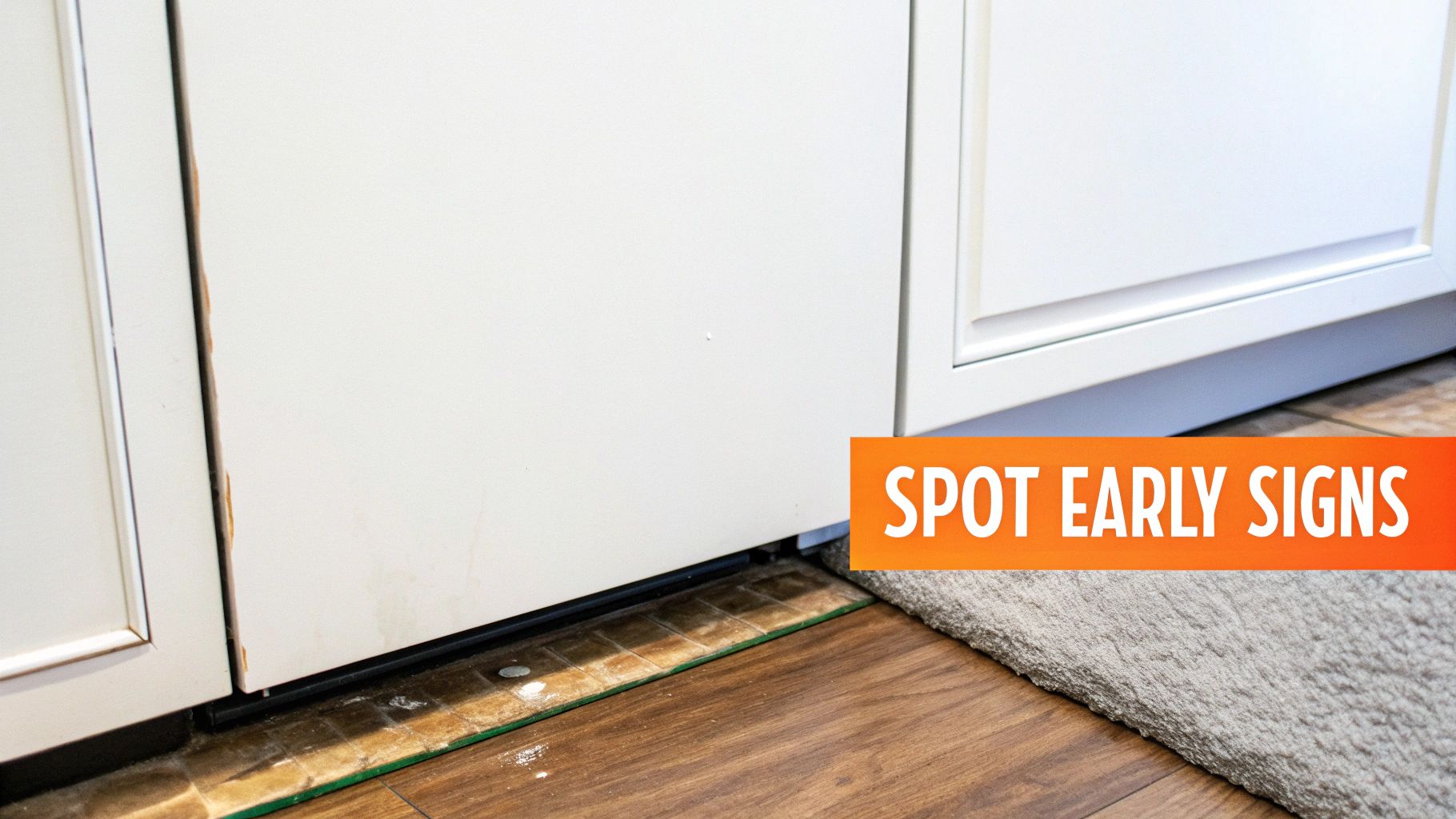
Visual Clues You Can't Ignore
The very first signs of water damage are often small changes to how your cabinets look. It’s easy to dismiss them, but these are the critical clues you need to pay attention to.
- Discoloration and Stains: Keep an eye out for faint water spots, dark streaks, or a yellowish tint on the wood or laminate. These usually appear first at the base of cabinets under the sink or adjacent to the dishwasher.
- Peeling or Bubbling Surfaces: When moisture gets trapped under paint, veneer, or laminate, it causes the surface to lift, bubble, or peel away from the cabinet's core—a sure sign the material underneath is saturated.
- Warped or Swollen Wood: Are your cabinet doors suddenly not closing flush? Do the drawers stick? This is a classic symptom. The wood or particle board has absorbed moisture and expanded, causing a distortion that's often permanent.
A common scenario we see in Newport Beach homes is a slightly swollen toe-kick at the base of the sink cabinet. It's often overlooked for months, but it almost always points to a slow drain pipe leak that needs immediate professional attention.
When Your Senses Warn You First
Sometimes, what you feel or smell is an even better indicator than what you can see. These clues often point to moisture that is completely hidden from view.
A persistent, earthy smell is a major warning. If you open a cabinet and detect a musty odor that won’t go away, it’s a strong sign of hidden mold growth. This is more than just an unpleasant smell; it's a potential health hazard that calls for professional remediation. A leak behind a cabinet can saturate drywall and framing, a topic we cover in our guide on how to detect water leaks in walls.
Another key sign is softened material. Gently press on the cabinet floor, especially in the back corners under the sink. If it feels spongy or gives way easily, the particle board or MDF underneath has lost its structural integrity from prolonged moisture exposure.
To help you connect the dots, this quick checklist can point you to the likely source of the problem.
Water Damage Source Identification Checklist
| Symptom Observed | Common Culprit | Recommended First Action |
|---|---|---|
| Swelling at the cabinet base near the dishwasher | Leaky dishwasher supply line or drain hose connection. | Turn off the water supply to the dishwasher and run a test cycle while watching the connections. |
| Dark stains or soft spots directly under the P-trap | Loose drain pipe connection or a cracked P-trap. | Place a bucket under the drain, run the faucet, and look for active dripping. |
| Warping or discoloration at the back of the sink cabinet | Failing faucet supply lines or a leak from the sink rim/caulking. | Use a flashlight to inspect all connections at the back of the faucet and check the sink seal. |
| Musty smell with no visible water | A slow leak behind the wall or under the cabinet floor. | Check the adjacent wall for any signs of moisture and consider calling a professional for leak detection. |
This table is a great starting point, but remember that water can travel in unexpected ways. A thorough, professional inspection is always the best next step.
The Growing Risk of Internal Leaks
This isn't just a local problem; it's a national trend. Water damage from internal plumbing failures has surged, with aging pipes and appliance connections being the primary suspects in kitchens.
Recent data shows that U.S. homeowners filed claims for these types of incidents at a rate of one in 50 properties each year between 2013 and 2017. Depending on the extent of cabinetry and flooring involved, repair costs for these kitchen disasters can easily average $10,000 to $15,000. Staying vigilant is your best defense against becoming one of those statistics.
What to Do Immediately After Discovering Water Damage
The moment you spot water pooling around your custom kitchen cabinets is undeniably stressful. However, your reaction in these first few minutes is critical. A calm, decisive response can dramatically reduce the long-term damage and prevent a small leak from spiraling into a massive restoration project.
Your mindset must shift instantly from daily life to damage control. The mission is to stop the water, eliminate electrical hazards, and move your belongings to safety. This isn't about fixing anything yet—it's about containing the chaos.
Stop the Source and Ensure Safety
Before you grab a single towel, you must shut off the water. If you're dealing with an overflowing sink or a burst supply line, you may find a small shut-off valve directly under the sink; turn the handle clockwise until it's tight.
But if the leak is heavy or you can't find the source immediately, don't waste time searching. The most important thing you can do is learn how to turn off the water main to your entire home. This single action stops the flow of water and prevents further damage.
Next, address electrical safety. Water is a conductor, making this situation potentially dangerous.
- Cut the Power: Go straight to your circuit breaker panel. Flip the breaker for the kitchen and any adjoining rooms. This simple step prevents electrocution and protects your high-end appliances from electrical shorts.
- Avoid Appliances: Do not touch or unplug any appliances that are sitting in or near water.
As IICRC Master Certified professionals and a BBB Torch Award Winner for Ethics, we cannot stress this enough: your safety is paramount. Never step into standing water if you are unsure whether the electricity has been safely disconnected. It’s a risk that is never worth taking.
Protect Your Belongings and Begin Initial Cleanup
Once the area is safe, begin rescuing undamaged items. This protects your belongings and, just as importantly, clears the area so you can begin drying the space effectively.
Open the affected cabinets and unload everything—dishes, cookware, food, and supplies. Move it all to a dry location like a dining room table or spare bedroom. Quickly inspect each item as you move it; any food that has come into contact with the water should be discarded due to potential contamination.
With the cabinets empty, you can address the standing water. Use old towels, buckets, and a mop to soak up every drop from the floors and inside the cabinet boxes. The more water you can remove manually, the less will soak into your custom woodwork and subfloor. For larger messes, our guide on emergency water removal provides more in-depth techniques.
Promote Airflow and Avoid Common Mistakes
After you’ve mopped up the bulk of the water, the goal is to get things dry. Airflow is your best friend.
Prop open every cabinet door and pull out all the drawers to allow air to circulate through every space. If it’s safe and you have power in other parts of the house, set up fans and aim them at the damp areas to accelerate drying. A dehumidifier is even better, as it will actively pull moisture from the air and materials.
It's tempting to rush the drying process, but there are two critical mistakes you must avoid:
- Do Not Use High Heat: Never point a hairdryer or a space heater at wet wood cabinets. Intense, direct heat will cause the wood to warp, crack, and bubble the finish, permanently ruining expensive custom work.
- Do Not Delay a Professional Call: These first-response steps are vital, but they are not a substitute for a professional assessment. Moisture is insidious. It gets trapped inside cabinet frames, under flooring, and in drywall, creating a perfect breeding ground for mold in as little as 24-48 hours.
How to Assess the Damage and When to Call a Pro
Once you've stopped the water source and cleared the area, the next step is a calm, clear-eyed assessment of the kitchen cabinets water damage. This isn’t a quick glance—it's about understanding exactly what you’re dealing with. Knowing the difference between a surface-level issue and a deep-seated structural problem is the critical fork in the road that determines whether this is a manageable DIY fix or if you need to bring in a certified professional, and fast.
The material your cabinets are made of is the single biggest factor in how they'll fare. Each type has a different breaking point, and understanding this helps set realistic expectations for repair versus replacement.
Understanding How Different Materials React to Water
Your cabinetry's construction will dictate its chances of survival. High-end kitchens across Orange County use a wide range of materials, and they all respond to moisture in dramatically different ways.
- Solid Wood: Often the most resilient, solid wood will still swell as it absorbs water. If caught and dried out quickly, it can often be saved. But if left saturated, it will permanently warp, crack, and its joints may pull apart.
- Plywood: Good quality plywood, built from cross-laminated wood veneers, stands up to water much better than particle board. The real risk here is delamination—when the layers separate from each other, creating a bubbled appearance and compromising its strength.
- MDF (Medium-Density Fiberboard): Think of MDF as a sponge. The moment it gets wet, it swells, loses its smooth finish, and begins to crumble. Once this happens, there's no going back; its original shape and strength cannot be restored.
- Particle Board: This is by far the most vulnerable material. Composed of wood particles held together with resin, it soaks up water instantly, swells significantly, and can essentially disintegrate. Cabinets made from particle board almost always require replacement after significant water exposure.
This decision tree helps visualize the key checkpoints that determine if you're looking at a minor repair job or a major structural hazard.
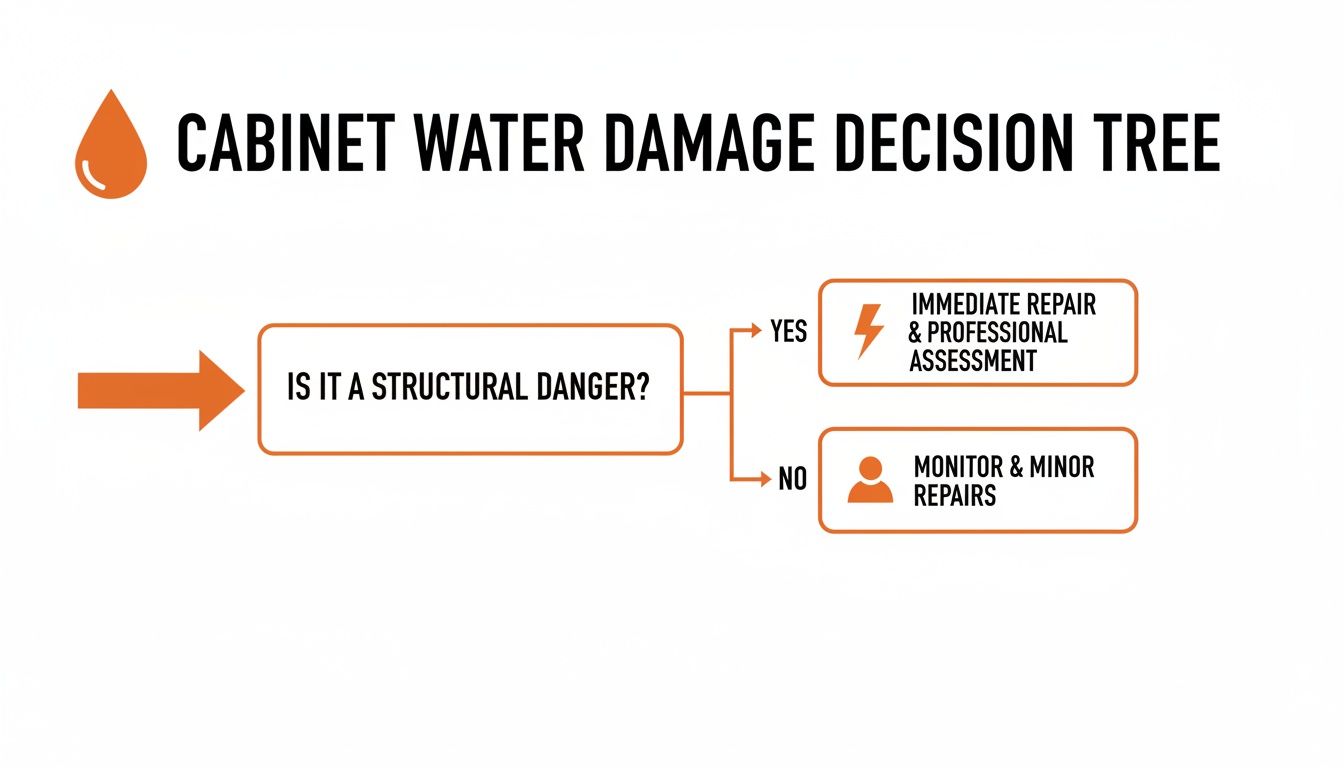
As the infographic shows, any sign of structural danger—swelling, delamination, or a musty smell—means it's time to call in certified professionals to prevent much larger problems down the line.
DIY Repair vs Professional Restoration: A Decision Guide
Deciding whether to tackle the damage yourself or call for professional help can feel overwhelming. The choice comes down to the extent of the damage and the materials involved. This table breaks down common scenarios to help you make a smart, informed decision.
| Type of Damage | Cabinet Material | Recommended Action |
|---|---|---|
| Light surface stains or discoloration | Solid Wood, High-Quality Plywood | DIY Possible. If caught early, you can often clean and dry the surface. Refinishing may be required, but the core is likely safe. |
| Minor swelling or bubbling finish | Solid Wood, Plywood | Professional Recommended. While a DIY fix might seem possible, a pro can assess if moisture is trapped and prevent long-term warping. |
| Noticeable swelling, doors misaligned | MDF, Particle Board | Professional Essential. These materials lose all structural integrity once swollen. Replacement is almost always necessary. |
| Peeling veneer or laminate (Delamination) | Plywood, MDF, Particle Board | Professional Essential. The adhesive has failed due to moisture saturation. This indicates deep, trapped water that requires professional drying and repair/replacement. |
| Any musty or mildew odor | All Materials | Professional Essential. An odor means mold is already growing. This is a health hazard that requires specialized remediation techniques and equipment. |
| Water reached the wall or subfloor | All Materials | Professional Essential. Water behind cabinets is a recipe for disaster. Pros use thermal cameras and moisture meters to find and dry hidden moisture. |
Ultimately, if you have any doubt, calling a professional for an assessment is the safest bet. A small consultation fee is a minimal investment compared to the cost of fixing hidden mold or structural damage later.
When a DIY Approach Is Realistic
Let’s be clear: a do-it-yourself fix is only appropriate for very minor, specific situations. If you caught a small leak immediately on a solid wood cabinet and the water only beaded up on the finish without penetrating the wood itself, you might be okay.
Here’s the checklist for a potential DIY attempt:
- The water was from a clean source (like a supply line, not a drain).
- The exposure was incredibly brief—minutes, not hours.
- The damage is purely cosmetic, such as a faint water spot or slightly bubbled varnish.
- The cabinet box is still perfectly square, and the doors hang and close exactly as they should.
For these small-scale issues, aggressive drying with fans (never heat!) and a good dehumidifier might be all you need. Our in-depth guide on how to assess water damage like a professional can walk you through more advanced techniques for evaluating the situation yourself.
The Non-Negotiable Signs to Call a Professional
Most of the time, kitchen cabinet water damage demands an expert. The risks of hidden moisture, aggressive mold growth, and eventual structural failure are too high for a homeowner to manage, especially in a luxury property where quality is paramount.
You need to pick up the phone and call an IICRC Master Certified professional if you see any of these red flags:
- Structural Swelling or Warping: If doors won’t close, drawers are sticking, or the cabinet box itself looks bowed or distorted, the core material is compromised.
- Delamination: Any peeling or bubbling on veneers or laminates is a clear sign that the adhesive has failed and moisture is trapped deep inside.
- A Musty Odor: This is the telltale signature of mold or mildew, which can start growing in as little as 24-48 hours. It's a serious health risk that requires professional remediation.
- Water Trapped Behind Cabinets: If you suspect water got into the wall cavity or under the flooring beneath the cabinets, you need industrial drying equipment to prevent rot and widespread damage.
At Sparkle Restoration, we’ve seen countless Newport Beach homeowners try to dry out soaked particle board cabinets with a space heater, only to call us weeks later when black mold has completely taken over the wall behind them. The hard truth is, once certain materials are saturated, no amount of surface drying is going to save them.
Making that call to a professional isn’t giving up; it’s a smart, strategic decision to protect your home’s value, your family’s health, and your own peace of mind. We use advanced tools like thermal imaging cameras and non-invasive moisture meters to pinpoint every last bit of hidden dampness, ensuring the problem is solved completely—the first time.
When a DIY approach just won't cut it for your kitchen cabinets' water damage, bringing in a certified professional like Sparkle Restoration Services is the best way to bring order back to the chaos. Knowing what to expect can demystify the entire experience and give you some much-needed peace of mind. As a full-service restoration and remodeling expert, we follow a meticulous, industry-standard process designed to be thorough, fast, and completely transparent from the moment we arrive.
This is much more than just drying a wet spot. It’s a scientific process aimed at protecting your home's structural integrity and, more importantly, your family's health. When our team arrives at your Orange County home, our first job is to turn a stressful situation into a calm, controlled plan of action.
Precise Detection with Advanced Technology
Before we can fix anything, we must understand the full scope of the water intrusion—especially the moisture you can’t see hiding behind walls and under floors. Guesswork has no place in professional restoration. We rely on sophisticated diagnostic tools to map out the extent of the damage with surgical precision.
Our IICRC-certified technicians come equipped with:
- Thermal Imaging Cameras: This is our secret weapon. These cameras allow us to "see" temperature differences behind walls and under cabinets, instantly revealing hidden pockets of moisture. A cool spot on a thermal scan is a dead giveaway for trapped water.
- Non-Invasive Moisture Meters: We use specialized meters to get exact moisture readings in materials like drywall, the wood framing of your home, and the cabinet boxes themselves. This data-driven approach tells us what's actually wet versus what just feels damp to the touch.
This initial assessment is absolutely critical. It ensures we tackle the entire problem, preventing surprises like hidden mold or wood rot from appearing weeks or even months down the road.
Water Extraction and Structural Drying
Once we have a clear map of the affected areas, our team immediately kicks off the mitigation phase. The goal is simple: get the standing water out and start a rapid drying plan using commercial-grade equipment. This is where professional gear truly makes all the difference.
We don't just set up a fan and hope for the best. We deploy a strategic combination of:
- Industrial-Grade Air Movers: These are not average box fans. They are incredibly powerful and are positioned to create optimal airflow across and into wet surfaces, drastically speeding up evaporation.
- Low-Grain Refrigerant (LGR) Dehumidifiers: Unlike standard home units, LGR dehumidifiers are workhorses. They are ruthlessly efficient at pulling vast amounts of moisture from the air, even in the cool, humid conditions common after a water loss.
- Specialty Drying Systems: For tricky spots like the cavity behind the cabinet toe-kick or inside wall assemblies, we use targeted injection systems that push dry air directly into these tight spaces.
Throughout this entire phase, we are on-site daily monitoring temperature, humidity, and moisture levels in the materials. We constantly adjust the equipment to achieve the fastest, most thorough drying results possible. You can get a much deeper look into these steps by exploring our full water damage restoration process.
Repair, Refinish, or Replace Your Cabinets
After the structure is completely dry and stable, we turn our attention to the cabinets themselves. Because we’re also a Licensed General Contractor, our expertise goes far beyond just drying things out. We handle high-end remodeling, which means we can provide a seamless transition from mitigating the damage to beautifully reconstructing your kitchen.
The right path forward depends on the cabinet material and the extent of the damage:
- Repair and Refinish: This is often an excellent option for solid wood cabinets with only minor swelling. Once properly dried, they can be sanded, re-stained or painted, and sealed to look brand new.
- Partial Replacement: Sometimes, only specific parts—like the sink base cabinet—are damaged beyond repair. Our design-build team excels at sourcing or custom-building replacement components that perfectly match your existing cabinetry style and finish.
- Full Replacement: For cabinets made of MDF or particle board that have swollen and started to crumble, or when mold is a serious issue, a full replacement is the only responsible choice. This can also be a great opportunity to upgrade your kitchen's style and function.
Choosing replacement isn't just about fixing damage; it's a chance to enhance your home's value. We often work with clients in Newport Beach and Irvine to turn a water damage event into a luxury kitchen remodel that elevates their entire living space.
Certified Mold Remediation Protocols
If our inspection uncovers mold, or if materials have been wet for more than 48 hours, we take no chances. We immediately implement strict mold remediation protocols. As IICRC Master Certified professionals, we contain the entire area, often using negative air pressure to stop spores from spreading. Our technicians use specialized gear and antimicrobial treatments to safely remove all contaminated materials and clean the air.
This ensures your kitchen is not just beautiful again, but also completely healthy for your family. It's a comprehensive approach that defines the Sparkle promise—turning a potential disaster into a meticulously executed upgrade.
Navigating Insurance Claims for Cabinet Damage
Discovering you have kitchen cabinets water damage is just the first hurdle; figuring out the financial side of the recovery can feel just as overwhelming. For homeowners in Orange County with high-end kitchens, tackling an insurance claim adds another layer of stress to an already tough situation. Understanding this process is critical to getting the fair compensation you need to restore your home’s beauty and value.
A solid claim always starts with meticulous documentation. Before moving or repairing a single thing, your first move should be to create a detailed photographic and video record.
- Take Wide Shots: Capture the entire affected area to provide a clear sense of the overall scene.
- Get Close-Ups: Zoom in on specific damage—warped wood, peeling veneer, and water stains.
- Document the Source: If you can safely see the leaking pipe or failed appliance, get a picture of it.
- Record Everything: Walk through the space with your phone, taking a video and narrating what you see.
This visual evidence is your most powerful tool. It creates an undeniable "as-is" record of the damage before any cleanup begins, which is invaluable when communicating with your insurance adjuster.
Communicating with Your Insurance Provider
When you call your insurance company, be clear and stick to the facts. State what happened—for instance, "We've discovered sudden and accidental water damage in our kitchen from a burst supply line under our sink." Avoid guessing how long the leak might have been there or speculating on long-term effects.
Stick to what you know. Insurance policies almost always distinguish between "sudden" damage (usually covered) and "gradual" damage from neglect (usually not). Your first report sets the tone for the entire claim. To better handle the nuances, you can check out our detailed guide on water damage insurance coverage.
Understanding Local Costs and Coverage Nuances
In Southern California, restoration costs can vary significantly. The final price tag depends on how far the water spread, the type of cabinet materials involved (MDF versus custom solid wood), and whether you're also dealing with a mold problem.
As a BBB Torch Award Winner for Ethics, we believe in total transparency. We provide itemized estimates using industry-standard software so that every single cost is justified and clearly explained—both to you and your insurer. This approach cuts through the confusion and helps get your claim approved faster.
Your homeowner's policy has specific limits and deductibles. It's vital to know if you have "replacement cost value" (RCV) or "actual cash value" (ACV). For a luxury home with custom cabinetry, RCV coverage is non-negotiable; it ensures you can replace what you lost with materials of the same kind and quality. A successful claim often comes down to effective insurance adjuster negotiation, and having a professional restoration partner in your corner can make a world of difference.
The Advantage of a Full-Service Partner
This is where a company like Sparkle Restoration truly proves its worth. We are both IICRC Master Certified restorers and a Licensed General Contractor, so we speak the same language as your insurance company. We don't just clean up the mess; we manage the entire claim for you.
Our process is designed to take the stress off your shoulders:
- Direct Communication: We engage directly with your insurance adjuster from the very beginning.
- Comprehensive Documentation: We supply all the necessary reports, moisture readings, and professional estimates needed to substantiate your claim.
- Seamless Transition: We take care of everything, from the initial water mitigation through the final high-end remodel, and we bill your insurance directly for all covered services.
This integrated approach gives you a single point of contact and a dedicated advocate. We fight to ensure your claim is handled fairly and your kitchen is restored flawlessly. We turn the chaos into a calm, managed process so you can focus on what matters most—getting your life back to normal.
Proactive Ways to Prevent Future Water Damage
Once you've dealt with a water damage crisis, the last thing you want is a repeat performance. Protecting your investment means more than a one-time repair; it requires a proactive mindset focused on prevention. By implementing a routine maintenance schedule and considering smart upgrades, you can dramatically lower the risk of future kitchen cabinets water damage and keep your Orange County home safe and beautiful.
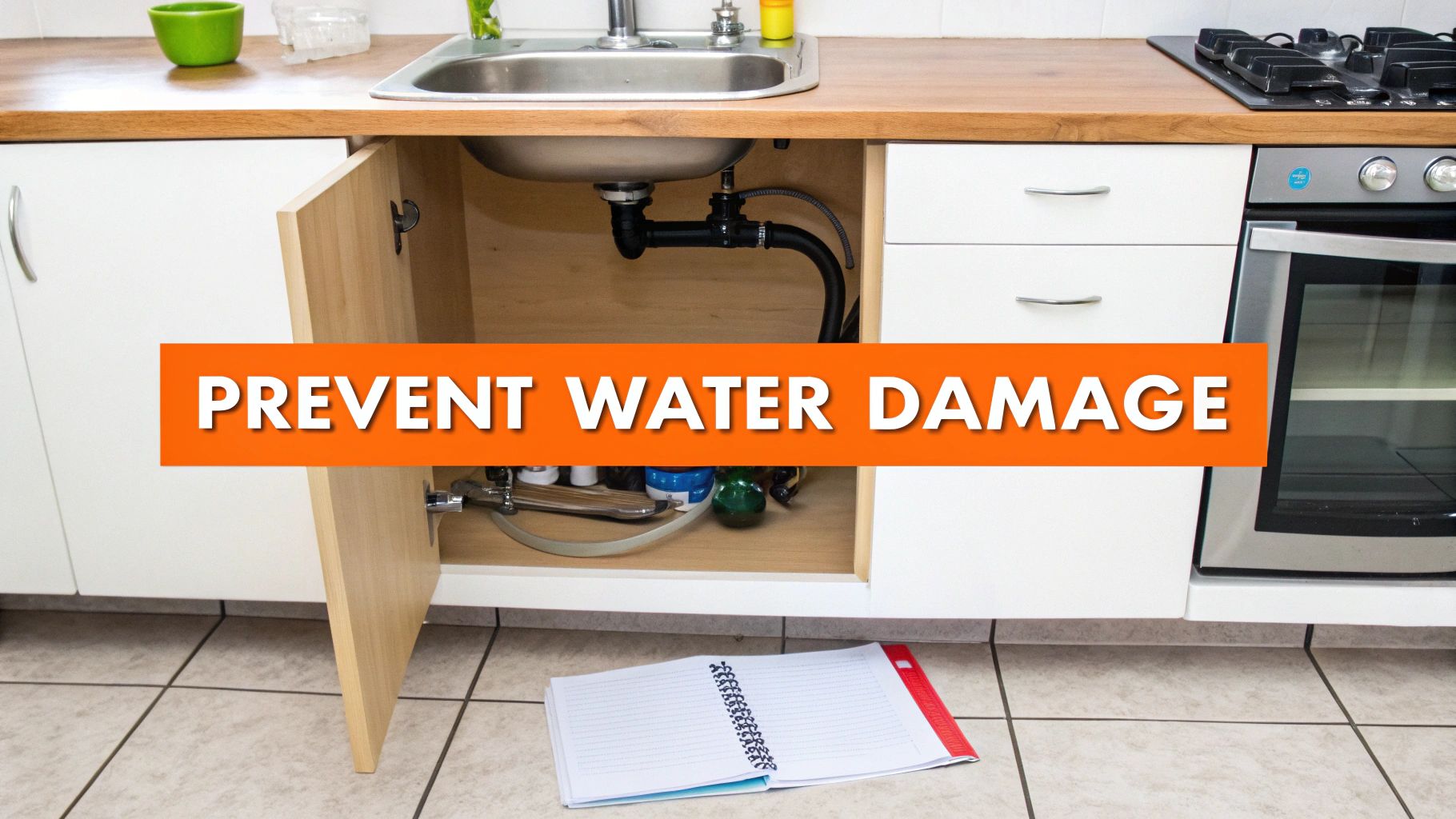
Shifting from reactive repair to proactive protection provides long-term peace of mind. Think of it as an ongoing commitment to the health of your home's most important room.
Creating a Routine Inspection Checklist
Regular inspections are your first and best line of defense. Catching small issues early almost always leads to simple, inexpensive fixes. We recommend setting a calendar reminder every three to four months to run through this quick but essential kitchen wellness check.
- Appliance Supply Lines: Closely look at the braided steel hoses connecting your dishwasher and your refrigerator's ice maker. You're looking for any signs of bulging, cracking, or the slightest moisture where they connect. These are some of the most common failure points we see.
- Under-Sink Plumbing: Grab a flashlight for a clear view of the P-trap and all drain connections under your sink. Check for even the smallest drip. A great pro tip is to run your fingers along the bottom of pipes to feel for any condensation or slow leaks that aren't yet visible.
- Caulking and Seals: Carefully examine the caulk around your sink and along the seam where the countertop meets the backsplash. If you spot any cracks, gaps, or areas where the sealant is pulling away, it's time to re-caulk. This simple step prevents surface water from seeping behind your cabinets and causing hidden damage.
Investing in Modern Preventative Technology
While routine checks are critical, technology now offers a powerful second layer of defense. Smart devices can monitor your plumbing 24/7, providing a level of protection that manual inspections just can't match.
One of the most effective upgrades is an automatic water shut-off device. These systems use small sensors placed near high-risk appliances like dishwashers, refrigerators, and washing machines. The moment a sensor detects moisture, it signals a valve to automatically shut off your home's main water line, stopping a potential flood before it can start.
Another simple but highly effective tool is waterproof cabinet liners. These are custom-fit mats designed for under-sink cabinets. They create a seamless, impermeable barrier that can hold a surprising amount of water from a small leak, protecting the cabinet base from saturation and buying you valuable time to find and fix the problem.
Lessons from High-End European Kitchens
The value of these preventative steps is driven home by data from markets focused on high-end kitchen design. In Sweden, for example, kitchens are the source of over 30,000 water damage cases each year, with leaking appliances being a primary culprit.
A critical study found that only 15% of refrigerators and a shocking 7% of dishwashers had the required waterproof underlays installed, despite being an industry standard. A single leak there can easily cost around $3,000 in basic repairs—a number that would be significantly higher in a luxury Orange County home with custom cabinetry. You can explore the full findings on appliance-related water damage to see just how important these protections are.
As an IICRC Master Certified firm and a Licensed General Contractor, we see prevention as the ultimate form of client care. An hour of maintenance or a small investment in a smart device can prevent tens of thousands of dollars in damage and weeks of disruption.
By adopting these proactive strategies, you move from being a victim of circumstance to the guardian of your home. It’s a commitment to quality and foresight that protects not just your kitchen cabinets, but your entire home and lifestyle.
Common Questions About Cabinet Water Damage
Even with a solid plan, it's natural to have questions about what's happening in your home. As an Orange County firm that has specialized in restoring luxury homes for over two decades, there isn’t a scenario we haven’t seen or a question we haven’t answered.
Here are a few of the most common concerns we hear from homeowners dealing with water-damaged kitchen cabinets.
Can My Water-Damaged Wood Cabinets Be Saved?
This is usually the first question on everyone's mind, and the honest answer is: it depends entirely on the material and how quickly you acted.
Solid wood cabinets have a real fighting chance. If the water exposure was caught early, professional drying techniques can often restore them. Afterward, an expert refinisher can correct any cosmetic issues, and you'd never know there was a problem.
However, materials like MDF or particle board are a different story. They act like sponges, swelling up and losing all structural integrity almost immediately. Once that happens, replacement is the only safe and lasting solution.
An IICRC Master Certified technician can give you a definitive answer. They use advanced moisture meters to get an exact reading of the wood's saturation level, allowing them to determine if a full recovery is possible or if replacement is the smarter long-term investment.
How Long Does Kitchen Cabinet Restoration Take?
The timeline for getting your kitchen back to normal can vary significantly, depending on the severity of the damage.
For a minor leak that was stopped quickly, the entire process might only take 2-4 days. This typically involves setting up professional drying equipment and making small, targeted repairs.
However, in more serious situations—where cabinets must be removed, the underlying structure dried, potential mold remediated, and new custom cabinetry built and installed—the project could extend over several weeks.
As a BBB Torch Award for Ethics Winner, our promise is to give you a clear, detailed project timeline from day one. We believe in transparent communication, so you always know what to expect and can plan your life accordingly. Our goal is a swift, predictable return to your daily routine.
Does Homeowners Insurance Cover Water Damaged Cabinets?
This is one of the most critical questions homeowners have, and the answer almost always boils down to the source of the water.
Most standard homeowner's insurance policies cover damage from "sudden and accidental" events. A classic example is a supply line bursting under the sink or a dishwasher suddenly malfunctioning and flooding the kitchen. In these cases, your policy will likely cover the costs of restoration and replacement.
Where you can run into trouble is with damage from gradual leaks or deferred maintenance. That slow drip from a faucet you’ve been meaning to fix for months is typically excluded from coverage. This is exactly why immediate, thorough documentation is so crucial.
With decades of experience working with insurance providers throughout Southern California, we know how to supply the professional documentation needed to support your claim, especially when dealing with high-value, custom cabinetry.
When you're facing kitchen cabinets water damage, you don’t have to navigate the chaos alone. For two decades, Sparkle Restoration Services has been the trusted partner for discerning Orange County homeowners, providing a seamless service experience from emergency response all the way through to luxury remodeling. Our IICRC Master Certified and licensed team is ready 24/7 to turn chaos into calm—fast.
Contact us today for a consultation and experience the Sparkle difference.
Ready to create a space that’s as beautiful as it is functional? Schedule your complimentary design consultation today by visiting Ready to Work with Sparkle?