


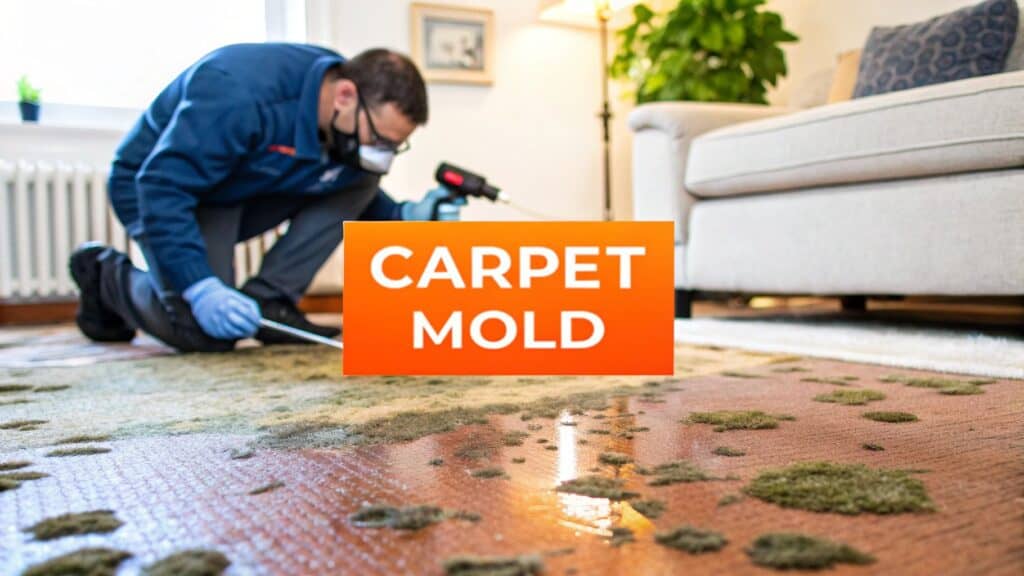
When your Orange County home experiences a burst pipe or flooding, the clock starts ticking. Immediate action is non-negotiable. The window to prevent mold in carpet from water damage is incredibly small—it can take hold in just 24 to 48 hours. What begins as a water issue can rapidly escalate into a serious threat to your property's value and your family's health.
As Orange County's premier restoration and remodeling expert, Sparkle Restoration Services understands the unique challenges local homeowners face. We've built our reputation on turning chaos into calm, fast, and this guide is designed to give you the authoritative, practical advice you need when every minute counts.
The Critical First 48 Hours After Water Damage
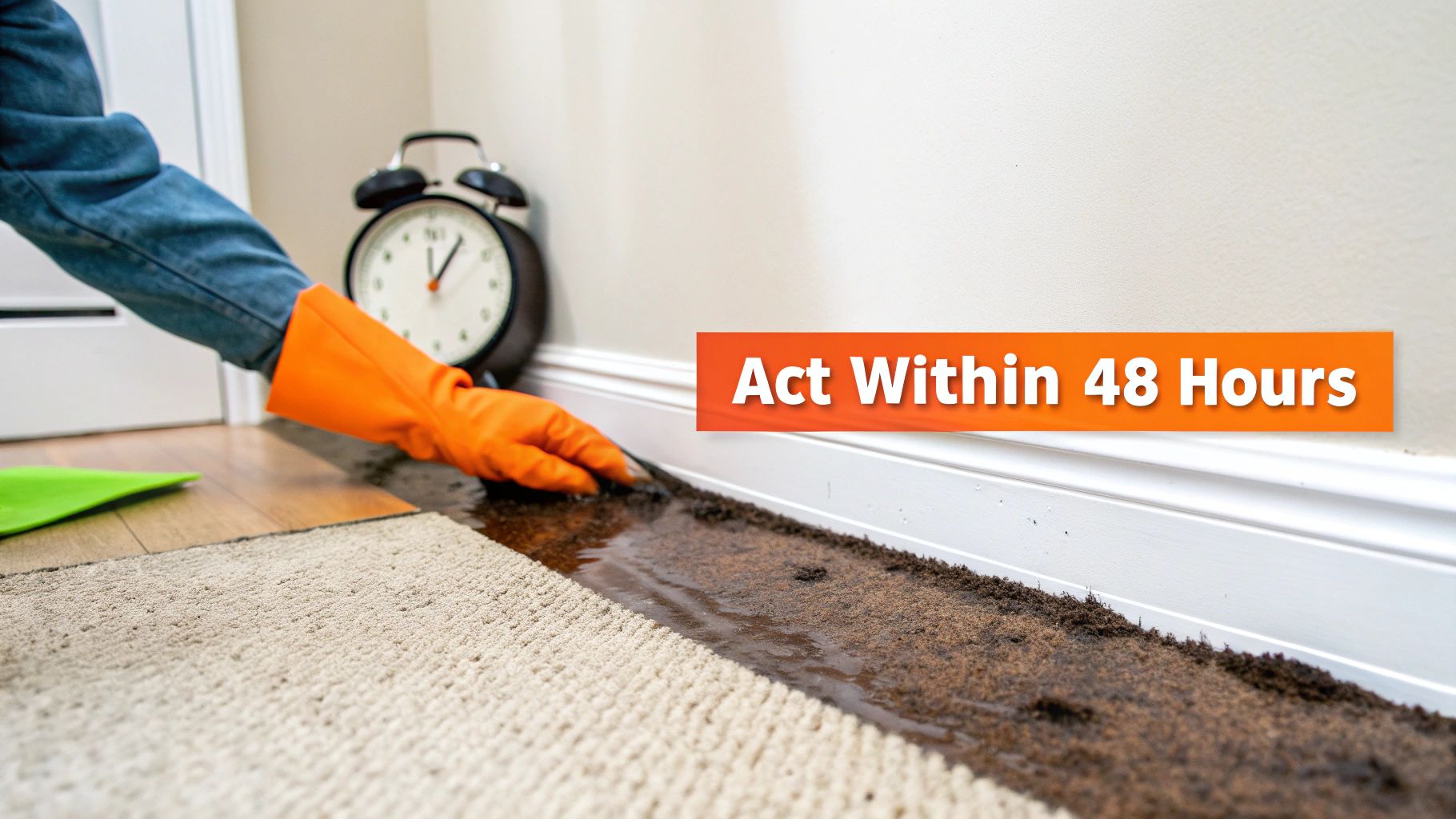
Imagine coming home to find a pristine carpet in your Newport Beach residence completely soaked. Within two days, dormant mold spores can explode into a thriving colony, transforming your sanctuary into a source of unhealthy air.
We call this short timeframe the "golden window." What you do—or don't do—in these initial hours makes all the difference. It's the deciding factor between a straightforward water extraction and a complex, costly mold remediation project that can disrupt your life for weeks.
Why Your High-End Carpet Is a Magnet for Mold
In many beautiful Orange County homes, from Irvine to Laguna Niguel, plush, high-pile carpets are the standard for comfort and luxury. But those same premium materials—think wool and thick synthetics—are exceptionally absorbent. When they get wet, they don't just hold water; they trap it deep within the fibers, the padding, and even the subfloor below.
This trapped moisture creates the perfect storm for mold growth:
- A Constant Water Source: Soaked padding acts like a sponge, providing the steady moisture mold needs to flourish for days, or even weeks.
- An Abundant Food Supply: The organic materials in carpet fibers, along with trapped dust and dirt, are a buffet for mold.
- The Ideal Environment: It's dark, damp, and has zero air circulation under there—exactly what mold loves.
Delaying a professional response allows this hidden problem to fester. The surface of your carpet might feel dry after a couple of days, but the padding underneath can stay saturated, silently cultivating a mold problem that degrades your home's air quality and can even damage its structure.
Turning Chaos Into Calm, Fast
At Sparkle Restoration Services, our entire process is built on speed and precision. We know a water emergency is incredibly stressful for homeowners. Our IICRC Master Certified technicians are trained to arrive on-site immediately, using advanced moisture detection tools to determine exactly how far the water has spread—not just what you can see on the surface.
To help you manage the first moments, we’ve created a quick-reference checklist. These are the critical first steps to take as soon as you discover water damage to ensure safety and prevent the situation from worsening.
Immediate Action Checklist for Water Damaged Carpets
| Priority Action | Why It's Critical | Pro-Tip from Sparkle |
|---|---|---|
| Stop the Water Source | The first priority is to prevent more water from entering your home. If you can't stop the flow, nothing else matters. | Locate your main water shut-off valve before an emergency. It's often in the garage, basement, or outside near the street. |
| Cut the Power Safely | Water and electricity are a lethal combination. Shutting off the circuit breakers to affected areas prevents electrocution risk. | Never wade through standing water to reach the breaker box. If it's inaccessible, call an electrician and our 24/7 emergency team immediately. |
| Document Everything | Your insurance claim will depend on solid evidence. Clear photos and videos are your best proof of the initial damage. | Get wide shots of the entire area, then close-ups of damaged carpet, furniture, and baseboards. Narrate your video to explain what you see. |
| Call a Certified Professional | Time is your enemy. Professionals have the industrial-grade equipment to extract water and dry structures far faster than any DIY method. | Don't just call any plumber. You need an IICRC Master Certified water damage restoration company. This credential is the industry's gold standard for expertise. |
Taking these steps helps secure your home and sets the stage for a much smoother recovery and insurance process.
Your Immediate Safety and Mitigation Plan
Before our team even arrives, your safety is paramount. After you've stopped the water and cut the power, there are a few more things you can do. Avoid walking on the wet carpet if possible; every step pushes water deeper into the padding and subfloor, complicating the drying process.
Being prepared for this kind of situation can make a huge difference. For more tips, check out our guide on creating a water emergency first-aid kit.
After you've documented the scene for your insurance company, your final and most important move is to call a certified restoration professional. We see it all the time: delaying this call is the single biggest mistake a homeowner can make. It's what gives mold the head start it needs to take over.
Knowing When Your Carpet Can Be Saved
After water hits, the biggest question on every homeowner's mind is a simple one: "Can my expensive carpet be saved?" The answer, unfortunately, is rarely simple. It comes down to a few critical factors that determine if you're looking at a minor cleanup or a major health hazard that demands full replacement. Trying to assess this on your own is risky, as the most dangerous problems often hide just below the surface.
Your own senses are the first line of defense. A persistent musty smell that won't go away, even with the windows open, is a significant red flag. It’s a sign that moisture and microbial growth are still active deep in the carpet fibers or, more likely, the padding underneath.
Visible discoloration is another giveaway. Look for black, green, or even fuzzy white spots appearing on the surface. But don't stop there. If it's safe, carefully peel back a corner of the carpet in the affected area—what you find underneath often tells the real story of the contamination.
Evaluating the Source and Saturation
Where the water came from is a non-negotiable factor in deciding your carpet's fate. In the restoration industry, we classify water into three categories, which directly dictates whether saving your carpet is even an option.
- Category 1 (Clean Water): This is the "best-case" scenario, coming from a sanitary source like a burst supply line. If professionally dried within 24-48 hours, the carpet often has a good chance of being salvaged.
- Category 2 (Gray Water): This water is contaminated and can cause illness. Think dishwasher overflows or washing machine drain failures. Carpet soaked with gray water requires immediate professional intervention, and the padding is almost always a loss.
- Category 3 (Black Water): This is the worst-case scenario—grossly contaminated water from sewage backups or overland flooding. There is no safe way to salvage carpet and padding exposed to black water. It's a serious biohazard requiring removal and disposal under strict safety protocols.
Beyond the water type, the sheer amount of water and time matter immensely. A small leak caught immediately is one thing; a room submerged for hours is a completely different challenge. The longer the carpet stays soaked, the more the backing delaminates, the padding disintegrates, and the subfloor absorbs moisture, creating the perfect breeding ground for a massive mold problem.
A slow, hidden leak inside a wall can actually cause more long-term devastation than a dramatic appliance flood. While the flood gets immediate attention, that quiet leak could have been feeding mold for weeks, destroying the carpet, padding, and subfloor before anyone knew it was there.
Key Factors Determining Carpet Salvageability
To make the right call, a clear-eyed, professional assessment is essential. Here are the main factors our IICRC-certified technicians evaluate on-site when determining if a carpet can be rescued from mold damage.
- Duration of Saturation: Was the carpet wet for less than 24 hours, or has it been sitting for days? Time is the enemy. The longer it's wet, the slimmer the chances of a successful restoration.
- Condition of the Padding: The carpet pad is essentially a giant sponge. In nearly every significant water damage situation, the padding must be replaced, even if we can save the carpet itself. It's practically impossible to dry and properly sanitize it.
- Carpet Material and Age: An older, worn-out carpet may not withstand the aggressive cleaning and drying process. Natural fibers like wool also present more challenges than modern synthetic carpets.
- Presence of Mold: If significant mold growth is already visible across a large area, replacement is almost always the only safe and effective choice. Trying to "clean" widespread mold will just release millions of spores into your home's air, creating a much larger problem.
In the end, while you might be able to clean up a minor spot yourself, only a professional can truly see the full scope of the problem. Our team provides comprehensive carpet and furniture cleaning services and we'll always try to restore items when it's safe to do so. But our number one priority is your family's health. If replacement is the necessary path, we'll guide you through that process to ensure your home is clean, safe, and beautiful again.
The Hidden Health Risks of Carpet Mold
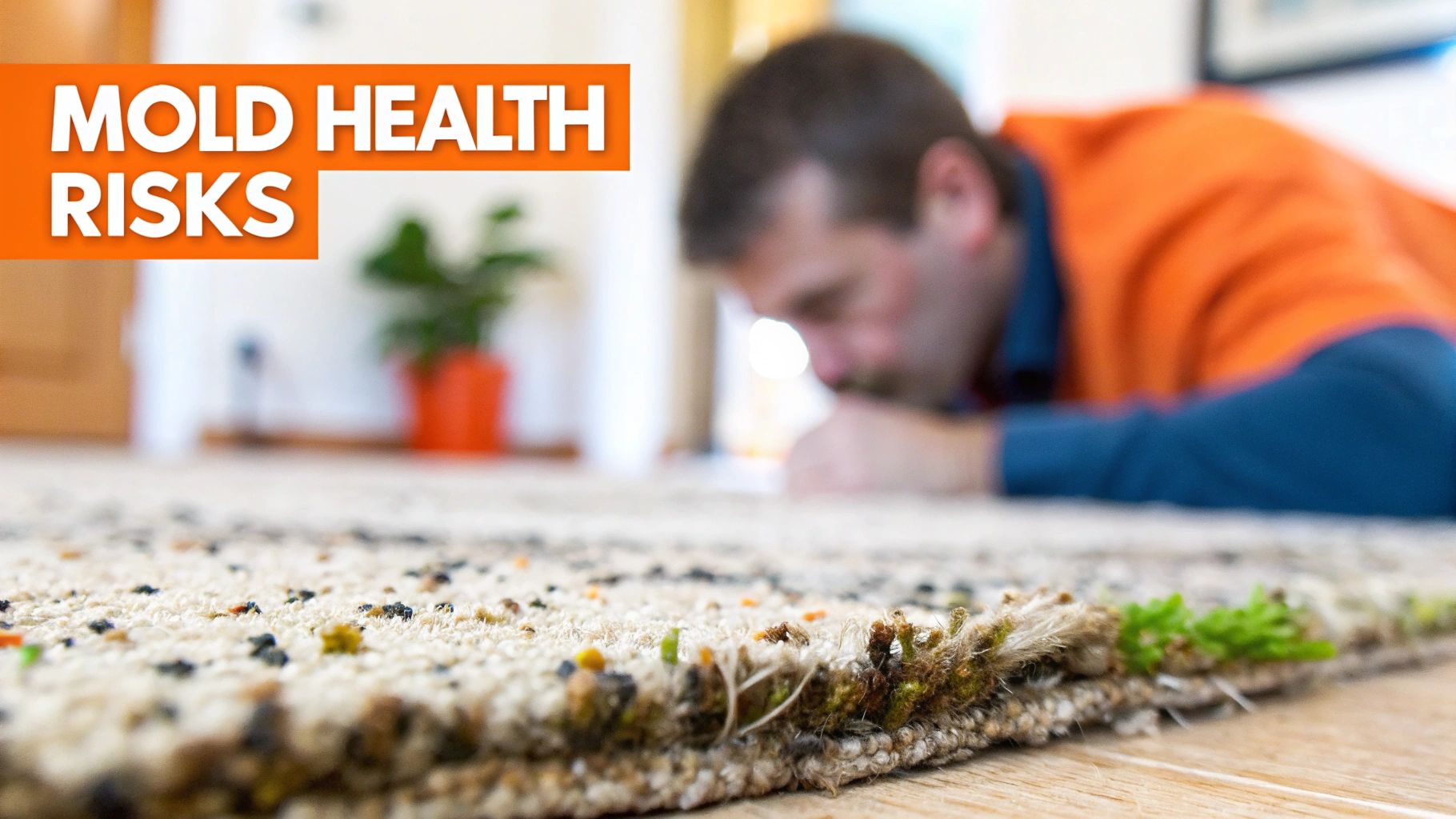
The obvious signs of water damage—the stains, the warped baseboards—are bad enough. But the most serious threat from mold in carpet from water damage is the one you can’t see. It's a silent problem that can seriously compromise your family's health, turning your home from a safe haven into a source of illness.
When mold begins to grow, it’s not just an unsightly spot. It becomes an active contaminant, releasing harmful substances into the very air you breathe.
That's because mold colonies produce microscopic spores and chemical compounds called mycotoxins. These tiny particles are so light they easily become airborne, circulating through your home's HVAC system and contaminating rooms far from the original water source. This means everyone in the house is getting constant exposure to irritants that can trigger a host of health issues.
Common Molds and Their Impact on Air Quality
Not all molds are the same, but many species found in water-damaged Orange County homes are particularly concerning. Types like Stachybotrys (often called "black mold") and Aspergillus are well-known for producing potent mycotoxins. Once they take hold in damp carpet and padding, they essentially become micro-factories, constantly pumping these toxins into your indoor air.
This process degrades your home's indoor air quality. Imagine it as an invisible smog you can't escape. The air that should be clean becomes a delivery system for allergens and toxins that can affect the whole family, though some are at much greater risk than others.
The link between damp indoor spaces and respiratory illness is undeniable. The only way to protect your family’s health is to tackle the root cause—the mold—not just treat the symptoms it creates. A musty smell is more than just unpleasant; it’s a clear warning that your air is compromised.
Recognizing Mold-Related Health Symptoms
The health effects from mold exposure can be tricky. They often mimic seasonal allergies or a lingering cold, which makes it easy to dismiss the real cause while the problem worsens. It’s absolutely critical to connect the dots between any new, unexplained health issues and a recent water damage event.
Symptoms vary from person to person, depending on their sensitivity and the specific type of mold. Here are some of the most common reactions we see:
- Allergic Reactions: This is often the first red flag. Think persistent sneezing, a constant runny or stuffy nose, itchy eyes, and even skin rashes.
- Respiratory Issues: Mold can trigger coughing, wheezing, shortness of breath, and a feeling of tightness in the chest, especially for people with existing lung conditions.
- Asthma Attacks: For anyone with asthma, mold spores are a potent trigger that can lead to more frequent and severe attacks.
- Neurological Symptoms: With long-term exposure to certain mycotoxins, some people report headaches, brain fog, fatigue, and difficulty concentrating.
Children, the elderly, and anyone with a compromised immune system are hit the hardest. Their bodies struggle to fight off the constant onslaught from airborne spores, which can lead to more severe and chronic health problems.
A critical step to uncover these hidden dangers is to conduct mold VOC testing. This scientific analysis pinpoints the specific types and amounts of harmful compounds in your home's air.
This danger is very real. Did you know that mold in damp carpets is a major contributor to 4.6 million asthma cases across the U.S.? That accounts for 21% of all reported sufferers. This shocking statistic highlights how serious the problem is when carpets release spores and mycotoxins into the air.
For a deeper dive into the risks, check out our comprehensive guide on the truth about mold contamination.
Protecting your property is important, but nothing is more vital than protecting your family's health. If you even suspect you have a mold problem, taking decisive action is the only responsible choice.
The Professional Mold Remediation Process
Effective mold remediation is a science. It’s not about scrubbing what you can see. When you're facing mold in carpet from water damage, aiming a fan at it or cleaning the surface won't work—in fact, that's one of the fastest ways to spread spores throughout your Orange County home.
A true professional, especially one certified by the IICRC (Institute of Inspection, Cleaning and Restoration Certification), doesn't just "clean" mold. They follow a strict, multi-step process to eliminate the mold and the moisture that allowed it to grow. This is about restoring a healthy environment in your home, not a temporary cleanup.
Initial Assessment and Containment
First, a certified professional must act as a detective. They'll use professional tools like moisture meters and thermal imaging cameras to identify exactly where the water went. This is a crucial step because it reveals moisture hiding behind walls or under the subfloor—places you'd never spot on your own.
Once we understand the full scope, we establish a secure containment zone. Think of it like a clean room in a laboratory. We use heavy plastic sheeting and negative air pressure machines to completely seal off the work area. This ensures that as we remove materials, we aren’t accidentally sending a cloud of mold spores into the rest of your home. Protecting your family’s air quality is paramount.
Safe Removal and Advanced Filtration
With the area contained, the physical work begins. This is where professional equipment and training are non-negotiable. Our technicians wear full personal protective equipment (PPE) before carefully cutting out, bagging, and removing the mold-damaged carpet and padding according to strict industry safety protocols.
Simultaneously, we run commercial-grade HEPA (High-Efficiency Particulate Air) air scrubbers. These are far more powerful than residential air purifiers. They run constantly, pulling microscopic mold spores, dust, and other contaminants from the air. A single HEPA filter is designed to capture 99.97% of airborne particles as small as 0.3 microns—much smaller than a single mold spore.
At Sparkle Restoration, we approach mold remediation like a surgical procedure. Every step is deliberate, from containing the 'infection' to purifying the air, ensuring the problem is completely excised without harming the rest of the home. This precision is the cornerstone of our IICRC Master Certification and our unwavering commitment to our clients.
Structural Drying and Antimicrobial Treatment
After the moldy carpet is out, our focus shifts to the subfloor and surrounding structures. Even if the subfloor looks dry, it’s almost certainly retaining moisture. We bring in heavy machinery—industrial air movers and low-grain refrigerant dehumidifiers—to aggressively pull every last bit of moisture from the concrete or wood, as well as from baseboards and wall cavities.
Only when our meters confirm everything is completely dry do we move on to the final treatment. We apply an EPA-registered antimicrobial agent to all affected surfaces. This isn't bleach, which is largely ineffective on porous materials. It's a professional-grade formula designed to kill any lingering spores and inhibit future growth, giving you a truly clean slate.
DIY Efforts vs Professional Remediation
It’s tempting to try and save money by tackling mold yourself, but the risks to your health and property far outweigh any potential savings. Here’s a clear comparison of why a professional, certified process is so different from a DIY project.
| Remediation Step | DIY Approach (High Risk) | Sparkle's Professional Process (Safe & Effective) |
|---|---|---|
| Assessment | Relies on visual inspection and smell, often missing hidden moisture in subfloors and walls. | Uses thermal imaging and moisture meters for a precise, data-driven assessment of the entire affected area. |
| Containment | Typically involves no containment, allowing mold spores to spread freely throughout the home via HVAC systems. | Establishes full containment with negative air pressure to isolate the work area and protect your family's health. |
| Removal | May involve scrubbing with bleach (ineffective on porous surfaces) or improper removal, releasing massive spore counts. | Utilizes safe removal and disposal of contaminated materials, followed by HEPA vacuuming to capture residual spores. |
| Drying | Uses household fans that can't penetrate deep into structural materials, leaving behind a moisture source for mold regrowth. | Employs commercial-grade dehumidifiers and air movers to achieve specific drying goals and verify dryness with meters. |
| Final Verification | Lacks any method to confirm that the air quality has been restored to a safe, normal level. | Conducts post-remediation verification and can coordinate third-party air quality testing for ultimate peace of mind. |
The difference is clear: professional remediation is a comprehensive solution, not a temporary fix. For a detailed overview of our certified process, you can learn more about our Orange County mold remediation services. By choosing a licensed and certified expert, you are investing in the long-term health and safety of your home and family.
Upgrading Your Home After Water Damage
Recovering from water damage can feel like a race back to "normal," but it's also a unique opportunity. This unexpected event gives you a chance to do more than just restore your Orange County home—you can reimagine it, making it more beautiful, resilient, and better suited to your lifestyle. Instead of simply replacing what you lost, you can make strategic upgrades that add lasting value and protect your home in the future.
This is the perfect moment to say goodbye to materials that are especially vulnerable to water damage. For many Southern California homes, that means rethinking wall-to-wall carpeting, particularly in areas prone to leaks.
Choosing Smarter, More Stylish Flooring
Instead of reinstalling the same carpet, this is your chance to explore stunning, water-resistant alternatives that elevate your home's design while standing up to moisture.
- Luxury Vinyl Plank (LVP): This is not your grandmother's vinyl. Modern LVP offers incredibly realistic wood and stone looks, is 100% waterproof, and is exceptionally durable against scratches and daily wear. It's a fantastic choice for busy households from Newport Beach to Irvine.
- Engineered Hardwood: If you love the timeless appeal of real wood, engineered hardwood is an excellent option. Its layered construction provides superior stability against moisture compared to solid hardwood, making it far less likely to warp.
- Porcelain or Ceramic Tile: A classic for good reason. Tile is completely waterproof and opens up a world of design possibilities, from sleek, large-format modern styles to classic, intricate patterns.
Making a thoughtful choice now isn't just about fixing a problem; it's a true investment in your home's future. As a Licensed General Contractor, Sparkle Restoration Services can guide you through these options. We provide expert flooring sales and installation services to ensure your new floors are both gorgeous and installed correctly for maximum protection.
Integrating Proactive Home Protection
A water damage event is a powerful reminder of how quickly things can go wrong. When a pipe bursts or a storm hits, mold follows with shocking speed. Here in Orange County, spores can colonize damp carpet fibers in just a couple of days, contributing to global flood damages that climb over $40 billion every year. In fact, mold destroys more wood annually than fires and termites combined.
This is why turning recovery into an upgrade means building in layers of protection. While your home is already under repair, it’s the most logical and cost-effective time to add smart home technology and other preventive measures.
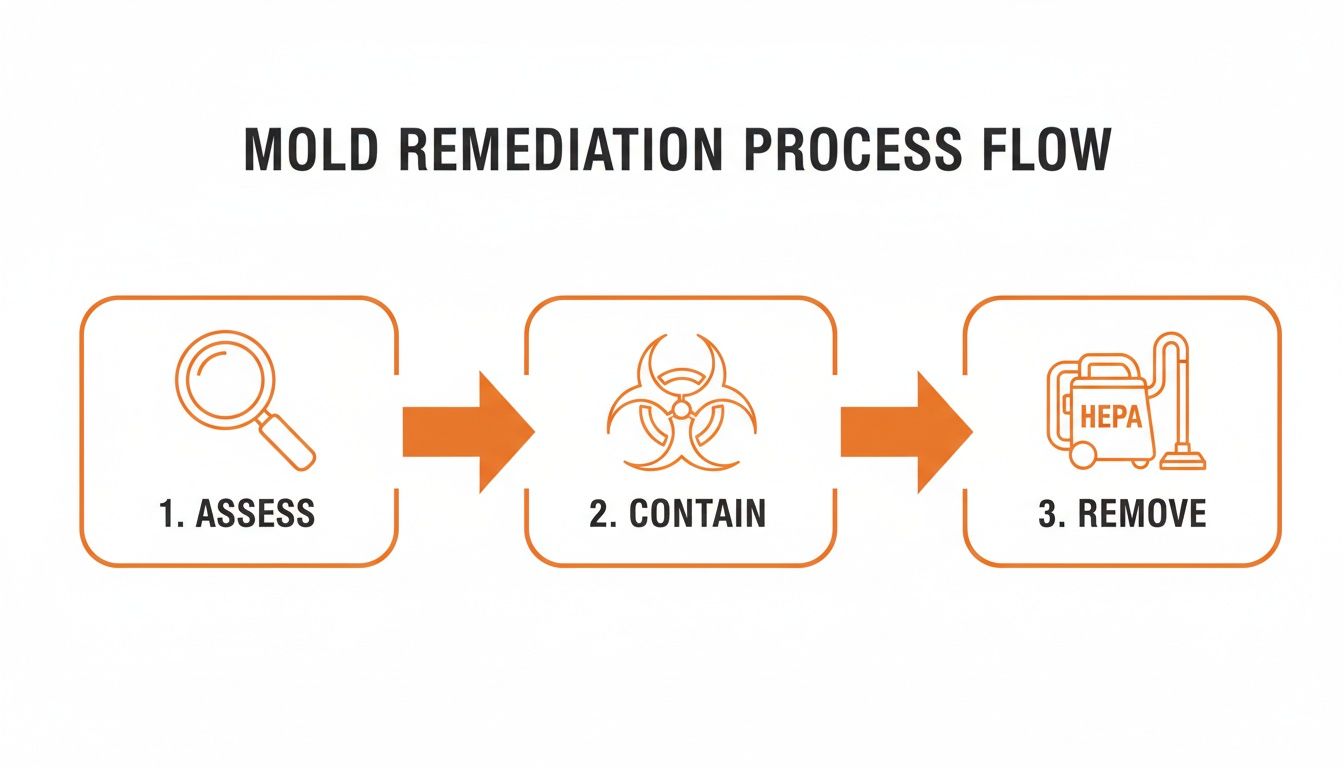
This process—assessment, containment, and removal—highlights the methodical approach professionals take to ensure mold is truly gone for good, not just superficially cleaned.
Consider adding these powerful upgrades during the restoration process:
- Smart Leak Detectors: These small, affordable sensors can be placed near water heaters, sinks, and washing machines. At the first sign of moisture, they’ll send an alert straight to your phone, giving you a chance to shut off the water before a tiny drip becomes a disaster.
- Improved Ventilation: Better airflow in bathrooms, laundry rooms, and kitchens is crucial for managing ambient moisture. Upgrading to high-CFM exhaust fans with built-in humidity sensors can automatically keep moisture levels in check, fighting off the damp conditions mold needs to thrive.
At Sparkle, we don’t just fix the immediate damage; we help you build a smarter, more secure home. As both restoration experts and licensed remodelers, we see the whole picture—turning a moment of chaos into a lasting opportunity for improvement and peace of mind.
By taking advantage of this moment, you can transform a major setback into a strategic enhancement for your property. You're not just putting things back the way they were; you're creating a home that's more resilient, functional, and aligned with the high standards of modern Orange County living.
Answering Your Questions About Carpet Mold
When you're facing a water-damaged carpet, the questions and uncertainties can feel overwhelming. To provide clarity, we've compiled straightforward answers to the most common concerns we hear from homeowners across Orange County dealing with mold in carpet from water damage. Consider this your final checklist for making smart, confident decisions.
Does Homeowners Insurance Cover This Type of Mold Damage?
Insurance coverage for mold is one of the most confusing aspects for homeowners. The short answer is: it depends entirely on your policy and the cause of the water damage.
Generally, your policy may cover mold if it’s the direct result of a “sudden and accidental” covered peril, like a burst pipe. However, if the mold grew because of a slow leak, poor maintenance, or a long-term humidity issue, it's almost always excluded.
We understand the financial side of remediation is a significant concern. Determining if and how does homeowners insurance cover mold is a critical first step. Your best tool for a successful claim is thorough documentation—take photos and note the dates of the initial water event. At Sparkle Restoration, we have extensive experience working with every major insurance carrier in Southern California and can help you navigate this often-frustrating process.
Can I Just Use Bleach to Kill Mold on My Carpet?
This is a common and dangerous myth. Applying bleach to a moldy carpet is not only ineffective but can actually make the situation much worse.
Bleach is only effective on hard, non-porous surfaces like tile. On porous materials like carpet and padding, it cannot reach the mold's "roots" (mycelia). Instead, the water in the bleach soaks deeper into the carpet backing and subfloor, essentially feeding the hidden mold and encouraging it to grow back stronger.
Furthermore, bleach will likely ruin your carpet fibers and fill your home with harsh fumes.
A Pro-Tip from Our Experts: True mold remediation relies on EPA-approved antimicrobial treatments. These are professional-grade products designed to safely kill mold colonies in porous materials without causing further damage or feeding the underlying problem.
How Can I Prevent Carpet Mold From Happening Again?
Prevention boils down to one simple concept: moisture control. After your home has been professionally dried and remediated, keeping it dry is your number one defense.
Here are the most effective ways to stop mold in its tracks:
- Fix Leaks Immediately: Don't ignore that tiny drip under the sink. Small leaks are often the start of major problems.
- Maintain Proper Ventilation: Run exhaust fans in bathrooms and kitchens to move humid air outside. A good dehumidifier can be invaluable in basements or other damp areas.
- Use Smart Technology: Consider installing smart leak detectors near your water heater, washing machine, and dishwasher. They can send an alert to your phone the second they sense moisture, turning a potential disaster into a minor cleanup.
Above all, if you experience another water incident, remember that fast, professional drying is everything. Bringing in industrial-grade equipment to dry the carpet, padding, and subfloor is the single most important step you can take to stop mold before it has a chance to grow.
What Does Professional Remediation Cost in Orange County?
There is no one-size-fits-all price for professional carpet mold remediation. The final cost depends on several key factors: the size of the affected area, whether the water was clean or contaminated (Category 1, 2, or 3), and the extent of materials that must be removed and replaced.
A small, contained issue might cost a few thousand dollars. Widespread contamination that has penetrated the subfloor and walls will naturally be more. After we conduct a thorough on-site inspection, we provide a clear, detailed estimate with no surprises. As a BBB Torch Award for Ethics Winner, our focus is on providing a complete, permanent solution that protects your property and your health. We do the job right the first time.
If you're dealing with a water emergency or suspect you have mold, don't wait. The problem will only get worse. The expert team at Sparkle Restoration Services is on call 24/7 to help restore your home and your peace of mind. Contact us today and let us show you how we turn chaos into calm—fast.
Schedule Your Free Consultation with Sparkle Restoration Services
Ready to create a space that’s as beautiful as it is functional? Schedule your complimentary design consultation today by visiting Ready to Work with Sparkle?