



It's a sinking feeling every homeowner dreads. You walk into a room, glance up, and notice something that wasn't there yesterday: a faint, brownish ring spreading across your otherwise perfect ceiling. Or maybe it’s a small bubble in the paint that you could have sworn was flat last week.
For homeowners in Orange County, from Newport Beach to Irvine, recognizing these early signs of water damage ceiling experts look for is your first and most critical defense. They might seem small, but they are your home's early warning system, signaling a much bigger problem lurking above. Acting quickly can mean the difference between a simple repair and a full-scale restoration project.
Identifying the Most Common Signs of Ceiling Water Damage
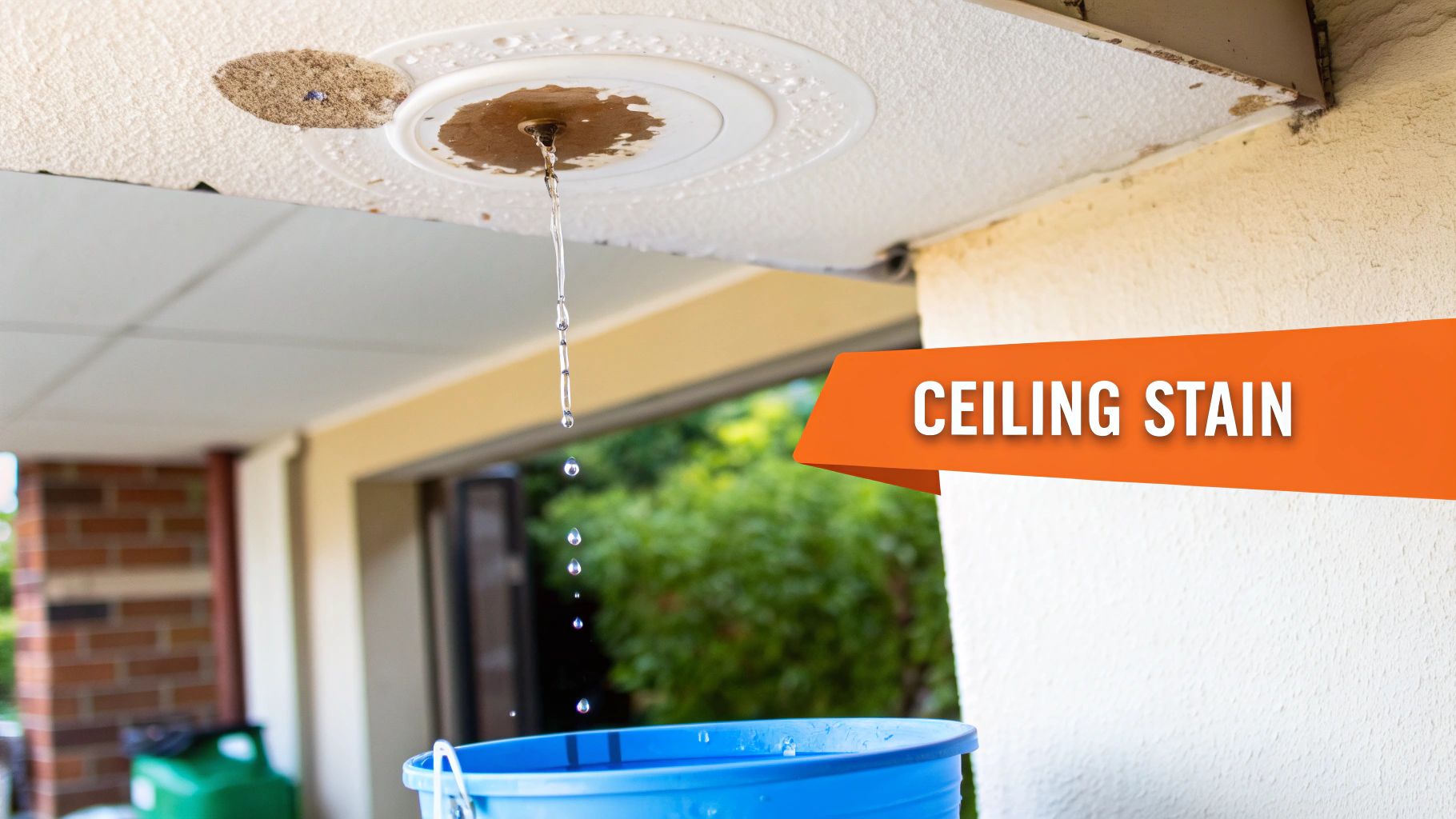
Learning to spot these clues is the most critical step in stopping a minor leak from becoming a major disaster. Think of these signs as your ceiling sending out an S.O.S. – and knowing how to read the message is key to protecting your home's value and structural health.
The most common signal, by far, is discoloration. These stains often start as a faint yellow or light brown spot. As water soaks into the drywall and then evaporates, it leaves behind mineral deposits that form a dark, distinctive ring around the edge. It looks almost exactly like a coffee stain on a piece of paper, where the outer rim is always the darkest part.
Beyond Stains: What to Look For
While those ugly brown spots are a dead giveaway, moisture can reveal itself in other, equally destructive ways. When water seeps into drywall or plaster, it fundamentally weakens the material from the inside out, causing it to lose its strength and shape. This breakdown leads to a few other classic signs:
- Bubbling or Bulging: This happens when water gets trapped between the drywall and the paint, or even inside the layers of the drywall itself. The pressure creates a noticeable swollen or drooping area that feels soft to the touch.
- Peeling or Flaking Paint: Often, one of the first things you'll see is peeling paint on ceilings. Moisture destroys the adhesive bond holding the paint to the surface, causing it to crack, blister, and flake off.
To help you quickly assess what you might be seeing, here's a simple guide to the most common signs and what they usually mean.
Quick Guide to Identifying Ceiling Water Damage
| Visual Sign | What It Looks Like | Common Implication | Urgency Level |
|---|---|---|---|
| Yellow/Brown Stains | Circular or patchy discoloration, often with a dark outer ring. | A slow, intermittent leak (e.g., from a leaky pipe or roof). The water has had time to dry and leave mineral deposits. | Medium: Investigate soon. |
| Bubbling/Blistering Paint | Paint that is lifting off the surface, creating bubbles or pockets. | Water is trapped between the paint and the drywall. The leak is likely recent or ongoing. | Medium-High: Needs prompt attention. |
| Sagging/Bulging Drywall | A noticeable droop or swollen area in the ceiling material. | Significant water has saturated and weakened the drywall. There's a risk of collapse. | High: Immediate action required. |
| Visible Dripping/Beads of Water | Water actively dripping or moisture forming on the ceiling surface. | An active, ongoing leak that is happening right now. | Critical: Call a professional immediately. |
| Musty Odor | A persistent damp, earthy smell, especially in enclosed spaces. | Hidden moisture that has likely led to mold or mildew growth within the ceiling or wall cavity. | High: Health risk; requires professional inspection. |
This table is a starting point, but remember that any sign of water intrusion warrants a closer look.
Want to understand the full lifecycle of water damage, from how it starts to the long-term impacts? Our comprehensive overview covers the basics of water damage explained and is a great place to start.
Of course, the most urgent sign of all is seeing visible drips or beads of moisture forming on the ceiling. If you see this, you have an active, ongoing leak that requires immediate professional help. Don't wait. These early warnings are your best chance to get ahead of a problem that could otherwise lead to catastrophic structural failure and major financial loss.
Decoding the Subtle and Hidden Signs of a Leak
That big, ugly brown stain on the ceiling? That’s the obvious stuff. An active drip is impossible to ignore. But some of the most destructive signs of water damage ceiling experts find are the ones that whisper instead of shout. These are the sneaky clues that point to a slow, chronic leak—the kind that silently rots your home’s structure and fuels mold growth long before you see a single drop of water.
The trick is to start acting like a detective in your own home. It’s not about finding one dramatic sign; it's about trusting your senses when something just feels off.
One of the most common red flags is a persistent, musty odor you can’t quite place. If you keep getting a whiff of something damp and earthy, but there's no visible source, pay attention. That smell is often the byproduct of mold and mildew feasting on damp drywall and wood framing hidden from view.
Listening and Feeling for Trouble
Beyond what you can see or smell, your ears and even your skin can pick up on the earliest warnings. These subtle shifts in your home’s atmosphere are often the first sign that something is wrong.
- Changes in Humidity: Does one room feel strangely damp or clammy compared to the rest of the house? That could be moisture evaporating from a hidden leak trapped in the ceiling. You might even notice condensation forming on windows or light fixtures where it never did before.
- Faint, Unexplained Sounds: In a quiet moment, listen closely. Can you hear a faint dripping, a soft buzzing, or even a crackling sound coming from above? A buzz or any issue with flickering lights is a major hazard—it could mean water is interacting with electrical wiring, and you need to call an IICRC-certified professional immediately.
- Textural Changes: Run your hand over the paint. Does it feel different? Paint that looks cracked, bubbled, or has a weird alligator-skin texture is a classic sign of repeated wetting and drying cycles. The water has compromised the paint's bond to the drywall beneath it.
These aren't just minor quirks; they're your home's early warning system for chronic moisture.
As an IICRC Master Certified firm and a licensed General Contractor, Sparkle Restoration knows that an educated homeowner is an empowered one. Trust your intuition. If something feels, smells, or sounds wrong in your home, it's worth a closer look. A small, odd detail can be the first chapter in a much larger story of hidden water damage.
Learning to recognize these quiet signals is a powerful skill for any homeowner. By paying attention to musty smells, unusual humidity, strange sounds, and those small paint imperfections, you can catch a problem long before it turns into a catastrophic repair. To take your protective mindset a step further, check out our guide to see if your home is leak-proof and secure. Being proactive is what keeps your Orange County home safe and maintains its value.
Tracing the Source of Your Ceiling Damage
Once you spot the tell-tale signs of water damage on your ceiling, your next job is to play detective. Finding the leak's origin is absolutely critical to stopping the damage for good. For most high-end homes here in Orange County, the problem can almost always be traced back to one of three primary culprits: the roof, the plumbing, or the HVAC system.
Think of it as a process of elimination. A stain that only shows up after a heavy rainstorm? That points strongly to a roofing issue. On the other hand, a constant, slow drip located directly below an upstairs bathroom is a dead giveaway for a plumbing failure. By understanding these common pathways, you can start to narrow down the cause and explain the situation clearly when you call a professional.
Common Culprits Behind Ceiling Leaks
Each potential source has its own set of classic failure points. Knowing what they are can help you start your investigation before a pro even sets foot on your property.
- Roofing Failures: Southern California's intense sun is brutal on roofing materials, eventually leading to cracks in shingles or tiles. Compromised flashing—the metal seals around vents, chimneys, or skylights—is another very common entry point for rainwater.
- Plumbing Problems: It doesn't take much. A slow leak from a shower drain, a failing wax ring on a toilet, or a corroded supply line in an upstairs bathroom can release water that quietly travels along floor joists before finally revealing itself on the ceiling below.
- HVAC Malfunctions: Your air conditioning system naturally produces condensation. A clogged condensate drain line or a cracked drip pan can cause this water to overflow, often leading to major damage in attics and, subsequently, the ceilings below them.
This decision tree helps visualize how to respond to more subtle clues, like strange smells or sounds, guiding you toward the next logical check.
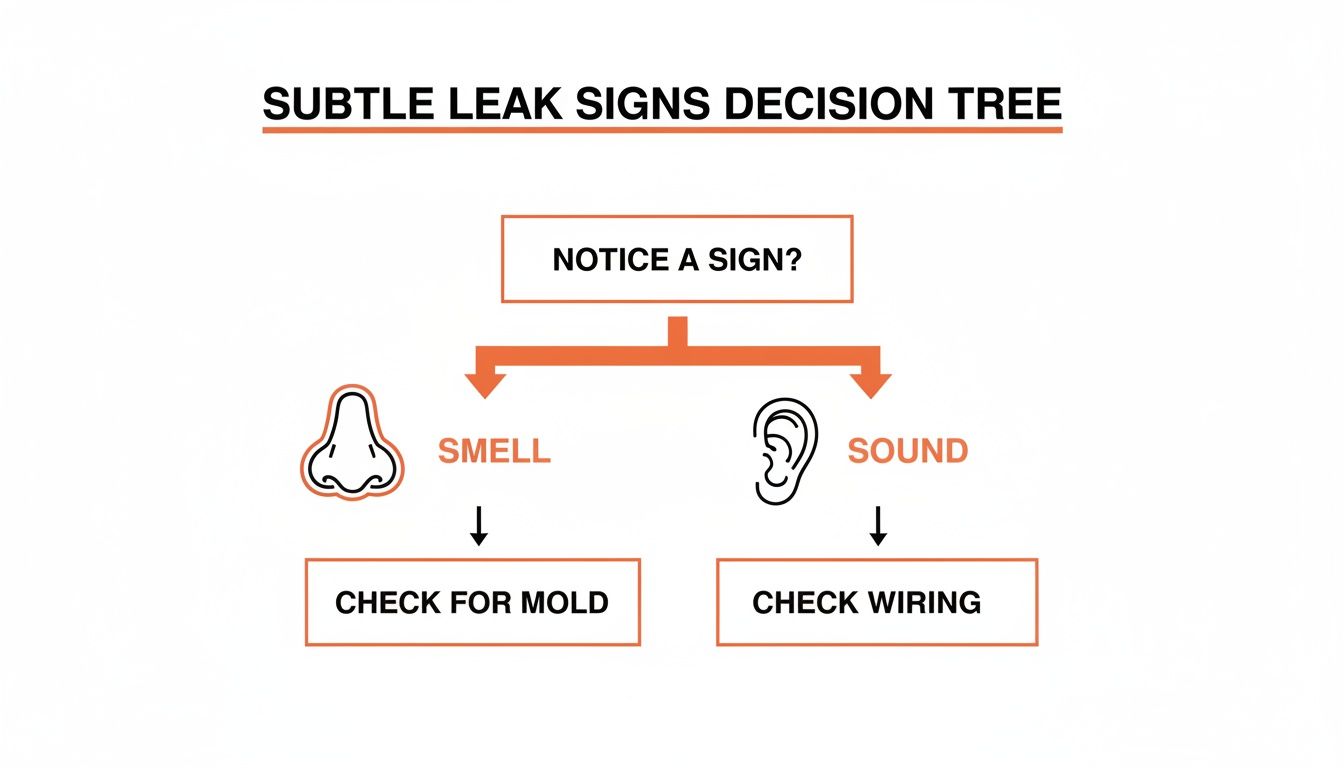
The key takeaway here is that your own senses are fantastic early detection tools. What you smell or hear can be just as important as what you see.
Real-World Scenarios in Orange County
Let's look at a scenario we see all the time. A homeowner in Irvine notices a ceiling stain directly below their master bathroom. While a leaky pipe seems obvious, the real culprit could be a tiny pinhole leak in the shower pan that only lets water escape when the shower is running. We recently documented a case where our team performed extensive water damage mitigation and restoration in Irvine, CA after just such a leak went unnoticed for weeks.
When you see a ceiling stain, you're only seeing the end of the water's journey. The real problem—the source—is often hidden several feet away, requiring professional diagnostic tools like thermal imaging cameras to pinpoint without needless demolition.
Pinpointing a roof leak can be especially tricky. Once you've identified the signs inside, the next step is locating the exact entry point outside. For a detailed walkthrough, this guide on how to find and fix a roof leak is an excellent resource. That said, for your own safety and to ensure a correct diagnosis, this is a task best left to certified professionals who can safely inspect your roof and attic spaces.
Understanding the Health and Structural Risks
That discolored patch on your ceiling is far more than a simple cosmetic flaw; it’s a critical warning sign that points to much deeper, more dangerous problems brewing out of sight. While the visible signs of water damage ceiling homeowners spot are concerning enough, it’s the unseen consequences that pose the biggest threat to your family's health and your home's structural integrity.
When you ignore that stain, you're essentially allowing two silent dangers to take root right above your head.
The first and most immediate risk is to your family’s well-being. The materials that make up your ceiling assembly—drywall, insulation, and the wooden framing—are a perfect buffet for mold once moisture is added to the mix. It happens incredibly fast. Mold growth can start in as little as 24 to 48 hours, releasing microscopic spores directly into the air you breathe.
The Dangers of Mold and Weakened Structures
This rapid contamination can seriously degrade your indoor air quality, kicking off a whole host of health issues, especially for children, the elderly, and anyone with respiratory sensitivities.
- Allergic Reactions: Those invisible spores can cause persistent coughing, sneezing, itchy eyes, and even skin irritation that just won't go away.
- Respiratory Issues: For anyone with asthma, mold exposure can trigger more frequent and severe attacks.
- Toxic Exposure: Certain types of mold even produce mycotoxins, which are linked to more serious, long-term health complications.
Beyond the very real health risks, that persistent moisture is waging a slow but relentless war on your home’s structure. Water soaks into wooden joists and support beams, causing them to rot from the inside out and lose their strength. Drywall, once saturated, becomes soft, heavy, and unstable, dramatically increasing the risk of a sudden and catastrophic collapse.
You can get a deeper understanding of these specific dangers by reading our guide on the truth about mold contamination and its health risks.
This progression from a simple leak to a major hazard can happen much faster than most homeowners think, which is why a professional response is so urgent.
A ceiling stain isn't the problem; it's a symptom of the problem. Calling a certified professional isn't just for cosmetic repairs—it's essential for neutralizing the hidden health and structural threats that always follow water intrusion. As a BBB Torch Award winner for ethics, we believe your home should be a sanctuary, and keeping it safe is our absolute top priority.
The timeline below shows just how quickly a seemingly minor issue can escalate, turning a simple water stain into a complex structural and environmental nightmare.
Timeline of Unaddressed Water Damage
| Timeframe | Visible Damage Progression | Hidden Risks Developing |
|---|---|---|
| First 24 Hours | A small, light-colored stain might appear. | Drywall starts absorbing water; dormant mold spores can activate. |
| 1-7 Days | The stain darkens and expands; paint may start to bubble or peel. | Mold growth begins; wood starts to swell; musty odors become noticeable. |
| 1-4 Weeks | The ceiling may begin to sag or bulge in the affected area. | Structural wood begins the process of rotting; indoor air quality declines sharply. |
| 1 Month+ | Visible mold may appear on the surface; severe sagging; potential for collapse. | Catastrophic structural failure risk; widespread mold contamination throughout the home. |
Ultimately, treating these signs with the seriousness they demand is about protecting both your property and your family. A swift, expert response is the only way to ensure the problem is truly solved, safeguarding your home’s integrity and maintaining a healthy living environment for everyone inside.
Your Immediate Action Plan for Water Damage

Discovering any signs of water damage on a ceiling can be jarring. It's a moment most Orange County homeowners dread, but how you respond in those first few minutes can dramatically limit the fallout and reduce stress.
Acting with a clear, calm head is your best defense. A strategic response can turn a moment of sheer panic into a controlled situation, protecting both your family and your property.
First and foremost, think safety. If you see significant water pooling near light fixtures or electrical outlets, or if the ceiling itself is visibly sagging, stay out of the area. Your immediate move should be to the breaker box to turn off electricity to that part of your home. This simple action eliminates the very real risk of electrical shock.
A Step-by-Step Emergency Checklist
Once you're sure the area is safe to enter, your goal is to contain the damage until a professional can take over. Follow these crucial steps to regain control and minimize the impact on your luxury home.
- Contain the Water: If you have an active drip, place a bucket or any waterproof container directly underneath it. For a more widespread leak, you can use towels or even plastic sheeting to help direct the water and protect your floors and furnishings from further harm.
- Move Valuables: Carefully get any furniture, artwork, rugs, and electronics out of the affected area. Move these items to a completely dry, safe location to prevent them from suffering secondary damage from the moisture.
- Document Everything: Before you move anything, pull out your smartphone. Take clear photos and videos of the damage from multiple angles. Be sure to capture the stained ceiling, any active drips, and any belongings that have gotten wet. This visual evidence will be invaluable for your insurance claim.
- Promote Air Circulation: If it's safe and there are no electrical hazards, open up windows or set up fans to get the air moving. This won't solve the problem, but it helps slow down the damage process while you wait for professional help to arrive.
Your immediate actions are the first line of defense, but they are not a substitute for professional intervention. The most critical step is knowing when to call for expert help, which is the moment you discover the problem.
For homeowners here in Orange County, having a plan is essential. Assembling key supplies ahead of time can make a world of difference in an emergency. To help you prepare, we've created a guide on building your own water emergency first aid kit.
After you've taken these initial steps, your next and most important call is to a 24/7 IICRC-certified restoration expert. At Sparkle Restoration, we are always on standby to respond, ready to turn chaos into calm—fast.
Why Professional Restoration Is Not a DIY Job
When you see the first hint of water damage on a ceiling, it's tempting to think a quick trip to the hardware store is all you need. Grab a can of stain-blocking primer, cover up that ugly spot, and problem solved, right?
Unfortunately, that approach is like putting a fresh coat of paint on a rotting deck. You're only hiding the evidence. A DIY fix might look good for a week, but it traps the moisture inside the ceiling cavity. This creates a dark, damp, perfect breeding ground for mold and accelerates the decay of your home's wooden frame. What started as a small stain can quietly morph into a major structural and health hazard, completely out of sight.
The Science Behind a True Dry-Out
At Sparkle Restoration, our IICRC Master Certified technicians approach water damage with scientific precision. We don't just paint over problems; we find the source and eliminate the threat from the inside out using tools that see what the naked eye can't.
- Thermal Imaging Cameras: These aren't just fancy gadgets. They let us create a "moisture map" of your ceiling and walls, pinpointing every hidden pocket of water without having to tear everything apart blindly.
- Industrial-Grade Dehumidifiers and Air Movers: We don't just open a window and hope for the best. We create a controlled drying vortex, strategically placing powerful equipment to pull moisture from deep within drywall, insulation, and wood studs until they're bone dry.
- Hygrometers and Moisture Meters: We rely on data, not guesswork. Our technicians take constant readings to verify that every affected material has returned to its normal, pre-damage moisture level. We don't leave until the numbers prove the threat is gone.
This professional process is critical because the clock is always ticking. A minor leak can show up as a visible stain in as little as 24–72 hours. But within just one to two weeks, that trapped moisture can lead to serious mold growth and begin to compromise the structural integrity of your home. The economic impacts of these events show why quick, decisive action is crucial.
Choosing professional restoration is an investment in certainty. It’s the only way to guarantee that your home isn’t just cosmetically patched up, but is truly dry, structurally sound, and safe for your family. We bring calm to the chaos by solving the problem correctly, the first time.
Have Questions About Ceiling Water Damage? We Have Answers.
Finding water damage on your ceiling can bring a flood of questions and concerns. As experts who've seen it all here in Orange County, we've put together straightforward answers to the most common questions homeowners ask us.
Can I Just Paint Over a Small Water Stain?
That’s a tempting thought, isn't it? A quick coat of paint and the problem disappears. Unfortunately, painting over a water stain is like putting a band-aid on a broken arm. It hides the symptom but does absolutely nothing to fix the underlying issue.
Worse yet, it actually traps moisture between the paint and the drywall. This creates a dark, damp environment where mold can flourish and the wooden framing of your home can begin to rot. The only real solution is to find and fix the leak first, then have an IICRC-certified technician professionally dry everything out. They'll use moisture meters to get scientific proof that the area is bone-dry before any cosmetic repairs even begin.
How Much Does Ceiling Water Damage Repair Cost?
This is the big question, and the honest answer is: it varies dramatically. In Orange County, the cost to repair a water-damaged ceiling depends entirely on the extent of the problem.
A minor fix for a small, contained stain that was caught early might only run a few hundred dollars. But if the damage is extensive—requiring structural repairs, significant drywall replacement, and professional mold remediation—the cost can easily climb into the several thousands. The only way to know for sure is to get a transparent, detailed estimate from a certified restoration company.
Will My Homeowners Insurance Cover This Damage?
Most of the time, yes—if the damage was caused by a sudden and accidental event. Think a burst pipe, a washing machine hose that gives way, or an overflowing bathtub. Standard homeowners insurance policies are designed for these kinds of unexpected disasters.
However, they typically will not cover damage that results from gradual leaks or a lack of maintenance. That slow drip you ignored for months? That's usually not covered. It is absolutely crucial to document everything with photos the moment you spot the damage and call a restoration expert who knows how to work directly with your insurance adjuster. This can make a world of difference in streamlining the claims process and getting your home back to normal.
When you’re facing water damage, you need certainty and a clear path forward. Trust the experts who can bring that peace of mind. For 24/7 emergency service and a comprehensive assessment of your water damage, contact Sparkle Restoration Services. We specialize in turning chaos into calm, fast. Schedule your free consultation today.
Ready to create a space that’s as beautiful as it is functional? Schedule your complimentary design consultation today by visiting Ready to Work with Sparkle?