


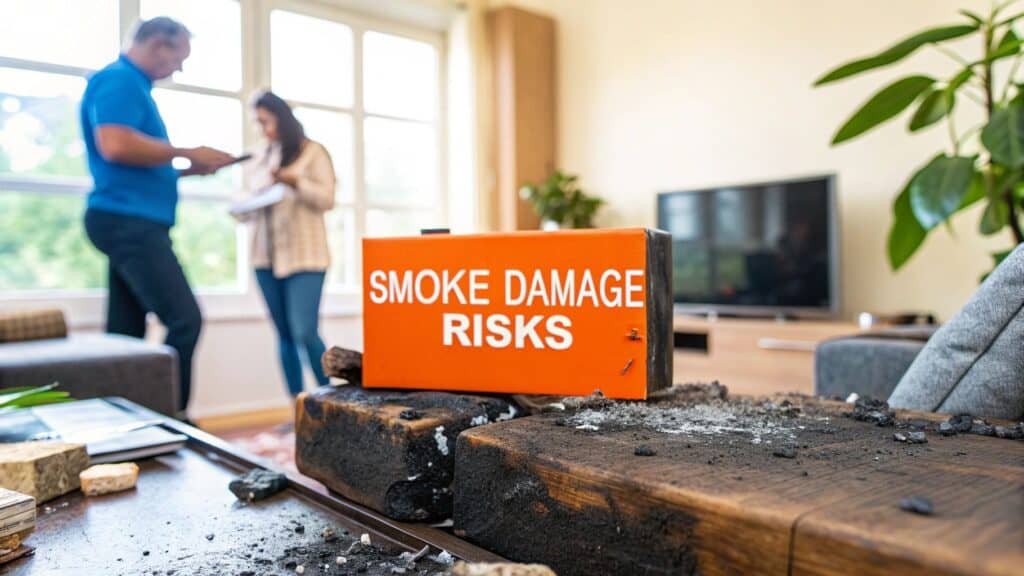
When the flames are extinguished after a fire in your Orange County home, the immediate crisis may seem over. But a far more insidious danger often remains: the microscopic soot and toxic particles that linger in the air, creating significant smoke damage health risks for your family. Understanding these invisible threats is the first and most critical step toward ensuring your home is truly safe again.
As a premier, IICRC Master Certified restoration expert serving homeowners and businesses from Newport Beach to Irvine, Sparkle Restoration Services is committed to turning chaos into calm. This guide will provide the authoritative, trustworthy information you need to protect your family's health.
Why Smoke Residue Is a Persistent Hazard
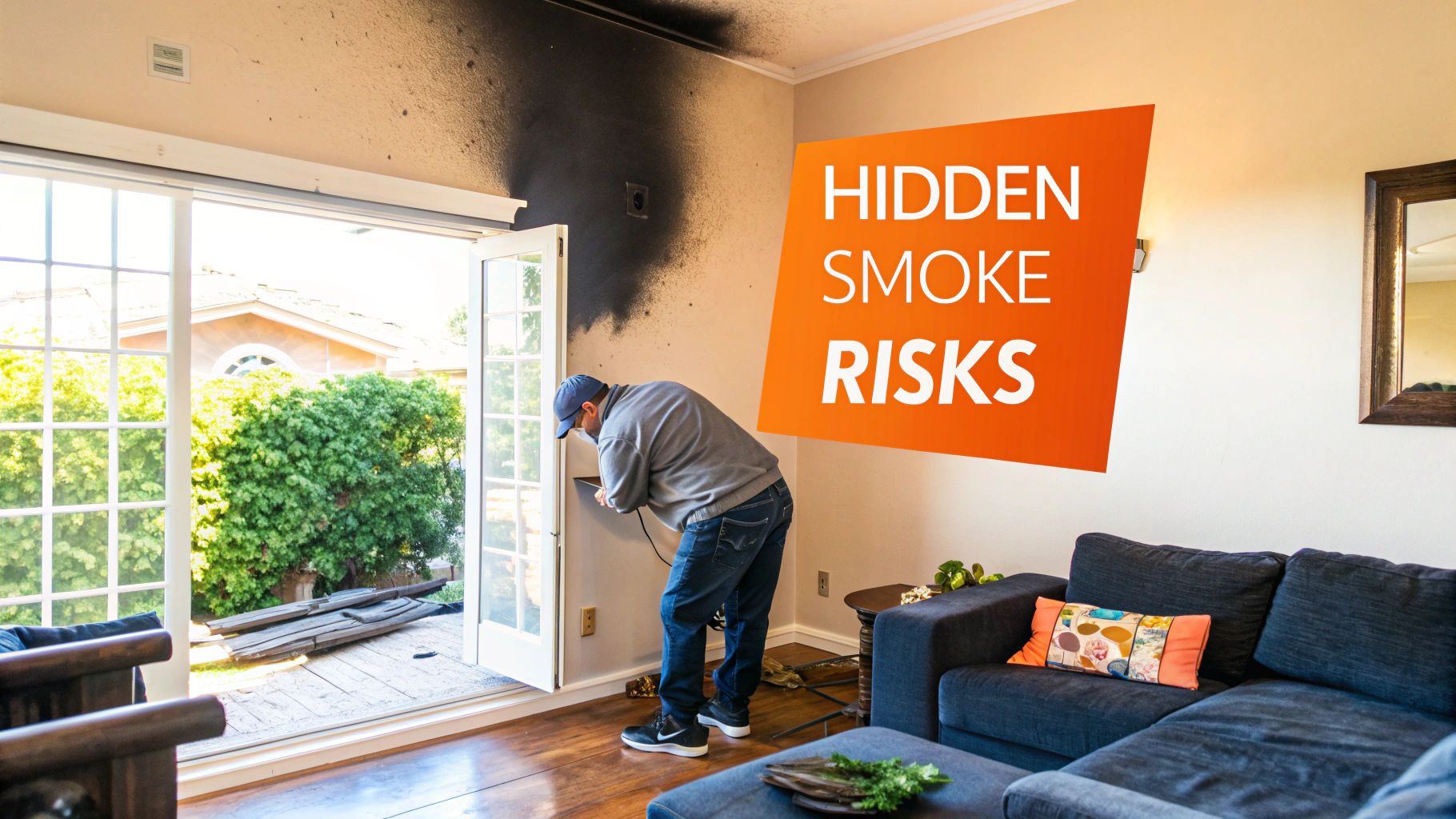
After a fire, it’s natural to focus on the visible destruction. However, the invisible threat smoke leaves behind is often far more treacherous. Smoke is not just an unpleasant odor; it's a complex mixture of fine particulate matter and toxic gases. This residue settles on every surface, from carpets and furniture to the hidden spaces within your walls.
These are not ordinary dust particles. They are the hazardous byproducts of burned synthetic materials found in every modern home—plastics, textiles, foams, and electronics. When these items combust, they release a chemical cocktail into the air. This toxic film doesn't simply dissipate; it saturates your home's structure and contaminates the very air you breathe, posing an ongoing risk.
What This Guide Covers
As an IICRC Master Certified firm and a BBB Torch Award Winner for Ethics, our mission at Sparkle Restoration is to protect your family’s well-being with expertise and integrity. This guide will walk you through everything you need to know to understand the full scope of smoke damage health risks. We’ll be covering:
- The toxic composition of smoke and soot.
- The immediate and long-term health symptoms to watch for.
- Why professional, certified remediation is the only truly safe solution for your property.
Understanding these hidden dangers is essential for restoring your home—and your peace of mind. For a deeper look into maintaining a healthy home, explore our resources on identifying and mitigating sources of indoor air pollution.
Deconstructing the Toxic Soup Left by Fire
Once the flames are out, the most immediate danger might seem over, but a far more insidious threat remains. An invisible, toxic residue settles on every single surface in your home, and it’s much more than just "dirt."
Think of it as a complex chemical soup, cooked up from the combustion of all the everyday items in your house. Modern homes are packed with synthetic materials—plastics in our TVs and computers, foam in our couches, and treated fibers in our carpets. When these things burn, they release a dangerous cocktail of chemicals into the air.
This toxic film doesn't just go away on its own. It clings to walls, seeps into porous materials like wood and drywall, and gets sucked into your HVAC system, where it’s then continuously circulated throughout your home. A simple surface wipe-down doesn't even begin to touch this deep-seated contamination.
What Is Hiding in the Soot and Smoke?
That lingering smell after a fire? That's your first clue. It’s a clear sign of Volatile Organic Compounds (VOCs). These nasty compounds can "off-gas" for weeks or even months, creating ongoing health risks long after the fire department has left.
Alongside VOCs, the soot and smoke are loaded with other hazardous components:
- Fine Particulate Matter (PM2.5): These are microscopic soot particles, smaller than 2.5 micrometers, which is tiny enough to be inhaled deep into your lungs and even enter your bloodstream. They're a primary driver of serious respiratory and cardiovascular problems.
- Carbon Monoxide (CO): While the immediate threat of CO poisoning fades when the fire is out, it can get trapped within the property and be released slowly from absorbent materials like drywall and furniture.
- Polycyclic Aromatic Hydrocarbons (PAHs): This is a group of chemicals formed during the incomplete burning of organic materials. Many of them are known carcinogens.
To give you a clearer picture of what you're up against, here’s a breakdown of some common toxins found in a typical house fire.
Common Toxins Found in Household Smoke
| Toxin/Particulate | Source in a House Fire | Primary Health Risk |
|---|---|---|
| Hydrogen Cyanide | Burning plastics, upholstery, insulation | Chemical asphyxiant that interferes with oxygen use |
| Phosgene | Household products containing chlorine, such as PVC pipes and vinyl flooring | Severe respiratory distress, lung damage |
| Benzene | Plastics, synthetic fibers, rubber | Known carcinogen, affects bone marrow |
| Asbestos Fibers | Older insulation, vinyl tiles, roofing materials | Lung cancer, mesothelioma |
| Lead Dust | Lead-based paints in older homes | Neurological damage, particularly in children |
These are just a few examples. The reality is that the chemical makeup of smoke is incredibly complex and varies with every fire.
This pervasive contamination is exactly why our IICRC Master Certified technicians at Sparkle don't just follow a cleaning checklist. We approach every fire restoration project as a scientific decontamination process. We’re not just cleaning; we’re removing a hazardous chemical environment to make your home safe again.
The Critical Role of Your HVAC System
Think of your home's HVAC system as its lungs. After a fire, those lungs become a primary delivery system for spreading contamination. Smoke, soot, and VOCs are pulled into the ductwork, where they settle and build up.
Every single time you turn on your air conditioner or heater, those toxins are recirculated back into every room. You and your family end up breathing them in, again and again.
It's vital to understand the specific harmful risks associated with dirty ducts, because a post-fire HVAC system is exponentially more contaminated than one dealing with just everyday dust. A thorough, professional cleaning and decontamination of the entire system isn't just a good idea—it's absolutely essential. Without tackling the HVAC system, any restoration effort is incomplete, and your family's health remains at risk.
Recognizing Immediate Symptoms of Smoke Exposure
Once the chaos of a fire is over, it’s easy to think the danger has passed. But the lingering smoke and soot that settle into your Orange County home continue to pose serious smoke damage health risks, and your body is often the first to send out the warning signals. Knowing how to spot these immediate symptoms is the first step in protecting your family’s health.
These aren't just minor annoyances. They're your body's direct response to breathing in or touching a toxic environment. If you ignore them, you could be looking at much bigger health problems down the road, especially if you stay in the house.
Key Warning Signs of Smoke Inhalation
If you’ve had a fire recently—even a small one that was put out quickly—be on the lookout for physical symptoms that just don’t feel right. Your body’s reaction to the microscopic particulate matter and chemical fumes left behind can show up in a few distinct ways:
- Respiratory Issues: A cough that just won't quit, wheezing, or feeling short of breath are classic signs. This is your lungs working overtime, trying to clear out the tiny soot particles you’ve breathed in.
- Eye and Throat Irritation: Do your eyes sting and water? Is your throat scratchy, or is your nose running? These are very common reactions to the chemical irritants hanging in the air and settled on surfaces.
- Headaches and Dizziness: Exposure to carbon monoxide and other volatile organic compounds (VOCs) can mess with the oxygen flow in your bloodstream. This can lead directly to headaches, feeling dizzy, confused, or even nauseous.
- Skin Irritation: Soot doesn’t just stay in the air. Those particles land on your skin and can cause rashes, itching, or other types of dermatitis, particularly if you or your family members have sensitive skin.
This infographic breaks down some of the main toxic troublemakers found in smoke residue after a fire.
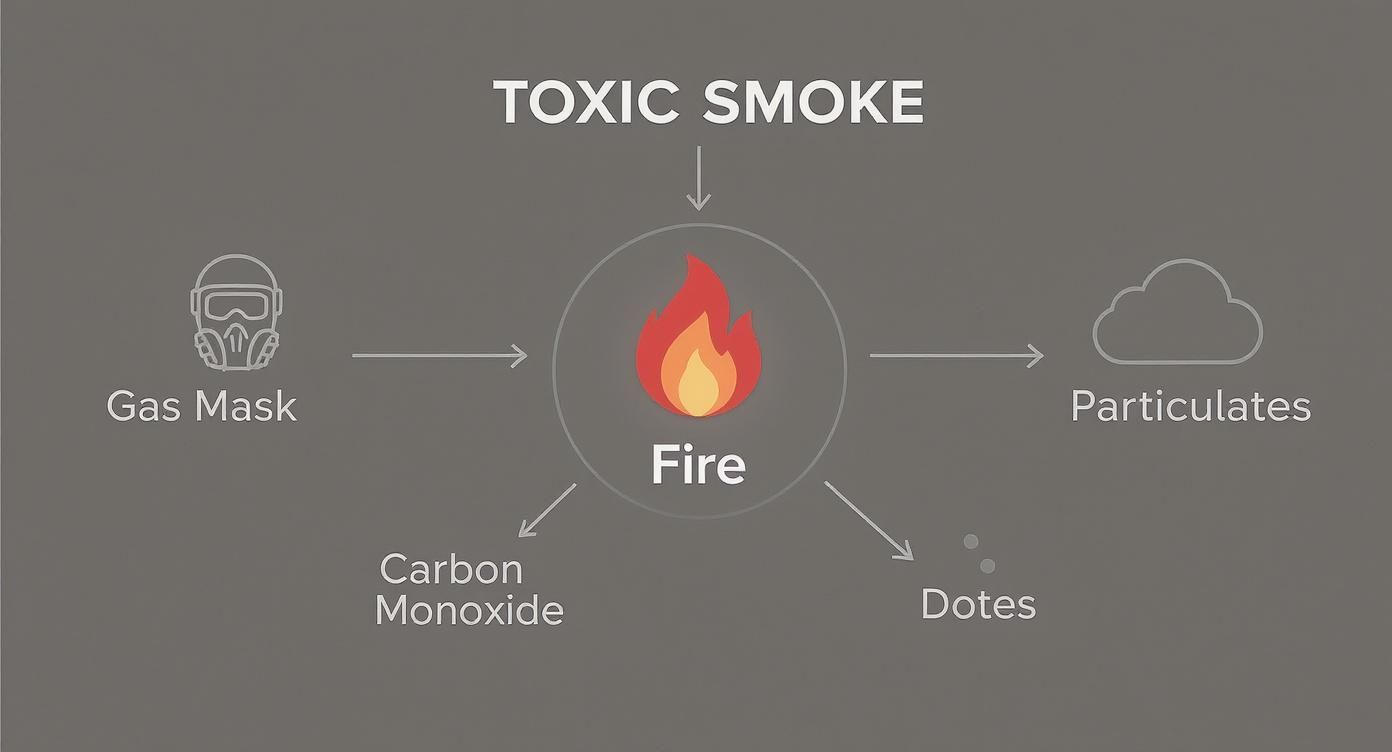
As you can see, a single fire unleashes multiple threats at once—nasty gases like VOCs and carbon monoxide, plus solid particles—all of which contribute to the health symptoms you might be feeling.
When to Seek Medical Attention
You have to listen to your body. If any of these symptoms feel severe, stick around, or get worse, it's time to get advice from a doctor right away. This is especially critical for the most vulnerable members of your family, like children, the elderly, or anyone with pre-existing conditions like asthma or heart disease.
Your health always comes first. These symptoms are a clear signal that your home environment isn't safe. It highlights the urgent need for professional, IICRC-certified remediation to get rid of the toxic source, not just cover up the smell.
At Sparkle Restoration, we get it—you're not just dealing with property damage, you're facing a real health hazard. Our team is trained and equipped to hunt down and eliminate these invisible threats, making sure the air in your home is clean and safe again. Don't wait for symptoms to get worse. If you think smoke residue is affecting your family, contact us for a comprehensive assessment.
Uncovering the Long-Term Health Consequences
While the immediate effects of smoke exposure are obviously alarming, the most dangerous smoke damage health risks often don't show up right away. They can develop silently over months or even years. When a home isn't properly decontaminated after a fire, your family is exposed to a continuous, low-level dose of toxic chemicals and cancer-causing particles. This is where the real danger lies.
Think of the toxic residue from smoke as a slow-release poison that has been absorbed by everything in your home—the drywall, carpets, insulation, and even your furniture. Every single day, these materials release harmful compounds back into the air you breathe. You take them in, absorb them through your skin, and unknowingly let them accumulate in your body.
This constant assault on your system can lead to serious, chronic health problems. It's a threat that doesn't just disappear when the smoky smell fades; in fact, some of the most dangerous compounds are completely odorless.
The Link Between Smoke Residue and Chronic Illness
The microscopic particles in soot and ash are tiny invaders. They're small enough to get past your body's natural filters, moving deep into your lungs and even making their way into your bloodstream. Once they're inside, they can set off inflammation and cellular damage that paves the way for severe, long-term health issues.
Key long-term risks include:
- Chronic Respiratory Diseases: Breathing in fine particulate matter (PM2.5) day after day causes persistent inflammation. This can lead to conditions like Chronic Obstructive Pulmonary Disease (COPD), bronchitis, and making asthma much worse. Over time, your lung function can be permanently damaged.
- Cardiovascular Damage: When these toxins get into your bloodstream, they can harm blood vessels and dramatically increase the risk of heart attacks, strokes, and other serious heart conditions.
- Increased Cancer Risk: Many of the substances released in a fire, such as benzene and polycyclic aromatic hydrocarbons (PAHs), are known carcinogens. Long-term exposure significantly raises the risk of developing several types of cancer.
The decision to professionally remediate your home is more than just a cleanup—it's a critical investment in your family's long-term health. Choosing a certified expert like Sparkle Restoration ensures that these hidden carcinogens are completely eliminated, not just covered up.
The Escalating Threat From Wildfires
This isn't just a theoretical danger. The extensive research on wildfire smoke gives us a sobering look at the real-world consequences. For those of us in Southern California, the growing frequency and intensity of wildfires is a serious concern. This data drives home a critical point for any homeowner: the toxic residue left by any fire, whether it’s from a nearby wildfire or a small kitchen fire, carries lasting consequences.
On top of that, the moisture from firefighting efforts can introduce another silent threat. To truly protect your home, you have to understand the connection between fire damage, water damage, and the health risks of mold contamination.
As an IICRC Master Certified firm and a BBB Torch Award Winner for Ethics, Sparkle Restoration has the expertise to tackle every angle of post-fire contamination. Our comprehensive approach means we don't just restore your property—we restore its safety, protecting your family from the serious long-term health risks that smoke damage leaves behind.
Protecting the Most Vulnerable Members of Your Family

After a fire, the invisible threat of smoke residue doesn't affect everyone in your Orange County home the same way. While the toxic particles and gases pose a risk to all, some family members face a much higher danger from exposure because of their unique physiology and health status.
Knowing who is most vulnerable is the key to making smart, safe decisions for your family's future. This isn't just a small detail; it’s a critical factor that should shape how you approach the entire post-fire restoration process. The toxins left behind can cause disproportionate harm to those whose bodies are still developing or are already working overtime to manage existing health issues.
Who Is Most at Risk from Smoke Inhalation?
The tiny, microscopic nature of soot and chemical residue means it can easily slip past the body’s natural defenses. For some, this invasion is far more damaging. The most susceptible groups include:
- Children and Infants: Their lungs are still developing, and they breathe much faster than adults do. This means they inhale a proportionally larger volume of airborne toxins, leading to greater exposure and the potential for long-term respiratory damage.
- Older Adults: As we age, our respiratory and cardiovascular systems can become less resilient. Pre-existing conditions and a naturally declining immune response make older adults more likely to suffer severe complications from inhaling these fine particles.
- Pregnant Women: Exposure to the toxins found in smoke can create risks not only for the mother’s health but also for the developing fetus.
- Individuals with Pre-existing Conditions: Anyone with chronic respiratory issues like asthma or COPD, or those with heart disease, will find their conditions can be severely aggravated by smoke residue. The irritants can trigger intense asthma attacks and place a dangerous strain on the cardiovascular system.
The Importance of a Clean HVAC System
One of the most critical steps in protecting vulnerable family members is dealing with your home’s circulatory system—the HVAC unit. Soot and toxic particles get sucked into the ductwork, where they settle and wait to be blown back into your home every time the heater or air conditioner kicks on.
For a child with asthma or an elderly parent with a heart condition, a contaminated HVAC system turns their home from a sanctuary into a source of constant toxic exposure. This makes professional decontamination a non-negotiable step for family safety.
Making sure these settled toxins are completely removed is essential. Our guide on the importance of professional HVAC system cleaning offers a deeper look into how this process protects your indoor air quality. And while this article focuses on the dangers after a fire, being proactive is just as important. Understanding broader fire safety regulations for vulnerable residents can help you create a more comprehensive safety plan for your family.
Why Professional Restoration Is Your Only Safe Option
After a fire, the urge to jump in and start cleaning up your Orange County home is completely understandable. You want to get things back to normal as quickly as possible. But trying to tackle smoke remediation on your own isn't just a tough job—it's a dangerous gamble with your family's health.
Wiping down walls and opening windows might make things look and smell a little better, but it does almost nothing to get rid of the microscopic toxins that have settled deep into your home. These are the real, lingering smoke damage health risks.
Smoke particles are incredibly sneaky. They’re so small that they work their way into porous materials like drywall, wood, insulation, and even your furniture. Worse yet, they get sucked into your HVAC system, which then acts like a superhighway, spreading hazardous chemicals to every corner of your house every time it kicks on. Cleaning what you can see leaves these invisible threats to keep releasing toxic gases for months, turning your home into a chronically unhealthy environment.
The Sparkle Restoration Difference
As an IICRC Master Certified firm and a Licensed General Contractor, we know that real fire restoration is a science. It's a decontamination process, not just a deep clean. We don’t just wipe away the soot; we use advanced technology and proven protocols to eliminate the hazard at its source—something no DIY effort can ever hope to achieve.
Our specialized equipment does the heavy lifting:
- HEPA Air Scrubbers: Think of these as super-powered air purifiers. Our industrial-grade machines capture 99.97% of airborne particles, literally pulling the microscopic soot, ash, and chemical residues right out of the air you breathe.
- Thermal Foggers: This technology is key to fighting smoke odor. We heat a special deodorizing agent until it becomes a fine mist, which expands and travels into the exact same hidden nooks and crannies that the smoke did. It neutralizes the odor-causing molecules on contact.
- Ozone Generators: For stubborn, deeply embedded odors in unoccupied spaces, these machines are game-changers. They generate ozone (O3), which creates a chemical reaction that permanently breaks down the structure of smoke molecules, eliminating the smell for good.
Expertise You Can Trust
Choosing the right team isn't just about cleaning up; it’s an investment in your family’s long-term health and the value of your property. Our credentials at Sparkle Restoration speak to our commitment to doing things the right way. Our recognition as a 2024 BBB Torch Awards for Ethics Winner is a direct reflection of our dedication to being transparent and always putting our clients' well-being first.
Professional restoration is not just a cleaning service; it is an essential health and safety measure. It ensures every toxic particle—from inside your walls to the depths of your HVAC system—is systematically and completely removed, restoring your home to a safe haven.
Attempting this complex process without professional training and gear can expose you and your loved ones to concentrated levels of carcinogens. It’s critical to understand the serious risks of going it alone, a topic we cover in more detail in our article on the dark side of DIY projects.
Don’t put your family's health on the line with an incomplete cleanup. The only way to be certain your home is truly free from hazardous smoke residue is to trust certified professionals who have the training, technology, and track record to get the job done right.
Protect your family and restore your peace of mind. If your home has been affected by fire, contact Sparkle Restoration Services today for a comprehensive assessment and let our certified experts turn chaos into calm, fast.
Schedule Your Free Consultation at sparklerestoration.com
Ready to create a space that’s as beautiful as it is functional? Schedule your complimentary design consultation today by visiting Ready to Work with Sparkle?