



A successful step by step kitchen remodel isn't a chaotic event; it's a meticulously planned journey from the first spark of an idea to the final, gleaming result. At Sparkle Restoration Services, we guide our clients through this journey in three core phases: dreaming up your vision (Dream), finalizing the logistics and design (Plan), and executing the construction with precision (Build).
Following this structured, professional approach is the single best way to turn a complex project into a manageable and rewarding experience, minimizing stress and maximizing the value of your investment.
The Journey to Your Dream Kitchen
Embarking on a kitchen remodel is one of the most exciting investments you can make in your home. Yet, for many affluent homeowners in Orange County, the thought of a major renovation can be daunting. Concerns about the budget, project timeline, and disruption to daily life are completely understandable.
The key to replacing that anxiety with confidence is understanding the process. A professionally managed remodel isn't a chaotic whirlwind of contractors and dust. It's a carefully orchestrated sequence of events designed by experts to bring a specific vision to life—efficiently, on budget, and beautifully.
Consider a common scenario we encounter in Irvine: a homeowner with a dark, closed-off kitchen from the 90s. They envision a bright, open-concept space perfect for entertaining friends and family. The vision is clear, but the path forward seems complex. This is precisely where our structured, step-by-step process provides clarity, turning a wish into a concrete, actionable plan.
Understanding the Remodel Phases
As an IICRC Master Certified firm and licensed General Contractor, Sparkle Restoration Services simplifies the entire process into three distinct, easy-to-follow phases. This structure ensures every detail is addressed before construction begins, minimizing unforeseen issues and delivering a superior final result.
- Phase 1: Dream & Discovery This is the inspirational stage. You'll gather ideas, define your "why" for remodeling, and set your primary goals. Is it about enhancing functionality for a gourmet chef, creating a modern aesthetic, or building a warm family hub?
- Phase 2: Plan & Design Here, ideas become a concrete blueprint. This critical stage involves finalizing layouts, selecting materials, establishing a detailed budget, and engaging a trusted design-build team.
- Phase 3: Build & Completion With a solid plan approved, the physical transformation begins. This phase covers everything from demolition and construction to installing final fixtures and conducting the final walkthrough.
This infographic provides a quick visual of how these phases flow sequentially.
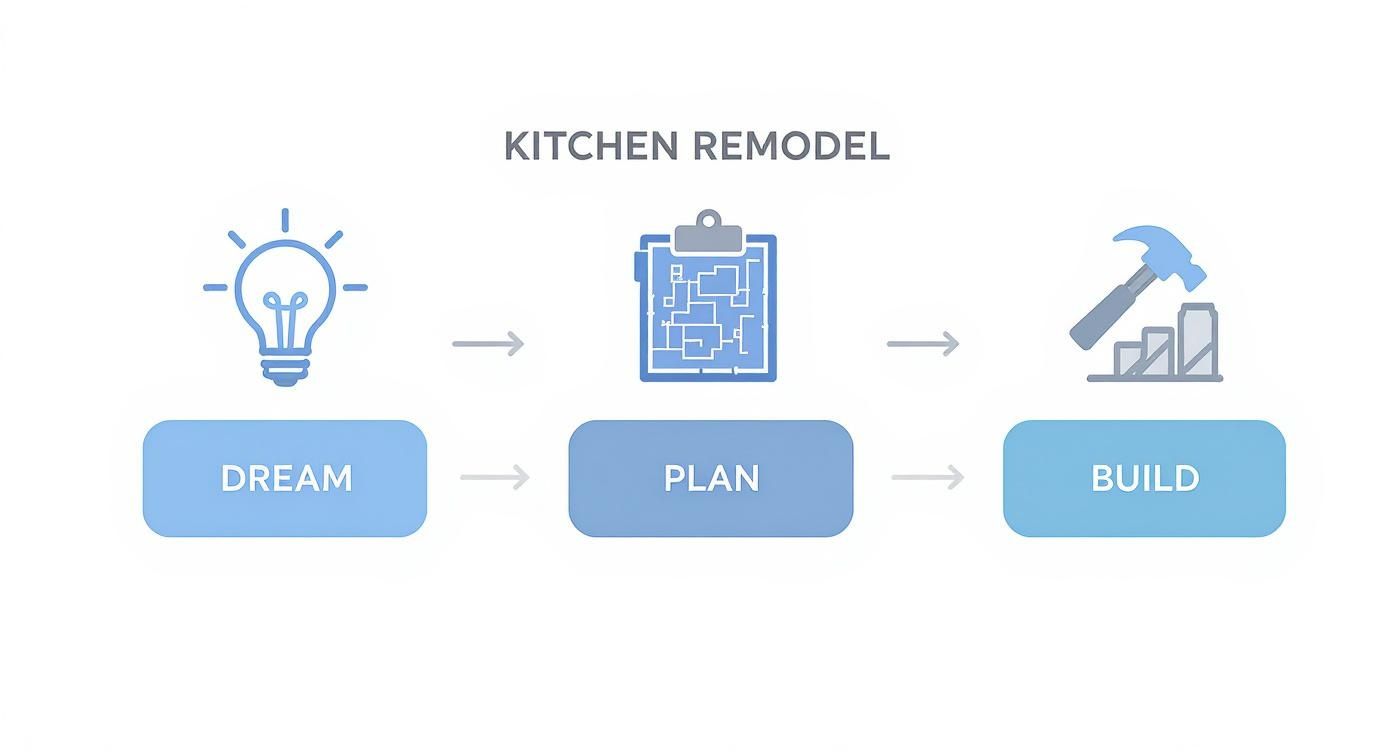
Visualizing the project this way helps homeowners in communities like Newport Beach and Laguna Niguel understand that each step builds logically on the last, creating a clear roadmap from start to finish.
To provide a quick overview, here’s a table breaking down the core phases of a professional kitchen remodel. This helps put the entire project lifecycle into perspective.
Kitchen Remodel Core Phases At a Glance
| Phase | Primary Goal | Key Activities |
|---|---|---|
| Dream & Discovery | Establish the project's vision, scope, and objectives. | Gathering inspiration, defining needs vs. wants, setting initial budget expectations. |
| Plan & Design | Translate the vision into a detailed, actionable plan. | Finalizing layout, selecting materials, hiring contractors, creating a firm budget and schedule. |
| Build & Completion | Execute the construction and bring the design to life. | Demolition, plumbing/electrical work, cabinet/countertop installation, final walkthrough. |
Each of these stages is essential for ensuring the project stays on track, on budget, and true to your original vision.
This methodical approach has never been more vital. The U.S. kitchen remodel services market was valued at $11.86 billion in 2025, with a compound annual growth rate (CAGR) of 7.2%, driven by renovation trends and the influence of modern design. You can explore more of this market trend data from ResearchAndMarkets.com.
As a BBB Torch Award Winner for Ethics, we believe transparency is the bedrock of a stress-free remodel. Our promise is to guide you through every phase with clear communication and deep expertise, turning potential chaos into a calm, fast, and exciting process.
Building Your Remodel Blueprint
A stunning kitchen remodel is won or lost long before the first sledgehammer swings. This planning stage is where you lay the foundation for success, creating a solid blueprint that guides every decision and ensures the final result matches your vision—and your budget. Think of it as the roadmap for your entire step by step kitchen remodel.
The first, most important question to ask is: why am I remodeling? Are you a passionate home chef who requires a high-performance workspace? Is your kitchen the central hub for family life, needing warmth and durability? Or are you dreaming of a sleek, modern space perfect for entertaining? Defining this "why" will bring clarity to every choice, from the layout down to the cabinet pulls.
Translating Inspiration Into a Practical Design
Diving into Pinterest and Houzz for inspiration is an excellent start, but the goal is to move from a collection of images to a focused, cohesive plan. Your vision should reflect your home and fit your family's lifestyle.
- Identify Your "Thumbprint": Do you consistently save images of bright, airy kitchens with natural wood? Or are you drawn to dramatic cabinetry and bold brass hardware? Pinpoint the common threads in your inspiration.
- Prioritize Function: A beautiful kitchen that is inefficient to cook in is a design failure. Pay close attention to clever storage solutions, smart island layouts, and ergonomic work triangles.
- Create a Materials Shortlist: Begin noting the specific countertops, backsplashes, flooring, and faucet styles that catch your eye. This list will be invaluable when it's time for selections.
For those interested in the technical side, professional visualization tools are remarkable. You can get a glimpse into how experts create photorealistic mockups by exploring resources on using 3ds Max for interior design.
Establishing a Realistic Financial Foundation
A detailed budget is the single most critical component of your blueprint. Many homeowners underestimate costs or forget to account for every line item. A solid budget is honest, comprehensive, and always includes a contingency for unforeseen issues.
Here’s a realistic breakdown of where the money typically goes in a mid-to-high-end Orange County kitchen remodel:
| Cost Category | Typical Budget Allocation | Notes |
|---|---|---|
| Cabinetry & Hardware | 30% – 35% | This is often the largest line item. Custom and semi-custom cabinetry will be at the higher end. |
| Labor & Installation | 20% – 25% | Covers demolition, plumbing, electrical, installation, and finishing work by licensed professionals. |
| Appliances & Ventilation | 15% – 20% | Costs can vary significantly based on the brands and features selected. |
| Countertops | 10% – 15% | Material choice (e.g., quartz vs. quartzite) is the primary cost driver here. |
| Contingency Fund | 15% – 20% | Non-negotiable. This is your safety net for hidden issues discovered during demolition. |
The Indispensable Contingency Fund
We cannot overstate this: setting aside a 15-20% contingency fund is the smartest move you can make. It is what separates a stressful project from a smooth one. When our teams work in older Newport Beach or Laguna Niguel homes, it’s not a question of if we’ll find hidden issues—like outdated wiring, leaky pipes, or termite damage—but when. This fund transforms a potential crisis into a manageable adjustment.
A project without a contingency fund isn't a budget; it's a guess. Building this buffer into your initial plan is a sign of a savvy homeowner and a hallmark of a professionally managed project.
Finally, navigating local building codes and permits in Orange County can be complex. Any remodel involving electrical, plumbing, or structural changes requires permits. This is where partnering with a licensed General Contractor and utilizing integrated design-build services provides immense value. A professional team manages all paperwork, inspections, and compliance, ensuring your project is not only beautiful but also safe, up to code, and built to last.
Assembling Your Design and Build Team
With a clear vision and a robust budget, it’s time to address one of the most critical parts of your step by step kitchen remodel: selecting the right professionals. This decision directly impacts the quality of workmanship, the project timeline, and your peace of mind.
You have two primary options: hire an architect, a designer, and a general contractor separately, managing each one yourself. Or, partner with a unified design-build firm.

For busy Orange County homeowners seeking a streamlined, efficient process, the design-build model is superior. Instead of acting as the intermediary between different specialists, a firm like Sparkle provides a single point of accountability for the entire project. This integrated approach ensures the design is grounded in real-world buildability and budget constraints from day one, preventing the costly revisions that occur when designers and builders are not aligned.
Vetting Your Potential Partners
Regardless of the model you choose, thoroughly vetting potential contractors is essential. You are looking for a partner with proven experience, a stellar reputation, and the credentials to back it up. A beautiful portfolio is important, but verifiable qualifications are what truly protect your home and investment.
When interviewing a potential partner, come prepared with a checklist. Their responses will reveal their level of professionalism.
- Licensing and Insurance: "May I see your California General Contractor's license and proof of general liability and workers' compensation insurance?" This is non-negotiable for your protection.
- Certifications: "What industry certifications do you hold?" Credentials like an IICRC Master Certification indicate a deep understanding of building science—invaluable when unexpected issues arise.
- Project Management: "How will you communicate project updates, schedule changes, and progress reports?" A professional firm will have a clear, established system.
- Team and Subcontractors: "Do you use an in-house crew or subcontractors? How do you vet them?" This provides insight into their quality control standards.
As a BBB Torch Award Winner for Ethics, we know that trust is built on transparency. A contractor who is proud to share their qualifications is one who is committed to excellence and protecting their clients' interests.
The diligence required to find an exceptional kitchen contractor is similar to any other major home project. Our guide on hiring the right contractor for a bathroom remodel offers valuable tips that also apply here.
From Concepts to Concrete Plans
Once your team is in place, the design development phase begins. This is where your inspiration is transformed into detailed architectural plans and photorealistic 3D renderings. Your designer will refine the layout, incorporating timeless principles like the kitchen work triangle alongside modern zoning concepts for prep, cooking, and gathering.
This phase is being revolutionized by technology. The global kitchen remodel market is projected to reach $150 billion by 2025, with growth fueled by tools like virtual reality (VR) design. On a recent Laguna Beach project, we used VR to allow the homeowner to "walk through" their new kitchen before a single cabinet was ordered. It was a game-changer, enabling them to experience the workflow and confirm every finish with absolute confidence. Learn more about these market innovations and insights.
Choosing Your Materials and Finalizing Details
With a solid plan and a trusted team, you’ve arrived at one of the most enjoyable stages of any step by step kitchen remodel. This is where your kitchen develops its unique personality as you select the materials and finishes that will define the space.
Here in Southern California, discerning homeowners seek the perfect blend of style, durability, and practicality. The active lifestyles in communities like Irvine and Newport Beach demand surfaces that withstand daily use while maintaining a sophisticated aesthetic.
Selecting Your Core Surfaces
Your countertops and cabinets are the two most significant visual elements in your kitchen. They establish the overall tone and represent a substantial portion of your budget. Making the right choices here is paramount.
Comparing Popular Kitchen Countertop Materials
Choosing a countertop can be overwhelming. Each material offers a unique character, maintenance requirements, and price point. This table breaks down the leading options to help you compare.
| Material | Average Cost per Sq. Ft. | Pros | Cons |
|---|---|---|---|
| Quartz | $70 – $150 | Extremely durable, non-porous (stain/bacteria resistant), vast color selection. | Can be damaged by extreme heat, not as natural-looking as stone. |
| Granite | $60 – $120 | Highly heat-resistant, each slab is unique, very durable. | Porous and requires periodic sealing, can chip or crack. |
| Quartzite | $80 – $200+ | Looks like marble but is more durable, UV resistant (won't fade in sunny rooms). | Can be more expensive, requires sealing, some varieties can etch. |
| Marble | $75 – $250+ | Unmatched classic beauty and veining, develops a unique patina over time. | Very porous, easily stains and etches from acids (wine, lemon juice). |
The ideal choice depends on your lifestyle. Are you a meticulous cook who cleans spills instantly, or do you have a busy family where messes are common? An honest assessment of your daily habits will lead you to the perfect surface.
Cabinetry: Custom vs. Stock
For cabinetry, your primary decision is between off-the-shelf stock options, semi-custom flexibility, or a fully custom design.
- Stock Cabinets: The most budget-friendly choice, typically available immediately. The drawback is their standard sizing, which can result in awkward gaps or inefficient use of space.
- Semi-Custom Cabinets: An excellent middle ground offering more options for sizes, finishes, and door styles without the full cost of custom work. A smart choice for a personalized look.
- Custom Cabinets: The premium solution for unique layouts or specific design visions. Built from scratch to fit your kitchen perfectly, they maximize every inch of space for a truly bespoke result.
Illuminating Your Design
Lighting is often an afterthought, yet it can make or break a kitchen's design. A well-conceived lighting plan enhances functionality, sets the mood, highlights your beautiful new finishes, and makes the entire room feel larger and more inviting.
A layered approach is most effective:
- Ambient Lighting: General, overall illumination for the room, typically from recessed ceiling lights.
- Task Lighting: Focused light precisely where you need it for work, such as under-cabinet LED strips for countertops or pendants over an island.
- Accent Lighting: Adds drama and visual interest, like lighting inside glass-front cabinets or stylish sconces flanking a window.
Finalizing Fixtures and Appliances
With major surfaces selected, it's time for the "jewelry"—the faucets, cabinet hardware, and appliances that unify the design. These finishing touches provide a complete and cohesive feel. This is also the perfect time to consider how smart home integration can enhance your kitchen with connected ovens, faucets, and lighting systems.
Flooring is another critical decision. It must be durable enough for spills and traffic, comfortable underfoot, and complementary to your cabinets and counters. For a detailed look at options like luxury vinyl plank, tile, and hardwood, explore our expert guide on flooring sales and installation.
The single most important piece of advice for this stage: Finalize every selection before construction begins. Locking in everything from cabinet pulls to grout color now prevents costly delays and decision fatigue later.
Once every material is chosen and every appliance is ordered, your contractor can build a detailed project schedule. This covers crucial logistics like setting up a temporary kitchen, protecting your home from dust, and confirming timelines to minimize disruption. This level of meticulous planning is how we deliver on our promise of "Turning Chaos Into Calm, Fast."
Navigating the Construction Process
After extensive planning and decision-making, this is the phase where your vision becomes a reality. For many homeowners, this is both exciting and nerve-wracking, but knowing what to expect demystifies what happens behind the dust barriers.
The construction phase is a carefully orchestrated sequence, with each trade's work setting the stage for the next. It’s a methodical process managed by skilled professionals to ensure each component is completed to the highest standard before the next one begins. This is critical for a high-quality, durable result.

The Order of Operations
While every project has unique aspects, the construction phase almost always follows this predictable sequence:
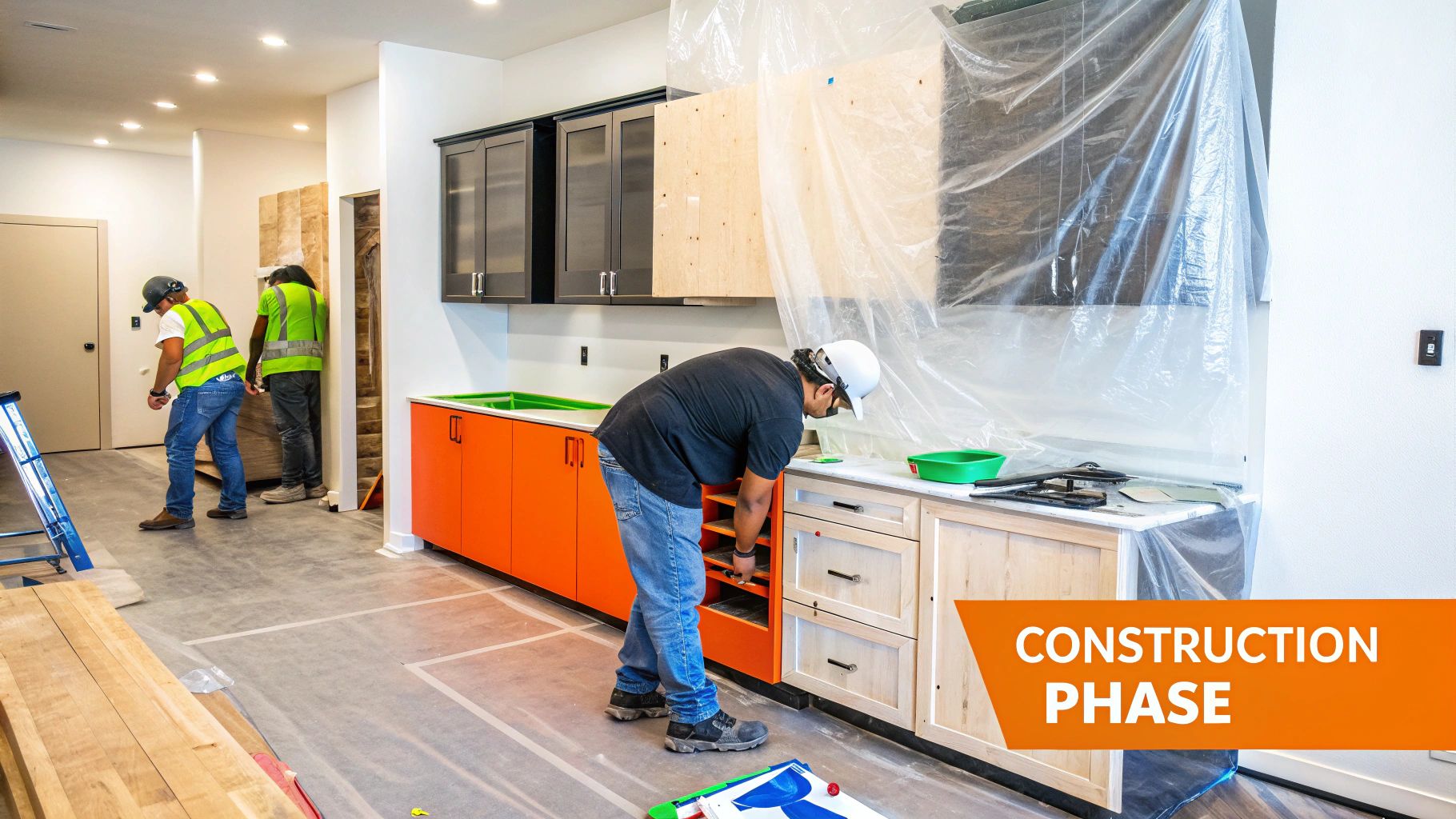
- Demolition and Prep: The project begins by clearing the space. Old cabinets, countertops, flooring, and appliances are carefully removed. We establish robust dust containment systems to protect the rest of your home.
- Structural and Rough-In Work: With the room down to the studs, we implement any structural changes. Next is the "rough-in," where licensed plumbers and electricians run new pipes and wiring to accommodate the updated layout. This critical work occurs before the walls are closed.
- Drywall, Priming, and Flooring: After all rough-in work passes inspection, new drywall is installed and finished, followed by a coat of primer. Your new flooring is then installed, creating the foundation for the cabinets.
- Cabinet and Countertop Installation: A major milestone where your space starts to look like a kitchen again. Cabinets are meticulously set and leveled. We then create a precise template for your countertops, which are typically installed one to two weeks later.
- Finishing Touches: Finally, all the details come together. The backsplash is tiled, appliances are connected, sinks and faucets are installed, and light fixtures are hung. Final painting is completed, and all trim and hardware are installed.
Communication Is Key
Throughout this process, consistent communication with your project manager is essential. They are your direct line for progress updates, schedule adjustments, and answers to any questions. At Sparkle, our project managers are dedicated to keeping the project on track and ensuring you feel informed and confident at every stage.
You can learn more about our commitment to a smooth remodeling and construction process on our services page.
A well-managed remodel should never feel like a mystery. Transparent, proactive communication is the bridge between a chaotic construction site and a calm, predictable project, reinforcing our promise of “Turning Chaos Into Calm, Fast.”
Trusting the Process
Living through a remodel can be challenging. The disruption to your daily routine is real, but trusting the plan and the expertise of your team makes all the difference. Remember, the temporary inconvenience leads to a beautiful, functional kitchen you will enjoy for years to come.
We understand our clients' motivations. Demographic trends show 40% of U.S. homeowners remodel because they are tired of an outdated look, while others seek improved functionality or a boost in home value. We approach every project with empathy and a shared vision for that stunning final outcome.
The Final Walkthrough and Enjoying Your Space
You’ve reached the finish line. The dust has settled, the tools are gone, and your new kitchen is gleaming. Before the project is officially complete, there's one crucial step left: the final walkthrough.
This is your opportunity to inspect the space with your project manager and create a “punch list.” This is a detailed list of any minor fixes or adjustments that need attention, such as a paint touch-up, a cabinet door adjustment, or a final piece of trim.
Be thorough during this review. As our client, you should not sign off on the final payment until every item on the punch list is resolved to your complete satisfaction. This is the last quality-control checkpoint to ensure perfection.
Settling into Your New Kitchen
With the punch list cleared, the kitchen is officially yours. Your contractor should provide a comprehensive packet containing all warranty information for your new appliances and their workmanship. Keep these documents in a safe place for future reference.
A professional post-construction cleaning is standard practice to remove the fine dust that settles everywhere, leaving you with a pristine space.
Now, the best part begins: moving back in. It’s time to organize your new drawers, stock the pantry, and start making memories. Seeing a project like this stunning kitchen remodel in Huntington Beach, CA become the true heart of a home is the ultimate reward.
Ready to start your own transformation? Contact Sparkle Restoration Services today for a complimentary consultation.
A Few Common Kitchen Remodeling Questions
When you begin planning a step by step kitchen remodel, many questions arise. Having guided countless Orange County homeowners through this process, we have compiled answers to the most common inquiries.
How Long Does a Kitchen Remodel Actually Take?
The honest answer is: it depends on the scope. A simple cosmetic refresh—new paint, backsplash, and hardware—might take only 2-4 weeks.
However, a full-gut remodel common in many Southern California homes involves a different timeline. When changing layouts, installing custom cabinetry, and relocating plumbing or electrical, a 3 to 5 month timeframe is realistic. This accounts for everything from initial design to the final walkthrough. At Sparkle, we provide a detailed project schedule from the outset, so you are always informed.
What Is the Return on Investment for a Kitchen Remodel?
A well-executed kitchen remodel is one of the best investments you can make in your home. National averages show homeowners can expect to recoup over 90% of the cost of a minor remodel at resale.
In the competitive Orange County real estate market, a dated kitchen can be a significant deterrent to buyers. A modern, beautifully finished kitchen is not just a luxury; it's a critical selling point that enhances your property's appeal and adds tangible value.
Will I Have to Move Out During the Remodel?
It is extremely rare to need to move out. We recommend setting up a temporary kitchen in another room with a microwave, coffee maker, and mini-fridge to maintain your daily routine.
Our IICRC-certified crews are experts at containment. We use advanced dust control systems and clean the job site daily. We are meticulous about protecting the rest of your home to minimize disruption and ensure your comfort throughout the project.
What Is the Biggest Mistake to Avoid in a Kitchen Remodel?
By far, the most critical mistake is failing to establish a proper budget that includes a contingency fund. We cannot stress this enough: you must set aside an extra 15-20% of your total budget for unforeseen circumstances. Opening a wall can reveal outdated plumbing, electrical issues, or termite damage.
This is where working with an experienced, licensed design-build firm like Sparkle provides immense value. We deliver a transparent, itemized estimate that accounts for every cost. Our goal is to eliminate financial surprises and ensure a smooth, predictable process.
Ready to transform your kitchen with an expert team you can trust? The professionals at Sparkle Restoration Services are here to guide you every step of the way, turning your vision into a stunning reality with unparalleled professionalism and care. Schedule your complimentary consultation today by visiting https://www.sparklerestoration.com.
Ready to create a space that’s as beautiful as it is functional? Schedule your complimentary design consultation today by visiting Ready to Work with Sparkle?