



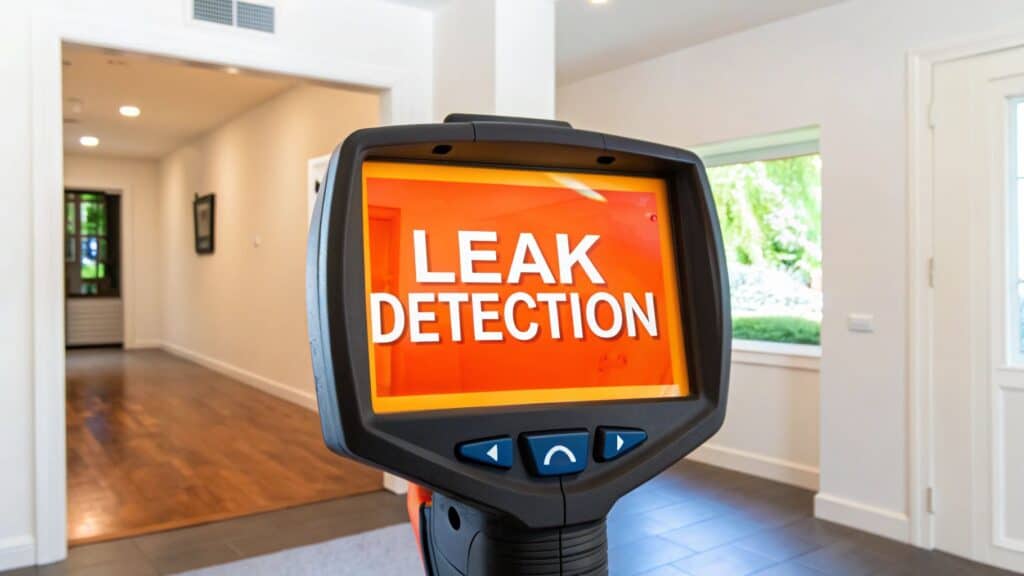
That faint water stain on your ceiling isn't the real problem. The real threat is the hidden moisture you can’t see. For discerning homeowners in Orange County, a slow, undetected leak behind a wall or beneath the floorboards can silently cause devastating structural rot and dangerous mold growth, turning a minor issue into a major catastrophe. At Sparkle Restoration Services, we specialize in using advanced thermal imaging leak detection to find these threats before they escalate, protecting your investment and bringing you peace of mind.
Why Unseen Leaks Are a Major Threat to Your Property
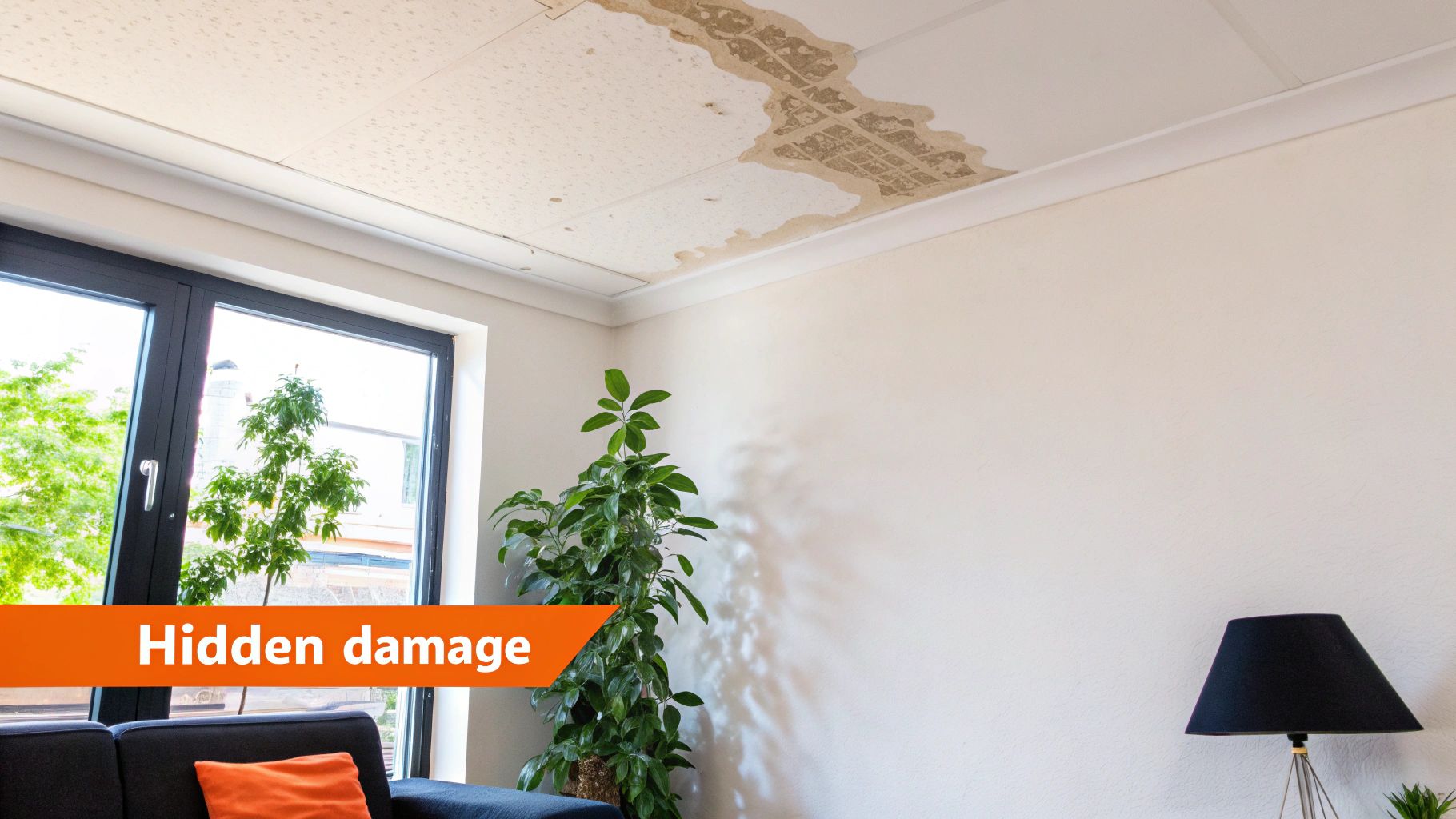
A visible water stain is often the final, desperate signal of a problem that has been festering for weeks, if not months. The true danger lies in the slow, steady drip happening out of sight, deep within your home’s structure. This is where significant damage occurs, putting both your property’s value and your family’s health at risk.
For owners of high-value properties in communities like Newport Beach and Irvine, protecting your investment means being proactive, not reactive. A seemingly small drip from a loose pipe fitting or a tiny crack in a supply line can release a constant flow of moisture into your drywall, insulation, and wood framing. This persistent dampness is the perfect breeding ground for mold and can lead to severe, costly consequences.
The Escalating Cost of Hidden Water Damage
What begins as a minor leak can quickly spiral into an extensive restoration project. The damage snowballs, leading to a cascade of expensive problems that compromise the integrity and beauty of your home.
- Structural Degradation: Wood studs, subfloors, and ceiling joists are not designed to be wet. Prolonged moisture exposure weakens them, causing rot that can seriously compromise your home’s structural integrity.
- Toxic Mold Growth: Mold can begin to grow in as little as 24 to 48 hours in damp conditions. Once established, it releases spores into your air, creating serious indoor air quality issues and potential health hazards for your family.
- Aesthetic Ruin: Eventually, a hidden leak will manifest as peeling paint, warped flooring, and crumbling drywall. Restoring your home to its original condition requires extensive and costly repairs.
Even beyond major water disasters, common issues like addressing a leaking pipe under your sink can cause significant harm if not caught early.
The most expensive repairs almost always stem from problems left undetected. Proactive inspection isn't a cost—it's an essential investment in preserving your property’s value and ensuring a safe, healthy living environment.
Fortunately, modern technology provides a powerful, non-invasive solution. Thermal imaging leak detection acts like an X-ray for your home, giving our certified experts a clear picture of what’s happening inside your walls without swinging a single hammer. This advanced approach allows Sparkle Restoration to stop damage in its tracks—turning chaos into calm, fast.
How Thermal Cameras See Temperature
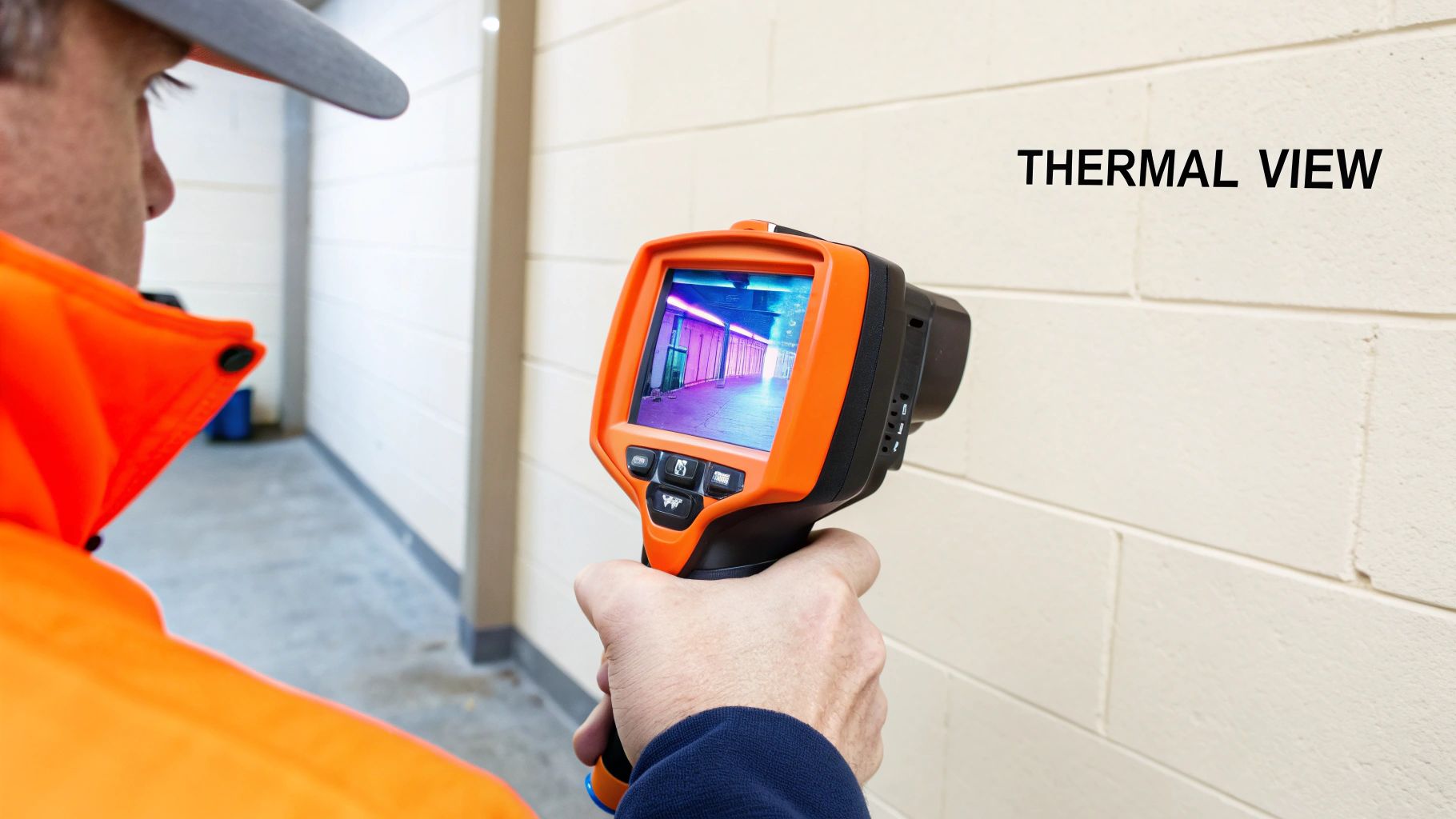
Ever wished you had X-ray vision to locate a hidden leak? A thermal camera is the next best thing. It’s a common misconception that these devices see through walls. Instead, they provide our IICRC Master Certified technicians with a specialized kind of sight: the ability to see heat.
Every object, from your drywall to the pipes behind it, radiates invisible infrared energy. The camera captures this energy and translates it into a visual map of temperatures. On the screen, warm areas might glow red and orange, while cooler spots appear as blue and purple. It’s like viewing a weather map for the inside of your home.
The Science of Evaporative Cooling
So, how does seeing heat help us find water? It all comes down to a simple process called evaporative cooling. When water from a hidden leak saturates materials like drywall or wood, it immediately begins to evaporate.
This process of turning liquid into vapor pulls heat away from the surrounding surface, creating a small but distinct drop in temperature. It’s the same reason you feel a chill when you get out of a swimming pool—the water evaporating off your skin is cooling you down.
Our high-sensitivity thermal cameras are powerful enough to detect these minute temperature differences, often less than a single degree. For a trained technician, this cool signature is a clear indicator of moisture. That distinct blue or purple anomaly on the screen becomes a precise map, showing us exactly where moisture is hiding without drilling a hole or tearing open a wall.
Translating Heat Maps into Actionable Data
Of course, using a thermal camera effectively requires more than just pointing and shooting. True thermal imaging leak detection demands expert interpretation. An experienced professional knows that not every cold spot is a leak. It could be missing insulation, a concrete stud, or a draft from a nearby vent.
This is where the expertise of the Sparkle Restoration team truly makes a difference. We don’t just see colors; we understand the story they tell about your property.
By detecting the subtle temperature changes caused by moisture, a thermal camera allows us to pinpoint the likely source and extent of a water leak, turning invisible threats into a clear, actionable roadmap for repair.
This non-invasive approach is always our first step. It lets us narrow our focus with incredible speed and accuracy, ensuring that any hands-on inspection is targeted directly at the source of the problem.
Key Factors in a Thermal Inspection
Obtaining a clear and accurate reading isn't automatic. Several factors can influence the results, and our technicians are trained to manage them for a reliable diagnosis every time.
- Thermal Sensitivity: The quality of the camera is crucial. We utilize professional-grade equipment capable of detecting minute temperature variations, which allows us to spot even small moisture problems before they escalate.
- Environmental Conditions: The ambient temperature and humidity in your home can affect thermal contrast. Our specialists know how to create the right conditions to make the temperature difference between wet and dry areas as clear as possible.
- Material Properties: Wood, concrete, drywall, and insulation all absorb and release heat differently. A skilled inspector understands how to read the unique thermal signatures of these materials to avoid false positives and make an accurate diagnosis.
By mastering this technology, we can effectively trace the path of water from its endpoint all the way back to its origin. This precision allows for targeted repairs that protect the integrity of your Orange County property, minimize disruption to your life, and give you the peace of mind you deserve.
The Modern Approach: Beyond Just Thermal Imaging
Finding a hidden water leak used to be a messy, frustrating process. It often involved guesswork and a "search-and-destroy" method where contractors would cut into drywall near a stain, hoping to get lucky. This approach was disruptive, expensive, and frequently created a bigger mess than the leak itself.
Thankfully, the industry has evolved. Today’s IICRC-certified professionals operate with near-surgical precision, using a suite of advanced diagnostic tools to find the source of a problem without tearing your property apart.
While thermal imaging is a game-changer, it’s not a magic bullet. Think of it as the powerful first step in a comprehensive diagnostic process. By understanding how these tools work together, Orange County property owners can appreciate the incredible value of a thorough, multi-tool inspection.
Thermal Imaging: The First Pass
A thermal camera is our scout. Its primary job is to sweep across large areas—walls, ceilings, and floors—quickly and non-invasively to spot thermal anomalies. These are the temperature differences that often signal hidden moisture.
It’s brilliant for covering a lot of ground in a short amount of time, giving us a clear map of suspicious areas without leaving a single scuff mark.
However, a thermal camera only sees temperature, not water. That cold spot it found could be a leak, or it could be a patch of missing insulation. That's why a true professional never stops at the thermal scan.
A thermal camera tells us where to look. Other specialized tools then confirm what we're looking at. This two-step verification process is the gold standard for accurate, non-destructive leak detection.
Confirming Findings with Pinpoint Tools
Once the thermal camera has flagged a potential trouble spot, we bring in specialized instruments to verify what’s really going on. These tools provide the hard data needed to confirm the presence of water and understand its saturation level before we recommend a solution.
Two of our most critical follow-up tools are moisture meters and acoustic sensors.
- Moisture Meters: These handheld devices provide definitive proof. We start with non-invasive pinless meters for an instant reading of moisture content just below a surface. For absolute confirmation, we use penetrating meters with tiny probes to measure the exact saturation level inside drywall or wood, defining the precise boundaries of the water damage.
- Acoustic Sensors: Some of the most elusive leaks are buried in concrete slabs or hidden in pressurized pipes within walls. They are often invisible and may not create a clear thermal signature. Highly sensitive acoustic listening devices can detect the distinct high-frequency sound of water escaping a pipe, allowing us to pinpoint leaks that other methods would miss.
Leak Detection Methods At a Glance
The difference between outdated guesswork and today's data-driven approach is night and day. This methodical process is at the heart of the comprehensive restoration and remodeling services we provide.
Here’s a simple breakdown of how the different methods stack up.
| Method | How It Works | Best For | Limitations |
|---|---|---|---|
| Visual Inspection | Relies on finding visible signs like stains, mold, or peeling paint. | Obvious, surface-level leaks. | Fails to detect hidden moisture; damage is often advanced by the time it's visible. |
| Destructive Testing | Cutting holes in drywall or flooring to manually search for the leak source. | A last resort when other methods fail. | Costly, messy, and requires extensive repairs, whether a leak is found or not. |
| Thermal Imaging | Uses an infrared camera to detect temperature differences caused by moisture. | Rapidly scanning large areas non-invasively to identify potential problem zones. | Cannot confirm moisture directly; requires secondary verification and expert interpretation. |
| Moisture Meters & Sensors | Uses electronic probes or acoustic sensors to confirm moisture levels or sound. | Verifying thermal findings and pinpointing exact leak locations with data. | Slower for large-area scans; most effective when used on targeted spots. |
By layering these modern tools, a certified team like Sparkle Restoration can diagnose a water intrusion problem with complete confidence. This process minimizes disruption to your life, protects your property from unnecessary damage, and ensures the fix is targeted directly at the source—turning a chaotic situation into a calm, controlled solution.
The Real Benefits of a Thermal Imaging Inspection
What does a thermal imaging inspection truly mean for you as a property owner in Orange County? It’s about more than just finding a leak. It’s about gaining peace of mind, protecting your most significant investment, and achieving tangible savings. The benefits fundamentally change how water damage is handled.
At its core, thermal imaging leak detection provides incredible precision. Instead of guessing where a leak might originate, our certified technicians can pinpoint its exact location. This accuracy is key to avoiding the messy and expensive demolition that often accompanies leak detection, preserving the integrity of your home’s high-end finishes.
Protect Your Property and Your Budget
A non-destructive approach is critical, especially in a beautifully appointed home. Consider your custom cabinetry, expensive hardwood floors, or that unique tile you spent weeks selecting. The old "search and destroy" method puts all of that at risk. Thermal imaging, in contrast, allows for a targeted, surgical-style repair that protects your valuable materials and keeps restoration costs down.
This precise approach translates directly into significant financial savings.
- Minimized Demolition: Knowing exactly where to open a wall or ceiling avoids widespread damage, dramatically reducing the scope and cost of subsequent repairs.
- Reduced Labor Costs: Less time spent hunting for a leak means lower labor bills. The efficiency of a thermal scan is reflected in the final invoice.
- Prevention of Secondary Damage: Catching a leak early is the single most important factor in preventing a catastrophe involving structural rot and mold.
A thermal inspection is an investment in prevention. The cost is minor compared to the thousands of dollars required for extensive mold remediation or structural repairs that arise from an undetected leak.
For anyone curious about how these specialized assessments are done, this resource on Arizona Thermal Inspections offers more details on local services and their applications.
Speed and Efficiency When It Matters Most
When you suspect a water leak, stress levels rise, and time is of the essence. A thermal inspection is remarkably fast. We can scan large areas of your property in a fraction of the time required for a manual inspection, minimizing the disruption to your life.
This entire process reflects Sparkle Restoration’s core promise—“Turning Chaos Into Calm, Fast.” We use smart, efficient technology to protect your property, your budget, and your well-being. This technology is so valuable that the global leak detection market was valued at around USD 2.9 billion and is forecasted to grow steadily, driven by the need to prevent the significant hazards posed by leaks.
Stopping Catastrophic Damage Before It Starts
Perhaps the most important benefit is the ability to catch problems before they spiral out of control. The longer water sits, the more damage it causes, creating a cascade of issues that are both expensive to fix and hazardous to your health.
- Preventing Mold Infestations: Mold can begin growing in as little as 24 hours. A thermal scan finds hidden moisture before mold can take hold, protecting your family’s health and helping you avoid a complicated remediation project. Our guide on water damage explained offers a deeper look into the timeline and risks of water intrusion.
- Preserving Structural Integrity: Slow, chronic leaks are notorious for causing wood rot in your home’s framing and subfloors. By finding these hidden drips early, we help preserve the foundational strength of your house.
Ultimately, a thermal imaging inspection empowers you with knowledge. It replaces the anxiety of the unknown with clear, actionable data, so you can make informed decisions to protect your most valuable asset.
What Happens During a Professional Inspection
Knowing what to expect can alleviate much of the stress of dealing with a potential leak. When you call Sparkle Restoration, our goal is to ensure you feel in control and informed every step of the way. Our thermal imaging leak detection process is designed to be transparent and thorough, moving you from uncertainty to a clear plan of action with minimal disruption.
This isn’t just about pointing a camera at a wall. It’s a systematic investigation designed to provide definitive answers, so you feel confident from the moment we arrive until the final report is in your hands.
The Initial Consultation and Walkthrough
Every inspection begins with a conversation. When our IICRC-certified technician arrives at your Orange County property, the first thing they will do is listen. We need to understand your concerns—where you've noticed damp spots, smelled musty odors, or if you know of any recent water events.
This initial walkthrough is critical. It allows us to combine your observations with our professional assessment, helping us create a targeted plan for the thermal scan. We’ll map out high-risk areas, such as bathrooms, kitchens, laundry rooms, and any vulnerable exterior walls.
Systematic Thermal Scanning
Once we have a clear picture, our technician begins the thermal scan. Using a high-resolution infrared camera, they will methodically sweep the walls, ceilings, and floors in the identified areas. This is a structured process, like a grid search, where we carefully look for the telltale signs of hidden moisture.
We are hunting for those distinct cool signatures—the shades of blue and purple—that appear when moisture is evaporating from behind a surface. Our technician carefully documents every anomaly, capturing thermal images that will become a key part of your final report. This visual evidence is crucial for understanding exactly what is happening.
This is how our methodical process delivers precision, savings, and speed.

A structured inspection is designed to pinpoint issues accurately, save you from more expensive repairs down the road, and get the problem solved efficiently.
The Critical Confirmation Phase
A thermal camera shows us potential moisture, but a true professional never leaves it at that. The most important part of the inspection is what comes next: confirmation. For every thermal anomaly we find, we follow up with a professional-grade moisture meter to verify the presence of water.
This two-step verification is non-negotiable for our team.
- Non-Invasive Meter Reading: We start with a pinless moisture meter. This provides an instant reading of the moisture content just below the surface without leaving a scratch.
- Penetrating Meter Confirmation: If we need absolute certainty, especially in materials like drywall or wood, we may use a penetrating meter with tiny probes. This gives us hard data on the exact moisture saturation, confirming the extent of the problem.
This meticulous approach means we never recommend repairs based on guesswork. It’s this dedication to accuracy that our clients trust, and it's a standard of quality you can learn more about by reviewing our certifications and what they mean for you.
Comprehensive Reporting and Action Plan
After completing the on-site work, we provide a comprehensive report that explains everything we found in plain English. This document is built for clarity and includes:
- High-Resolution Thermal Images: You'll see the exact color-coded images showing every thermal anomaly we discovered.
- Standard Digital Photos: We include corresponding regular photos of the same areas for easy reference.
- Moisture Meter Readings: You'll get the hard data—the quantitative numbers confirming the moisture levels at each spot.
- A Detailed Action Plan: We provide clear, expert recommendations for the next steps, whether it’s a simple plumbing fix or a more involved drying and restoration job.
This data-driven process is designed to empower you. You’ll have all the information needed to make an informed decision, confident that the problem has been properly diagnosed by a team whose only goal is to turn chaos into calm.
Choosing Your Certified Leak Detection Specialist
Not all leak detection services are created equal, and with thermal imaging, the accuracy of the results depends entirely on the expertise of the person behind the camera. Choosing a genuinely qualified expert is the most critical step you can take to protect your property. For homeowners in Orange County, this means looking beyond a simple service call to find a team with proven, verifiable credentials.
While thermal cameras have become more common, owning the technology is a world away from mastering it. True expertise comes from deep industry knowledge and rigorous certification.
The IICRC Master Certification Difference
When evaluating specialists, the first credential you should ask about is an IICRC Master Certification. This is not a basic training certificate; it represents the highest level of achievement in the restoration industry.
A Master Certified technician has undergone extensive training and passed rigorous exams in multiple disciplines, including the complex science of water damage and applied structural drying. This deep expertise means they can accurately interpret thermal data, distinguish between a real leak and a false positive, and understand the full implications of water intrusion in a high-value property.
Why a General Contractor's License Matters
Finding the leak is only half the battle. What happens next? A specialist who is also a Licensed General Contractor can offer a seamless, complete solution from diagnosis to final repair. They have the verified skill to not only identify the problem but also perform all necessary repairs and restoration with expert craftsmanship.
This dual qualification is a significant advantage. It eliminates the stress of hiring and managing multiple contractors, providing a single point of accountability from leak detection through the final, beautiful restoration. To see what it takes to earn this license, you can learn more about Sparkle’s CSLB license and what it means for your project.
Choosing a firm that is both IICRC Master Certified and a Licensed General Contractor ensures you receive a holistic service. They can address the problem from every angle—from precise, non-invasive detection to flawless, professional-grade repairs.
At Sparkle Restoration, our credentials speak for themselves. As both an IICRC Master Certified firm and a Licensed General Contractor, we bring the comprehensive expertise that Orange County homeowners demand. Our commitment to excellence is further validated by our 2024 BBB Torch Award for Ethics, a testament to our unwavering dedication to integrity and client-focused service. We don't just find leaks; we deliver peace of mind.
Common Questions About Thermal Leak Detection
We understand that new technology can sound complex. To ensure you feel completely confident, we’ve gathered the most common questions Orange County homeowners ask about thermal imaging for leak detection. Our goal is to provide clear, direct answers that demystify the process.
Can Thermal Imaging See Through Walls?
This is the number one question we hear. The simple answer is no; a thermal camera doesn’t see "through" solid objects like an X-ray machine.
Instead, it reads the surface temperature of materials like your drywall. When a pipe leaks inside a wall, the evaporating moisture makes the wall's surface slightly cooler. Our highly sensitive cameras detect this specific temperature difference, showing us precisely where hidden water is likely located.
How Accurate is This Technology?
When operated by an IICRC-certified professional, thermal imaging is an exceptionally accurate tool for spotting temperature anomalies caused by moisture. But it’s the first step, not the final word.
The real accuracy of thermal imaging leak detection comes from a two-step verification process. The camera flags potential problem spots, and then a professional moisture meter confirms the presence of water with hard data.
This methodical approach delivers absolute precision before any work begins, preventing unnecessary demolition and saving you money.
Is a Thermal Inspection Expensive?
A professional thermal inspection is a small investment compared to the massive expense of repairing widespread structural damage, wood rot, or a serious mold problem.
By catching leaks early, thermal imaging regularly saves homeowners thousands of dollars in the long run. We always provide clear, upfront pricing during our consultations, so you can make the best decision to protect your property with no surprises.
If you suspect a hidden leak in your Orange County home, don’t wait for the damage to appear. The Sparkle Restoration Services team is ready to provide a precise, non-invasive inspection to protect your property. As an IICRC Master Certified firm and a Licensed General Contractor, we are your trusted partner in turning chaos into calm, fast. Schedule your free consultation today at https://www.sparklerestoration.com.
Ready to create a space that’s as beautiful as it is functional? Schedule your complimentary design consultation today by visiting Ready to Work with Sparkle?