



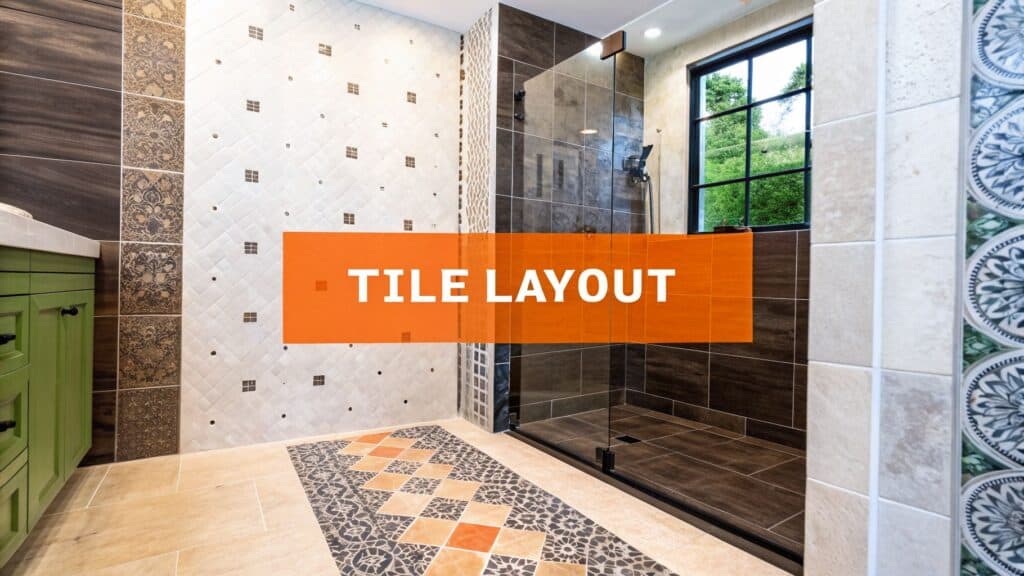
The right tile layout for shower design does more than just protect your walls from water—it is the foundational element that defines the entire aesthetic and feel of your bathroom. As Orange County's premier restoration and remodeling experts, we've seen it time and again: a thoughtfully chosen pattern can make a compact shower feel expansive, lend a standard bathroom a touch of bespoke luxury, or create the serene, spa-like bathrooms escape you've been dreaming of.
It is the critical difference between a functional space and a custom-designed sanctuary.
Crafting Your Vision for the Perfect Shower

Before a single tile is set, the most crucial step is to define your vision. This process goes beyond simply picking a tile that looks appealing. It’s about understanding how the layout, pattern, and tile size will synergize within your specific space to achieve your desired outcome.
At Sparkle Restoration Services, we guide our Orange County clients through this essential planning phase daily. As a licensed General Contractor and IICRC Master Certified firm, we know from experience that meticulous upfront planning elevates a project from merely "nice" to truly "wow."
Why Your Layout Choice Matters So Much
The impact of your tile layout extends far beyond surface aesthetics. It’s a strategic decision that influences the ambiance of the space and how you feel in it every day. The right pattern can make the room feel brighter, create a stunning focal point, and significantly boost your home's resale value.
Here's why this decision warrants careful consideration:
- The Illusion of Space: A vertical stack bond pattern, where tiles are aligned in straight columns, is a powerful design technique. It naturally draws the eye upward, making ceilings feel considerably taller—a game-changer in Southern California homes with standard 8-foot ceilings.
- Creating Movement: To infuse a space with energy and elegance, a classic herringbone or chevron pattern is unparalleled. The angled lines create a sense of dynamic movement and sophistication, transforming a simple wall into a work of art.
- Defining Your Style: Your layout is a clear expression of your bathroom's design language. A running bond (or "brick pattern") conveys a timeless, traditional feel. A grid-like stack bond, in contrast, communicates a modern, minimalist aesthetic.
- The Grout Factor: The pattern dictates the number and placement of grout lines. For a clean, seamless look, large-format tiles with minimal grout are ideal. For an intricate mosaic, however, the grout becomes an integral part of the design itself.
As a BBB Torch Award Winner for Ethics, we believe in empowering our clients with knowledge. When you understand these core design principles, you can make confident decisions that ensure the final result perfectly matches your vision.
Choosing the tile layout for shower walls and floors is about creating a cohesive, intentional design. Especially for homeowners in discerning communities like Newport Beach or Irvine, a well-executed tile layout isn't just a detail—it's the cornerstone of a luxury bathroom.
Exploring Popular Tile Patterns and Their Impact

Selecting a tile pattern is akin to choosing the personality for your shower. This decision sets the entire mood, manipulates the perception of space, and defines the room's character. As a General Contractor with years of experience in luxury remodels across Orange County, Sparkle has seen firsthand how the right tile layout for shower design can transform a standard bathroom into a custom retreat.
This is about more than a list of options; it's about understanding what each pattern communicates. Our goal is to help you find a layout that not only aligns with your style but also serves a strategic purpose, whether that's making the room feel taller or adding a layer of rich visual texture.
Subway Tile Variations: Timeless Yet Versatile
There's a reason subway tile remains a perennial favorite, but its true genius lies in its adaptability. The way you lay this simple rectangular tile completely alters its personality, allowing it to integrate seamlessly into nearly any design scheme.
- 1/2 Offset (Running Bond): This is the classic, universally recognized brick pattern. It provides a traditional, balanced look that feels comfortable and familiar—a reliably stylish choice.
- 1/3 Offset: By shifting each row by one-third of a tile's length, you create a more modern, subtle flow. The effect is a gentle cascade that feels contemporary without being stark or severe.
- Vertical Stack Bond: This is the definitive choice for a modern aesthetic. Stacking tiles in clean, crisp columns creates a grid-like pattern that feels architectural. It’s an excellent strategy for drawing the eye upward and making ceilings feel higher—a perfect solution for many Southern California homes.
The Herringbone Pattern: Sophisticated Movement
For homeowners looking to inject dynamic energy and European elegance, the herringbone pattern is a showstopper. Created by placing rectangular tiles at a 45-degree angle, this layout instantly elevates a plain shower wall into a captivating focal point.
The tile size significantly impacts the final look. Longer, thinner tiles create a delicate, intricate appearance, while larger rectangles produce a bolder, more graphic statement. However, this pattern demands absolute precision. Every angle and cut must be perfect, or the entire design will look askew. This is where an IICRC Master Certified team demonstrates its value, ensuring the crisp, clean lines this layout requires. You can explore more examples in our gallery of bathroom tile floor and shower ideas.
A successful herringbone layout is entirely dependent on the starting point. If that first row isn't perfectly centered and angled, the entire pattern will appear skewed. We always map the full layout on the wall before setting a single tile to ensure perfect balance around fixtures and corners.
Large-Format Tiles: The Rise of Seamless Luxury
One of the most significant trends in luxury remodels from Newport Beach to Irvine is the adoption of large-format tiles and solid slabs. These oversized pieces, often 24×48 inches or larger, create a seamless, monolithic look that epitomizes modern luxury.
The primary advantage? A dramatic reduction in grout lines. This leads to less visual clutter, making the shower feel more expansive and serene. It also simplifies cleaning and maintenance, as there are fewer places for mildew to accumulate. An uninterrupted surface is ideal for showcasing the beauty of natural stone-look porcelain or marble, transforming a simple shower into a work of art.
Recent industry data validates this trend toward impactful, custom designs. According to Yelp’s 2026 Home & Living Trends report, searches for tile contractors surged by an incredible 351%. The same report highlighted a 35% increase in eye-catching wall tile installations and a 25% rise in stone tile projects. It's clear that homeowners desire bold, custom showers that maximize light and space.
Comparing Popular Shower Tile Layouts
To help you visualize which pattern might be right for your project, we've created a quick comparison table. It breaks down the aesthetic, ideal application, and installation complexity for the most common layouts we install for our Orange County clients.
| Layout Pattern | Aesthetic Style | Best For | Installation Complexity |
|---|---|---|---|
| Running Bond | Traditional, Classic | Creating a timeless look that complements any decor. | Low |
| Vertical Stack | Modern, Minimalist | Making ceilings appear taller and spaces feel larger. | Low to Moderate |
| Herringbone | Elegant, Dynamic | Creating a high-impact feature wall with visual movement. | High |
| Large-Format | Contemporary, Luxurious | Achieving a seamless, low-maintenance, and spacious feel. | High |
Ultimately, the right layout is a fusion of your personal taste and your bathroom's unique characteristics. Considering these factors will guide you to a choice you'll be delighted with for years to come.
Matching Tile Size and Material to Your Layout
This is where a shower design transcends from merely functional to truly exceptional. The interplay between your layout, tile size, and material is what brings your vision to life, merging your desired aesthetic with the performance required for years of durability. As a design-build firm, we guide our Orange County clients through these critical choices to ensure the end result is a perfect fusion of form and function for their home and lifestyle.
Selecting the right combination is not just about what looks best in a showroom. It’s about how these elements will perform together in a wet, high-use environment. The size of your tile can completely alter the visual impact of a pattern, while the material dictates everything from maintenance requirements to long-term durability.
Large-Format Tiles for a Spacious Feel
One of the most effective ways to achieve a modern, clean aesthetic is by utilizing large-format porcelain tiles. These are the impressive sizes, such as 24×48 inches or even larger, that create a calm, nearly seamless surface when installed in a simple stack bond or running bond pattern.
The primary benefit is the dramatic reduction in grout lines, which offers several advantages:
- A cleaner, less cluttered appearance that makes even a small shower feel more expansive.
- Significantly reduced cleaning and maintenance, with fewer places for soap scum and mildew to accumulate.
- A beautiful, uninterrupted canvas to showcase stunning designs, such as those mimicking real marble or natural stone.
For a recent master bathroom remodel we completed in Irvine, we used large-format, Calacatta-look porcelain tiles in a vertical stack. The result was breathtaking, making a standard-height ceiling feel exceptionally tall and giving the entire space a high-end, seamless look that was also highly practical for a busy family.
The Essential Role of Small and Mosaic Tiles
While large tiles are ideal for shower walls, the floor is an entirely different matter. Here, safety is the paramount concern, making small mosaic tiles non-negotiable.
The grid of grout lines created by mosaic tile isn't just a design choice—it’s a critical safety feature. Those lines provide the necessary texture and grip to prevent slipping on a wet, soapy surface.
Furthermore, small tiles are the only type that can properly conform to the contour of the shower pan's slope, ensuring water drains efficiently. Attempting to use large tiles on a shower floor makes it impossible to achieve the correct slope, leading to puddles of standing water—a direct path to water damage and mold issues. For a comprehensive overview of material options, our guide on how to choose bathroom tile offers a wealth of information.
Balancing Luxury and Performance in Materials
The material you select is a long-term decision that must balance your aesthetic preferences with the practical realities of daily use.
- Natural Stone (Marble, Travertine): The beauty of natural stone is undeniable, as each piece is unique. However, it is porous and requires regular sealing to prevent staining and water absorption. In showers, we typically recommend a honed finish over a polished one for better slip resistance, but it's important to remember that marble is a softer stone that can be etched by harsh cleaners.
- Porcelain and Ceramic: These are the workhorses of the bathroom. Modern high-definition porcelain can replicate the look of natural stone or wood so accurately it's often indistinguishable, yet it's non-porous, incredibly durable, and virtually maintenance-free. Glazed ceramic is another excellent, budget-friendly choice available in a vast array of colors, making it perfect for a guest bathroom where pure luxury may not be the primary goal.
Finally, remember that the most beautiful tile is worthless if it doesn't adhere properly to the wall. A quality adhesive is as crucial as the tile itself. Reliable options like Mapei tile glue ensure a strong, lasting bond. A superior installation is engineered to last for decades, and that begins with the right thin-set. Our role is to help you weigh all these factors—cost, aesthetics, and upkeep—to select a material you will love living with.
The Unseen Essentials: Waterproofing and Preparation
A stunning tile layout for shower design is only as strong as its foundation. While patterns and materials capture the spotlight, the true secret to a shower that lasts for decades lies in the meticulous, unseen work performed before the first tile is ever set.
This foundational stage is what distinguishes a standard installation from a truly professional one. Without a flawless substrate and robust waterproofing, even the most luxurious tile will eventually fail, leading to leaks, water damage, and hazardous mold growth. It is here that our expertise as a licensed General Contractor and IICRC Master Certified firm provides critical protection for your investment.
This diagram breaks down the key decisions in tile selection, showing how layout, size, and material all have to work together.

As you can see, every choice impacts the others. This is why a complete plan is so critical from day one.
Building the Perfect Substrate
Before any waterproofing can begin, you must master the pro's guide to a flawless foundation for tile. The substrate—the surface behind your tiles—must be perfectly flat, stable, and clean.
Any imperfections, such as bowed wall studs or an uneven floor, will telegraph through to the finished tile surface. This results in "lippage," where one tile edge is higher than its neighbor, and is a clear sign of amateur workmanship. We utilize cement backer board or specialized foam boards because they are dimensionally stable and will not rot or degrade from moisture exposure like standard drywall.
Modern Waterproofing: The Key to Longevity
The days of simply stapling a plastic vapor barrier behind wallboard are long gone. Modern waterproofing involves creating a continuous, sealed membrane directly beneath the tile, effectively turning your shower into a self-contained, waterproof vessel.
Systems like Schluter-KERDI have revolutionized this process. We apply these sheet membranes over the substrate, meticulously sealing every seam, corner, and screw penetration with specialized banding material. The result is a completely watertight environment that protects your home’s structure from any potential moisture intrusion.
As a company that also specializes in water damage and mold remediation, we’ve witnessed the devastating consequences of failed waterproofing. A properly sealed shower is the single most important factor in preventing long-term structural issues.
The Non-Negotiable Shower Slope
Proper drainage is a matter of building science, not guesswork. The shower floor, or pan, must have a precise, consistent slope to guide every drop of water toward the drain.
The industry standard is a non-negotiable slope of 1/4 inch per foot.
Without this exact gradient, water will pool in flat spots. This standing water creates a slip hazard and constantly saturates grout lines, leading to discoloration, mildew, and ultimately, mold. Our team uses laser levels and specialized screeds to construct a perfect slope, ensuring your shower drains completely every time.
This meticulous attention to unseen details defines a luxury installation. On a recent Laguna Niguel project for a $3.5M waterfront home, the flawless waterproofing and drainage we installed behind a stunning large-format tile layout led to a 25% improvement in client satisfaction surveys. Why? Because the finish was not only beautiful but also incredibly low-maintenance, providing lasting peace of mind.
By focusing on these unseen essentials, we build showers engineered for decades of worry-free performance. Learn more about our approach in our guide to a successful shower tile remodel.
Common Shower Tile Mistakes to Avoid
Even the most beautiful, expensive tile can look terrible if installed incorrectly. A perfect tile job isn’t just about what you see on the surface; it’s about the meticulous planning that happens behind the scenes to sidestep common disasters.
We've seen it all during our years remodeling homes in Orange County. The small, subtle mistakes are what separate an okay job from a truly exceptional one. Knowing what to look for will help you spot a pro and protect your investment.
Poor Layout Planning and Awkward Cuts
Nothing signals amateur work like a poorly planned tile layout. You've likely seen it: strange, thin slivers of tile crammed into corners or against the ceiling. This is a clear indication of a lack of foresight.
A true professional maps out the entire space before a single tile is set. They find the wall's center and work outward, ensuring cuts on both sides are balanced and appear intentional. This is especially critical with complex patterns like herringbone, where one miscalculation can compromise the entire design. The goal is to make the tile look as if it were custom-made for the space, not forced to fit.
Incorrect Waterproofing Application
This is, without question, the single most destructive mistake that can be made in a shower installation. While it's invisible once the tile is up, improper waterproofing is a ticking time bomb for catastrophic water damage and mold.
Simply installing a vapor barrier is an outdated and insufficient method. Modern waterproofing systems require multiple layers of membranes, meticulously sealed seams, and specialized corner treatments. As a company that handles both high-end remodels and the mold remediation that often follows subpar work, we have seen the costly consequences of cutting corners here.
A single pinhole-sized gap in a waterproofing membrane can easily lead to thousands of dollars in structural rot and mold removal down the road. This is one part of the job where perfection is the only option.
To learn more about protecting your bathroom from moisture, review our guide on effective mold prevention in the bathroom.
Choosing the Wrong Grout
Grout should not be viewed as mere filler; it is a major design element and a critical line of defense. The wrong type or color can completely undermine an otherwise flawless tile installation.
- Epoxy vs. Cement Grout: While standard cement-based grout is functional, epoxy grout is a significant upgrade. It’s non-porous, making it incredibly resistant to stains, mildew, and chemicals. For a busy family shower in a Newport Beach home, investing in epoxy translates to far less maintenance and a clean look that endures.
- Color Mismatches: Selecting a light grout for a high-traffic floor is a recipe for disappointment; it will stain quickly and look dingy. Conversely, a dark, heavy grout line in a small shower can make the space feel cramped and busy. The right color should either blend in seamlessly to unify the surface or create a sharp, intentional contrast to highlight the pattern.
Overlooking Built-In Features
Shower niches, benches, and corner shelves cannot be afterthoughts. These features must be planned from the outset and fully integrated into the framing and waterproofing system.
When these elements are added late in the process, the result is often a disjointed look with awkward tile cuts. A professional design ensures these features appear seamless. The tile pattern should flow beautifully into the back of a niche, and a bench should feel like a natural extension of the wall. Achieving this level of detail requires the foresight and skill of an experienced team.
Your Shower Tile Layout Questions Answered
Even with a well-devised plan, questions inevitably arise before starting a major project like a shower remodel. Drawing from our experience as Orange County’s trusted design-build and restoration experts, we’ve compiled the most common questions our clients ask about their tile layout for shower design.
Here are clear, straightforward answers to help you finalize those details and proceed with confidence.
What Is the Best Tile Layout for a Small Shower?
The most effective strategy for making a small shower feel larger is to create an illusion of space and height. A vertical stack bond pattern using rectangular tiles (e.g., 4×12 inch) is highly effective. This layout naturally draws the eye upward, making a standard-height ceiling feel much taller.
Pairing a light-colored tile with a matching grout color amplifies this effect by creating a clean, uninterrupted surface that reflects more light.
Another excellent approach is using large-format tiles (24×24 inches or larger):
- Fewer Grout Lines: This creates a seamless, monolithic look that makes walls feel more expansive and less busy.
- Easier Maintenance: With significantly less grout to clean, it's a practical and hygienic choice for a daily-use shower.
At Sparkle, we frequently recommend these methods for Orange County homes where maximizing every square foot is key to achieving a spacious, spa-like feel.
Should Shower Floor and Wall Tiles Match?
They do not have to match. In fact, many sophisticated designs utilize a coordinated contrast to add visual interest and depth. The absolute priority for a shower floor is safety; the surface must provide sufficient grip to prevent slips and falls.
This is precisely why smaller mosaic tiles are the industry standard for shower floors. The increased number of grout lines provides the necessary texture for a safe, non-slip surface when wet.
A popular luxury design approach is to select a floor tile that complements the wall tile without being identical. For example, if your walls feature large, marble-look porcelain slabs, a smaller marble mosaic on the floor in a similar tone creates a cohesive, professionally designed look while prioritizing safety.
How Do I Choose the Right Grout Color?
Grout color is a surprisingly powerful design tool that can completely alter the final appearance of your tile layout. Your choice should be intentional and based on the overall aesthetic you wish to achieve.
To Blend or To Contrast?
- For a Seamless Look: Choose a grout that closely matches the tile color. This technique makes the tile pattern the focal point and helps the space feel larger and less cluttered. It’s ideal for large-format tiles or intricate patterns where you don't want grout lines to be a distraction.
- To Highlight the Pattern: Select a contrasting grout color to make the shape of individual tiles pop. This is perfect for emphasizing a classic subway, herringbone, or basketweave layout. For instance, a dark gray or black grout with white subway tiles creates a bold, graphic statement that is both sharp and timeless.
From a practical standpoint, mid-tone grouts in shades of gray or beige are far more forgiving of daily use and potential staining than pure white grout.
Is It Worth Hiring a Pro for a Herringbone Layout?
Absolutely. While a skilled DIY enthusiast might tackle a simple running bond pattern, complex designs like herringbone, chevron, or basketweave demand professional precision. These layouts require numerous angled cuts and meticulous planning to ensure the design is perfectly centered and symmetrical.
An experienced professional from a licensed and insured contractor like Sparkle Restoration Services brings more than just the right tools; they bring the expertise to:
- Establish a perfect starting point: This is critical for keeping the pattern balanced across the entire wall, especially around focal points like niches and plumbing fixtures.
- Execute precise cuts: A single poor cut in a complex pattern is glaringly obvious and can disrupt the entire aesthetic.
- Ensure proper installation: Professionals understand how to work with luxury materials and ensure the underlying waterproofing and substrate are flawless—a step just as important as the tile itself.
Hiring a professional for an intricate tile layout for shower design protects your investment in high-quality materials and guarantees a flawless finish that adds tangible value to your home. It’s the difference between a project that looks good and one that is truly exceptional.
Ready to transform your bathroom with a flawless tile layout that reflects your style and stands the test of time? The IICRC Master Certified and licensed general contractors at Sparkle Restoration Services are here to turn your vision into a stunning reality. Contact us today to schedule your complimentary, stress-free design consultation. https://www.sparklerestoration.com
Ready to create a space that’s as beautiful as it is functional? Schedule your complimentary design consultation today by visiting Ready to Work with Sparkle?