


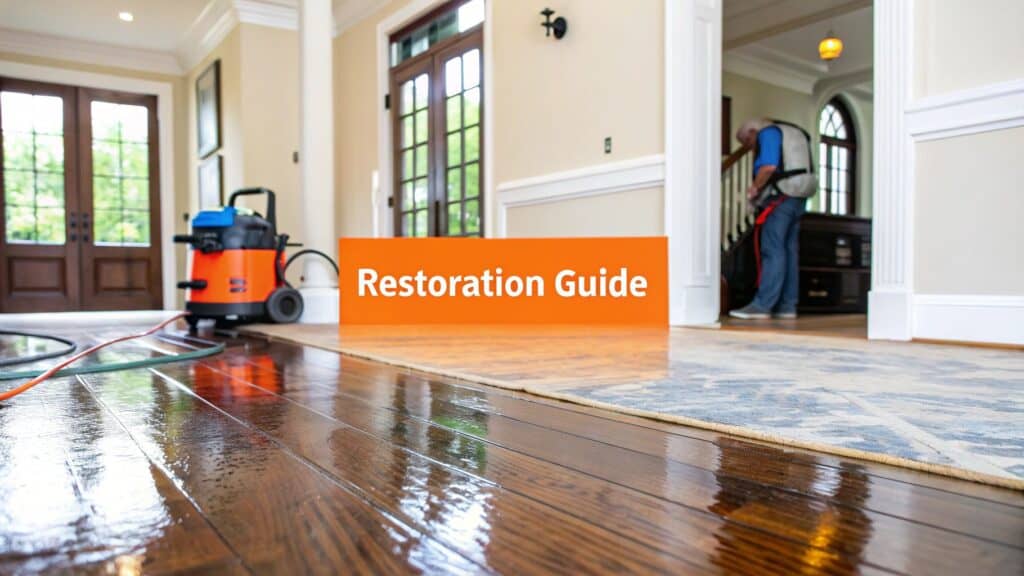
When you discover water pooling across your hardwood floors or cascading down from a ceiling, it’s a moment of pure chaos. As Orange County’s premier restoration expert, we’ve seen the shock this causes homeowners. While the initial surprise can be paralyzing, what you do in the first 24 hours is the most critical part of the entire water damage restoration process.
This guide is your strategic plan to turn chaos into calm, fast.
Turn Off the Power and Stop the Flow
First and foremost: safety. Before you even think about saving that antique rug, you must address potential electrical hazards.
If there's water anywhere near outlets, light fixtures, or your breaker box, your top priority is shutting off the power to those areas. However, if you must stand in water to reach the panel, do not touch it. In that situation, wait for a certified professional. It's a risk not worth taking.
Once the electrical danger is handled, stop the water at its source. For most homeowners, this means locating and turning off the main water valve. Knowing its location before an emergency is one of the most empowering pieces of information you can have.
Document Everything (And I Mean Everything)
With immediate threats neutralized, your focus must shift to documentation. It’s easy to overlook this in the heat of the moment, but it’s absolutely vital for a smooth insurance claim.
Pull out your smartphone and start taking photos and videos. Be thorough.
- Capture the source of the water if you can see it.
- Show any standing water and try to indicate its depth.
- Get detailed shots of damaged furniture, electronics, and personal items.
- Don't forget the structure itself—wet drywall, soaked baseboards, warped flooring, and stained ceilings.
This visual evidence provides your insurance adjuster with undeniable proof of the damage's extent, which can make a significant difference in your claim's outcome. You simply cannot have too many photos. For a more detailed checklist, it helps to have a small kit with essential info ready to go. You can learn more about building a water emergency first-aid kit to keep on hand for just such an occasion.
What to Expect When You Make a 24/7 Emergency Call
When you call a trusted, IICRC Master Certified team like Sparkle Restoration, you are officially initiating the professional phase of recovery. Our goal is to arrive fast—typically within an hour in Orange County communities like Newport Beach or Irvine—to get the situation under control and begin mitigation immediately.
Our uniformed technicians will arrive and conduct a rapid safety assessment, double-check that the power is safely off, and begin an initial moisture inspection. We use specialized tools that see what the naked eye can't, pinpointing exactly where water has traveled behind walls or crept under your floors.
This simple flowchart breaks down the immediate actions every homeowner should take.
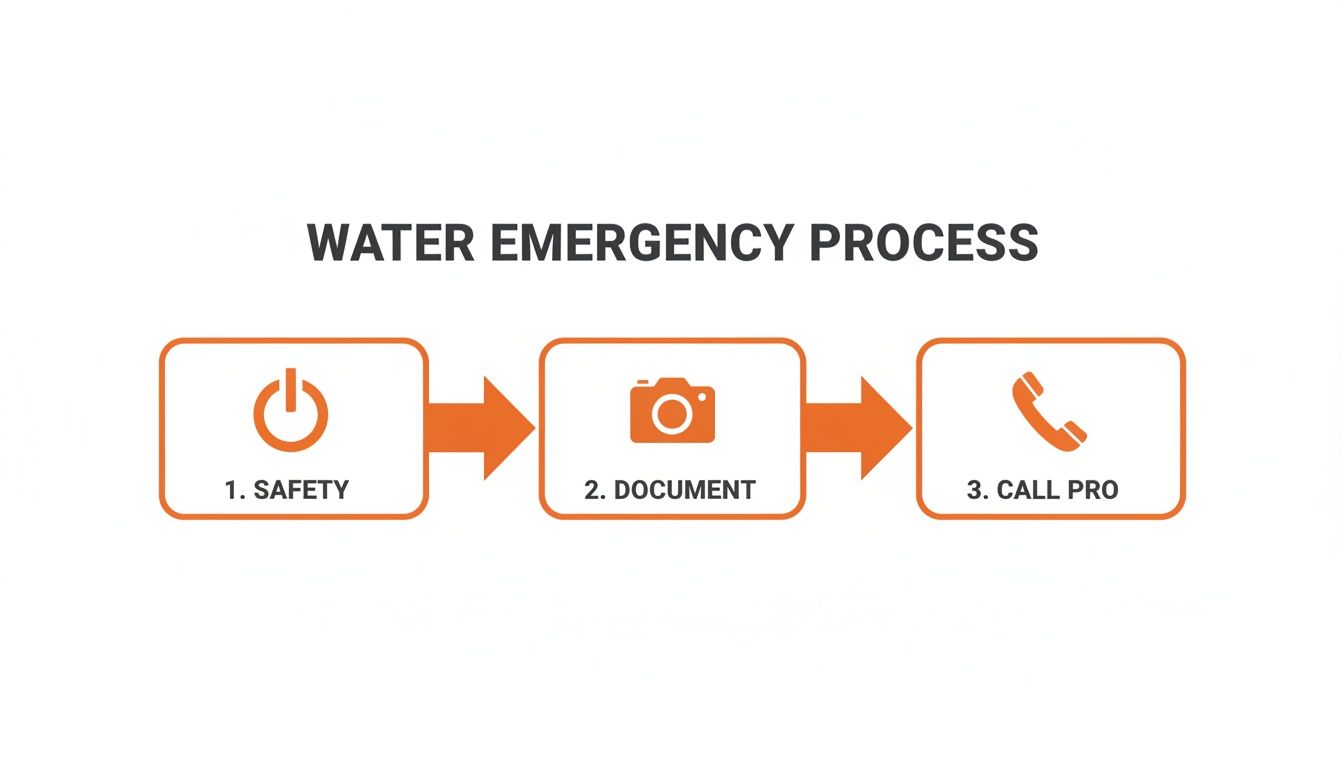
It highlights a clear, three-part protocol—Safety, Documentation, and Professional Help—that serves as the foundation for a successful restoration. This first phase truly sets the stage for the entire project.
Expert Insight: The first 24-48 hours are what we in the industry call the "golden hours." Quick, correct action during this window can prevent secondary damage like mold growth and permanent structural warping, literally saving you thousands in repair costs down the line.
From there, our team will lay out a clear, concise plan. We'll walk you through what needs to be done, explain why it's necessary, and set expectations for the coming hours and days. Our goal is to bring a sense of calm and control, showing you that your property is now in the hands of seasoned experts ready to turn that chaos back into order—fast.
Professional Damage Assessment and Water Removal
Once your home is secure and immediate risks are neutralized, we transition into the technical phase of the water damage restoration process. This is where our deep, certified expertise truly makes a difference. It's about much more than just finding puddles; we scientifically trace the full path of the water to guarantee a complete and lasting restoration.
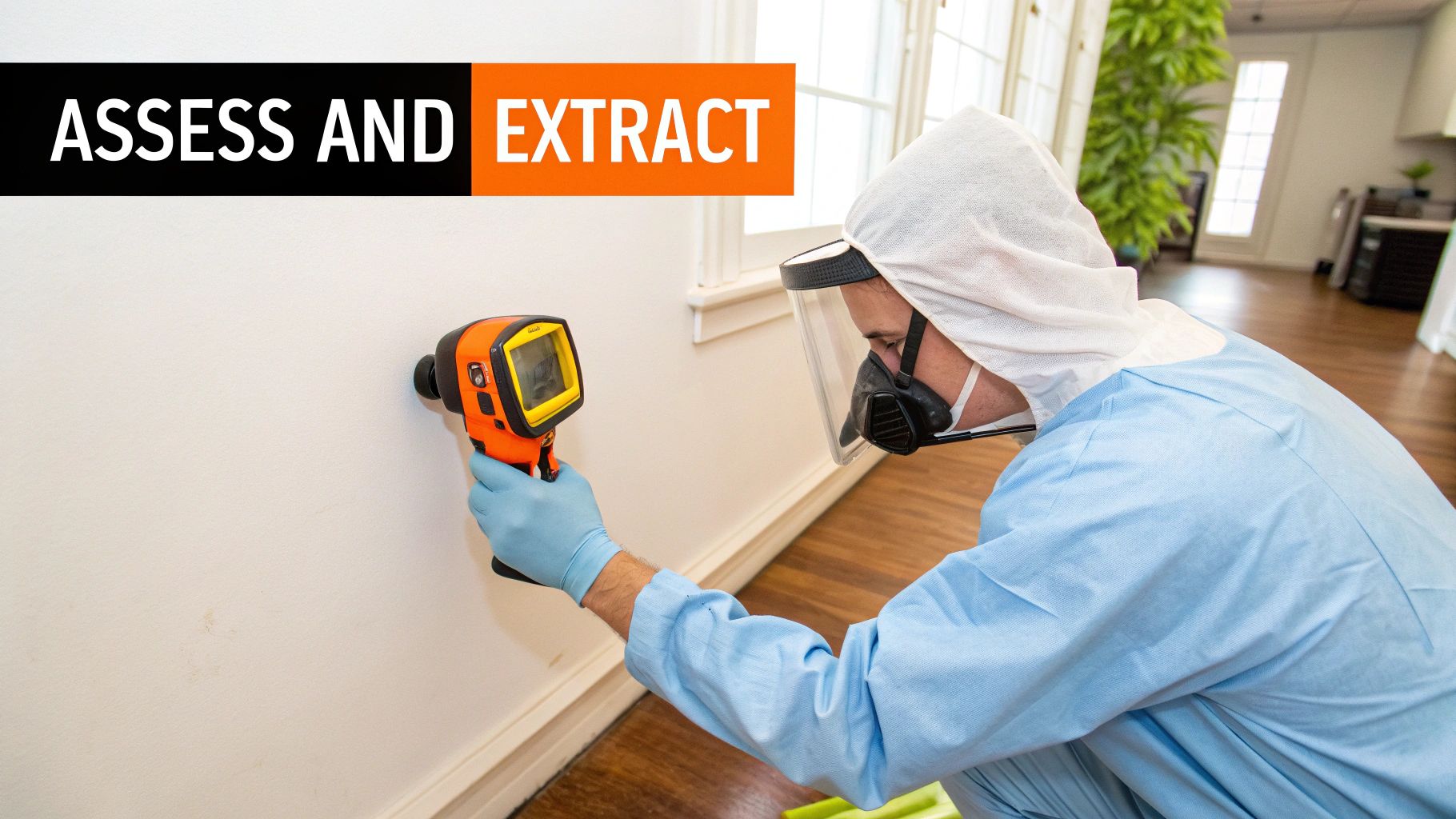
We immediately get to work with advanced diagnostic tools that see what the naked eye can’t. Water is insidious—it can wick up inside walls, seep under luxury vinyl flooring, or saturate insulation without ever showing on the surface. This hidden moisture is precisely what leads to long-term problems like structural rot and dangerous mold growth.
To find every last drop, our IICRC-certified technicians use specific equipment:
- Thermal Imaging Cameras: These devices show us temperature differences in building materials. Cooler spots instantly reveal moisture-heavy areas hiding behind drywall or under your custom cabinets.
- Moisture Meters: We use a combination of penetrating and non-penetrating meters to get exact moisture content readings in materials like wood, drywall, and concrete. This tells us not just what is wet, but how wet it is.
Identifying the Water Category and Source
A crucial step in our assessment is classifying the type of water we’re dealing with. Not all water is the same, and its category dictates our entire plan for safety, cleaning, and sanitization. The IICRC, which sets the industry standard, defines three categories.
This initial classification is vital. For example, a burst supply line is typically Category 1 (Clean Water), which has minimal health risks if addressed quickly. But an overflowing dishwasher that introduces soaps and food particles? That's Category 2 (Gray Water). The most serious is Category 3 (Black Water), from sources like sewage backups, which contains dangerous pathogens and requires specialized containment and remediation. You can learn more in our detailed guide on the fundamentals of water damage.
As a BBB Torch Award Winner for Ethics, we believe in total transparency. We’ll walk you through our findings, showing you the moisture readings on our equipment so you understand exactly what we’ve discovered and why certain actions are needed.
This meticulous assessment forms the blueprint for a precise, data-driven plan for extraction and drying. Nothing is left to chance.
The Power of Professional Water Extraction
With a clear map of the moisture, our priority becomes removing bulk water as quickly as possible. This is no job for a shop vac. It requires powerful, commercial-grade equipment to stop porous materials from absorbing more water and prevent secondary damage.
We deploy truck-mounted extraction units—essentially industrial-strength vacuums capable of removing hundreds of gallons of water per minute. In a flooded Newport Beach living room, this means we can often clear all standing water in less than an hour, a critical factor in saving hardwood floors or custom cabinetry.
Recent industry data shows that rapid, professional extraction reduces the likelihood of secondary issues like mold by over 70%. Our process always begins with this powerful extraction before moving to structural drying.
By pairing a detailed assessment with powerful extraction, we lay the groundwork for a successful restoration. This phase isn’t just about cleanup; it’s about strategic action that protects the long-term health and value of your Orange County home. It’s how we deliver on the Sparkle Restoration promise of turning chaos into calm, fast.
The Science of Structural Drying and Dehumidifying
Once our crew has removed all standing water, we move into the most critical part of the job: the science-backed drying phase. Getting rid of puddles is just the start. The real enemy is the moisture you can't see—the water that has soaked deep into porous materials like drywall, wood framing, and your subfloors.
If that hidden moisture is left behind, it's a ticking time bomb. It’s a direct invitation for mold to take root, for structural rot to set in, and for musty odors to compromise your home’s indoor air quality.
This is where we transition from brute-force extraction to a highly strategic drying process. Our IICRC Master Certified technicians don’t just scatter a few fans around and hope for the best. We meticulously engineer a controlled drying environment inside your home, a method grounded in the principles of psychrometrics—the science of air and its properties.
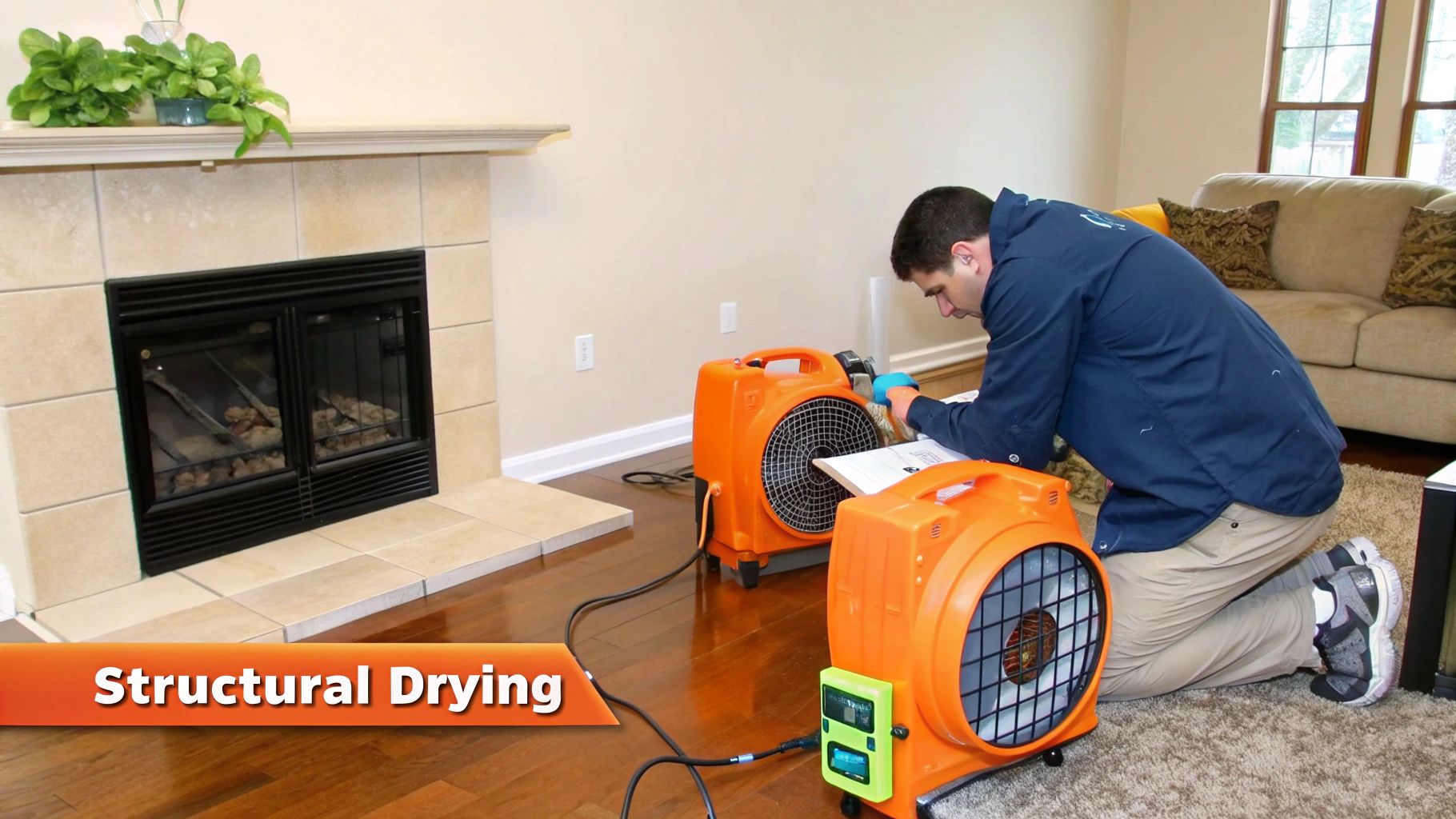
It all comes down to a precise balance of three key elements, working in concert to pull moisture out of your home’s structure and then out of the air itself.
Mastering the Drying Environment
Our goal is to create the perfect conditions for water molecules to release from wet materials, become airborne, and then be captured and removed for good. We achieve this by carefully manipulating airflow, humidity, and temperature.
-
High-Velocity Air Movers: We don't just point fans at a wet spot. We strategically place specialized air movers to create a vortex of air that sweeps across wet floors and walls. This powerful airflow breaks the water's surface tension, dramatically speeding up evaporation.
-
Industrial-Grade Dehumidifiers: As the air movers push moisture into the air, our powerful dehumidifiers are waiting. They pull in that damp, heavy air, strip out the water, and pump dry air back into the room. It’s a continuous cycle that steadily lowers the overall humidity.
-
Temperature Control: Sometimes, we’ll carefully raise the temperature in the affected rooms. Why? Because warmer air can hold more moisture, which makes our dehumidifiers work even more efficiently.
This carefully orchestrated system is precisely why professional drying is light-years faster and more effective than simply opening windows. We are actively forcing moisture out and capturing it.
Data-Driven Monitoring, Not Guesswork
A proper drying project is all about data, not assumptions. Our technicians return to your home daily, taking meticulous moisture readings from all affected materials and the air itself.
This daily monitoring allows us to make critical adjustments on the fly. We might reposition air movers to zero in on a stubborn wet spot behind a cabinet or bring in a second dehumidifier if the Orange County marine layer is pushing up ambient humidity and slowing things down. This scientific approach is our guarantee that every material, from your custom hardwood floors to the insulation inside the walls, is brought back to its normal, pre-damage moisture content.
At Sparkle Restoration, we manage the entire project with the precision of a Licensed General Contractor. We understand how different building materials respond to moisture, allowing us to protect your home’s high-end finishes and structural integrity throughout the drying phase.
Choosing the Right Equipment for the Job
Not all drying equipment is the same, and a huge part of our expertise is knowing exactly which tool to use for your specific situation. The two primary types of professional dehumidifiers we deploy are refrigerant and desiccant models, and they each have their place.
Refrigerant vs. Desiccant Dehumidifiers
| Dehumidifier Type | How It Works | Best For |
|---|---|---|
| Refrigerant | Cools incoming air to condense moisture, which is then drained away. | Standard room temperatures (60-90°F). The most common and efficient choice for typical residential water damage. |
| Desiccant | Uses a special moisture-absorbing material (like silica gel) to pull water vapor from the air. | Colder spaces or when you need extremely low humidity for dense materials like hardwood floors. |
This kind of technical knowledge is non-negotiable. Using the wrong machine can bring the drying process to a screeching halt or, worse, cause even more damage. Our commitment to using the right tool for the job is central to our promise to restore your home correctly. You can see how this detailed execution makes all the difference in real-world situations, like in our recent water damage mitigation project in an Irvine home, where precise drying was the key to saving the property.
Cleaning, Sanitizing, and Preventing Mold Contamination
Once our advanced drying equipment has done its job, you might think the hard part is over. But getting your home's structure verifiably dry is just one piece of the puzzle. A dry home isn't necessarily a clean or safe one, which is why the water damage restoration process now shifts to protecting your family's health.
This is where we focus on meticulously cleaning, sanitizing, and ensuring your property is free from any contaminants the water left behind. For families here in Orange County who prioritize well-being, this step is absolutely critical. It’s where our commitment as IICRC Master Certified professionals truly shines, safeguarding your health long after we're gone.
Advanced Cleaning and Sanitization Protocols
Wiping down surfaces just doesn’t cut it. The type of water we're dealing with—which we identify during our initial assessment—dictates the specific protocols needed to eliminate bacteria, pathogens, and other microorganisms.
We use specialized, professional-grade cleaning agents and proven techniques to decontaminate every impacted area, including:
- Hard Surfaces: Non-porous materials like tile, sealed concrete, and certain metals are thoroughly cleaned and treated.
- Salvageable Contents: Your personal belongings are handled with care as we clean, sanitize, and deodorize them.
- Structural Elements: We apply specific treatments to wood framing, subfloors, and other structural components to ensure they are clean and safe.
Every material requires a slightly different approach. For example, tackling microbial growth on structural components involves specific methods, making a deep understanding of techniques like black mold removal on wood essential for success.
Antimicrobial Treatments for Mold Prevention
After water damage, the biggest lingering threat is mold. You can't always see it, but microscopic mold spores can lie dormant, waiting for a hint of moisture to spring back to life. This is why being proactive isn't just a good idea—it's non-negotiable for protecting your family's health.
To stop mold in its tracks, we apply EPA-registered antimicrobial treatments to the affected areas. These solutions create an environment where mold simply can't grow, neutralizing the threat before it begins and giving you lasting peace of mind. It’s one of the key things that separates a true professional restoration from a quick cleanup job. To learn more about the dangers, you can read up on the truth about mold contamination and see why professional handling is so vital.
As a BBB Torch Award Winner for Ethics, we believe in being completely transparent about potential health risks. Applying antimicrobial treatments isn't just a best practice; it's our professional duty to ensure your home is restored to a truly safe and healthy condition.
Odor Removal and Air Purification
Water damage often leaves a stubborn, musty odor that can cling to everything. These smells come from microbial volatile organic compounds (MVOCs)—gases released by mold and bacteria. We don’t just cover them up with air fresheners; we eradicate them at the source.
Using advanced equipment like thermal foggers, we disperse deodorizing agents that penetrate deep into the same hidden nooks and crannies the water reached. This process neutralizes odor-causing particles, both in the air and embedded in materials like drywall and wood. It’s the final touch that ensures your home not only looks restored but also smells fresh and clean, erasing any memory of the damage.
Rebuilding Your Home to Better Than Before
After all the drying, cleaning, and sanitizing is complete, we arrive at the most rewarding part of the water damage restoration process. This is where the chaos finally fades, and your home isn't just repaired—it's reborn. As a Licensed General Contractor, this is where our team at Sparkle Restoration truly excels, moving seamlessly from damage control to masterful reconstruction.
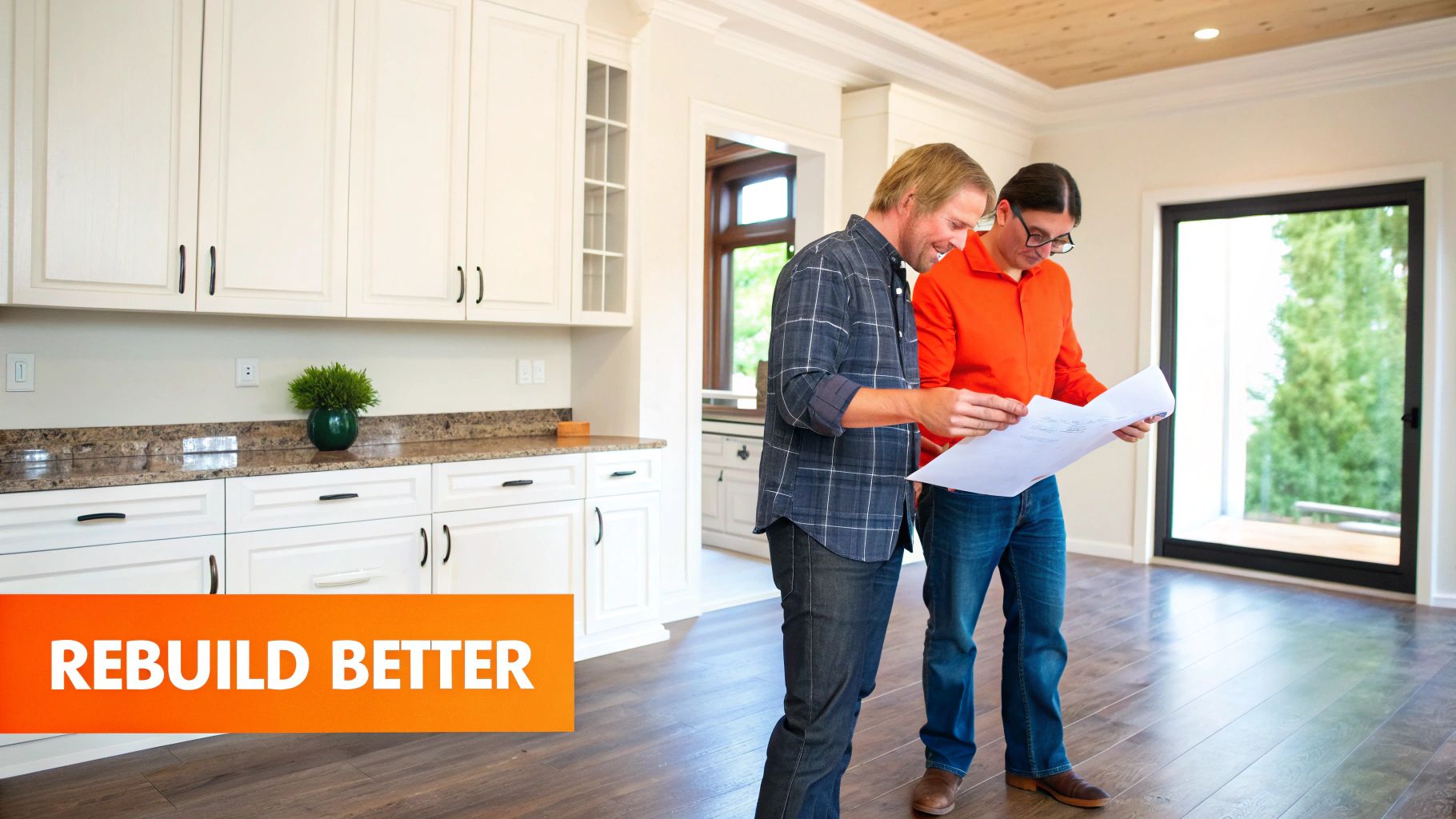
Our first goal is always to bring your space back to its pre-damage condition. This isn't just patching things up; it's a careful, detailed reconstruction handled with the precision your Orange County home deserves.
This is the phase where the technical skill of our tradespeople—our drywall finishers, carpenters, and painters—truly makes the difference, ensuring every detail is perfect.
Foundational Repairs for a Flawless Finish
The first order of business is replacing the core structural elements that were compromised. This foundational work is absolutely critical, and it takes the steady hand of a seasoned contractor to guarantee lasting quality.
Our process typically involves:
- Drywall Installation and Finishing: Any drywall we had to remove is replaced, taped, mudded, and sanded down to create a perfectly smooth surface, ready for a fresh coat of paint.
- Flooring Replacement: Whether we're lacing in new boards to match your existing hardwood or laying down beautiful new tile, our flooring experts ensure a flawless, professional installation.
- Professional Painting: Our painters apply high-quality paints with expert precision, either matching the existing colors perfectly or applying a completely new palette of your choosing.
These essential repairs ensure all signs of water damage are completely erased, returning your space to its original condition. But for many of our discerning homeowners, this moment of disruption often feels like a unique opportunity.
Turning Disaster into a Design Opportunity
A water damage event forces a reset. While stressful, it also opens the door to not just restore but to truly elevate your living space. We see this happen all the time with our clients in Newport Beach and Irvine, who decide to use this moment to make a significant upgrade.
Instead of just replacing a few damaged kitchen cabinets, maybe now is the perfect time for that full kitchen remodel you've been dreaming of. That water-stained guest bathroom could finally become the spa-like retreat you've always wanted. Because we are a full-service design-build firm, we can weave high-end remodeling directly into the restoration workflow.
This transition from restoration to remodeling is where Sparkle truly excels. We handle the entire project under one roof, providing a single point of contact and ensuring a cohesive vision from emergency call to final, stunning reveal.
The Seamless Sparkle Restoration Experience
Trying to manage an insurance claim while simultaneously coordinating a separate remodeling project can be an absolute nightmare. Our integrated approach completely eliminates that headache. We coordinate all the insurance-covered restoration work with any upgrades you want, maintaining clear communication and transparent budgeting from start to finish.
The demand for trusted, expert services is clear. Water damage accounts for roughly 40% of the entire restoration market, and residential properties make up over 60% of that revenue, according to industry reports.
Our ability to manage every single detail, from the initial 24/7 emergency call to hanging the final light fixture in your newly remodeled kitchen, defines our commitment to you. We don't just fix the damage; we fulfill your vision for a better, more beautiful home. It's how we turn chaos into calm—and then into something truly exceptional.
Common Questions About Water Damage Restoration
When you’re dealing with a water intrusion, your mind is probably racing with questions. It's a stressful situation, and feeling overwhelmed is completely normal. As a client-focused firm here in Orange County, we’ve heard every question in the book. Let's walk through some of the most common concerns to give you a clearer picture of the water damage restoration process.
How Long Does The Restoration Process Take?
This is almost always the first thing homeowners want to know, and the most honest answer is: every situation is unique. There's no one-size-fits-all timeline.
A small leak from a clean water source—say, a supply line under a sink that you caught right away—might only take 3 to 5 days for everything to be dried and repaired. On the other hand, a major event like a burst pipe that floods several rooms, especially with contaminated water, could easily stretch into several weeks of work.
Our promise is to be completely transparent from day one. After our team performs a thorough initial assessment, we’ll provide a detailed and realistic timeline. Our goal is always to restore your home the right way, not just the fast way.
Will My Homeowners Insurance Cover This?
This is the big financial question for most of our clients. Generally speaking, your standard homeowners insurance policy is designed to cover damage that is sudden and accidental. The classic example is a washing machine hose that bursts and floods your laundry room.
Where it gets trickier is with damage caused by slow, gradual leaks or a clear lack of maintenance. It's also important to know that regional flooding is almost always excluded unless you have a separate flood insurance policy. The financial impact of these events is massive; according to a market report by DataHorizzon Research, the average restoration incident can cost thousands. You can find more market insights about damage restoration services on datahorizzonresearch.com.
We have spent years working directly with every major insurance carrier in Southern California. Our team knows exactly what documentation they need, and we provide it meticulously to help you navigate the claims process for a fair and smooth resolution. For a complete breakdown, take a look at our homeowners' guide to navigating property insurance claims.
Can I Stay In My Home During The Work?
Your family's safety is our absolute first priority, so the answer depends on the scale and nature of the damage.
If the work is confined to a small area, like a single bathroom, you can often stay in the home without a problem. However, for larger projects involving contaminated water (Category 2 or 3 water) or if significant structural repairs are needed, we will almost always recommend you relocate for a short time.
Expert Insight: The professional drying equipment we use is incredibly powerful, but it’s also very loud. The constant drone of high-velocity air movers and dehumidifiers, combined with the general disruption of the work, can make living at home extremely stressful. A temporary move often makes the whole experience much more peaceful for your family.
Understanding the financial side of a claim is also key. A good guide to navigating home insurance claims can be a huge help during this time.
What Is The Difference Between Mitigation And Restoration?
This is an excellent question that gets to the core of what a full-service restoration company does. People often use these terms interchangeably, but "mitigation" and "restoration" are actually two distinct phases of the recovery process.
- Water Mitigation: Think of this as the emergency response. It’s all the immediate actions we take to stop further damage. This includes stopping the source of the water, extracting all standing water, removing soaked materials that can't be saved, and setting up professional drying equipment.
- Water Restoration: This is the rebuild phase. Once the structure is clean, dry, and safe, we switch gears to repairing and rebuilding your property. This is where we replace drywall, install new floors, paint, and bring your home back to its pre-damage condition—or even better, since we're also a Licensed General Contractor.
At Sparkle, we manage both phases of the job seamlessly. This provides you with a single, trusted point of contact from that first chaotic moment all the way to the beautiful, finished result.
When water damage strikes your Orange County home, you need more than just a cleanup crew—you need a true partner. At Sparkle Restoration Services, we combine IICRC Master Certified expertise with the skill of a Licensed General Contractor to turn chaos into calm, fast.
If you’re facing water damage, don’t wait. Contact Sparkle Restoration Services today for a free consultation and 24/7 emergency response.
Ready to create a space that’s as beautiful as it is functional? Schedule your complimentary design consultation today by visiting Ready to Work with Sparkle?