

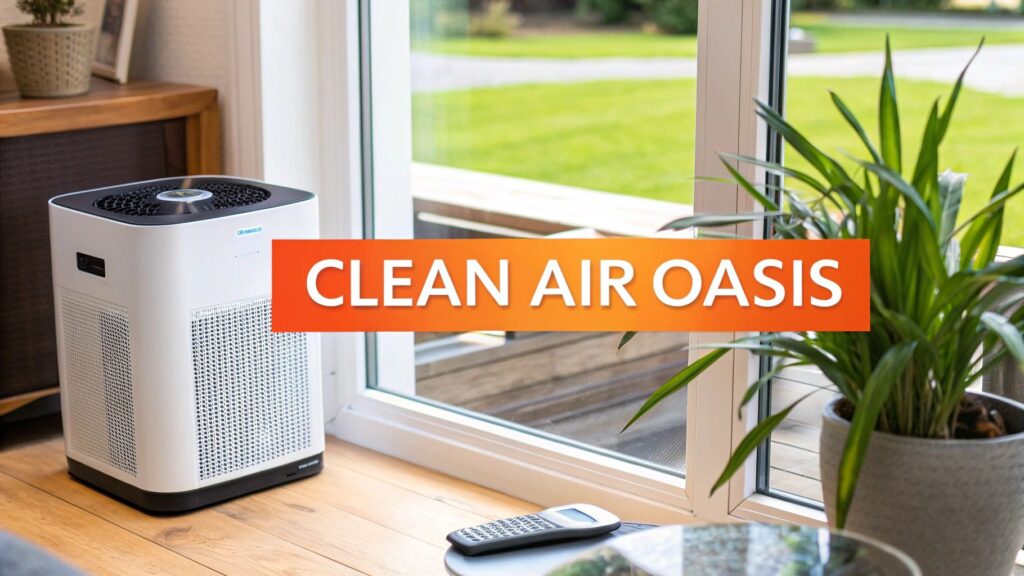
For discerning homeowners in Orange County, the quality of your indoor environment is as non-negotiable as your home's aesthetic appeal. While we cherish the coastal breezes of Newport Beach and the pristine communities of Irvine, our tightly sealed, energy-efficient homes can inadvertently trap pollutants, allergens, and volatile organic compounds (VOCs). This compromises the very sanctuary your home is meant to be, impacting everything from respiratory health and allergy symptoms to your home’s long-term structural integrity. Merely opening a window is not a comprehensive strategy for pristine air.
This guide moves beyond generic advice to detail ten essential ways to improve indoor air quality, offering actionable, high-impact solutions tailored for luxury properties. We will explore advanced filtration, professional-grade ventilation, and smart home integrations that deliver measurable results. As an IICRC Master Certified firm and a BBB Torch Award Winner for Ethics, Sparkle Restoration Services has a deep understanding of the unique environmental challenges our Southern California climate presents, from humidity and mold risk to airborne particulates.
Our purpose is to provide the expert insights you need to make informed decisions, transforming your residence into a haven of clean, healthy air. You will learn how to assess your current air quality, implement targeted upgrades, and establish maintenance routines that protect your family and your investment. Let’s explore the definitive strategies for achieving superior indoor air quality, ensuring your living space is as safe and restorative as it is beautiful.
1. HEPA Filtration Systems
High-Efficiency Particulate Air (HEPA) filtration is the gold standard for removing airborne contaminants, making it one of the most effective ways to improve indoor air quality. These advanced systems utilize a dense, multi-layered fiber mat to mechanically trap microscopic particles. A true HEPA filter is engineered to capture 99.97% of airborne particles as small as 0.3 microns, including common irritants like dust, pollen, pet dander, mold spores, and even some bacteria and viruses.
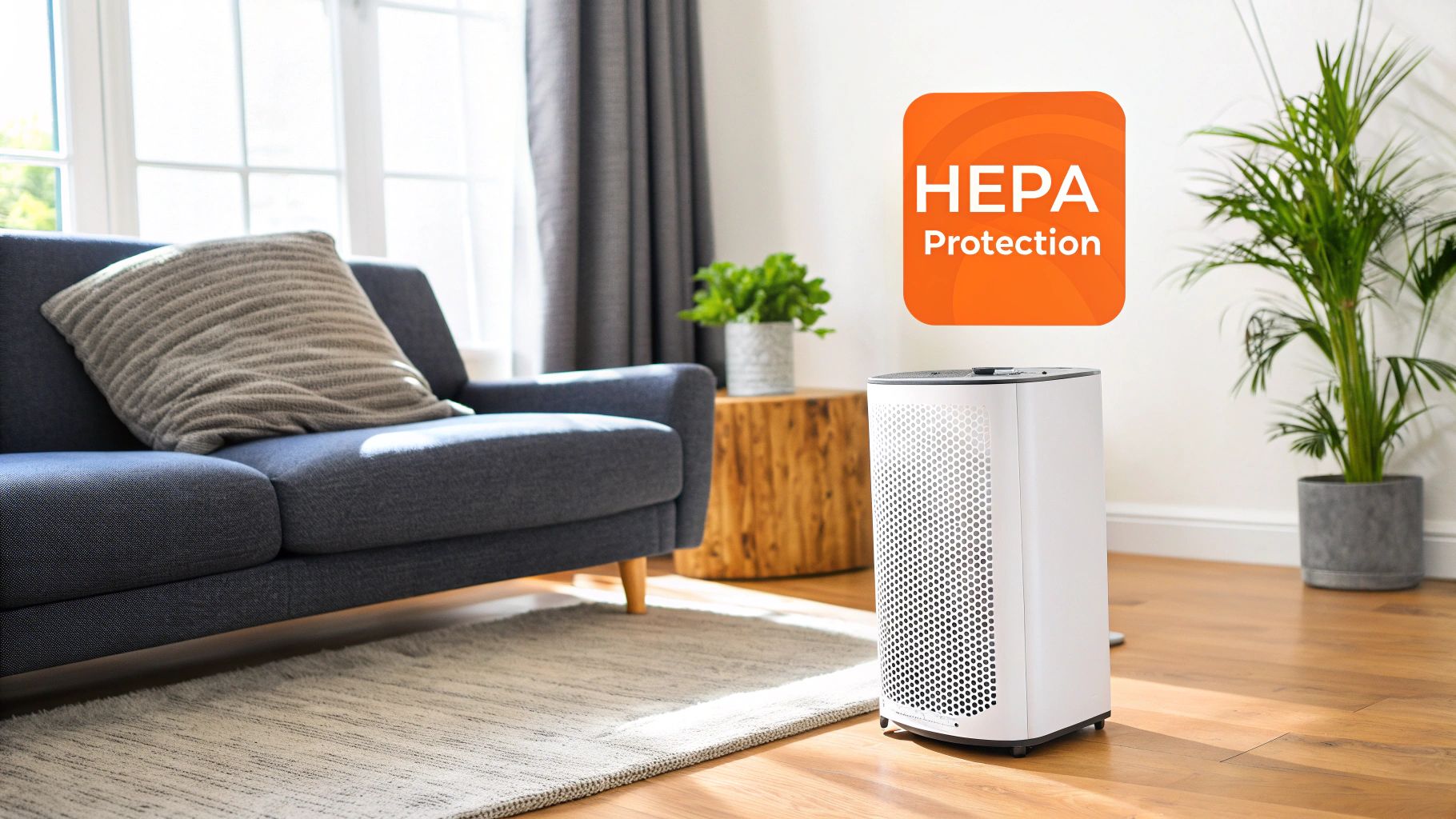
This level of filtration is especially beneficial for Orange County homeowners, where coastal breezes can carry fine salt particles and urban pollutants inland. HEPA systems provide a powerful defense, ensuring the air inside your luxury home remains pristine and healthy.
Implementation and Best Practices
For comprehensive coverage in a high-value property, a whole-home HEPA system integrated directly into your HVAC is the premier solution. Unlike portable units that only treat a single room, a whole-home system purifies the air circulated throughout your entire residence. Brands like Honeywell Home and IQAir offer robust systems that provide continuous, medical-grade air purification.
To maximize the effectiveness of this investment, consider these actionable steps:
- Professional Integration: Ensure the system is installed by a certified professional who can assess your existing HVAC system and seal any ductwork leaks. Leaky ducts can pull in unfiltered air from attics or crawl spaces, undermining the filter's performance.
- Filter Maintenance: Adhere strictly to the manufacturer's replacement schedule. A clogged filter restricts airflow, strains your HVAC system, and fails to capture new pollutants. Monitor the filter status monthly or check the system's pressure gauge.
- Complementary Measures: Pair your whole-home HEPA system with high-MERV filters in your HVAC return vents. This creates a multi-stage filtration process that extends the life of your more expensive HEPA filter by capturing larger particles first.
In post-restoration scenarios, such as after mold remediation or water damage repair, IICRC-certified firms like Sparkle Restoration Services use commercial-grade HEPA air scrubbers to guarantee all lingering particulates are removed, restoring your home to a state of pristine cleanliness and safety.
2. Professional Mold Remediation and Prevention
Mold is a silent threat that thrives in humid environments, releasing spores that can significantly degrade indoor air quality and trigger serious respiratory issues. Professional mold remediation goes far beyond surface cleaning; it is a meticulous, science-based process to locate, contain, and eliminate mold colonies and their moisture source, ensuring the problem is resolved at its root. This specialized service is essential for protecting both property value and occupant health.
For homeowners in Orange County's coastal cities like Newport Beach and Laguna Niguel, the persistent marine layer creates ideal conditions for mold growth, particularly after a water leak or flood. Addressing this requires a precise, IICRC-certified approach to ensure complete removal from hidden areas like wall cavities, crawl spaces, and HVAC systems, safeguarding your luxury home from long-term structural damage.
Implementation and Best Practices
Simply wiping away visible mold is ineffective and often spreads spores. True remediation involves a multi-step process executed by certified professionals who understand building science and microbiology. The goal is to return the affected area to a normal, safe fungal ecology.
To ensure your property is handled with the highest standard of care, consider these essential steps:
- Engage a Certified Firm: Only hire an IICRC (Institute of Inspection, Cleaning and Restoration Certification) Master Certified firm. This certification guarantees the team follows strict industry protocols for containment, negative air pressure, and safe removal, preventing cross-contamination to unaffected areas of your home.
- Address the Moisture Source: Effective remediation always begins with identifying and repairing the source of moisture. Whether it's a plumbing leak, roof issue, or high humidity, this step is critical to prevent regrowth and is a core part of any reputable remediation plan.
- Prioritize Prevention: Once remediation is complete, focus on prevention. Maintain indoor humidity between 30-50%, ensure proper ventilation in kitchens and bathrooms by using exhaust fans, and consider installing a vapor barrier in your crawl space to control ground moisture.
For complex situations, such as post-water damage contamination in a luxury residence, a full-service team like Sparkle Restoration Services provides a seamless, insurance-approved process that not only remediates the mold but also restores the property to its original, pristine condition.
3. Ventilation System Upgrades and Ductwork Sealing
While filtration cleans the air already inside your home, true air quality management also involves introducing fresh air and preventing contaminants from entering in the first place. Modern ventilation systems, paired with professional ductwork sealing, create a comprehensive strategy for a healthy indoor environment. This approach is one of the most effective ways to improve indoor air quality by continuously replacing stale, polluted indoor air with fresh, filtered outdoor air.
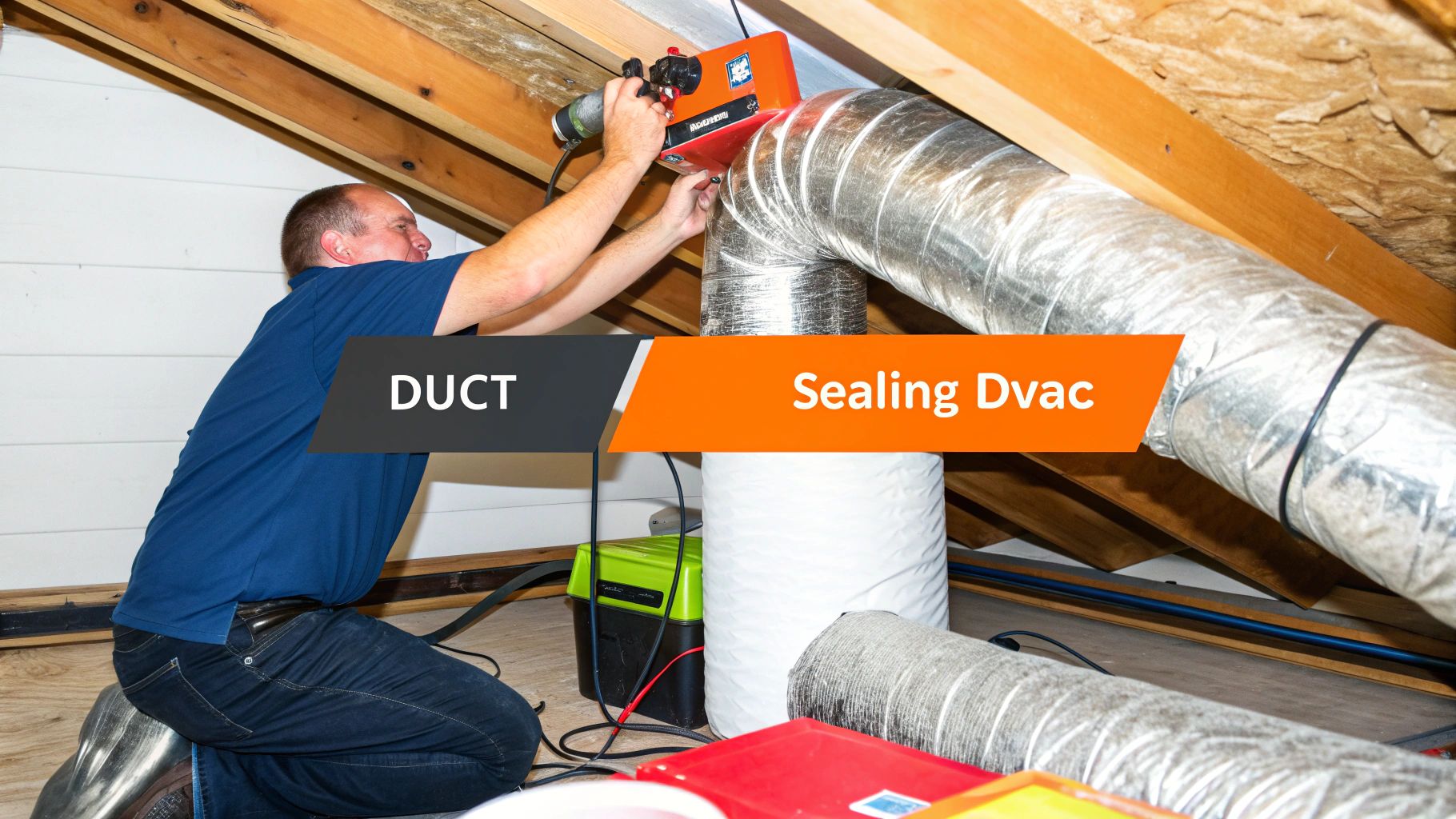
This dual approach is critical for luxury homes in Orange County, where even tightly sealed properties can trap indoor pollutants like VOCs from furnishings and cleaning products. A sealed and properly ventilated system ensures that the fresh coastal air you enjoy is just as pure inside your home, free from both external smog and internal contaminants.
Implementation and Best Practices
High-performance ventilation systems like Energy Recovery Ventilators (ERVs) and Heat Recovery Ventilators (HRVs) are the gold standard for modern luxury homes. These systems, offered by brands like Zehnder and Mitsubishi Electric, transfer heat and humidity between incoming and outgoing air streams, maintaining your home's climate efficiency while ensuring a constant supply of fresh air. Complementing this with ductwork sealing prevents treated air from escaping and stops unfiltered air from being drawn into your living spaces from attics or crawl spaces.
To achieve superior results, consider these actionable steps:
- Prioritize Ductwork Sealing: Before upgrading your HVAC or ventilation, seal your ductwork using advanced methods like Aeroseal technology. This patented process seals leaks from the inside, often reducing air infiltration by over 40% without invasive demolition.
- Select the Right System: Choose an ERV for Southern California's climate to manage humidity effectively. Plan the installation during a major renovation or HVAC replacement to integrate the system seamlessly and cost-efficiently.
- Integrate Smart Controls: Opt for smart ERV systems with humidity sensors and app controls. This allows for automated, optimized performance, adjusting ventilation rates based on real-time indoor air quality metrics.
- Ensure Professional Installation: A certified contractor can guarantee proper system balancing and the installation of crucial components like backdraft dampers, which prevent outdoor pollutants from entering when the system is inactive.
4. Air Purifiers with Activated Carbon Filtration
While HEPA filters are exceptional at capturing particulates, activated carbon filtration targets a different and equally critical set of airborne threats: gases, odors, and chemical pollutants. Activated carbon is treated with oxygen to open up millions of minuscule pores between its atoms, creating a vast surface area that adsorbs gaseous molecules. This process, known as adsorption, effectively traps volatile organic compounds (VOCs), smoke, and persistent odors that a standard HEPA filter cannot.
For Orange County homes undergoing renovations or dealing with the aftermath of smoke exposure, this technology is non-negotiable. Activated carbon filtration is a powerful tool for neutralizing chemical off-gassing from new furniture, paint, and flooring, ensuring your home's air is not just clean but also free from harmful invisible gases.
Implementation and Best Practices
The most effective strategy often involves a multi-stage purifier that combines both HEPA and activated carbon filters. Premium portable units from brands like IQAir and Austin Air are excellent for targeted use, while whole-home systems can be integrated into your HVAC for comprehensive, continuous purification. Restoration professionals rely on these systems to eliminate stubborn smoke and chemical odors after a disaster.
To get the most from this technology, follow these expert recommendations:
- Strategic Placement: Position portable units in areas with high concentrations of VOCs or odors, such as a newly remodeled kitchen or a room with new furnishings. This captures pollutants directly at the source.
- Timely Filter Replacement: Activated carbon filters become saturated over time and lose their effectiveness. Replace them every 3-6 months, or more frequently if you notice odors returning, to ensure optimal performance.
- Use During and After Renovations: Run a high-quality carbon air purifier continuously during any interior remodeling project and for at least 30 days afterward to capture the peak period of chemical off-gassing from new materials.
- Pair for Complete Protection: Ensure your purifier includes a high-quality pre-filter and a True HEPA filter. This combination creates a comprehensive system that traps both particles and gases for the highest level of air purification.
After a fire or smoke damage event, Sparkle Restoration Services deploys commercial-grade air scrubbers with deep-bed activated carbon filters. This specialized equipment is essential for thoroughly removing harmful smoke particles and volatile compounds, restoring your home's air to a safe and healthy state.
5. Dehumidification Systems and Moisture Control
Controlling indoor humidity is a non-negotiable step in maintaining superior indoor air quality. Dehumidification systems are designed to maintain the ideal relative humidity level, typically between 30% and 50%, which inhibits the growth of mold, mildew, dust mites, and other microbial contaminants that thrive in damp environments. These systems work by drawing in moist air, cooling it to condense the water vapor, and then circulating the drier, healthier air back into your home.
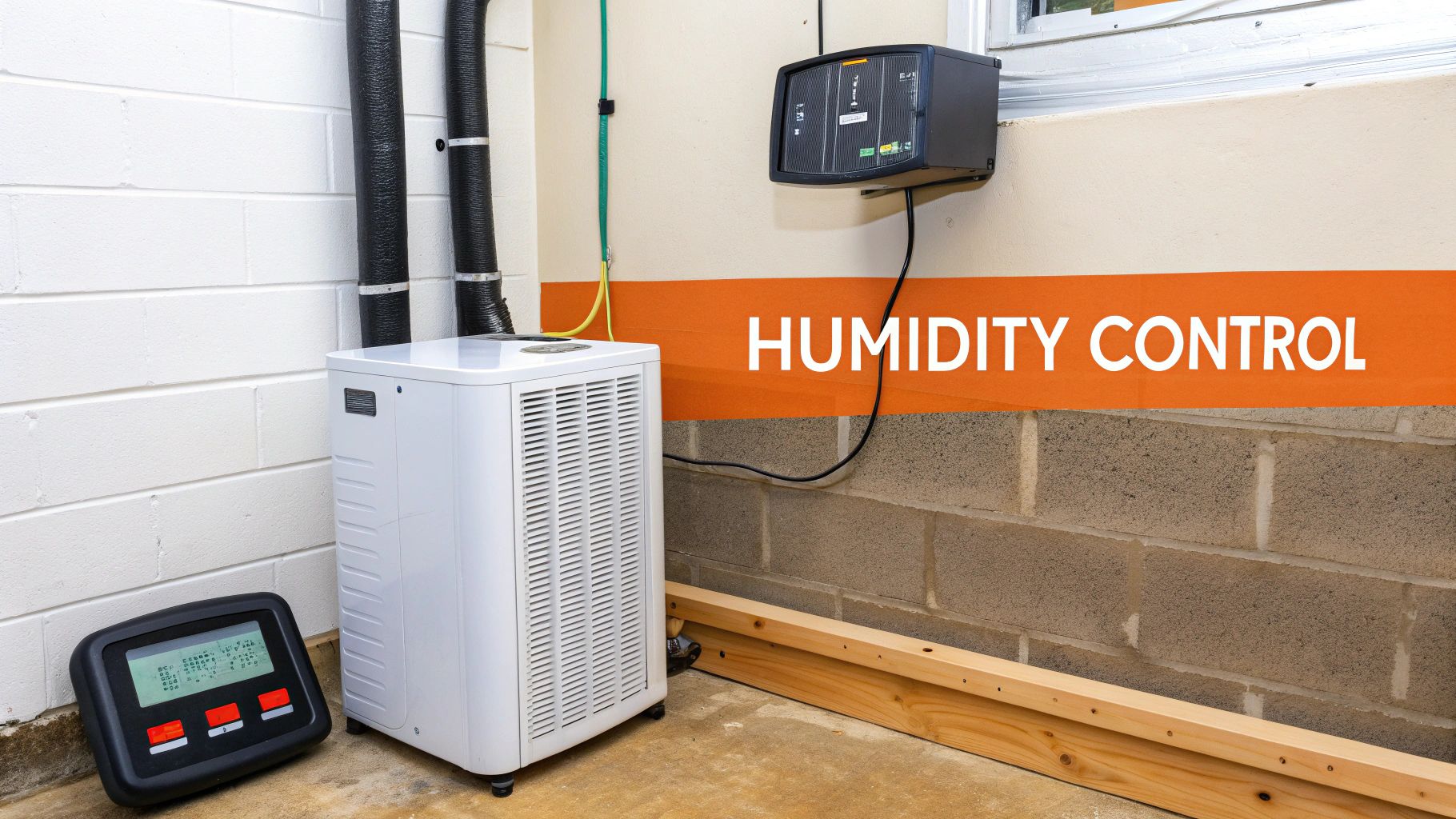
This level of moisture control is particularly crucial for Orange County homeowners. Proximity to the coast means properties in Newport Beach and Laguna Niguel often face ambient humidity levels of 60-80%, especially during the summer marine layer. This creates a perfect breeding ground for allergens, making proactive dehumidification a cornerstone of a healthy indoor ecosystem.
Implementation and Best Practices
For a seamless, whole-home solution befitting a luxury residence, a professional-grade dehumidifier integrated directly into your HVAC system offers unparalleled performance. Unlike portable units, which are often noisy and require manual draining, integrated systems from brands like Aprilaire or Ultra Aire provide quiet, automated humidity control across your entire property. They manage moisture levels without requiring your constant attention.
To ensure your investment delivers optimal results, follow these specific steps:
- Strategic Installation and Sealing: Have the system installed by a licensed professional who will also inspect and seal your ductwork and building envelope. This prevents the system from overworking by pulling in humid outdoor air, a critical step for coastal homes.
- Target Ideal Humidity Levels: Use hygrometers to monitor different zones in your home and aim for a consistent relative humidity of 40-50%. This level is optimal for comfort, preserves wood furnishings and flooring, and effectively prevents microbial growth.
- Seasonal Maintenance and Use: Schedule a system check-up at the beginning of the humid season (late spring) to ensure it's ready for peak performance. Pay special attention to crawl spaces and basements, as these areas are highly susceptible to moisture buildup.
Following water damage, IICRC Master Certified firms like Sparkle Restoration Services utilize high-capacity dehumidifiers to rapidly dry affected structures. This aggressive moisture removal is essential to prevent secondary damage and halt mold growth before it can compromise your home’s air quality and structural integrity.
6. Regular HVAC Maintenance and Filter Replacement
Your home's HVAC system is its respiratory system, circulating air throughout every room. When neglected, it becomes a primary source of indoor air pollution. Regular professional maintenance and consistent filter replacement are fundamental practices for ensuring your system distributes clean, healthy air, making this one of the most critical ways to improve indoor air quality. This routine upkeep prevents the accumulation of dust, allergens, and microbial growth within the ducts and mechanical components.
A dirty or clogged filter forces your system to work harder, reducing efficiency and allowing contaminants to bypass the filter and recirculate. For luxury properties in Orange County, where systems often run year-round, preventive maintenance is not just a best practice; it is essential for protecting your investment and ensuring a pristine living environment.
Implementation and Best Practices
Establishing a proactive maintenance schedule with a certified HVAC provider is the most effective strategy. This approach moves beyond simple filter changes to a comprehensive system health check, ensuring optimal performance and longevity. A well-maintained system operates more efficiently, consumes less energy, and provides superior air purification.
To guarantee your HVAC system enhances rather than degrades your indoor air quality, implement these actionable steps:
- Schedule Professional Servicing: Engage a reputable, certified HVAC technician for bi-annual or quarterly service inspections. These appointments should include cleaning coils, checking refrigerant levels, inspecting drain pans, and ensuring all mechanical parts are functioning correctly.
- Prioritize Filter Quality and Frequency: Upgrade from standard fiberglass filters to high-quality pleated filters with a MERV rating of 11-13. These capture a significantly higher percentage of fine particles. Replace filters every 30-60 days, especially during high-use seasons or if you have pets.
- Invest in Professional Duct Cleaning: Over time, ducts accumulate dust, dander, and other debris. The EPA and ASHRAE recommend professional duct cleaning every 3-5 years, or more frequently in dusty environments or after a renovation. This service removes built-up contaminants at the source.
Following an event like fire or water damage, professional HVAC and ductwork cleaning is non-negotiable. IICRC-certified firms like Sparkle Restoration Services perform comprehensive system decontamination to remove soot, mold spores, and other hazardous materials, restoring the system to a safe, clean, and efficient state.
7. Air Quality Testing and Monitoring Systems
To truly manage what you cannot see, professional testing and real-time monitoring are essential ways to improve indoor air quality. This data-driven approach moves beyond guesswork, providing precise measurements of airborne pollutants like particulates (PM2.5), volatile organic compounds (VOCs), mold spores, and carbon dioxide. This information is invaluable for diagnosing issues, verifying the success of remediation efforts, and making informed decisions about ventilation and filtration.
For Orange County homeowners, particularly those undertaking luxury remodels or recovering from water or fire damage, this level of precision is non-negotiable. It provides the empirical proof needed to ensure a home’s environment is not just clean, but certifiably healthy.
Implementation and Best Practices
The first step is a baseline assessment by a certified professional, which establishes a clear picture of your home’s current IAQ. This is followed by post-remediation testing to confirm pollutants have been eliminated. For continuous oversight, smart home-integrated monitors from brands like Awair or Airthings provide real-time data on your smartphone, empowering you to act proactively.
To leverage this technology for maximum benefit, follow these best practices:
- Pre- and Post-Remediation Testing: Always conduct professional air quality testing before starting a project like mold removal and again 24-48 hours after completion. This provides objective, third-party verification that the remediation was successful.
- Install Permanent Smart Monitors: Place real-time monitors in high-traffic areas like the primary bedroom and living room. Use the data to automate your HVAC fan or air purifier when CO2 or VOC levels rise, ensuring optimal air exchange.
- Share Data with Your HVAC Contractor: Provide your IAQ test results and monitoring data to your HVAC professional. This information allows them to fine-tune your system’s ventilation rates and filter selection for a truly customized solution.
In post-fire and water damage scenarios, IICRC-certified firms like Sparkle Restoration Services use professional-grade testing to provide clients with definitive proof that their home’s air is safe. This documentation is often crucial for insurance claims and provides ultimate peace of mind.
8. Plant-Based Air Purification and Biophilic Design
Incorporating living plants into your home's interior offers a natural, elegant method for purifying the air. This approach, validated by extensive research including the famous NASA Clean Air Study, harnesses the power of plants to absorb common volatile organic compounds (VOCs) like formaldehyde and benzene while concurrently producing oxygen. This natural process is a cornerstone of biophilic design, a concept that improves well-being by connecting inhabitants with nature.
For luxury homeowners in Orange County, this strategy beautifully merges aesthetic appeal with tangible health benefits. Integrating plant-filled atriums or custom living walls not only enhances air quality but also creates a serene, restorative environment, aligning perfectly with a wellness-focused lifestyle.
Implementation and Best Practices
While a single potted plant has a modest impact, a thoughtfully curated collection integrated into your home's design can significantly contribute to better indoor air quality. The key is strategic selection and placement, turning your residence into a living, breathing ecosystem that complements mechanical filtration systems.
To leverage this natural solution effectively, consider these actionable steps:
- Select High-Performance Plants: Choose species known for their air-purifying capabilities. Snake Plants are ideal for bedrooms as they release oxygen at night, while Peace Lilies thrive in the humidity of a master bathroom. Spider Plants and Pothos are excellent for living areas due to their hardiness and effectiveness at removing formaldehyde.
- Ensure Proper Care to Prevent Mold: Overwatering can lead to mold growth in the soil, which would counteract your air quality goals. Use pots with excellent drainage and allow the soil to dry out between waterings. This simple practice is crucial for maintaining a healthy indoor environment.
- Combine with Mechanical Systems: Plant-based purification is most effective when used as a complementary layer to a high-quality HVAC filter or a portable air purifier. This hybrid approach ensures comprehensive removal of both gaseous pollutants (VOCs) and airborne particulates like dust and dander.
During a luxury remodel, Sparkle Restoration Services can collaborate with interior designers to integrate biophilic elements, such as custom-built planters or living walls, ensuring they are designed for both beauty and optimal air-purifying performance.
9. Smart Home Air Quality Integration and Automation
For the ultimate in convenience and precision, smart home integration offers a proactive, automated approach to managing your indoor environment. This advanced method connects your home's HVAC, air purifiers, dehumidifiers, and ventilation systems to a central network. Using IoT-enabled sensors, the system monitors air quality in real-time and automatically adjusts each component to maintain optimal conditions, providing a seamless, hands-free solution for superior indoor air quality.
This level of automation is ideal for discerning Orange County homeowners who value both cutting-edge technology and effortless living. In a high-value Newport Beach property, for example, a smart system can automatically activate air purification during high-pollen seasons or increase ventilation when CO2 levels rise, ensuring a healthy and comfortable atmosphere at all times without any manual intervention.
Implementation and Best Practices
The foundation of a robust smart air quality system is a powerful, integrated ecosystem. Platforms like Control4, Lutron, or even more accessible options like Apple HomeKit and Google Home can serve as the central brain. These systems coordinate actions based on data from various sensors, creating a responsive and intelligent environment.
To leverage this technology for peak performance in your luxury home, consider these actionable steps:
- Strategic Sensor Placement: Work with a professional to install smart sensors in key areas like bedrooms, kitchens, and living spaces. These sensors should monitor a range of pollutants, including VOCs, PM2.5, CO2, and humidity, to provide comprehensive data for the automation system.
- Choose a Compatible Ecosystem: Select a smart home platform that integrates seamlessly with your preferred HVAC brand and other air quality devices. Ensure your home has robust WiFi coverage to support reliable communication between all connected components.
- Customized Automation Routines: Program automated "scenes" or routines for different scenarios. For example, a "Good Night" routine could lower the temperature, reduce fan speed, and activate a bedroom air purifier, while a "Post-Cooking" routine could trigger the kitchen exhaust fan and increase whole-home ventilation.
At Sparkle Restoration Services, we often integrate these smart technologies during major remodeling projects. By planning for sensor placement and system compatibility early in the design-build process, we ensure our clients enjoy a truly intelligent home that actively protects their health and well-being.
10. UV-C Light Purification Technology
Ultraviolet-C (UV-C) light purification offers a powerful, germicidal approach to enhancing indoor air quality. This advanced technology uses a specific wavelength of light (around 254 nanometers) to penetrate the cell walls of microorganisms like bacteria, viruses, and mold spores. By scrambling their DNA and RNA, UV-C light effectively neutralizes these pathogens, destroying their ability to reproduce and cause illness. It acts as an invisible shield against biological contaminants.
For luxury homeowners in Orange County, integrating this hospital-grade technology provides an exceptional layer of health protection, particularly in humid coastal areas where mold growth is a persistent concern. UV-C systems are one of the most proactive ways to improve indoor air quality by targeting threats that filters alone may miss.
Implementation and Best Practices
The most effective application for a high-value residence is an in-duct UV-C system installed directly within your HVAC unit. Placed near the cooling coils and drain pan, the light continuously sterilizes these damp surfaces, preventing mold and biofilm from forming and circulating throughout your home. Top-tier brands like Carrier and Honeywell Home offer seamless integration into existing HVAC systems.
To ensure you get the maximum benefit from this investment, follow these key practices:
- Professional Installation is Non-Negotiable: UV-C light can be harmful to eyes and skin, making professional installation essential. A certified technician will ensure the system is correctly positioned for maximum germicidal effect and safely enclosed within the ductwork.
- Strategic System Pairing: UV-C technology excels at neutralizing germs but does not remove particulates. Pair it with a high-MERV or HEPA filtration system to create a comprehensive solution that captures dander, dust, and pollen while the UV-C light destroys pathogens.
- Annual Bulb Replacement: The germicidal effectiveness of UV-C bulbs diminishes over time, even if the light still appears to be on. Adhere to the manufacturer’s recommendation for annual replacement to maintain peak performance.
In post-remediation scenarios, especially after significant mold or water damage, IICRC Master Certified firms like Sparkle Restoration Services often use portable UV-C units. This step helps guarantee that any lingering airborne pathogens are fully eliminated, ensuring your home’s air is restored to a state of pristine health and safety.
Indoor Air Quality: Top 10 Solutions Comparison
| Solution | Implementation Complexity (🔄) | Resource Requirements (⚡) | Expected Outcomes (⭐) | Ideal Use Cases (📊) | Key Advantages / Tips (💡) |
|---|---|---|---|---|---|
| HEPA Filtration Systems | Medium 🔄 — portable easy, whole-home needs pro install | Moderate ⚡ — initial cost $500–$3k+, filter replacements 6–12 mo | ⭐⭐⭐⭐ — removes 99.97% particulates; reduces allergens and spores | Homes needing particulate removal; post-restoration dust/mold control; allergy sufferers | Pair with HVAC maintenance; replace filters on schedule; prefer whole-home for full coverage |
| Professional Mold Remediation and Prevention | High 🔄 — invasive, requires certified protocols | High ⚡ — specialized crew/equipment, $2k–$10k+, containment, testing | ⭐⭐⭐⭐⭐ — eliminates colonies and prevents recurrence if moisture controlled | Visible/hidden mold after water damage; insurance claims; structural risk areas | Use IICRC-certified professionals; control moisture sources; perform post-remediation testing |
| Ventilation Upgrades & Ductwork Sealing | High 🔄 — HVAC retrofit and ductwork work | High ⚡ — ERV/HRV units, aeroseal, $3k–$8k+, professional install | ⭐⭐⭐⭐ — continuous fresh air, energy recovery, reduced indoor pollutants | Luxury homes, high-pollution/coastal areas, major renovations | Recover energy 70–85%; schedule duct sealing before HVAC work; add humidity sensors |
| Air Purifiers with Activated Carbon | Low–Medium 🔄 — portable simple; whole-home needs integration | Moderate ⚡ — carbon + HEPA filters, replace 3–12 mo, $100–$300/yr | ⭐⭐⭐⭐ — removes odors, VOCs, smoke; complements HEPA for gases | Post-fire/smoke, VOC off-gassing during remodels, odor problems | Replace carbon regularly; pair with HEPA pre-filter; position in main living areas |
| Dehumidification Systems & Moisture Control | Medium 🔄 — whole-home install or portable deployment | Moderate–High ⚡ — $1.5k–$4k+ for whole-home, power and drainage | ⭐⭐⭐⭐ — maintains 30–50% RH; prevents mold, dust mites, musty odors | Coastal/humid homes, post-water damage, crawl spaces | Target 40–50% RH; install multiple hygrometers; integrate with HVAC sealing |
| Regular HVAC Maintenance & Filter Replacement | Low 🔄 — scheduled service and filter swaps | Low ⚡ — recurring labor and filters; filters $50–$300/yr; cleaning costs variable | ⭐⭐⭐⭐ — improves efficiency, extends equipment life, reduces contaminants | All homes for preventive care; post-restoration upkeep | Quarterly schedule; use MERV 11–13 filters; keep maintenance records |
| Air Quality Testing & Monitoring Systems | Medium 🔄 — devices + professional analysis | Moderate ⚡ — monitors $200–$800+, lab tests $300–$1k+ per assessment | ⭐⭐⭐⭐⭐ — provides objective data to guide and verify remediation | Pre/post-remediation, VOC/mold verification, buyer/seller inspections | Test before/after remediation; install permanent monitors for real-time alerts |
| Plant-Based Air Purification & Biophilic Design | Low 🔄 — simple placement and design | Low ⚡ — plants $20–$100 each; minimal upkeep | ⭐⭐ — modest VOC removal and wellbeing benefits; slow for serious pollution | Wellness-focused interiors, aesthetic enhancements, supplemental strategy | Combine with mechanical systems; choose pet-safe plants; ensure drainage to avoid mold |
| Smart Home Air Quality Integration & Automation | High 🔄 — system integration and configuration | High ⚡ — sensors, controllers, installation $3k–$8k+, robust network | ⭐⭐⭐⭐ — automates responses, optimizes energy and air quality | Tech-forward luxury homes, busy owners desiring hands-free control | Start with smart thermostat; ensure strong Wi‑Fi; train users on automation |
| UV-C Light Purification Technology | Medium–High 🔄 — in-duct needs pro install and safety measures | Moderate ⚡ — in-duct $1.5k–$4k+, annual bulb replacements $50–$150 | ⭐⭐⭐⭐ — inactivates viruses/bacteria/mold spores; not for particulates/gases alone | Post-remediation pathogen control, health-focused properties | Pair with HEPA/carbon filters; install near evaporator coil; replace bulbs annually |
Achieve Perfect Air Quality with Sparkle Restoration Services
Cultivating an exceptional indoor environment is no longer a luxury; it is a fundamental component of a modern, health-conscious home. As we've explored, achieving pristine indoor air quality is a sophisticated, multi-layered endeavor. It extends far beyond simply opening a window or changing a filter. The journey to superior air involves a deliberate, integrated strategy that addresses everything from microscopic particulates and volatile organic compounds to humidity levels and hidden microbial threats.
From the surgical precision of HEPA filtration systems that capture 99.97% of airborne allergens to the proactive defense of professional mold remediation, each solution plays a critical role. We have seen how upgrading your home's ventilation and sealing ductwork can stop contaminants at the source, while advanced air purifiers with activated carbon neutralize odors and chemical pollutants. Similarly, embracing dehumidification systems, smart home automation, and even the natural power of biophilic design creates a robust, holistic shield for your family’s well-being.
Key Takeaways for the Discerning Homeowner
Mastering your home’s air quality is about taking control of your environment. The most impactful strategies are those that work in harmony, creating a cohesive ecosystem of purity and comfort.
- Proactive Prevention Over Reactive Fixes: The most effective approach is to prevent issues before they begin. Regular HVAC maintenance, consistent filter replacement, and vigilant moisture control are the cornerstones of a healthy home. Addressing a minor leak or installing a dehumidifier now can prevent a costly and disruptive mold remediation project later.
- Technology is a Powerful Ally: Modern advancements have made achieving pure air more accessible and effective than ever. Smart home monitors provide real-time data, UV-C light sanitizers neutralize pathogens within your HVAC system, and whole-home solutions offer seamless, automated control. Leveraging these tools transforms air quality management from a chore into a sophisticated, integrated aspect of your smart home.
- Expert Integration is Non-Negotiable: While many of these ways to improve indoor air quality can be implemented individually, their true potential is unlocked through a professional, integrated strategy. A licensed expert can assess your home's unique challenges, from its architectural nuances to its specific environmental exposures in Orange County. They can ensure that your ventilation, filtration, and purification systems are correctly sized, installed, and calibrated to work together for maximum efficiency.
Your Next Steps Toward a Healthier Home
Ultimately, the air you breathe is an invisible yet powerful influence on your quality of life, impacting everything from restorative sleep to daily energy levels. Investing in your home's air quality is a direct investment in your family's health, comfort, and peace of mind. It elevates your property from a mere structure to a true sanctuary, a space where you can unwind and rejuvenate, confident that you are breathing the purest air possible. For those who value excellence and demand turnkey results, partnering with a trusted expert is the definitive step.
An IICRC Master Certified and licensed General Contractor possesses the comprehensive expertise to not only identify and remediate existing problems like water damage or mold but also to implement high-end, permanent solutions. This unified approach ensures that every aspect of your project, from initial diagnostics to the final remodeling touches, is executed to the highest standard, protecting both your family's health and your home's significant value.
Ready to transform your home into a haven of pure air? As a licensed General Contractor and IICRC Master Certified firm, Sparkle Restoration Services offers a single, trusted point of contact for comprehensive restoration, luxury remodeling, and advanced air quality solutions in Orange County. Schedule your complimentary consultation with Sparkle Restoration Services today and discover how our award-winning expertise can turn chaos into calm, fast.
Ready to create a space that's as beautiful as it is functional? Schedule your complimentary design consultation today by visiting Ready to Work with Sparkle?